The Moment Algeria Connected to Africa’s Payment Grid
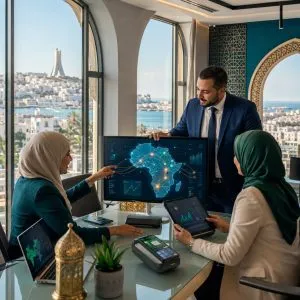
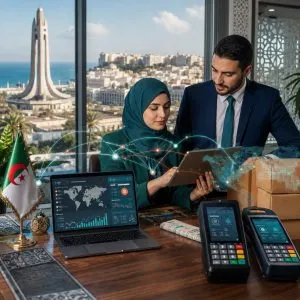
On August 15, 2025, the Bank of Algeria officially joined the PAPSS network, marking a watershed moment in the country’s financial integration with the African continent. The announcement came from the African Export-Import Bank (Afreximbank), which developed PAPSS in collaboration with the African Union Commission (AUC) and the African Continental Free Trade Area (AfCFTA) Secretariat.
The timing was deliberate. Algeria’s accession came just weeks before the country hosted the 4th Intra-African Trade Fair (IATF2025) in Algiers from September 4-10, 2025 — an event that became the largest in the fair’s history, attracting over 112,000 participants from 132 countries, 2,148 exhibitors, and generating $48.3 billion in trade and investment deals. Algeria alone contributed $11.4 billion in signed contracts plus an additional $11.6 billion in commitments.
The PAPSS accession and the IATF hosting together signaled Algeria’s most assertive move toward African economic integration in decades. But while the trade fair generated headlines and handshakes, it is PAPSS that provides the plumbing — the technical infrastructure that can turn those deals into actual settled transactions without the friction, cost, and delays that have historically plagued intra-African commerce.
What PAPSS Actually Does — And Why It Matters
The Pan-African Payment and Settlement System is, at its core, a real-time gross settlement (RTGS) infrastructure that enables instant cross-border payments in local African currencies. Launched publicly on January 13, 2022 in Accra, Ghana, PAPSS was designed to solve a problem that has constrained African trade for decades: the inability to pay directly in local currencies across borders.
Before PAPSS, an Algerian business wanting to pay a Nigerian supplier faced a convoluted process. The Algerian dinars would be converted to US dollars or euros through a correspondent bank (typically located in New York, London, or Paris), the hard currency would be wired internationally, and the receiving bank in Nigeria would convert the dollars into naira. Each step added fees, each conversion added spread, and the entire process took days or weeks.
This is not merely inefficient — it is structurally extractive. An estimated $5 billion per year is added to the cost of intra-African currency transactions through this correspondent banking detour. According to the World Bank’s 2023 Remittance Prices report, sending money across African borders incurs on average 7-8% of the total value sent, well above the global average of 6-7%. The funds physically leave Africa during the conversion process — African money routed through Western financial centers to reach an African destination.
PAPSS eliminates this detour. The system supports three core processes — instant payment, pre-funding, and net settlement — that work as follows:
- An originator issues a payment instruction in their local currency to their bank or payment service provider.
- The payment instruction is sent to PAPSS, which carries out all necessary validation checks.
- The instruction is forwarded to the beneficiary’s bank, which clears the funds to the beneficiary in their local currency.
- The entire process completes within 120 seconds.
- At the end of each day (11:00 UTC), PAPSS settles the net balance of all transactions among individual African currencies. Central banks then resolve the remaining difference, and the process restarts from net zero the next day.
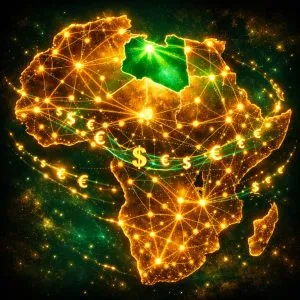
No dollars. No euros. No correspondent banks. No funds leaving Africa. The Algerian dinar settles directly against the Nigerian naira, the Ghanaian cedi, the Kenyan shilling — whatever the counterpart currency may be.
The Network Effect: From 18 Countries to a Continental Mesh
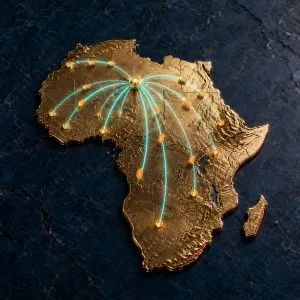
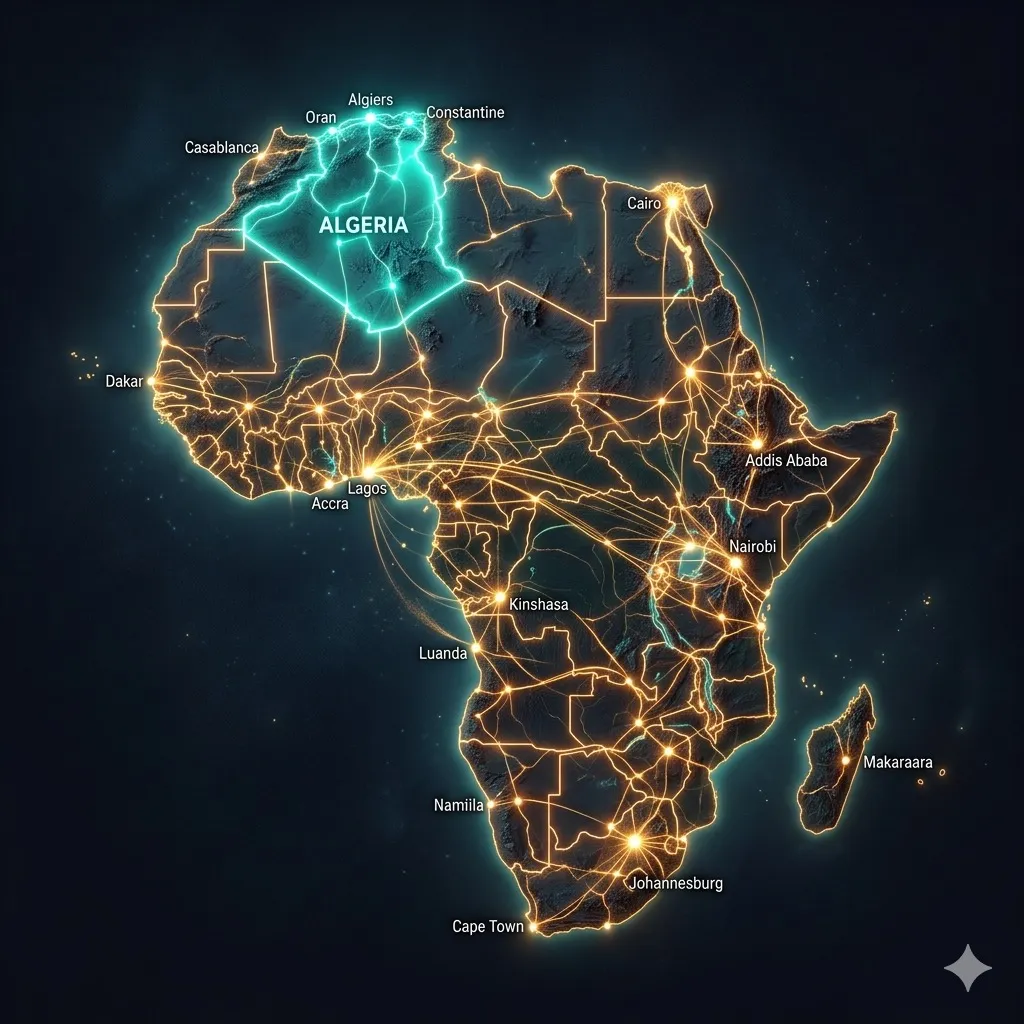
At the time of Algeria’s accession, PAPSS connected 18 countries with more than 150 commercial banks and 14 national payment switches across four African regions — West, Central, East, and North Africa — creating a payment mesh that can handle cross-border transactions across most of the continent’s major economies.
The network has demonstrated tangible results. PAPSS CEO Mike Ogbalu III cited 27% cost savings for end users among participating countries, while commercial banks on the platform have experienced transaction volume surges of over 1,000% through digital channel integration.
The network continues to expand. In February 2026, Kenya’s Pesalink connected to PAPSS, bringing 80+ Kenyan banks, fintechs, SACCOs, and telcos into the network. This single integration connected 160+ commercial banks and fintechs on the PAPSS platform to one of Africa’s most dynamic digital payment ecosystems, where mobile money has already transformed financial inclusion.
The network effect is critical. Each new country and bank that joins PAPSS increases the value of membership for every existing participant. For Algeria, PAPSS membership means the dinar can now settle directly against the currencies of other African nations — a capability that did not exist before August 2025.
Algeria’s Cross-Border Payment Problem: Why PAPSS Is Structural
To understand why PAPSS matters specifically for Algeria, one must understand the constraints that have shaped — and limited — Algeria’s cross-border commerce.
The Algerian dinar operates under strict controls. It is not freely convertible and is subject to capital controls managed by the Bank of Algeria. The personal travel foreign exchange allowance was increased in July 2025 to 750 euros per year for adults (up from the previous ~100 euros equivalent), but this remains modest by international standards. The process for business foreign exchange transfers is bureaucratic, requiring approximately 30 different steps and taking three to six months or longer to complete.
The result is a massive parallel foreign exchange market. By mid-2025, the official rate stood at approximately 152 dinars per euro and 129 dinars per dollar, while the parallel market traded at 259-263 dinars per euro and 225-229 dinars per dollar — a premium of 73-78%. This dual-rate system creates enormous friction for any business attempting to engage in legitimate cross-border commerce.
For intra-African trade specifically, the challenges multiply. Algeria’s share of total intra-African trade stands at just 2.2%, a figure that increased only marginally from 1.9% in 2022 despite the AfCFTA framework. Mineral fuels and oils constitute 91.5% of Algeria’s exports, leaving the non-hydrocarbon trade basket extremely narrow.
The payment infrastructure explains much of this constraint. An Algerian manufacturer wanting to export processed food to Senegal or an Algerian tech company selling services to Ghana faces a payment mechanism that was designed for dollar-denominated oil transactions, not for the diverse, smaller-scale commerce that drives economic diversification.
PAPSS changes this equation fundamentally. An Algerian exporter can now receive payment in dinars directly from an African buyer paying in their local currency, with the transaction settling in under two minutes rather than weeks. The correspondent banking detour — with its costs, delays, and bureaucratic friction — is bypassed entirely.
The AfCFTA Connection: Payments as the Missing Infrastructure
The African Continental Free Trade Area (AfCFTA), operational since January 2021, created the world’s largest free trade area by number of participating countries. Its ambition is to eliminate tariffs on intra-African commerce, potentially boosting intra-African trade by 52.3% by eliminating import duties, according to IMF analysis.
But tariff elimination alone cannot drive trade growth if businesses cannot pay each other efficiently. Non-tariff barriers — including average customs dwell times of 126 hours and logistics costs nearly double the global average — continue to obstruct commerce. And the payment infrastructure has been arguably the most binding constraint of all.
For Algeria, which ratified AfCFTA in 2021 and has positioned itself as a champion of African economic integration, PAPSS provides the payment rail that transforms AfCFTA from a tariff agreement into an operational trade framework. The $48.3 billion in deals signed at IATF2025 in Algiers represents potential. PAPSS provides the mechanism to convert that potential into settled transactions.
The strategic implications extend beyond individual transactions. Algeria’s economy remains heavily dependent on hydrocarbon exports (approximately 91.5% of total exports). The government’s stated objective of economic diversification requires new markets and new trading relationships. Africa — a continent of 1.4 billion people with a combined GDP exceeding $3 trillion — represents the most natural diversification target. But that diversification is impossible without a payment system that makes intra-African commerce practical.
PAPSS does not solve Algeria’s macroeconomic challenges — the currency controls, the parallel market premium, the bureaucratic complexity of foreign exchange operations. But it creates a parallel channel for African trade that operates outside those constraints, at least for the commercial transactions it covers.
Advertisement
What Algeria Gains: Sector-by-Sector Impact
The practical impact of PAPSS on Algeria’s economy will vary by sector, but several areas stand to benefit immediately.
Pharmaceutical exports. Algeria has 218 pharmaceutical production plants — approximately 30% of Africa’s total pharmaceutical manufacturing capacity — and has been expanding its African export ambitions. Nine Algerian pharmaceutical laboratories have already entered a dozen African countries. PAPSS enables these companies to receive payment in dinars from buyers across PAPSS-connected African countries, eliminating the foreign exchange conversion barrier that has constrained growth.
Agricultural trade. Algeria is both a major food importer and a potential exporter of processed foods and agricultural products to sub-Saharan Africa. The IATF2025 specifically highlighted agriculture as a priority trade area. PAPSS makes it feasible for Algerian food processors to sell into West and Central African markets without navigating the correspondent banking system.
Digital services. Algeria’s growing tech sector — including companies like Yassir, the Algerian super-app operating across North Africa — can invoice and receive payment through PAPSS for services delivered across borders. For tech startups that operate at the scale of thousands of small transactions rather than a few large ones, the cost savings from PAPSS are proportionally more significant.
Construction and infrastructure. Algerian construction firms, particularly the Cosider Group — Algeria’s largest construction company and one of Africa’s top-ranked builders — have been pursuing international opportunities across the continent. PAPSS streamlines the payment flows for construction contracts, progress payments, and equipment procurement across borders.
Small and medium enterprises. Perhaps most importantly, PAPSS democratizes cross-border trade by making it accessible to businesses that are too small to navigate the correspondent banking system. An Algerian artisan selling handicrafts to a buyer in Cote d’Ivoire — a transaction that would have been prohibitively complex and expensive through traditional channels — becomes a two-minute payment through PAPSS.
Algeria’s Trading Partners: Where PAPSS Opens Doors
To understand the practical value of PAPSS for Algeria, it helps to map Algeria’s existing African trade relationships against the PAPSS network.
Algeria’s top five African export partners in 2023 were Tunisia (70.7% of African exports), South Africa (6.7%), Cote d’Ivoire (3.6%), Nigeria (3.1%), and Senegal (2.7%). On the import side, Mauritania (38.8%), Tunisia (32.7%), and Cote d’Ivoire (9%) led. Several of these countries are already connected to PAPSS, meaning existing trade flows can immediately benefit from faster, cheaper settlement.
But the more interesting opportunity lies in markets where Algeria trades little today — not because of lack of demand, but because of payment friction. Nigeria, Africa’s largest economy with a population exceeding 220 million, has enormous demand for pharmaceuticals, processed foods, and manufactured goods that Algeria produces. Ghana, Kenya, and Senegal are fast-growing markets with import needs that align with Algeria’s non-hydrocarbon production capabilities.
The IATF2025 results suggest this latent demand is real. Algeria’s $11.4 billion in signed contracts plus $11.6 billion in commitments at the trade fair far exceeded expectations, demonstrating that African counterparts are eager to do business with Algerian companies when the opportunity presents itself. PAPSS now makes the payment side of that business dramatically simpler.
Challenges and Constraints: What PAPSS Cannot Fix
PAPSS is a payment rail, not a magic wand. Several structural constraints will limit its impact on Algeria’s trade position in the near term.
Currency convertibility remains a binding constraint. PAPSS enables settlement in local currencies, but it does not change the underlying convertibility regime of the Algerian dinar. The Bank of Algeria’s capital controls, foreign exchange allocation mechanisms, and the parallel market premium exist for macroeconomic reasons (primarily managing foreign exchange reserves in the context of volatile oil prices) that PAPSS does not address.
Commercial bank integration takes time. Algeria’s accession means the Bank of Algeria has joined the PAPSS network, but individual commercial banks — BNA, CPA, BEA, BADR, and others — must each integrate with the system. This technical integration, including compliance with PAPSS protocols, cybersecurity requirements, and operational procedures, will determine the actual availability of PAPSS services to businesses.
Trade logistics remain a bottleneck. Paying a supplier instantly is valuable, but if customs clearance takes weeks, transport infrastructure is inadequate, and non-tariff barriers (standards, certifications, quotas) persist, payment speed alone does not unlock trade volumes. PAPSS solves the financial plumbing; the physical plumbing of trade requires separate investment.
Adoption requires awareness. Many Algerian businesses — particularly SMEs that would benefit most — are unaware of PAPSS or do not understand how to access it. Commercial banks must actively market PAPSS services and make them operationally accessible through their existing digital banking platforms.
PAPSS faces continent-wide adoption challenges. Despite the promising statistics, PAPSS is still in its growth phase. Observers have noted obstacles blocking PAPSS’s push to fully ditch dollar-denominated transactions three years after launch, including limited awareness among SMEs, regulatory fragmentation across countries, the lack of currency-hedging mechanisms, and the entrenched position of correspondent banking relationships. Many African businesses remain cautious about settling in local currencies due to exchange rate volatility.
The Fintech Opportunity: Building on PAPSS Rails
PAPSS is infrastructure. What gets built on top of that infrastructure will determine its actual economic impact.
For Algeria’s nascent fintech ecosystem, PAPSS creates an entirely new category of opportunity: cross-border payment applications. Companies like Yassir, which operates across North Africa and has recently expanded into retail and financial services, could integrate PAPSS settlement to offer seamless cross-border payments within their super-app platform. A Yassir user in Algiers could pay a merchant in Lagos — settled in dinars and naira respectively — through the same app they use for ride-hailing and delivery.
Trade finance is another frontier. Algerian banks could build letter-of-credit and trade finance products that leverage PAPSS for settlement, offering African importers faster access to goods and Algerian exporters faster access to payment. The combination of PAPSS instant settlement with digital trade documentation could compress the trade cycle from weeks to days.
Remittances represent a significant untapped market. The Algerian diaspora spans multiple African countries, and remittance flows between Algeria and sub-Saharan Africa currently pass through expensive informal channels or traditional wire services. PAPSS-enabled mobile remittance applications could capture this flow at a fraction of the current cost.
The Pan-African Payment and Settlement System itself is designed as a platform that third-party service providers can build upon. Its API-based architecture allows banks, fintechs, and payment service providers to integrate PAPSS capabilities into their existing products. For Algerian developers and entrepreneurs, this represents an infrastructure layer that did not exist before August 2025 — and one that connects to a market of 1.4 billion people.
The Bigger Picture: Algeria’s African Economic Pivot
Algeria’s PAPSS accession should be understood as part of a broader strategic repositioning toward Africa. The hosting of IATF2025, the AfCFTA ratification, the investments in trans-Saharan infrastructure — including the Trans-Sahara Highway and the Nigeria-Algeria gas pipeline — and now the payment system integration all point toward a deliberate policy of deepening Algeria’s African economic relationships.
The country’s traditional trade orientation has been overwhelmingly toward Europe — the EU remains Algeria’s dominant trading partner, primarily through hydrocarbon exports. But Europe’s energy transition, the push toward renewable sources, and the structural decline in hydrocarbon demand create long-term risks for an economy that derives 91.5% of its export revenue from oil and gas.
Africa represents the diversification opportunity. The continent’s population is projected to reach 2.5 billion by 2050, creating the world’s fastest-growing consumer market. The AfCFTA framework is designed to make intra-African trade easier. And PAPSS provides the payment infrastructure that can make it practical.
For Algeria, with its geographic position spanning the Mediterranean and the Sahara, its industrial base, its pharmaceutical manufacturing capacity, and its tech startup ecosystem, the pieces are in place for a meaningful African trade expansion. What was missing was the payment rail. PAPSS provides it.
The question is whether Algeria’s businesses, banks, and regulators will seize the opportunity with the urgency it deserves. The dinar is now connected to Africa’s payment grid. What Algerian businesses do with that connection will determine whether PAPSS becomes a transformative force for economic diversification or merely another promising infrastructure investment that underdelivers on its potential.
The 120-second settlement time is ready. The $5 billion in annual cost savings is available. The 150+ banks across the continent are connected. The dinar can now speak directly to the cedi, the naira, the shilling, and the franc — without asking permission from New York, London, or Paris.
It is up to Algeria to use this channel.
Frequently Asked Questions
How does PAPSS eliminate the $5 billion annual cost of intra-African currency transactions?
Before PAPSS, cross-border payments between African countries were routed through correspondent banks in New York, London, or Paris, converting local currencies to dollars or euros and back again. This detour added an estimated $5 billion per year in fees and spreads across the continent. PAPSS bypasses this entirely by settling transactions directly between local currencies — for example, Algerian dinars to Nigerian naira — within 120 seconds, with no funds leaving Africa during the process.
Which Algerian export sectors stand to benefit most from the PAPSS network’s 150+ connected banks across 18 countries?
Pharmaceutical exports are positioned for the most immediate impact — Algeria has 218 pharmaceutical production plants representing approximately 30% of Africa’s total manufacturing capacity, with nine laboratories already operating in a dozen African countries. Agricultural trade and digital services are also key beneficiaries. For SMEs, PAPSS democratizes cross-border trade by making transactions that were previously prohibitively complex through correspondent banking accessible via a two-minute settlement process.
What is the gap between Algeria’s 2.2% share of intra-African trade and the $48.3 billion in deals signed at IATF2025 in Algiers?
Algeria’s share of total intra-African trade stood at just 2.2% in 2023, up marginally from 1.9% in 2022, with 91.5% of exports being mineral fuels and oils. However, the $48.3 billion in trade and investment deals signed at IATF2025 — including $11.4 billion in Algerian contracts plus $11.6 billion in commitments — demonstrates massive latent demand. PAPSS provides the payment infrastructure to convert these signed deals into settled transactions, potentially accelerating Algeria’s non-hydrocarbon trade diversification across Africa.
Sources & Further Reading
- Bank of Algeria joins PAPSS network — PAPSS Official
- Bank of Algeria joins PAPSS network — Afreximbank
- IATF2025 Ends on High Note with Record $48.3 Billion in Deals — Afreximbank
- PAPSS: How It Works — PAPSS Official
- Pesalink and PAPSS Unlock Cross-Border Payments in Kenya — Afreximbank
- Algeria Joins Pan-African Payment System — Fintech News Africa
- Algeria Deepens Trade Ties with African Countries — Afreximbank
- 2025 Investment Climate Statement: Algeria — U.S. Department of State
- Algeria: Solutions to the Gap Between Official and Parallel Exchange Rates — Financial Afrik
- Trade Integration in Africa: Unleashing the Continent’s Potential — IMF
- Pan-African Payment and Settlement System Launched — Afreximbank
- Algeria’s Pharmaceutical Industry: 218 Plants, 30% of Africa — Maghreb Pharma
- Insider Reveals Obstacles Blocking PAPSS Adoption — WeeTracker
- Algeria Travel Allowance Increased to 750 Euros — DzairTube