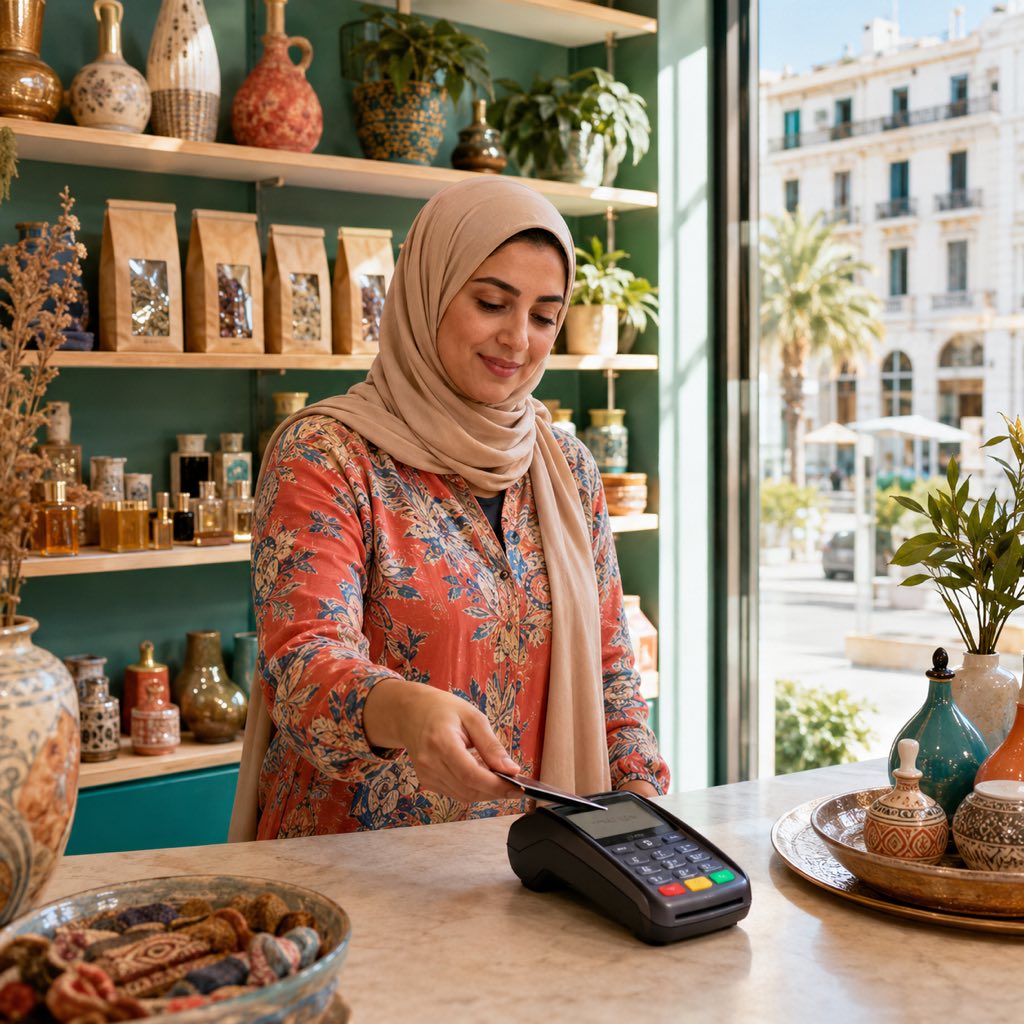
The Numbers Are Undeniable: Algeria’s Payment Infrastructure Is Moving
The headline figure — a 46% surge in electronic payment transactions during 2025, with total value reaching 939 billion DZD versus 643.8 billion DZD in 2024 — is not a one-year anomaly. It is the acceleration of a structural shift that has been building since 2016, when Algeria processed its first wave of digital payments. The critical data point: more than half of the cumulative 84 million transactions recorded since 2016 were completed in just the last two years.
The online payment channel is the most dramatic: a 179% surge to 145 billion DZD across 27 million transactions, with a peak of 3.6 million transactions and 65.27 billion DZD in December 2025 alone. Point-of-sale terminals doubled in transaction value to 89.5 billion DZD as the device network expanded 15.61% to 78,774 machines. Mobile payments via intra-bank QR codes rose 19% to 69.3 million operations worth 57.3 billion DZD. Average transaction values are rising too: from 1,180 DZD per online transaction in 2020 to 5,400 DZD in 2025 — a 4.6× increase that signals consumers are not just testing digital payments but relying on them for meaningful purchases.
This is the infrastructure reality. The business reality, however, is different: according to e-commerce research for 2026, over 85% of Algerian e-commerce transactions still rely on cash-on-delivery (COD). The two data points coexist because most of the payment surge is happening in telecom bills, administrative services, and utilities — sectors where the customer has no choice but to pay digitally. The voluntary digital commerce layer, where SMEs live, remains cash-dominated.
The SME Digital Revenue Gap: Why COD Dependency Is a Business Risk
Cash-on-delivery is not just a payment preference — it is a cash-flow trap. When a customer places an order under COD terms, the merchant bears the cost of fulfillment, logistics, and warehousing before receiving any revenue. Return rates in COD markets run high: Algeria’s fragmented logistics network across 58 wilayas generates significant return-to-sender (RTS) rates, with some merchants reporting 20–35% returns on COD orders. Each returned order is a net loss after shipping costs.
The economic math is straightforward: a merchant running 1,000 monthly orders at an average value of 5,400 DZD (the 2025 national average for online transactions), with a 25% COD return rate, loses roughly 1,350 orders worth of fulfillment cost before recovering the first dinar of revenue. A shift to 50% digital pre-payment would cut that exposure in half. At 70% digital pre-payment — the level Algeria’s top online merchants are targeting — the business model transforms from working-capital intensive to cash-flow positive.
The structural barrier is not consumer willingness — the 27 million online transactions and 69.3 million QR code operations demonstrate willingness at scale. The barrier is merchant infrastructure: checkout flows that default to COD, absence of post-purchase SMS receipts, and payment pages that fail on low-bandwidth connections or 4G networks in secondary cities. These are solvable engineering problems, not cultural ones.
Advertisement
What Algerian SMEs Should Do to Capture the Digital Revenue Wave
1. Audit your checkout abandonment data before changing your payment stack
Most SMEs skip this step and go straight to “integrate a new payment gateway.” Before touching the technology, pull your abandonment rate at the payment step. Algerian merchants who add a digital payment option without optimising the checkout journey often see less than 5% adoption — because the new option sits buried below a prominent COD button. The fix is not the payment gateway; it is the order of options and the copy. Move digital payment to the top, add a brief “Instant confirmation + no pickup fee” label, and measure the impact for 30 days before investing in additional integrations.
2. Leverage the DZ Mob Pay infrastructure as your low-friction entry point
The national DZ Mob Pay platform, launched by GIE Monétique, reached 95,014 personal accounts and 14,283 merchant accounts in its inaugural year, executing 12,682 QR code transactions and 44,369 P2P transfers. This is not a competitor to your payment stack — it is a trust bridge for customers who are skeptical of third-party payment providers. Registering as a DZ Mob Pay merchant costs nothing and plugs your checkout into a state-backed payment channel that many consumers already have on their phones. Use it as a second digital option alongside your primary gateway, positioned explicitly as “Pay via your bank’s official app.”
3. Target the 644 web merchant cohort as your competitive intelligence baseline
By end-2025, Algeria had 644 registered web merchants — a 26.27% increase from 2024. This is a small, knowable peer group. Systematically review the payment flows of the top 50 by traffic: what gateways do they use, how do they present payment options, what trust signals do they display (SSL badges, accepted card logos, money-back copy)? This intelligence costs nothing and tells you exactly what the market leaders are doing. Mirror their best practices and run A/B tests to improve on them. The merchants already capturing digital payments are not doing anything proprietary — they are simply executing the basics better.
4. Build your refund and dispute resolution process before scaling digital payments
One reason COD persists is the consumer perception that digital payments are irreversible. A buyer who pays digitally and receives a defective product has no COD safety net. Merchants who build clear, fast, prominently displayed refund processes — ideally with a 48-hour turnaround — directly address this perception. According to fintech growth trend analysis, consumer trust in digital payments correlates most strongly not with the technology but with the post-payment resolution experience. Your digital payment adoption rate will scale in direct proportion to your refund resolution speed.
Where This Fits in Algeria’s 2026 Digital Economy
The 46% payment surge is both a confirmation and a challenge. It confirms that Algeria’s digital infrastructure — ATM network expanded to 4,679 machines, interbank cards exceeding 21.8 million, mobile networks covering 95.2% of the population — is sufficient to support mass digital commerce. The challenge is that the infrastructure is being used primarily for bill payments, not commerce.
The shift from bill-payment digital transactions to commerce-driven digital transactions requires SME activation, not more consumer education. Algeria’s national digital strategy targets 20% GDP contribution from the digital economy by 2030, a goal that is mathematically unreachable if the country’s 2 million+ SMEs remain on COD rails. The SMEs that build digital payment capability now are not just improving their own cash flow — they are becoming the infrastructure nodes of the digital economy target.
The merchants who move fastest will face lower competition (most peers are still on COD), higher customer lifetime value (digital payment customers reorder more frequently because the friction of the next purchase drops to a single tap), and stronger fundraising narratives when Bank of Algeria’s sandbox window opens in H2 2026. The payment surge is not a trend to watch — it is a market structure shift to lead.
Frequently Asked Questions
How big is Algeria’s digital payment market in 2025?
Total electronic payment transaction value reached 939 billion DZD in 2025, up from 643.8 billion DZD in 2024 — a 46% increase. The online payment channel specifically grew 179% to 145 billion DZD across 27 million transactions. The ATM network processed 235 million+ operations worth 4,397 billion DZD, and interbank cards exceeded 21.8 million.
Why do most Algerian e-commerce businesses still use cash-on-delivery?
Over 85% of Algerian e-commerce transactions use cash-on-delivery due to a combination of consumer skepticism about digital payment reversibility, merchant checkout designs that default to COD, and historical gaps in dispute resolution infrastructure. The barrier is not technical — consumers already execute 69.3 million QR code operations per year — it is trust and checkout design at the merchant level.
What is DZ Mob Pay and how can SMEs use it?
DZ Mob Pay is the national interbank mobile payment platform, launched in January 2025. By December 2025 it had 95,014 personal accounts and 14,283 merchant accounts. SMEs can register as merchants to offer customers a state-backed payment channel that complements third-party gateways, particularly useful for reaching customers who distrust private payment providers.
Sources & Further Reading
- Electronic Payments in Algeria Surge by 46% in 2025 — Dzair Tube
- Algerian E-Commerce Research 2026 — Ecommaps
- Algeria Aims for Full Digital Transformation by 2030 — We Are Tech Africa
- 9 Important Digital Payment Trends Guiding Fintech Growth in 2026 — Lumenalta
- Algeria Digital Economy — U.S. Trade.gov Commercial Guide
🔗 Related Intelligence
Algeria’s Digital Services Export: How SMEs Earn Hard Currency via New Fintech Corridors

Algeria’s Digital Payment Infrastructure: 78K Terminals, 644 Online Merchants, and a 46% Surge

Algeria’s Digital Payments: What the 4.6× Average Transaction Leap Means for Merchants

Algeria’s E-Commerce Pivot: From COD Dominance to Digital Payment Adoption