The Month That Changed Algeria’s Payment Curve
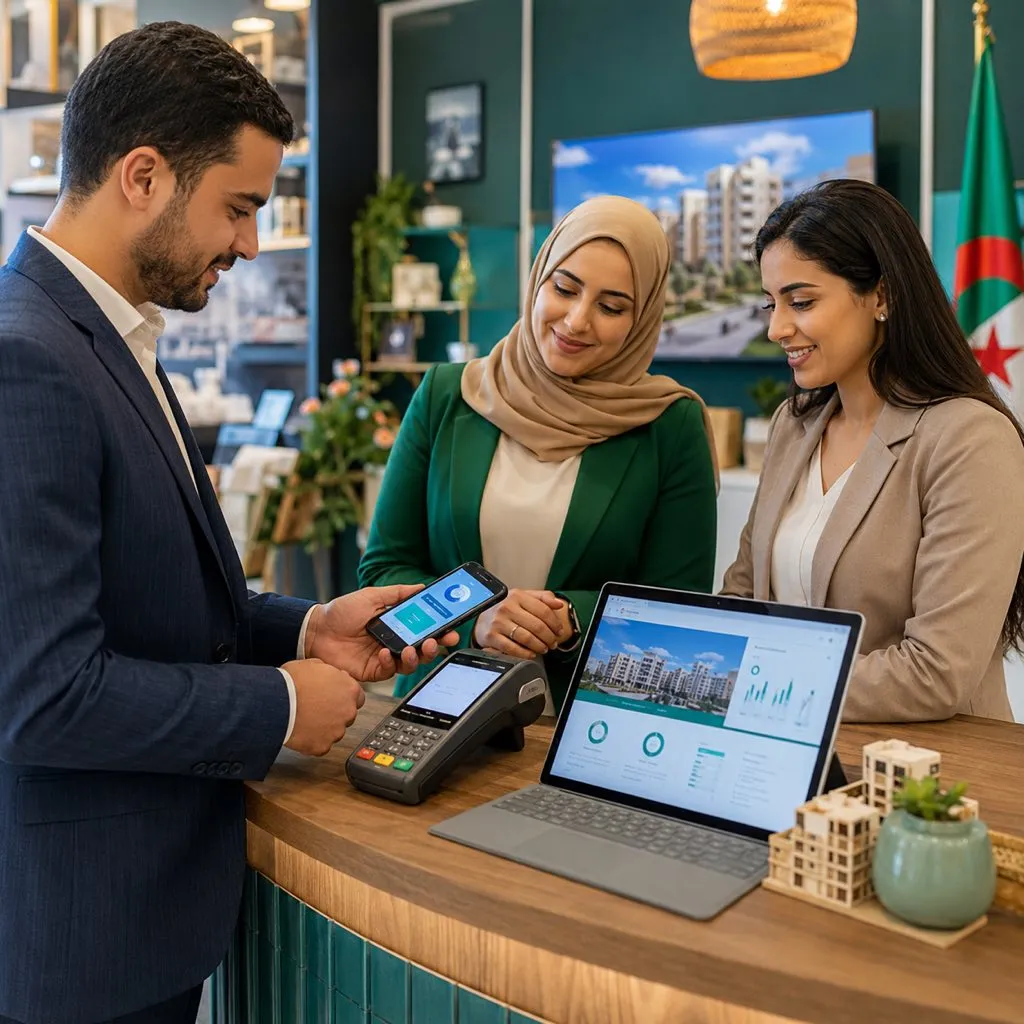
On a single December day in 2025, hundreds of thousands of Algerian households sat down, opened a banking app or walked to an ATM, and paid the first installment of their AADL 3 housing unit — exclusively online. No alternative was offered. No cash window was open. The result was the most concentrated burst of electronic payment activity in Algerian history: 3.6 million transactions worth 65.27 billion DZD processed in December 2025, a single-month record.
That spike did not emerge from a fintech campaign, a consumer awareness drive, or a bank promotion. It emerged from a government program design decision: AADL 3 payments would be digital-only. This is the central insight behind Algeria’s accelerating electronic payment curve — and it has implications far beyond housing.
For the full year 2025, Algeria’s total electronic payment volume reached 939 billion DZD, up 46% year-over-year from 643.8 billion DZD in 2024. Online payments specifically surged 179%, reaching 145 billion DZD across 27+ million transactions. The cumulative count since the interbank system launched in 2016 now stands at over 84 million transactions — and half of that total was completed in just the last two years. Average transaction values have also climbed from 1,180 DZD (2020) to 5,400 DZD (2025), reflecting a shift from micro-payments to meaningful household spending on digital rails.
AADL’s own Gest Immo platform processed over 1,060,683 electronic payment transactions throughout 2025. But December’s spike dwarfed the rest of the year combined — a reminder that mandatory channels compress adoption timelines in ways that optional ones cannot.
What the Numbers Actually Tell Us
The 46% annual growth in electronic payments is impressive, but the composition matters more than the headline. Three structural shifts are visible in the 2025 data:
POS adoption is accelerating at the merchant level. POS terminal transaction values doubled to 89.5 billion DZD, and the device count rose from 68,140 to 78,774 — a 15.6% expansion in a single year. Merchants who resisted installation are now under pressure from both regulators and customers trained by AADL 3.
Mobile and QR-code payments are growing organically. QR code transactions hit 69.3 million operations (+19%), worth 57.3 billion DZD. Peer-to-peer transfers reached 47.5 million transactions (+31%), totaling 647.4 billion DZD. These flows are happening on Edahabia and CIB rails that beneficiaries were forced to activate for AADL 3 — and they are not stopping at housing payments.
Card infrastructure is reaching critical mass. Interbank cards in circulation reached 21.8 million by end-2025, with 4,679 ATMs nationwide. When government programs mandate digital payment, citizens activate dormant cards. Those cards then get used for grocery stores, pharmacies, and online merchants — creating a flywheel that voluntary adoption programs could not generate.
The trajectory DZ Mob Pay (launched in 2024) is also worth tracking: 95,014 personal accounts and 14,283 merchant accounts by December 2025 represent an early baseline that scales faster now that AADL 3 has trained millions of users on digital payment behavior. According to AADL’s Gest Immo platform announcement on DZWatch, the system processed over 1 million e-payments in 2025 before the December AADL 3 spike.
Advertisement
What Algerian Policymakers and Digital Economy Stakeholders Should Do
1. Replicate the Mandatory-Channel Model Across Public Services
AADL 3 succeeded not because it offered a better payment experience but because it removed the alternative. The same design should be applied to: university tuition payments (which still accept cash at many institutions), vehicle registration renewals, passport and consular fees, and court filing fees. Each mandated digital channel adds hundreds of thousands of trained users to the payment network. The Ministry of Digitalization should audit every public fee-collection point and set a 12-month target for digital-only channels, with CIB and Edahabia as the mandatory rails. Algeria’s Fintech Strategy 2024-2030 explicitly names digital payment infrastructure as a national priority, providing the regulatory backing for this push — since existing cards work without new infrastructure.
2. Deploy Merchant Onboarding Programs Targeting AADL 3 Neighborhoods
Residents who paid AADL 3 digitally are now looking for merchants that accept their cards near their new apartments. The 78,774 POS terminals currently deployed are concentrated in major city centers — not in the suburban and peri-urban zones where AADL programs allocate units. SATIM, the Ministry of SMEs, and wilaya-level commerce directorates should coordinate a targeted POS rollout within a 5 km radius of all AADL 3 delivery zones. A merchant trained to accept CIB one month before residents move in becomes part of a cashless neighborhood ecosystem from day one.
3. Use Payment Data Infrastructure for Public Service Personalization
The 939 billion DZD in electronic transactions processed in 2025 represents a transaction graph of Algerian household behavior that does not yet exist in any other form. With appropriate privacy protections, Algerie Poste and SATIM’s anonymized data could be used by ministries to model demand for social services, target subsidy disbursements, and identify regions with low digital payment penetration requiring infrastructure investment. This is not surveillance — it is the same data-for-policy approach that Singapore’s GovTech used to optimize social grants delivery. Algeria’s Fintech Strategy 2024-2030 names financial data infrastructure as a priority; the AADL 3 dataset is a ready-made starting point.
4. Extend the Mandate to Social Transfer Payments
Algeria’s social protection system — including university stipends, pension payments, and family support allowances — still largely relies on cash distribution through post offices. The AADL 3 experience demonstrates that citizens who are given no cash alternative will complete digital payment transactions successfully. Transitioning social transfers to Edahabia accounts would eliminate cash handling costs, reduce fraud, accelerate delivery, and add millions of low-income users to the digital economy network. Morocco’s conversion of social support transfers to CIH Bank accounts in 2022-2023 cut disbursement delays from 3 weeks to same-day — a reference benchmark for the Ministry of Social Affairs.
The Structural Lesson
The AADL 3 case answers a question that policymakers in emerging markets frequently debate: should digital payment adoption be incentive-led or mandate-led? Algeria now has a data point. Voluntary incentive programs (cashback, reduced fees, loyalty points) added approximately 40 million transactions to the network over a decade of effort. A single mandatory government program added 3.6 million transactions in one month.
The lesson is not that incentives are worthless — they matter for sustaining usage after the initial forced adoption. The lesson is sequencing: mandates establish the infrastructure of habit; incentives then deepen it. Countries that have run this playbook successfully — Rwanda’s RwandaPost government payments, Kenya’s eCitizen portal, Morocco’s Barid Cash — all used public service digitalization as the forcing function, not consumer marketing. The UNCTAD Algeria eTrade Readiness Assessment identifies public service payment digitalization as one of Algeria’s highest-leverage levers for expanding digital commerce participation.
According to Algeria’s national e-commerce research by Ecommaps, Algeria’s 2030 digital economy target is for the digital sector to contribute 20% of GDP. Hitting that number requires not just more tech startups but deeper penetration of digital transactions across every economic layer. AADL 3 proved that the most powerful lever is the one already in the government’s hands: the moment a citizen has no choice but to go digital.
Frequently Asked Questions
What made AADL 3 payments different from previous government digital payment initiatives?
AADL 3 removed the cash alternative entirely — the first installment could only be paid electronically via Edahabia or CIB. Previous government programs offered digital payment as an option alongside cash windows. That single design decision compressed years of voluntary adoption into a single month, producing 3.6 million transactions worth 65.27 billion DZD in December 2025 alone, compared to 1,060,683 total transactions on the Gest Immo platform for the entire rest of 2025.
Which payment rails benefit most from the AADL 3 cascade effect?
Edahabia (Algerie Poste) and CIB (SATIM) are the primary beneficiaries, since AADL 3 payments run on those networks. Both the card count (21.8 million interbank cards) and POS terminal count (78,774 devices) grew significantly in 2025, with AADL 3 acting as the primary activation trigger. QR code payments (+19%) and peer-to-peer transfers (+31%) also grew as newly trained digital users applied their payment habits to everyday spending beyond housing.
How can Algerian fintech startups capitalize on this trend?
The immediate opportunity is merchant onboarding in AADL 3 delivery zones, which are typically suburban or peri-urban areas underserved by existing POS infrastructure. Startups offering lightweight QR-code acceptance (no hardware required) can move faster than traditional banks. Longer term, the anonymized transaction data that SATIM and Algerie Poste now hold represents a credit-scoring data layer for the previously unbanked — a foundation for embedded lending products targeting AADL 3 beneficiaries who now have a verifiable digital payment history.
—
Sources & Further Reading
- Electronic Payments in Algeria Surge by 46% in 2025 — DzairTube En
- AADL’s Gest Immo Platform Processes Over 1 Million E-Payments in 2025 — DZWatch
- Algeria Launches Digital Platform for AADL 3 Housing Program — MEATechWatch
- Algeria’s Fintech Ecosystem in 2026: Building Momentum — The Fintech Times
- The Digitization of E-Commerce in Algeria — Ecommaps Blog
- UNCTAD Algeria eTrade Readiness Assessment — UNCTAD
🔗 Related Intelligence

Algeria’s Digital Payment Infrastructure: 78K Terminals, 644 Online Merchants, and a 46% Surge
From 95% COD to Digital Trust: How Algerian Platforms Are Shifting Payments

Algeria’s E-Commerce Pivot: From COD Dominance to Digital Payment Adoption
Algeria’s Digital Services Export: How SMEs Earn Hard Currency via New Fintech Corridors