From Regulatory Void to Rulebook: What Instruction 06-2025 Actually Says
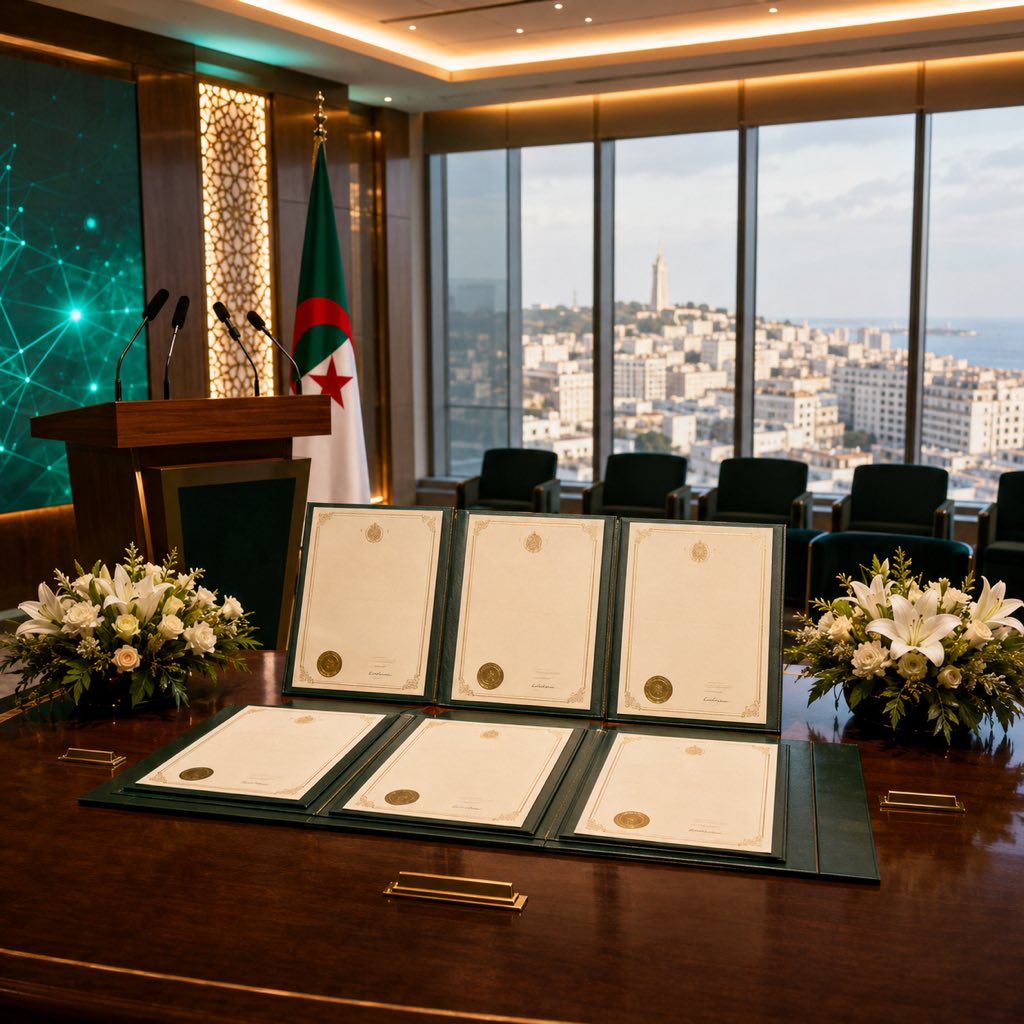
For years, Algerian fintech startups operated in a grey zone: digital payment services existed but no formal category for Payment Service Providers (PSPs) did. That changed on August 17, 2025, when the Bank of Algeria published Instruction 06-2025, creating the country’s first structured operating framework for fintech companies offering payment services.
The regulation does three things at once. First, it defines who a PSP is and what licences are required to operate legally. Second, it protects consumers through mandatory fund segregation — all customer funds held by a PSP must be deposited into dedicated escrow accounts at commercial banks, with balances reconciled daily. Third, it creates a tiered digital wallet architecture that calibrates access to risk: startups can onboard users quickly at lower KYC tiers and move them upward as trust grows.
The timing matters. Algeria joined the Pan-African Payment and Settlement System (PAPSS) in 2025, signalling that cross-border payment integration is now on the national agenda. A domestic PSP framework is the prerequisite for plugging into that wider infrastructure.
The Three-Tier Wallet Architecture: A Closer Look
The wallet tier system is the most operationally significant part of Instruction 06-2025. It allows PSPs to design products for different user segments without building three separate compliance stacks:
Level 1 — Entry tier (100,000 DZD cap, ~$740 USD): Onboarding requires basic digital identification only. This tier is explicitly designed to reach the unbanked and underbanked — a segment that, according to trade.gov’s Algeria Digital Economy guide, still represents the vast majority of adults given that only 22.9% of the population holds a debit card and a mere 2.8% holds a credit card.
Level 2 — Standard tier (500,000 DZD cap, ~$3,700 USD): Users must provide a scanned official ID and proof of income. This tier covers the bulk of individual transactional needs — bills, e-commerce, payroll-linked disbursements.
Level 3 — Enhanced tier (1,000,000 DZD cap, ~$7,400 USD): Requires Level 2 documentation plus a video conference interview. This tier enables higher-value B2C and early B2B use cases.
Each tier carries corresponding daily transaction limits, and movement between tiers is driven by verified identity data rather than arbitrary waiting periods — a design choice that rewards platforms that invest in good KYC tooling.
Advertisement
The Regulatory Sandbox: What the 2026 Cohort Window Means
Instruction 06-2025 is the operating framework; the regulatory sandbox is the innovation accelerator that sits on top. Startup Researcher reporting on the regulation indicates the sandbox is targeted for a 2026 launch window, reportedly accepting around 20 innovators annually to test payment models under Bank of Algeria supervision with reduced liability exposure.
For a fintech founder, the sandbox changes the cost calculus of launching. Normally, a startup must achieve full Instruction 06-2025 compliance — capital requirements, fund segregation, insurance, system integrations — before accepting its first real-money transaction. Inside the sandbox, a startup can validate its product with real users while still completing those compliance steps, reducing the risk of building and then failing to license.
The practical implication: Algerian fintech founders who are currently prototyping payment products should be preparing sandbox applications now. The selection window is expected to open in H2 2026, and early entrants will shape both the sandbox’s norms and the regulator’s future rulemaking.
What Algerian Fintech Founders Should Do Now
1. Audit your capital structure against the 160M DZD minimum requirement
The Instruction 06-2025 framework imposes minimum capital requirements for PSP licences. Reporting from the Algeria invest space points to an expected 160M DZD floor (~$1.18M USD at current rates). For early-stage founders, this is not a number to reach at the licensing moment — it is a fundraising target to work toward over the next 12–18 months. Factor it into your next seed round narrative: investors who understand the regulatory path will see the capital requirement as a moat, not a burden.
2. Build your escrow architecture from day one, not at compliance time
The mandatory fund segregation requirement — all customer funds in dedicated bank accounts, matched daily — is not a checkbox item. It shapes your treasury stack, your banking relationships, and your customer-facing trust story. Startups that bolt this on at licence-application time face expensive rearchitecture; those that build it from the first line of code turn it into a differentiator. Partnering early with one of Algeria’s commercial banks to establish the cantonnement account structure also signals institutional seriousness to future investors.
3. Design your product around Level 1 onboarding first, then create upgrade paths
Algeria’s unbanked population is the addressable market — not the 22.9% who already hold debit cards. The Level 1 wallet (basic digital ID, 100,000 DZD cap) is your entry point into that majority. Design the onboarding experience for someone who has never had a formal bank account, then build frictionless upgrade prompts to Level 2 and Level 3 once the user has an active balance and a transaction history. Platforms that force full KYC at sign-up will lose acquisition battles to those that embrace progressive verification.
4. Prepare your sandbox application package before the window opens
The 2026 sandbox selection process will be competitive. The Bank of Algeria’s reported capacity of around 20 innovators per year means early entrants get first-mover status in shaping how the regulator interprets the rules. A strong sandbox application includes: a defined use case with quantified addressable users, a pre-compliance architecture diagram showing your escrow and authentication approach, and a test-and-learn timeline. Startups that show up with a complete application on day one will outcompete those still defining their product scope.
The Structural Lesson: Why Licensing Architecture Is Competitive Advantage
The most important thing Instruction 06-2025 does is not regulate — it legitimises. Before August 2025, any Algerian fintech founder pitching international investors faced the same friction: “what is the regulatory status of your product?” The honest answer was “unclear.” Now the answer is an instruction document with specific capital thresholds, wallet tiers, and consumer protections.
That legitimacy has a direct market value. The Fintech Times reporting on Algeria’s 2026 ecosystem notes approximately 30-35 fintech startups currently operating in Algeria — a number that will grow once the licensing path is clear. Among the early movers, platforms like Banxy (Algeria’s first fully mobile-based banking platform), ESREF Pay, and UbexPay are already building on this infrastructure.
The regulatory sandbox compounds this dynamic. Markets that combine a clear licensing framework with a supervised innovation channel — as Singapore did with its MAS sandbox in the 2010s — historically see a 3–5× acceleration in fintech formation. Algeria’s sandbox is smaller in scale, but the structural dynamic is identical: reduce the cost of the first regulated product, and founders who have been waiting for clarity will enter the market.
The 20% GDP digital economy target by 2030 is not achievable through infrastructure alone. It requires financial infrastructure — the rails over which digital value moves. Instruction 06-2025 and its sandbox are the regulatory foundation of those rails.
Frequently Asked Questions
What is Bank of Algeria Instruction 06-2025?
It is the first formal regulatory framework for Payment Service Providers (PSPs) in Algeria, published on August 17, 2025. It defines licensing requirements, introduces a three-tier digital wallet system with caps from 100,000 DZD to 1,000,000 DZD, mandates customer fund segregation in escrow accounts, and sets the stage for a regulatory sandbox in 2026.
What does the 160M DZD capital requirement mean for startups?
The 160M DZD (~$1.18M USD) is the expected minimum capital a company would need to hold to obtain a PSP licence. It is a fundraising target, not a barrier to prototyping. Startups can develop and test their products before reaching this threshold, including via the sandbox, but must achieve it before going live at full commercial scale.
How many fintechs are currently operating in Algeria?
Approximately 30–35 fintech startups are currently active, according to The Fintech Times 2026 ecosystem review. They are concentrated in digital payments, mobile banking, and financial access solutions. Notable examples include Banxy, ESREF Pay, UbexPay, and the super-app Yassir, which has expanded into digital financial services.
Sources & Further Reading
- Algeria Opens for Fintech: New PSP Rules Create a Playbook — Launch Base Africa
- Algeria’s Fintech Ecosystem in 2026: Building Momentum — The Fintech Times
- Algeria’s New Digital Payment Law: 57% Unbanked at Stake — AlgeriaTech
- Algeria Launches First Fintech Regulation for PSPs — Startup Researcher
- Algeria Digital Economy — U.S. Trade.gov Commercial Guide
🔗 Related Intelligence

Algeria Fintech Sandbox 2026: The Qualification Guide for PSPs and Digital Wallet Startups

Algeria Fintech Summit 2026: PSP Licensing, PAPSS, and the Sandbox Era
Loop Files Algeria’s First PSP Agrément Application: What It Means for Fintech Founders

Algeria’s First Fintech Law: Who Got a PSP License and What Actually Changed