The Case for a Second Hub
For most of the last decade, Algeria’s tech conversation has centred on Algiers. The capital hosts the largest cluster of startups, the flagship incubators, the Algerian Startup Fund, and most of the corporate accelerators backed by Sonatrach, Algerie Telecom, Naftal, and the major banks. That concentration has served the ecosystem well at its earliest stage, but it now creates a familiar problem: single-hub ecosystems do not scale as efficiently as multi-hub ones, and they leave regional talent either underutilised or migrating.
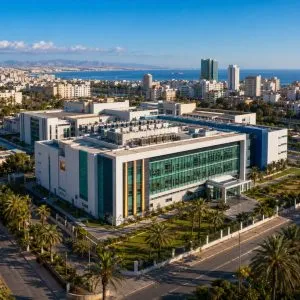
Oran, Algeria’s second city and the commercial and industrial capital of the west, is the most credible candidate to absorb the next phase of growth. It combines a long-established industrial base (chemicals, heavy engineering, and logistics tied to its Mediterranean port), three major technical universities, a maturing incubator layer, and now a flagship piece of AI-specific infrastructure. Government data shows startups are already clustering across Algiers, Oran, and Constantine, with Oran’s momentum the most visible of the three outside the capital.
The University Backbone
Oran’s technical-education infrastructure is the backbone of the emerging hub, and it is unusually deep for an African second city.
The University of Science and Technology of Oran Mohamed Boudiaf, known as USTO-MB, is the largest anchor. With seven faculties spanning chemistry, mechanical engineering, electrical engineering, architecture and civil engineering, life sciences, physics, and mathematics and computer science, USTO-MB supplies the western region with engineers and scientists at volume. It is also one of the Huawei ICT Academy partner institutions, training students on routing, switching, cloud, 5G, and AI modules that align with enterprise demand.
ENSET Oran, the École Normale Supérieure d’Enseignement Technologique, plays a complementary role. Formally established in its current shape by executive decree in 2008 (building on a lineage going back to 1970), ENSET trains technical-education specialists in exact sciences, technology, computer science, mechanical engineering, electrical engineering, electronics, and industrial chemistry. ENSET’s distinctive contribution is the teacher-training and technical-instructor pipeline: ENSET graduates populate the vocational and technical institutes across western Algeria, which matters more as the country scales its September 2026 joint Huawei-Ministry vocational programme in cloud, cybersecurity, and AI.
The École Nationale Polytechnique d’Oran and the University of Oran 1 Ahmed Ben Bella complete the university mesh. The University of Oran 1 runs a Digital Business Incubator under the Ministry of Higher Education and Scientific Research — one of 124 active university incubators that together engage around 60,000 Algerian students in startup-oriented final-year projects. In 2025, a student team from University of Oran 1 launched the Atakor III rocket at the International Rocket Engineering Competition in Texas, reaching 11,066 feet — the only successful launch by an African or Arab team among 143 competitors.
The Startup Layer
Oran’s private-sector startup layer is younger than its university base, but is thickening quickly.
Makers Lab, co-founded by Dr Nizar Djalal Adnani, is the most visible incubator specific to Oran. It sits alongside a wider ecosystem of Algerian incubators and accelerators, including Leancubator (national reach with strong Oran footprint), Sylabs, and the corporate-accelerator initiatives funded through Algerie Telecom’s 1.5 billion dinar AI-cyber-robotics fund. Government programmes running through the Startup Label framework, startup.dz portal (7,800-plus registered companies nationally, 2,300 labelled), and the newly announced 1,000-startup venture-studio initiative backed by the Algeria Startup Fund, CERIST, and DeepMinds with 600 million US dollars of public-private capital all contribute to a more even geographic distribution of founders.
The sectors that are moving fastest in Oran reflect the local economic base. FinTech, HealthTech, and EdTech are the national leaders by number of startups, with AI and machine learning plus PropTech growing fastest. In Oran specifically, industrial automation, logistics (leveraging the port of Oran and the Mohammed Boudiaf International Airport), agri-tech in the adjacent wilayas, and clean-energy applications tied to the solar build-out around Biskra and M’Sila are the areas where local startups have the most obvious customer pull.
Advertisement
The AI Supercomputing Center: The Infrastructure Differentiator
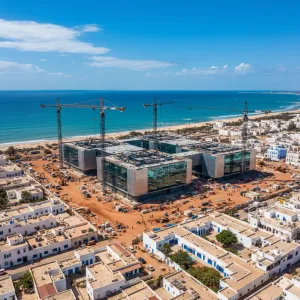
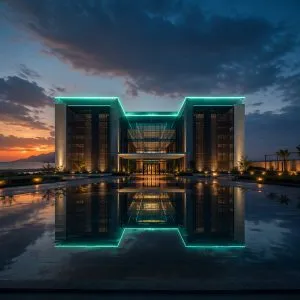
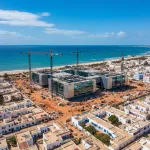
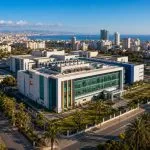
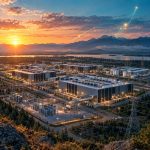
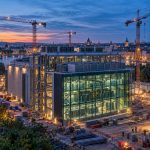
The signature infrastructure investment that has put Oran firmly on the national map is the new AI supercomputing centre. The foundation stone was laid on 16 March 2025 in Oran’s Akid Lotfi district by Minister of Post and Telecommunications Sid Ali Zerrouki, making this the country’s first high-performance computing facility dedicated specifically to artificial intelligence.
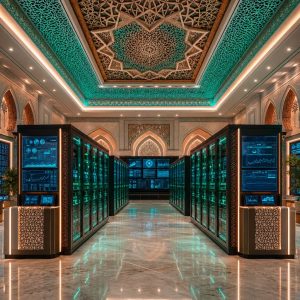
The facility will be equipped with latest-generation GPUs designed to provide the scalable compute power required for AI-driven workloads in healthcare, industrial automation, cybersecurity, smart cities, precision agriculture, energy-resource management, and climate modelling. It is intended to serve researchers, startups, and academia — a governance-by-design choice that ensures the resource benefits the full ecosystem rather than being captured by a single buyer.
The strategic framing is explicitly sovereign: the Ministry has described the centre as a “strategic step toward digital sovereignty” to reduce dependence on foreign infrastructure for intensive compute. For Algeria’s stated target of 7% AI contribution to GDP by 2027, that sovereignty is not abstract — it matters because many European and Gulf hyperscalers cannot, by regulatory constraint, host Algerian public-sector AI training workloads on their commercial clouds.
The centre also changes the recruitment calculation for Oran. A world-class researcher or senior ML engineer considering Algeria is materially easier to attract if there is named, visible, government-backed compute infrastructure to work with, rather than just promises of access. It is a small but decisive detail in the global competition for AI talent.
The Connective Tissue: Fibre, Solar, Vocational Diplomas
Three pieces of national infrastructure directly strengthen Oran’s trajectory.
The first is the fibre backbone. Algeria has deployed more than 140,000 km of fibre with 2.5 million FTTH subscribers as of September 2025, covering roughly 27% of households. Algeria Telecom’s 400G WDM national backbone (delivered in partnership with Huawei and commissioned in 2025) runs through Oran, providing the low-latency connectivity that a viable second hub requires.
The second is solar generation. The 2026 commissioning of 1,480 MW across nine plants, including M’Sila and several Biskra-region facilities, feeds a grid that the Oran cluster will draw from — improving the sustainability profile that Oran’s data-centre and compute facilities will need as they scale.
The third is the vocational-diploma programme starting September 2026. The three programme institutions are in the Algiers region, but the broader skills pipeline — including the 285,000 new vocational-training places added in the 2026 cycle — will feed Oran’s employer base directly. Oran’s universities already produce thousands of ICT graduates per year; the vocational pipeline adds the technician layer beneath.
What the Next Three Years Could Look Like
If Oran stays on its current trajectory, three milestones will likely define its profile by 2028.
The AI supercomputing centre will move from foundation to operational in 2026-2027. A visible flagship customer — a major Sonatrach research programme, a Ministry of Health clinical AI project, or a USTO-MB-led climate-modelling initiative — will give the centre a narrative anchor for international visibility.
A first exit. Yassir’s diaspora-scale exit in 2025 was an Algiers-centric moment. Oran needs a comparable moment of its own — a Series A or strategic acquisition from an Oran-based fintech, industrial-automation, or AI startup — to confirm that the hub can produce returns as well as talent.
A sister-hub pattern. Constantine is the natural third node, with strong universities and a growing startup layer. An Algiers-Oran-Constantine triangle, rather than an Algiers-centric star, would mirror how Morocco’s Casablanca-Rabat-Tangier triangle and Singapore’s multi-node innovation districts have built more resilient ecosystems than single-city models.
Oran is not yet Algiers’s equal. But it is no longer a secondary story. It is the ecosystem’s most significant geographic diversification since the Startup Label was introduced, and the infrastructure, universities, and incubators converging there in 2026 are the strongest signal to date that Algeria’s tech map is finally going multi-polar.
Frequently Asked Questions
What makes Oran different from Algiers as a tech hub?
Oran combines a Mediterranean port, heavy industrial base, three major technical universities (USTO-MB, ENSET, Oran 1), and the new AI Supercomputing Centre in Akid Lotfi. Algiers still leads on startup density, capital, and corporate HQs, but Oran’s infrastructure differentiator is the named sovereign compute facility.
When does the AI Supercomputing Centre actually come online?
The foundation stone was laid 16 March 2025, and the expected operational window is 2026-2027. The centre will host latest-generation GPUs for researchers, startups, and academia — a governance-by-design choice to avoid single-tenant capture.
Which sectors have the strongest pull for Oran-based startups?
Industrial automation (leveraging the city’s chemicals and heavy-engineering base), logistics (port of Oran and Mohammed Boudiaf International Airport), agri-tech in the adjacent wilayas, and clean-energy applications tied to the Biskra and M’Sila solar build-out. FinTech, HealthTech, and EdTech remain national leaders but are less Oran-specific.
Sources & Further Reading
- Algeria Launches Construction of an AI Supercomputing Center — We Are Tech Africa
- Algerian gov’t breaks ground on AI data center in Oran — DCD
- Digital Business Incubator — University of Oran 1 Ahmed Ben Bella
- University of Science and Technology of Oran Mohamed-Boudiaf — Times Higher Education
- Normal Superior School of Technical Education Oran (ENSET) — IBIMA
- New venture studio to create Algerian 1,000 startups — Middle East AI News