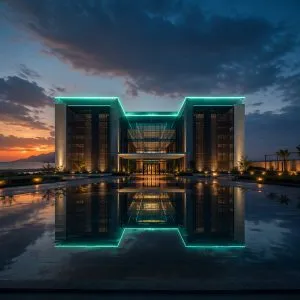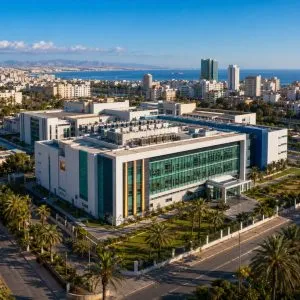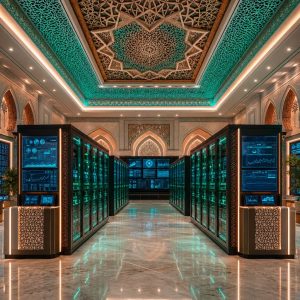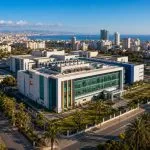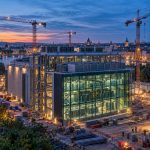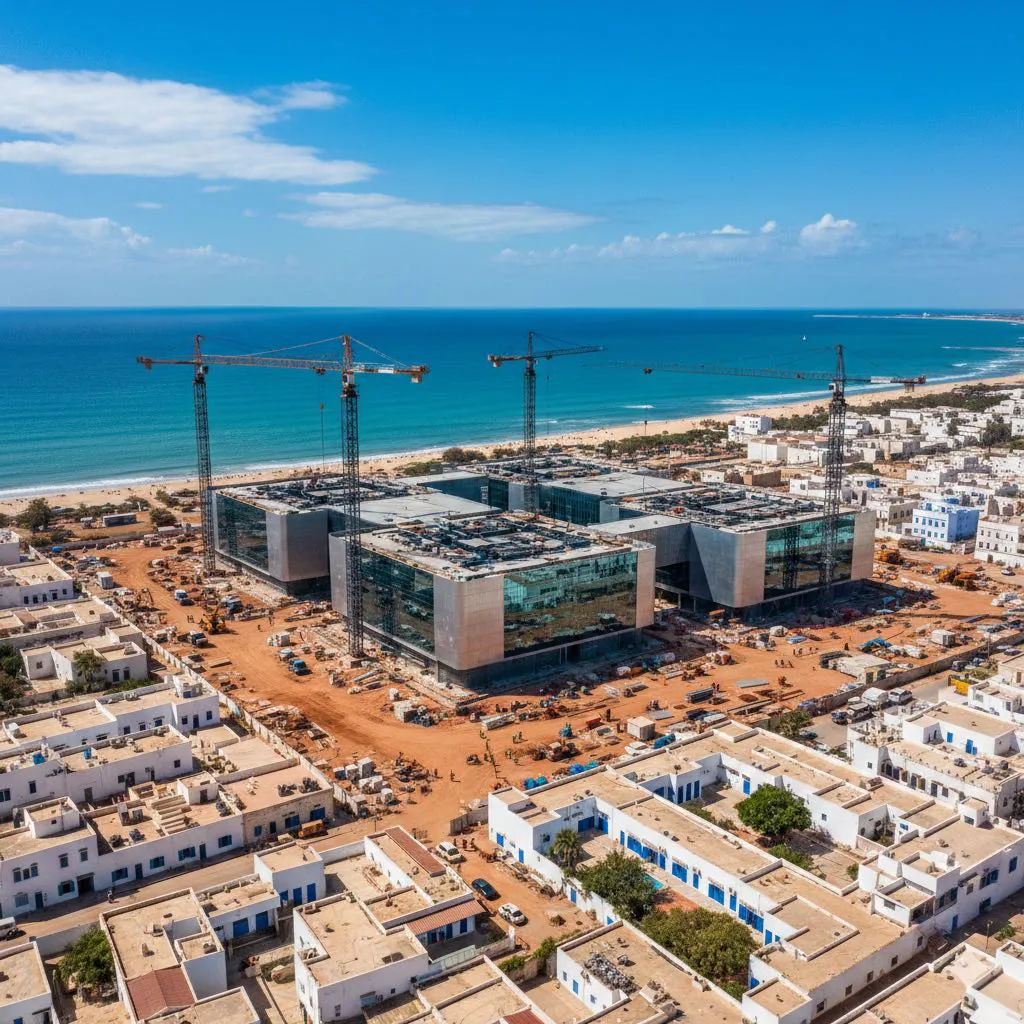
Algeria has laid the foundation stone for its first dedicated artificial intelligence data center in Oran, marking a milestone in the country’s push for digital sovereignty. The facility, located in the Akid Lotfi district, will house latest-generation GPU clusters for AI training and inference — giving Algerian researchers, startups, and government agencies access to high-performance computing power that previously required renting from foreign cloud providers.
What Happened
On March 16, 2025, Minister of Post and Telecommunications Sid Ali Zerrouki and Minister of the Knowledge Economy Noureddine Ouadah presided over the groundbreaking ceremony, calling the project “a strategic step toward digital sovereignty”. The center is Algeria’s first state-owned HPC facility purpose-built for AI workloads, designed to serve healthcare diagnostics, industrial optimization, cybersecurity analytics, and smart city applications.
The project follows an April 2024 contract between Algeria and Huawei to build a government data center, reflecting deepening Sino-Algerian technical cooperation in the digital sphere. It also aligns with President Tebboune’s vision to position Algeria as a regional hub for digital transformation in North Africa.
Why Oran
The choice of Oran is both symbolic and strategic. As Algeria’s second-largest city and a major industrial and educational hub on the Mediterranean coast, Oran offers proximity to academic talent — including the University of Oran and the Advanced School of Applied Sciences — and critical international connectivity via the Oran-Valencia (ORVAL) submarine cable, which provides up to 40 Terabits per second of capacity to Europe. Politically, investing in Oran signals that digital development extends beyond the capital.
The Sovereign Compute Imperative
The data center addresses a structural gap. No global hyperscale cloud provider — AWS, Azure, or Google Cloud — currently operates a data center region in Algeria. Until now, Algerian organizations seeking GPU-accelerated compute have relied on foreign cloud services (with data sovereignty, cost, and latency implications) or limited local providers like HostArts, Ayrade, ICOSNET, and ISSAL.
Algeria’s data protection laws compound this gap. Under Law 18-07, transfers of personal data outside the country require special authorization from the national data authority (ANPDP). Having an onshore HPC center directly addresses compliance requirements and reduces dependency on overseas facilities billed in foreign currency.
Algeria’s Broader Digital Infrastructure Push
The Oran center is part of an accelerating infrastructure wave under the National AI Strategy (2024–2030), which targets AI contributing 7% of GDP by 2027:
- 400G backbone: In early 2025, Algérie Télécom partnered with Huawei to deploy a 400G WDM all-optical backbone covering major urban corridors.
- 5G commercial launch: All three mobile operators (Mobilis, Djezzy, Ooredoo) secured 5G licenses in December 2025, with rollout across eight pilot provinces.
- Startup fund: Algérie Télécom invested 1.5 billion DZD (~$11 million) to support AI, cybersecurity, and robotics startups.
- Submarine cables: Beyond the existing ORVAL/ALVAL systems, Algeria will connect to the Medusa and Africa-1 cables in 2026, significantly expanding international bandwidth.
- Algiers data center: A separate government data center was inaugurated in Algiers in November 2024.
- Over 500 digitalization projects are planned for the 2025–2026 cycle across government and industry sectors.
Advertisement
Private Sector Parallel: Ooredoo and Nvidia
While the state builds sovereign infrastructure, the private sector is creating complementary pathways. In June 2024, Ooredoo Group signed a partnership with Nvidia to deploy Nvidia Tensor Core GPUs across its data centers in the MENA region, including Algeria. This effectively launches a “Sovereign AI Cloud” — allowing Algerian businesses in energy, finance, and healthcare to access high-performance computing locally while complying with data sovereignty requirements.
Building the Talent Pipeline
Sustaining an AI data center requires human capital. Algeria’s approach includes:
- The National Higher School of Artificial Intelligence (ENSIA) in Algiers — the first institution of its kind in Africa and the Arab world — anchors an academic ecosystem of 50 universities offering AI courses and 20 specialized research labs.
- A China-Algeria Digital Economy Cooperation Deal signed in May 2024 will provide vocational training in cloud computing, cybersecurity, and AI starting September 2026, with diplomas jointly issued by the Algerian Ministry and Huawei.
- Huawei has already trained 8,000 Algerians and expanded training at three regional universities.
- “Skills Centers” have been inaugurated in Sétif, Annaba, and Oran for AI and ICT training.
Challenges Ahead
Hardware procurement: Cutting-edge AI accelerators (Nvidia H100/H200 and successors) are subject to U.S. export controls that impose licensing requirements on exports to Middle Eastern and African markets. Algeria is not currently restricted, but the regulatory landscape can shift.
Talent depth: While Algeria has nearly 58,000 students in AI-related graduate programs across 52 universities, hands-on HPC experience remains thin. The Government AI Readiness Index 2023 ranked Algeria 120th globally, indicating the country is still ramping up institutional capacity.
Digital divide: Approximately 60% of rural zones lack high-speed connectivity, and over 10 million Algerians remain offline. The center’s impact will be limited if the fiber network is not extended inland.
Cooling and power: Oran’s Mediterranean climate, with summer temperatures exceeding 35°C, makes data center cooling both critical and energy-intensive. Advanced liquid cooling or AI-optimized airflow systems will likely be needed.
Startup ecosystem: Fewer than 15% of Algeria’s 50–60 active AI startups received government support in 2024, highlighting a financing gap that could limit demand for the center’s services.
What Success Looks Like
The Oran AI Data Center is not just a building — it is a test of whether Algeria can translate infrastructure investment into economic value. The country’s AI market is projected to grow from $498.9 million in 2025 to $1.69 billion by 2030. Success will mean Algerian researchers publishing AI work computed locally, startups building products on sovereign infrastructure, and government agencies deploying AI services — from agricultural advisory to healthcare triage — without sending citizen data abroad.
As one analysis notes, Algeria’s systematic approach to AI — combining funding, education, and infrastructure — “provides a model” for North African innovation. The foundation stone has been laid. The harder work begins now.
Frequently Asked Questions
What makes the Oran AI Data Center significant for Algeria?
It will be Algeria’s first purpose-built AI computing facility with GPU clusters, designed for training and deploying machine learning models. This reduces dependence on international cloud providers for AI workloads and supports the national AI strategy’s sovereignty goals.
When will the Oran Data Center be operational?
Construction began in 2025 with initial operations targeted for late 2026. Full capacity, including advanced GPU clusters for large-scale model training, is expected by mid-2027. Early access will prioritize research institutions and government AI projects.
What job opportunities will the Oran Data Center create?
Direct roles include data center operations engineers, GPU infrastructure specialists, ML platform engineers, and security staff. Indirectly, it will enable AI startups and research projects that currently cannot access affordable GPU compute locally.
Sources & Further Reading
- Algeria Launches First AI-Focused HPC Center in Oran — AL24 News
- Algeria to Build First AI-Dedicated Data Center in Oran — Algerian News Gate
- Algerian Government Breaks Ground on AI Data Center in Oran — Data Center Dynamics
- Why Algeria Is Positioned to Become North Africa’s AI Leader — New Lines Institute
- ALVAL/ORVAL Cable System in Service — SubTel Forum
- More Subsea Cable Connectivity Planned for Algeria — Developing Telecoms
- Algeria Invests in AI Infrastructure to Boost GDP — SAMENA Council
- Ooredoo Pioneers AI Revolution in MENA with Nvidia — Ooredoo
- AI in Algeria: Insights and Practical Implementation — Tech A Hub
- Algeria Launches Setif Skills Center for AI Training — We Are Tech Africa
- First HPC Center for AI in Algeria — AMAN Alliance
- AI in Algeria: Between Reality and Ambition — ASJP/CERIST