A Foundation Stone in Akid Lotfi — and What It Represents
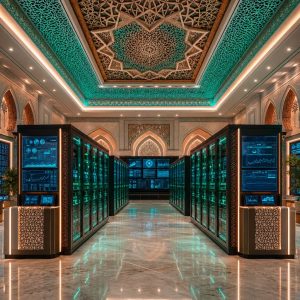
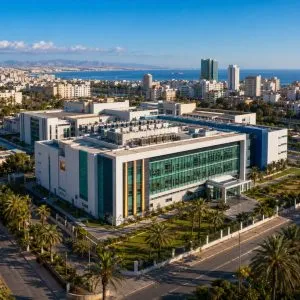
On March 16, 2025, Minister of Post and Telecommunications Sid Ali Zerrouki presided over the laying of the foundation stone for Algeria’s first AI supercomputing centre in Oran’s Akid Lotfi district. The ceremony marked the most concrete step yet in Algeria’s ambition to build sovereign compute infrastructure — moving from policy declarations to poured concrete and GPU procurement.
The facility is designed for intensive computing capabilities focused on artificial intelligence applications across healthcare, industrial automation, cybersecurity, smart cities, precision agriculture, energy-resource management, and climate modelling. It will serve Algerian researchers, startups, and companies, giving them access to advanced computing resources domestically — resources that, until now, required either purchasing expensive cloud GPU credits from AWS, Azure, or Google Cloud, or navigating Algeria’s foreign currency restrictions to do so.
Algeria’s AI market was valued at $498.9 million in 2025 and is projected to grow at a 27.67% CAGR to reach $1.69 billion by 2030, according to New Lines Institute analysis. Without domestic compute, most of that growth would flow to foreign cloud providers rather than building local capability. The Akid Lotfi centre is the infrastructure answer to that dependency problem.
Why Oran, and What Makes This Different from a Standard Data Center
The choice of Oran is not incidental. Algeria’s second-largest city is the country’s emerging tech hub, home to a growing concentration of technology startups, the University of Oran’s strong computer science departments, and proximity to the Mediterranean’s undersea cable infrastructure. A November 2024 data center was already launched in Algiers for general government workloads; Akid Lotfi is explicitly GPU-focused — purpose-built for AI, not general web hosting. The geographic distribution across two major cities also reflects a deliberate redundancy strategy: critical compute infrastructure spread across Algiers and Oran reduces single-point-of-failure risk for national digital services.
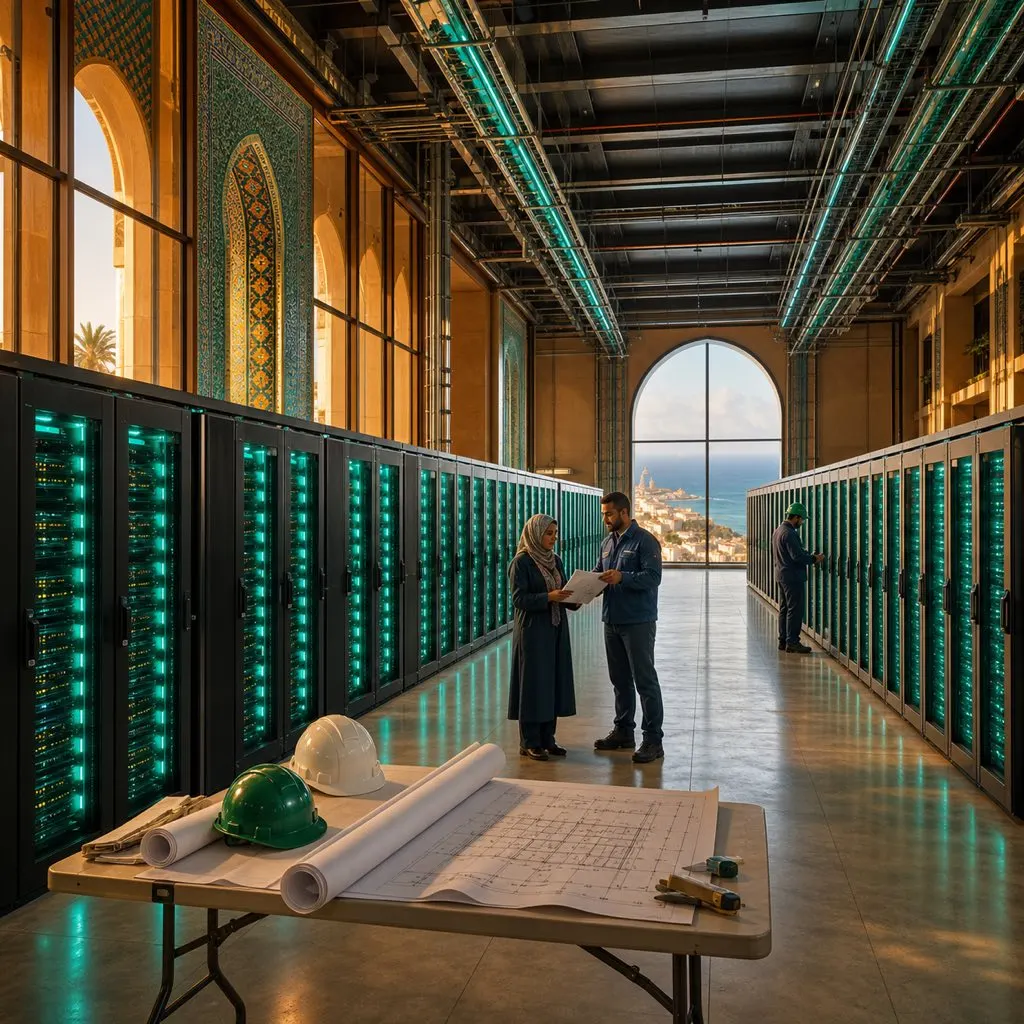
The distinction matters. A standard data center runs virtual machines, databases, and web servers. An AI supercomputing centre runs tensor workloads — training and inference jobs that require the parallel processing architecture of GPUs, not the sequential processing of standard CPUs. These are different facilities requiring different power density, cooling infrastructure, and networking architecture. The Algerian government’s decision to build a GPU-first facility signals an understanding of the technical distinction, not just a political desire to have a “data center.”
The facility is also framed explicitly as a “strategic step toward digital sovereignty” — language that connects the infrastructure to Algeria’s broader ambition to reduce dependence on foreign cloud platforms for sensitive workloads in defense-adjacent domains like cybersecurity and energy-resource management.
Advertisement
What Algerian Researchers and Startups Should Do Now
The Akid Lotfi centre’s 2026–2027 operational window is close enough that researchers and startups should be preparing their access strategies today, not waiting for an announcement.
1. Register with Algeria Venture and document your compute requirements
Algeria Venture, the state-backed accelerator that is also a partner in Djezzy’s AventureCloudz platform, is the most direct channel into government-affiliated compute access programs. Startups that have already registered with Algeria Venture and documented their GPU requirements will be positioned as early-access candidates when the Akid Lotfi centre opens its allocation pipeline. The registration is free; the positioning advantage is significant. Startups that wait until the opening announcement will compete against a backlog of demand.
2. Build your research pipeline around GPU-native frameworks now, on available cloud credits
The compute at Akid Lotfi will run standard GPU frameworks — PyTorch, TensorFlow, CUDA-based HPC environments. Researchers who are already proficient in these environments and have working code that they can deploy immediately will capture the highest-value allocation slots. The practical action is to use AWS Activate, Google for Startups, or Azure for Research credits available to Algerian universities today to build and test GPU workloads — so that when Akid Lotfi opens, you have a production-ready pipeline to port over rather than a proof-of-concept.
3. Target the six priority domains identified in the facility’s design brief
The Akid Lotfi centre was explicitly designed for six domains: healthcare AI, industrial automation, cybersecurity, smart cities, precision agriculture, and energy-resource management. Researchers and startups operating in these verticals have the strongest alignment with the facility’s allocation priorities. Projects in these areas should frame their compute requests around the facility’s stated mission — not as generic AI compute asks, but as contributions to the specific domains Algeria’s government has prioritized. This framing increases allocation probability and strengthens grant and partnership applications simultaneously.
4. Form university-startup consortia to access larger compute blocks
Compute allocation at facilities like Akid Lotfi typically favors academic-industry consortia over individual applicants. An Algerian university AI lab that partners with two or three startups on a shared research project has greater leverage than any single entity applying alone. The consortium model also creates the mentorship and IP-sharing structures that Algeria Venture favors when evaluating which startups to back. Start building these relationships now — not six months after the facility opens.
The Structural Lesson: Sovereignty Requires Compute, Not Just Connectivity
The Akid Lotfi centre illustrates a principle that Algeria’s infrastructure builders are learning from watching Morocco, Egypt, and Singapore build their AI ecosystems: connectivity without compute produces a digital services economy that is permanently dependent on foreign infrastructure for its highest-value workloads.
Algeria has invested significantly in undersea cable landing infrastructure — the MEDUSA and 2Africa cables both include Algerian landing points — and mobile penetration exceeds 105%. What it has lacked is indigenous compute: the GPU capacity to train and run AI models domestically. Without it, Algerian AI companies face a structural cost and sovereignty disadvantage: every token processed, every model trained, every inference served moves money and data to a foreign cloud provider.
The Akid Lotfi GPU centre is the first concrete break from that dependency. It will not immediately match the scale of AWS’s us-east-1 or Azure’s European regions — but it establishes the foundation that Singapore built in the early 2010s when it built its first national supercomputing facility before the AI wave crested. Algeria’s 57,702 students enrolled across 74 AI master’s programs in 52 universities need domestic infrastructure to convert their training into productive research. The Akid Lotfi centre is the infrastructure that converts that human capital into economic output.
Frequently Asked Questions
When will the Akid Lotfi AI supercomputing centre open?
The foundation stone was laid on March 16, 2025. The expected operational window is 2026–2027, though no specific opening date has been officially confirmed. The facility is Algeria’s first GPU-focused compute centre and will serve researchers, startups, and enterprises across six priority domains including healthcare, cybersecurity, and energy management.
Who can access computing resources at the Akid Lotfi centre?
The facility is designed to serve Algerian researchers, startups, academic institutions, and companies. Access will likely be managed through an allocation process similar to European HPC centers, with priority given to projects in the facility’s stated domains. Startups affiliated with Algeria Venture and university research groups are expected to be primary beneficiaries in early allocation rounds.
Does Algeria have any other AI data centers besides the Oran facility?
Yes. A data center was launched in Algiers in November 2024 for general government digital workloads. Djezzy operates a commercial cloud facility supporting its AventureCloudz AI platform, and Algérie Télécom runs the country’s largest legacy data center footprint. The Akid Lotfi centre in Oran is distinct because it is the first facility purpose-built specifically for GPU-intensive AI supercomputing rather than general web and database hosting.
—
Sources & Further Reading
- Algeria Breaks Ground on AI Data Center in Oran — DatacenterDynamics
- First High-Performance Computing Center Focused on AI in Algeria — AMAN Alliance
- Algeria Breaks Ground on New AI Data Center in Oran — MEATechWatch
- Why Algeria Is Positioned to Become North Africa’s AI Leader — New Lines Institute
- Algeria to Build First AI-Dedicated Data Center in Oran — AlgeriaNEWSGate
- Oran Rising: Algeria’s Second Tech Hub Takes Shape — ALGERIATECH