Where the $66 Billion Went, and Where It Hasn’t Gone Yet
Gulf sovereign wealth funds and corporate investors spent an estimated $66 billion on AI and digitalization infrastructure in 2025, according to analysis by FurtherAfrica. The deployment pattern is instructive: Abu Dhabi is building a 5-gigawatt AI campus described as one of the largest on earth, Google and Saudi Arabia’s Public Investment Fund are co-building a $10 billion AI hub, and Kenya secured the largest private-sector digital investment in its history when Microsoft and G42 announced a geothermal-powered data center in the Rift Valley.
UAE-Africa trade reached $107 billion in 2024, a 28% year-over-year increase. The UAE’s cumulative Africa investment from 2020 to 2024 totalled $118 billion. Brookfield and Qatar Investment Authority have structured a $20 billion AI infrastructure partnership. Amazon Web Services committed $5.3 billion to Saudi Arabia.
Algeria is not yet on this map in the way it could be. Egypt, Morocco, Kenya, and South Africa are the primary African beneficiaries of Gulf-backed data center investment. Algeria’s absence is not a function of its fundamentals — those are competitive — but of how Algeria has historically presented itself to international infrastructure investors. That presentation can change.
The Algerian Competitive Case: Four Structural Advantages
The Gulf investment thesis for African data center infrastructure rests on four criteria: power availability (ideally renewable), geographic position for latency to key markets, growing domestic digital demand to justify anchor tenancy, and a government capable of executing land, permits, and grid connectivity on predictable timelines.
Algeria scores well on all four when measured against the countries that have secured Gulf commitments.
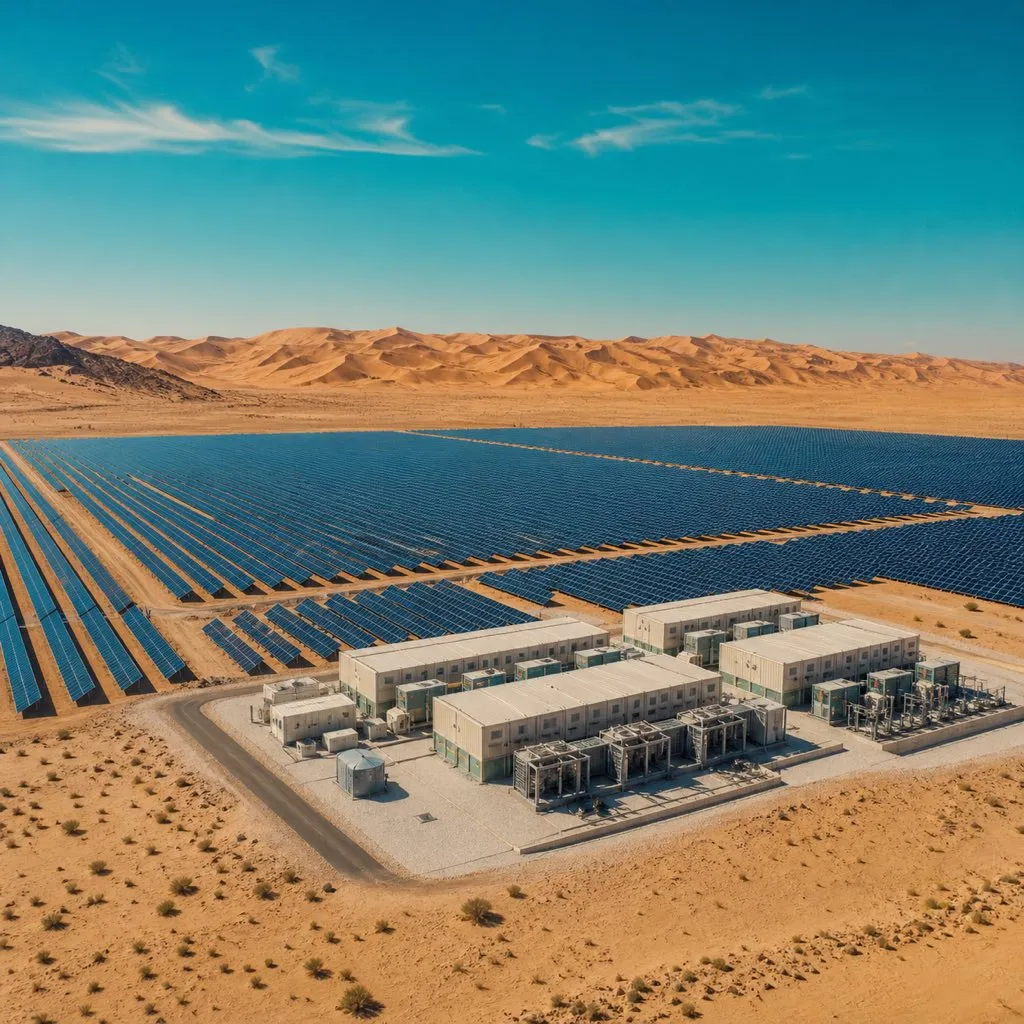
Solar power density. Algeria’s Saharan region receives 2,650 peak-sun hours annually — among the highest in the world. The country has 1.5 million square kilometers of desert territory suitable for utility-scale solar deployment. AI data centers require massive and growing power inputs: the IEA reports that global data center electricity consumption grew 17% in 2025, reaching approximately 485 TWh, with AI-focused facilities growing 50% in the same year. Gulf investors who have committed to carbon-reduction targets are explicitly prioritizing renewable-powered data center locations. Algeria’s solar resource is among Africa’s most compelling for this purpose.
Mediterranean strategic position. Algeria sits between Europe (across the Mediterranean), sub-Saharan Africa (via the Trans-Saharan Highway and fiber routes), and the Gulf (via established shipping and investment corridors). A data center in Algiers or Oran provides latency advantages for serving North African, Southern European, and West African digital markets simultaneously — a geographic sweet spot that Kenya or South Africa cannot replicate for European-facing workloads.
Domestic digital demand. Algeria’s AI market was valued at $498.9 million in 2025 and is projected at a 27.67% CAGR to $1.69 billion by 2030. The public cloud market hit $1.12 billion in 2025. Algérie Télécom has over 500 digitalization projects planned for 2025–2026. A Gulf-backed hyperscale facility in Algeria would have immediate anchor tenancy opportunities from government workloads, banking infrastructure, and the growing enterprise cloud demand that local providers like Djezzy are already capturing.
Human capital. Algeria has 57,702 students enrolled in 74 AI master’s programs across 52 universities — Africa’s strongest computer science pipeline by absolute numbers. Data center operations, cloud platform engineering, and AI application development all require this workforce. Gulf investors building facilities in Kenya and Ghana face a human capital ramp-up problem that Algeria’s university system largely pre-solves.
Advertisement
What Algeria’s Government and Private Sector Should Do Now
Attracting Gulf AI infrastructure investment is not passive. It requires active positioning, the right institutional interfaces, and visible early wins that signal execution credibility.
1. Establish a dedicated AI infrastructure investment desk at Algeria Invest
Algeria Invest is the country’s official investment promotion body. It currently handles general foreign direct investment inquiries. A dedicated AI infrastructure desk — staffed with officials who understand hyperscale data center requirements (power agreements, land tenure, grid connection timelines, connectivity SLAs) — signals to Gulf investors that Algeria can execute at the speed and specificity they require. Egypt’s GAFI and Kenya’s KenInvest both have specialized tech infrastructure desks that have been instrumental in closing Gulf-backed deals.
2. Package the Saharan solar-plus-data-center offer as a co-investment opportunity
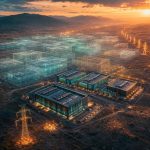
The most compelling Gulf pitch is not “build a data center in Algeria” — it is “co-invest in a solar-plus-compute campus that serves North Africa and Southern Europe.” This structure aligns with Gulf sovereign wealth fund mandates (infrastructure, renewable energy, strategic assets) and gives Algeria a stake in the facility rather than being purely a host jurisdiction. The Abu Dhabi 5-gigawatt campus and Qatar’s data center buildout both follow this co-investment model. Algeria’s Ministry of Energy and the Ministry of Digital Transformation should develop a joint-ministry term sheet for this structure before the next Gulf-Africa economic summit.
3. Fast-track the Akid Lotfi AI centre as a proof-of-execution anchor
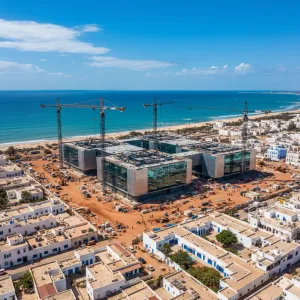
Gulf investors assess country-level execution risk before committing capital. Algeria’s Akid Lotfi GPU centre in Oran, with its March 2025 groundbreaking and 2026–2027 target completion, is the most concrete proof point available that Algeria can build AI infrastructure on schedule. The government should invest in documenting and publicizing Akid Lotfi’s construction milestones — monthly progress updates, published power and connectivity specifications, named institutional partners — so that Gulf investors tracking African AI infrastructure see Algeria’s execution record before they see a pitch deck.
4. Engage G42 and ADNOC directly through Algeria-UAE bilateral channels
Abu Dhabi’s G42 (the AI and cloud company behind the Microsoft partnership in Kenya) and ADNOC (which has existing energy sector relationships with Algeria) are the most natural Gulf partners for an Algerian AI infrastructure initiative. The energy relationship between ADNOC and Sonatrach creates a pre-existing bilateral channel that can be used to explore infrastructure co-investment in ways that a cold pitch to a Gulf fund cannot replicate. Algeria’s Ministry of Foreign Affairs and Ministry of Energy should table an AI infrastructure co-investment agenda at the next ADNOC-Sonatrach bilateral meeting.
The Timing Question: Why Act in 2026 and Not 2028
Gulf investment in African AI infrastructure is not a permanent open window. The 2025–2027 period is the deployment phase for commitments made in 2024–2025; after that, committed capital will be in construction, not in the market looking for new projects. Countries that enter the conversation now — with a credible offer, an institutional interface, and an early proof point — will capture 2026–2028 commitments. Countries that wait for the Akid Lotfi centre to fully open before beginning investor outreach will find that the Gulf capital cycle has moved on to Southeast Asia and Latin America for its next round.
The competitive dynamic within Africa is also tightening. Egypt has multiple Gulf-backed data center projects under construction. Morocco is actively positioning Casablanca as North Africa’s cloud hub with favorable tax treatment for hyperscale operators. If Algeria does not make its structural advantages visible to Gulf investors in 2026, it cedes the North Africa positioning window to its western neighbor.
Frequently Asked Questions
Why are Gulf sovereign wealth funds investing in African AI infrastructure?
Gulf sovereign funds are deploying into African AI infrastructure for three reasons: renewable energy alignment (Saharan solar and East African geothermal support Gulf carbon commitments), geographic diversification (Africa is growing faster than OECD markets), and strategic positioning (controlling compute infrastructure gives Gulf states influence in Africa’s digital governance). The UAE’s cumulative $118 billion in Africa from 2020–2024 reflects a long-term strategic bet, not short-term opportunism.
What makes Algeria more attractive than Morocco or Egypt for Gulf AI investment?
Algeria has a stronger solar resource than Morocco or Egypt in absolute terms, a larger domestic cloud market ($1.12B vs Morocco’s smaller base), Africa’s largest pipeline of AI master’s students, and existing bilateral energy relationships with Gulf states through the ADNOC-Sonatrach partnership. The current disadvantage is weaker investment facilitation infrastructure—Egypt’s GAFI and Morocco’s CRI Casablanca both have faster investor onboarding than Algeria Invest, which is the gap that institutional reform can close.
How much power would a Gulf-backed AI data center in Algeria require?
A hyperscale AI data center campus comparable to what Gulf investors have backed in Kenya or Ghana typically requires 50–200 MW of dedicated power, scaling to 500 MW+ for campuses like Abu Dhabi’s 5-gigawatt project. Algeria would need to structure a utility-scale solar or hybrid solar-gas power purchase agreement alongside the facility. Algeria’s energy regulatory framework already handles large-scale industrial power offtake agreements through Sonelgaz — the structure exists, it needs adaptation for data center load profiles.
—
Sources & Further Reading
- Africa-Gulf AI Infrastructure Investment — FurtherAfrica
- Africa & Middle East Data Center Colocation Market to Reach $11.1 Billion by 2030 — GlobeNewswire
- Ghana and UAE Sign $1B Deal to Build Africa’s Largest Innovation and AI Hub — African Business
- Why Algeria Is Positioned to Become North Africa’s AI Leader — New Lines Institute
- Data Centre Electricity Use Surged in 2025 — IEA
- Algeria Breaks Ground on AI Data Center in Oran — DatacenterDynamics