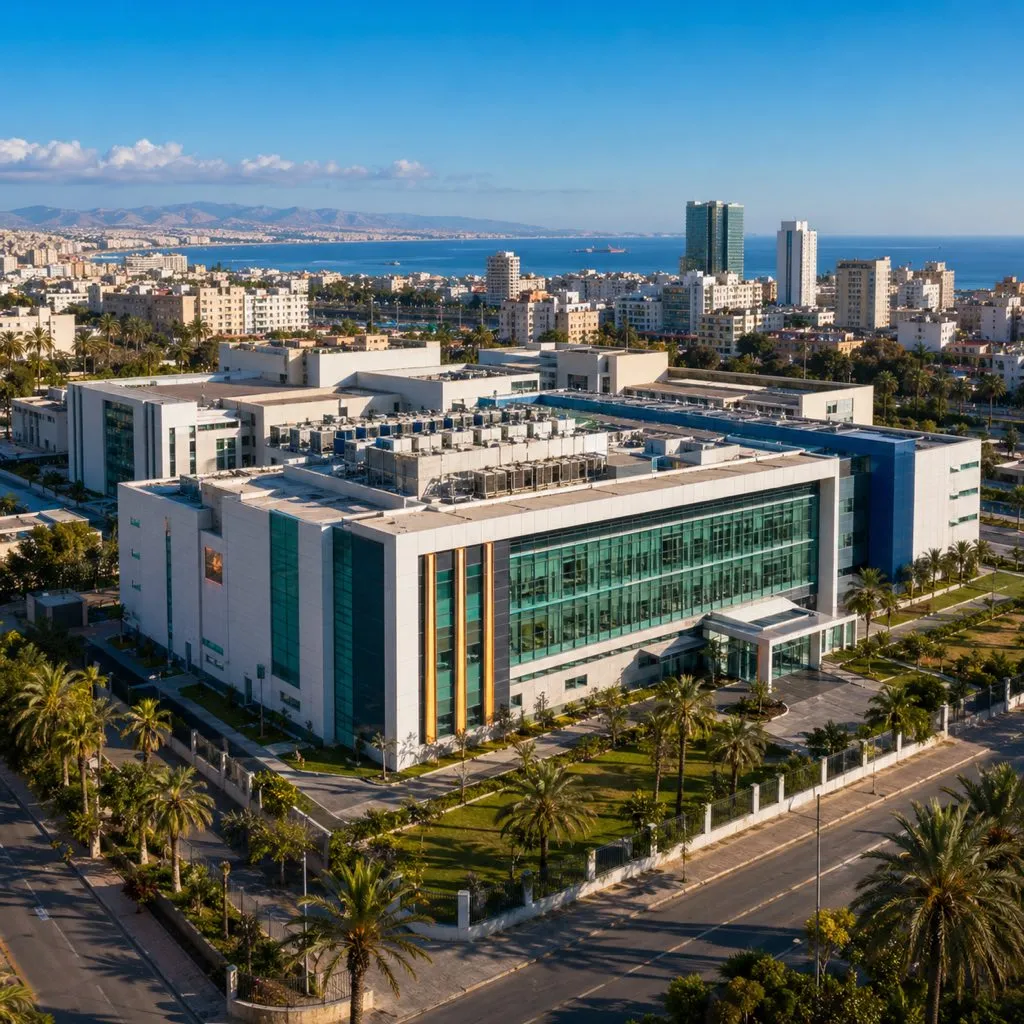
Why the Access Question Matters More Than the Infrastructure Announcement
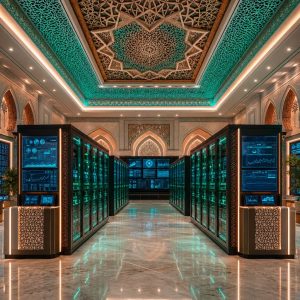
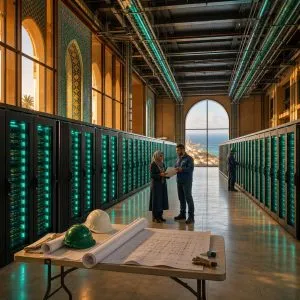
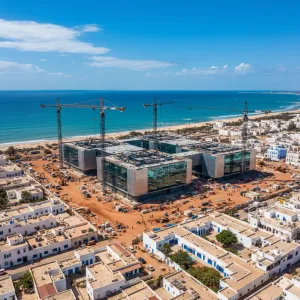
The Oran AI Supercomputing Centre announcement has received significant attention since the foundation stone ceremony on March 16, 2025, presided over by Minister of Post and Telecommunications Sid Ali Zerrouki and Higher Education Minister Noureddine Ouadah. The facility’s existence — Algeria’s first GPU-accelerated computing center dedicated to AI — is no longer in question.
What has not been answered in most coverage is the practical access question: once the facility is operational, how does an Algerian startup, university research team, or enterprise IT department actually get GPU compute time? What is the application process? Who decides allocation? What are the cost structures? And for organizations that cannot wait for the facility to fully operationalize, what interim compute options exist that build toward the Oran infrastructure model?
These are the questions that determine whether the Oran facility becomes a transformative national resource or a well-publicized facility that serves a narrow set of insiders. The access architecture matters as much as the technical specifications.
Understanding the Facility’s Likely Operating Model
Based on comparable sovereign HPC facilities in Morocco (Mohammed VI Polytechnic University’s Toubkal supercomputer), Singapore’s National Supercomputing Centre (NSCC), and the Saudi Arabia AI compute facilities under Vision 2030, sovereign AI compute centers of this type typically operate on a tiered allocation model:
Tier 1 — Academic and Research Access. Universities and public research institutions receive allocated compute time as part of a national research infrastructure program, typically administered through the Ministry of Higher Education or a designated scientific body. Researchers apply through a formal proposal process, with allocation decisions made by a scientific committee evaluating the merit and national-interest relevance of the proposed work. In the Algerian context, ENSIA (École Nationale Supérieure d’Informatique) and the universities of science at Bab Ezzouar, Oran, and Constantine are the natural anchor institutions.
Tier 2 — Startup and SME Access. Early-stage startups and SMEs typically receive compute time through a competitively allocated program managed in partnership with a national innovation body — in Algeria’s case, the Agency for Development of SMEs or a dedicated program under the Ministry of Knowledge Economy. Access is time-bounded (typically 3-6 month compute grants) and tied to demonstrating AI application development rather than pure research.
Tier 3 — Enterprise Pay-Per-Use. Larger enterprises purchase compute time through a commercial reservation system, with pricing set by the facility operator (typically below foreign hyperscaler rates for comparable GPU hours, justified by the sovereign premium). Enterprises in regulated sectors (banking, energy, defense, health) are the primary commercial anchor tenants because they have both the AI development budgets and the data sovereignty requirements that make domestic compute preferable to foreign cloud.
This tiered model is not confirmed for the Oran facility — the Ministry has not published a formal access framework as of the writing of this article. But organizations that begin engaging with the likely decision-makers now, rather than waiting for a formal announcement, will be positioned to participate in the design of the access process rather than simply responding to it.
Advertisement
What Algerian Startups and Enterprises Should Do Now
1. Register with ARPCE, ANPT, and the Ministry’s digital transformation unit — and make your AI compute interest explicit
The institutions most likely to influence the Oran facility’s access framework are the regulatory and promotional bodies already active in Algeria’s digital sector: ARPCE (regulatory), ANPT (Agence Nationale de Promotion et de Développement des Parcs Technologiques), and the High Commissioner for Digitization (HCD) under Meriem Benmouloud. Startups and enterprises that have formal relationships with these bodies — through existing licensing, program participation, or public consultation engagement — will have channels to advocate for access framework designs that serve their use cases. Specifically, the HCD’s consultative processes for the SNTN roadmap are the most direct venue for influencing how compute access is structured. Document your organization’s AI development roadmap and compute requirements in writing, and submit them through whatever formal consultation channels become available in 2026.
2. Build your AI development capability on interim compute before Oran is operational
The Oran facility will not be fully operational for enterprise workloads in 2026 — construction was initiated in March 2025 and large-scale HPC facilities typically take 18-36 months from ground-breaking to full operational status. Organizations that wait for Oran to be operational before starting AI development will lose 2-3 years of capability building. Use the interim period to develop AI applications on available compute options: AWS SageMaker in EU regions (accessible via the improving Medusa-path connectivity), Google Cloud Vertex AI, or the GPU-enabled instances of Algerie Telecom’s cloud services. The goal is not to use these as permanent platforms — the data sovereignty arguments for Oran’s domestic compute are real — but to develop the skills, datasets, and application architectures that can be migrated to Oran compute when it becomes available.
3. Design your workload architecture to be compute-platform agnostic from day one
The most common architecture mistake for organizations planning to eventually migrate to the Oran facility is building their AI applications in ways that are tightly coupled to a specific cloud provider’s managed services (e.g., AWS SageMaker pipelines, Azure ML managed endpoints, Google Cloud Vertex AI feature stores). Migrating these applications to a sovereign facility requires rebuilding the orchestration layer because the managed services don’t exist on domestic infrastructure. Use open standards from the start: containerized training jobs with Kubernetes orchestration, MLflow for experiment tracking, open-source model registries rather than proprietary ones, and Hugging Face or ONNX model formats rather than provider-specific serialization. This architecture runs on any GPU infrastructure — including Oran’s facility once operational.
4. Identify specific workloads that qualify for sovereign compute on regulatory or strategic grounds
Not every AI workload needs sovereign compute. A Algerian e-commerce platform running product recommendation models has no compelling reason to use domestic GPU infrastructure over a foreign hyperscaler. But specific workload categories have clear regulatory or strategic reasons to be on domestic infrastructure: Arabic-dialect NLP models trained on Algerian Arabic text data, computer vision models trained on datasets from Algerian government agencies or state enterprises, AI systems processing health data subject to ARPCE data localization requirements, and defense or security-related AI applications. Identifying which of your planned AI workloads fall into this sovereign-compute category — and documenting the regulatory basis for that classification — is the prerequisite for a successful application for Tier 1 or Tier 2 compute time under the eventual access framework.
Where This Fits in Algeria’s 2026 AI Ecosystem
The Oran AI Supercomputing Centre is the most visible component of Algeria’s sovereign compute strategy, but it operates within a broader ecosystem that Algerian enterprises and startups should understand as a system rather than as isolated projects.
The SNTN roadmap (Stratégie Nationale de Transformation Numérique) commits Algeria to 500+ digital projects for 2025-2026, with the Oran facility as the flagship HPC investment. The roadmap’s five pillars — infrastructure, training, digital governance, digital economy, and digital society — are designed to be mutually reinforcing. The compute facility serves the infrastructure pillar; the training programs at ENSIA and technical universities serve the human capital pillar; the digital governance pillar includes the data localization and privacy frameworks that create the demand for sovereign compute.
The Algiers Declaration on Telecommunications Sovereignty, signed at the Global Africa Tech summit in March 2026, adds a continental dimension. Algeria has positioned itself not just as a consumer of sovereign compute but as a potential provider of sovereign cloud services for francophone African countries — a position that the Oran facility supports if its capacity, access framework, and carrier connectivity are designed with regional clients in mind from the outset.
For Algerian enterprises, the practical takeaway is that engaging with the Oran facility’s access framework is not a narrow IT procurement decision — it is a participation in a national technology strategy that will shape Algeria’s AI development trajectory for a decade. Organizations that participate in shaping the access model, build compute-agnostic AI architectures, and develop their AI applications now rather than waiting will be the ones that translate the infrastructure investment into competitive capability.
Frequently Asked Questions
When will the Oran Akid Lotfi AI Supercomputing Centre be open for general access?
The foundation stone was laid on March 16, 2025. Based on comparable sovereign HPC facility timelines (18-36 months from ground-breaking to operational status), the facility is expected to reach partial operational capacity in late 2026 or early 2027, with full operational capacity in 2027-2028. The Ministry of Post and Telecommunications has not published a formal operational timeline as of April 2026. Organizations should plan for 2027 as a realistic first-access date and use 2026 to complete architecture preparation.
What types of AI workloads will be prioritized at the Oran AI facility?
Based on public statements from the Ministry and alignment with the SNTN roadmap, priority workload categories are likely to include: Arabic-language NLP and speech recognition research (national language preservation), AI applications for public administration and e-government, health and medical AI in collaboration with Algerian hospitals and medical universities, and industrial AI supporting the manufacturing and petrochemical sectors. Commercial applications with strong national economic justification will be considered under Tier 2 and Tier 3 access models.
How does the Oran AI center compare to Morocco’s Toubkal supercomputer?
Morocco’s Toubkal supercomputer (operated by Mohammed VI Polytechnic University in Benguerir) is a regional sovereign HPC facility with GPU capacity dedicated to AI research. The Oran facility is designed to serve a broader mix of academic, startup, and enterprise users under a national sovereign compute model, targeting a wider user base than a pure academic facility. The Toubkal model provides a useful operational reference point for Algeria — its application processes, pricing frameworks, and governance structure are the closest available reference point for what Algeria’s access framework might look like.
Sources & Further Reading
- Algeria’s Ambitious Digital Transformation Plan: 500+ Projects for 2025-2026 — MEA Tech Watch
- Why Algeria Is Positioned to Become North Africa’s AI Leader — New Lines Institute
- Algeria Oran AI Data Center Sovereign Compute — ALGERIATECH
- Oran AI Supercomputing Center 2026 — ALGERIATECH
- Algeria Cloud and DevOps Landscape 2026 — State of Algeria Dev