Why the Sea Routes Are No Longer Reliable
The global internet runs on approximately 400 active submarine cable systems. The routes through the Red Sea and the Strait of Hormuz have historically been among the most critical choke points: cables running through the Bab al-Mandab strait connect Europe to Asia, and Gulf cables link the Arabian Peninsula to the African and Asian internet backbone.
Since 2024, both of these chokepoints have become operationally unreliable. Houthi attacks in the Red Sea damaged multiple cables in February 2024, cutting capacity on key routes and triggering months-long repair delays. The Persian Gulf route faces a different but equally serious threat: Iran has stated publicly that it could sever undersea cables and mine the Strait of Hormuz in response to potential military operations, and has separately categorized US tech companies’ regional infrastructure as “enemy technology infrastructure.” Iranian officials have made specific threats to attack US-linked data centers and cable landing stations in the Gulf.
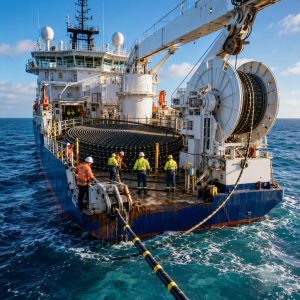
The repair capacity gap makes this structural rather than temporary. Only 63 cable repair ships operate globally, with just 2-4 typically positioned in the Middle East. Repairing a damaged submarine cable costs $1-3 million per incident and requires 40+ days on average — a timeline that is unacceptable for enterprise cloud traffic. The combination of active threats, limited repair capacity, and high recovery costs has pushed Gulf telecom operators from contingency planning to active infrastructure construction.
The Four Overland Projects Reshaping the Map
SilkLink (Saudi Arabia — $800 million): Operated by STC Group, SilkLink is the most advanced overland project in the Gulf, with the first phase expected to complete within 18-24 months. The route runs 4,500 km through Syria to Tartus on the Mediterranean coast, with connections through Jordan, Lebanon, and Turkey. The project pairs terrestrial fiber corridors with data center landing points in each transit country, creating a latency-optimized path from Riyadh to European internet exchanges.
WorldLink (UAE-Iraq Consortium — $700 million): Led by Iraq’s Tech 964, UAE-based Breeze Investments, and DIL Technologies, WorldLink routes from the UAE to Iraq’s Al-Faw Peninsula, then overland through Iraq and Kurdistan to Turkey. The five-year build plan explicitly targets hyperscalers, carriers, and AI application providers as anchor customers. Al-Faw is significant: it gives the UAE a terrestrial exit point that bypasses the Strait of Hormuz entirely, routing traffic eastward before turning north toward Europe.
FiG — Fibre in Gulf (Qatar — $500 million overland commitment): Ooredoo’s FiG project combines a 720 Tbps subsea cable connecting GCC states with a $500 million overland commitment for Iraq-Turkey terrestrial routes. The subsea segment is targeted for completion in late 2027; the overland routes provide a parallel path that activates earlier and serves as a contingency if the subsea segment is delayed by the hostile-sea-environment risk that has already stalled other Gulf cable projects.
SONIC (Saudi Arabia + Qatar joint project): STC Group and Ooredoo jointly operate SONIC, a terrestrial fiber link between Saudi Arabia and Oman connecting existing submarine cable landing stations. The first phase, expected within 12 months, creates a cross-peninsula mesh that lets Gulf operators reroute traffic between the Indian Ocean and the Red Sea landing stations without transiting the Strait. While SONIC does not itself reach Europe, it is a critical short-haul link that enables the longer-haul overland routes to function as a coherent system.
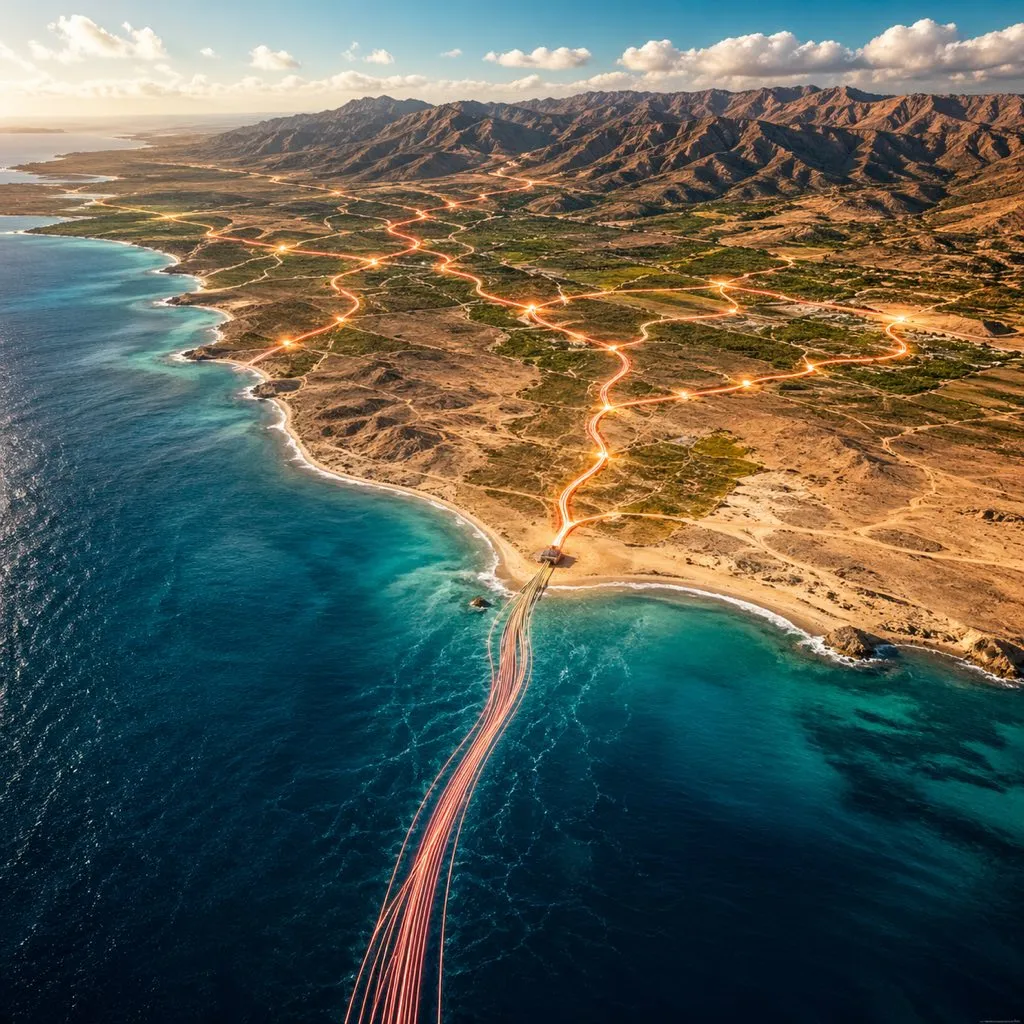
All four projects converge on Turkey as the primary European gateway, with the Bulgaria Internet Exchange (BIX.BG) emerging as a secondary hub for routes entering southeastern Europe. This convergence creates a new geographic concentration risk — the overland diversification from sea threats is offset by dependence on a single overland corridor.
Advertisement
What Enterprise IT Leaders Should Take Away
1. Map your cloud provider’s region footprint against the overland corridor timeline
Enterprise cloud architects rarely think about the physical cable paths that underpin their cloud regions. After the Red Sea cable cuts of February 2024, several AWS and Azure EU-to-Asia routes experienced measurable latency increases for 60-90 days while repair ships completed work. For enterprises running latency-sensitive applications — trading platforms, real-time analytics, AI inference APIs — the 2024 event should have produced a cable dependency analysis. If it didn’t, start now. AWS, Azure, and Google Cloud publish limited information about their backbone cable partnerships, but TeleGeography’s cable map provides region-level path visibility. Identify which of your cloud regions depend on Red Sea or Gulf routes and whether the hyperscaler has announced backbone diversity investments.
2. Include cable corridor risk in your disaster recovery and business continuity planning
Most enterprise DR plans account for cloud region failures and data center outages, but not for internet backbone degradation events that affect multiple regions simultaneously. The Red Sea cuts proved that such events happen — the 40+ day repair timeline is long enough to constitute a business continuity scenario for organizations dependent on high-bandwidth cross-region data flows. Add a “cable corridor degradation” scenario to your BC/DR test matrix: what is your recovery posture if your primary cloud region’s backbone connectivity drops to 30% capacity for 45 days? For most enterprises, the answer today is “we don’t know,” which is the first problem to solve.
3. Treat Turkey’s role as a monitoring signal for your network architecture
All four Gulf overland projects route through Turkey, making Istanbul and the Turkish fiber corridor the single most important new concentration point in the emerging overland internet backbone. Turkey’s regulatory environment, geopolitical relationships with NATO and the US, and its geographic position at the Europe-Asia divide make it a complex transit country. Enterprise network architects should monitor Turkish internet exchange traffic data, Turkish government regulatory statements on data transit, and any signs of capacity constraints at Turkey’s internet exchange points (Tr-IX, DECIX Istanbul). The overland routes reduce Gulf sea-risk while creating a new terrestrial choke point — that trade-off needs to be priced into your network strategy.
4. Consider a content delivery network audit that accounts for overland corridor activation
Content delivery networks (CDNs) and anycast DNS systems route traffic automatically based on network latency and availability. When the SilkLink and WorldLink overland corridors come online in 2026-2027, routing tables across CDNs will update to reflect new shortest-path calculations that may route your customers through unfamiliar jurisdictions. For enterprises with strict data residency requirements — particularly those serving financial services customers in the Gulf or EU — proactive CDN configuration audits should include geographic routing rules that account for newly activated overland paths.
What Comes Next
The overland projects described here are under construction, not operational. SilkLink’s first phase is 18-24 months from completion; WorldLink’s full build is a five-year program; FiG’s subsea portion is targeted for late 2027. The near-term internet backbone map through the Gulf and Red Sea remains what it was after the 2024 cuts: fragile, under-repaired, and dependent on too few vessels.
The longer-term picture is one of structural diversification. The $2 billion-plus committed across these four projects, plus the East Africa overland alternative agreed by Ethio Telecom, Djibouti Telecom, and Sudatel in February 2026, represents the most significant rerouting of the internet’s physical backbone in a decade. When these corridors are operational, an enterprise or carrier routing traffic between Europe and the Gulf or South Asia will have a genuine choice between sea and land paths for the first time — with the land paths carrying none of the anchor-strike, weather-delay, or geopolitical-sabotage risk that has made the sea routes unreliable.
Algeria sits at a relevant intersection point in this evolving map. The country’s Mediterranean cable landings (Medusa, Africa-1, and legacy systems) give it potential as a traffic hub between sub-Saharan Africa, the Maghreb, and Europe — especially if the Gulf overland projects increase demand for western Mediterranean transit as an alternative to the Istanbul bottleneck.
Frequently Asked Questions
Why are Gulf states building overland cables instead of repairing the existing subsea routes?
The combination of active military threats (Houthi attacks in the Red Sea, Iranian threats to the Strait of Hormuz), limited global repair capacity (only 63 cable ships worldwide, 2-4 in the Middle East), and long repair timelines (40+ days, $1-3 million per incident) makes relying on subsea repairs an insufficient risk mitigation strategy. Overland corridors are not subject to anchor strikes, weather delays, or sea-mining threats, making them a fundamentally different risk category rather than just an alternative route.
What makes Turkey the convergence point for all four Gulf overland cable projects?
Turkey sits at the geographic intersection of Europe, the Middle East, and Central Asia, with existing large-scale internet exchange infrastructure (DECIX Istanbul, Tr-IX) and direct fiber paths into southeastern and central Europe. All four Gulf overland projects need to reach European internet exchanges, and Turkey is the shortest overland path from any Gulf state to European fiber corridors. The convergence creates a new concentration risk — if Turkey’s internet infrastructure or regulatory environment becomes problematic, the overland diversification strategy faces a single point of failure.
How does the 2024 Red Sea cable damage compare to historical cable incidents?
The February 2024 Houthi attacks on Red Sea cables are among the most significant infrastructure disruption events since the 2006 Taiwan earthquake cut multiple Pacific cables. The 2024 incident damaged cables carrying an estimated 25% of Asia-Europe internet traffic, with repair operations taking 60-90 days due to the hostile operating environment preventing repair ships from accessing the damage sites. The event is widely cited as the primary driver behind the acceleration of Gulf overland cable projects from concept to construction.
Sources & Further Reading
- Gulf Overland Data Cables to Europe — Rest of World
- Beneath the Strait: Iran Could Threaten Gulf Data Centers and Cables — Stimson Center
- The Future of the Middle East’s Connectivity Beneath the Waves — SubseaCables.net
- New Cables Are Coming to Africa — TeleGeography
- Strategic Future of Subsea Cables: The Egypt Case Study — CSIS