Quick Take: Algeria’s entire digital future rides on a handful of submarine cables that most officials cannot name. The Medusa project — a EUR 342M, 480 Tbps ring system arriving in 2026 — represents a once-in-a-decade opportunity, but only if landing station access is opened and eastern coastal infrastructure gaps are addressed while the window is still open.
The Cables You Never Think About
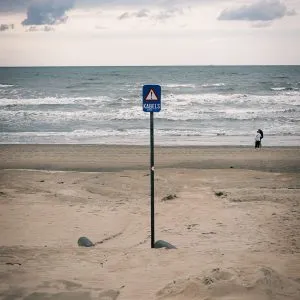
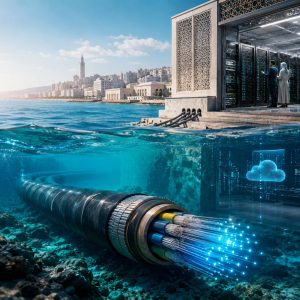
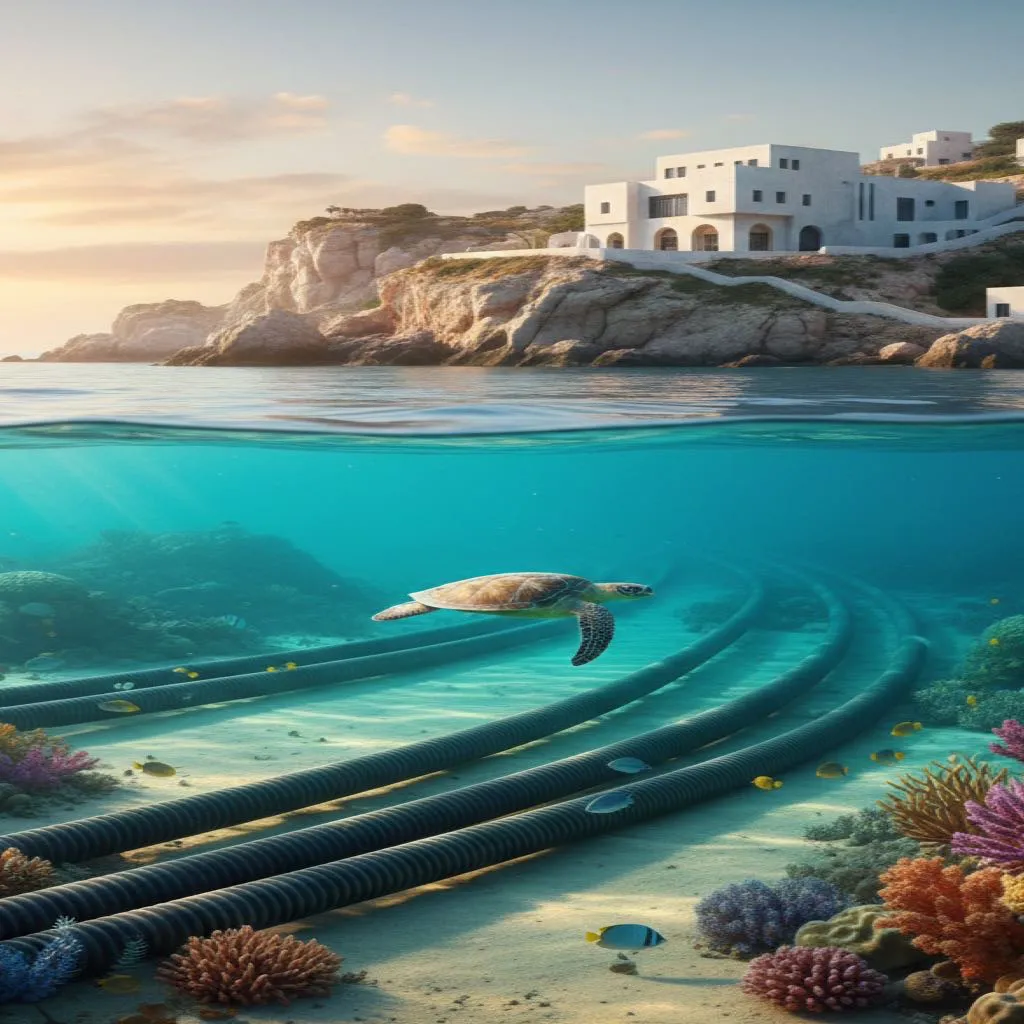
Every email sent from Algiers, every video call from Oran, every cloud workload pushed from a Bab Ezzouar data center to a European hyperscaler travels through one of a small number of submarine fiber-optic cables resting on the Mediterranean seabed. These cables are the single most critical piece of Algeria’s digital infrastructure, yet they receive almost no public attention.
Algeria’s international internet connectivity depends on five submarine cable systems and one terrestrial link: ALVAL (Algiers-Valencia), ORVAL (Oran-Valencia), SeaMeWe-4, Medex, and Alpal-2, plus an overland fiber connection through Tunisia. Together, these systems carry the totality of Algeria’s international data traffic. While the Tunisian land route provides some backup, it cannot match the capacity of the submarine links, leaving the Mediterranean cables as the backbone of everything digital in the country.
The fragility of this arrangement surfaces periodically. Reports of cable faults causing noticeable degradation across Algerie Telecom’s network have circulated over the years, though specific incidents are not always well-documented publicly. What is beyond dispute is the structural reality: millions of users, thousands of businesses, and the country’s entire e-government ambition sit atop an infrastructure layer that most decision-makers cannot draw on a map.
Algeria’s Submarine Cable Inventory
ALVAL and ORVAL are the newest and highest-capacity links. Put into commercial operation on December 31, 2020, these twin systems connect Algiers and Oran respectively to Valencia, Spain. Each route carries two fiber pairs, giving the combined ALVAL/ORVAL system a total design capacity of 40 Tbps using 100×100 Gbps DWDM technology. Valencia serves as a gateway to European internet exchanges, making these cables the de facto backbone of Algerian international bandwidth. Operated by Algerie Telecom in partnership with consortium members, they represent by far the largest share of Algeria’s installed capacity.
SeaMeWe-4, one of the longest submarine cable systems in the world stretching from France to Singapore, lands in Annaba. This gives Algeria a secondary international path that does not terminate in Valencia and connects to the broader Asia-Europe cable ecosystem. SeaMeWe-4 provides several terabits per second of capacity on Algeria’s segment.
Medex adds another Mediterranean route with capacity of approximately 2 Tbps. It provides additional diversity beyond the Valencia corridor, an important factor for resilience planning.
Alpal-2, managed by Sparkle (formerly Telecom Italia Sparkle), links Algiers to Palma de Mallorca. With capacity of up to 85 Gbps, it is the smallest of Algeria’s submarine systems by bandwidth but still provides a distinct routing option through the Balearic Islands to the European backbone.
In total, Algeria’s installed international cable capacity is approximately 10.2 Tbps across all operational systems — a figure significantly higher than older estimates of 3-5 Tbps that appear in some reports, largely because ALVAL/ORVAL’s full capacity is often underreported. Yet even at 10.2 Tbps installed, Algeria remains well behind its North African neighbors. Morocco benefits from connections to multiple major consortium cables, including 2Africa and several Atlantic corridor systems, giving it substantially greater aggregate bandwidth. Egypt, with its strategic Suez Canal landing stations, sits on a different order of magnitude entirely. The precise gap is difficult to pin down — exact operational capacity figures are closely held by operators — but Algeria’s relative position at the lower end of North African connectivity is not in dispute.
The demand side underscores the urgency. Algeria’s data consumption has grown at a staggering pace, rising from 379.7 million GB in Q2 2020 to 3.3 billion GB in Q2 2025, an 8.7-fold increase in just five years. That trajectory shows no sign of slowing, and it means that even the 40 Tbps design ceiling of ALVAL/ORVAL will face pressure within the decade if consumption trends hold.
Advertisement
Single Points of Failure and the Resilience Question
The concentration risk is acute. All five cable systems land on Algeria’s Mediterranean coast, within a geographic corridor roughly 900 km wide. A major seismic event, anchor drag incident in shipping lanes, or coordinated sabotage — a scenario European defense planners increasingly discuss — could impair multiple systems simultaneously.
The landing stations themselves present another vulnerability. Algiers hosts multiple cable landings, but physical infrastructure at these sites has not kept pace with investments seen at landing stations in Marseille, Barcelona, or Genoa. Redundant power, physical security, and meet-me room capacity at Algerian cable landing stations lag behind Mediterranean best practice. The International Cable Protection Committee (ICPC) has repeatedly flagged Mediterranean cable infrastructure broadly as under-protected relative to traffic growth.
Adding a cable landing station on Algeria’s eastern coast beyond Annaba is the next infrastructure step — it would give the Constantine-Skikda economic corridor a direct international transit route rather than relying on terrestrial backhaul to Annaba or Algiers. Any serious digital infrastructure plan for eastern Algeria’s economic zones can build around this opportunity.
The Medusa Cable: A Generational Upgrade
The planned Medusa submarine cable system represents by far the most significant upgrade to Algeria’s international connectivity in decades. A EUR 342 million project, Medusa is co-funded by the EU’s Connecting Europe Facility for Digital (CEF Digital, contributing EUR 38.3 million) and the European Investment Bank (EIB, with a EUR 40 million loan). Construction is led by ASN (Alcatel Submarine Networks, a Nokia subsidiary) and Elettra Tlc, with Orange as a key consortium partner.
Medusa’s route creates a ring topology across the southern Mediterranean, connecting Portugal, Spain, France, Italy, and Cyprus with Algeria, Morocco, Tunisia, and Egypt. The ring architecture is significant: a single cable cut does not sever connectivity because traffic reroutes around the ring in the opposite direction. For a country that has historically depended on point-to-point links, this topological shift alone is a major resilience upgrade.
The capacity numbers are transformative. Medusa will carry 24 fiber pairs, each with a minimum capacity of 20 Tbps, giving the system a total potential capacity of approximately 480 Tbps. To put that in perspective, Algeria’s entire current installed base is around 10 Tbps. Even if Algeria’s share of Medusa’s capacity is a fraction of the total, the system would multiply available international bandwidth several times over, fundamentally changing the economics of cloud adoption, content delivery, and data-intensive services.
The project timeline has the first links — connecting Morocco and Tunisia — entering service in Q4 2025, with Algeria’s connections following in 2026. Construction contracts were awarded in July 2023, and the project appears to be progressing on schedule as of early 2026.
What Operators and Policymakers Should Do Now
The immediate priority is ensuring Algeria’s Medusa connections are completed and lit on schedule in 2026. Delays in submarine cable projects are common, and Algeria’s participation must remain fully funded and diplomatically supported. ARPT (Autorite de Regulation de la Poste et des Telecommunications) should publish cable capacity and utilization data to enable informed private-sector planning.
Second, Algeria should invest in a new landing station on the eastern coast, ideally near Jijel or Bejaia, to serve the eastern economic corridor and provide geographic diversity. Landing station investment is modest by infrastructure standards — estimated at $15-30 million — but yields outsized resilience benefits.
Third, the transit hub strategy requires open-access policies at landing stations. If Algerie Telecom monopolizes cable landing access, international carriers and content providers will route around Algeria rather than through it. Marseille became Europe’s Mediterranean bandwidth capital precisely because of carrier-neutral colocation at its landing stations. Algeria should learn from that model.
Finally, the Trans-Saharan fiber link concept — connecting through Niger to channel West and Central African internet traffic to Europe via Algerian landing stations — deserves sustained investment. Nigeria, Chad, Niger, and Mali currently depend on expensive satellite or long-haul terrestrial routes. An Algerian transit path would be among the shortest Mediterranean crossings for this traffic, generating transit revenue and geopolitical leverage. With Medusa providing the Mediterranean capacity, the missing piece is the southbound terrestrial backbone.
Frequently Asked Questions
What is algeria’s submarine cable network?
Algeria’s Submarine Cable Network: The Invisible Infrastructure Behind Every Connection covers the essential aspects of this topic, examining current trends, key players, and practical implications for professionals and organizations in 2026.
Why is algeria’s submarine cable network important for Algeria?
This topic is significant for Algeria because it intersects with the country’s digital transformation goals, economic diversification strategy, and growing technology ecosystem. The article provides specific context for Algerian stakeholders.
How does algeria’s submarine cable inventory work?
The article examines this through the lens of algeria’s submarine cable inventory, providing detailed analysis of the mechanisms, trade-offs, and practical implications for stakeholders.
Sources & Further Reading
- Submarine Cable Map — TeleGeography
- ALVAL Cable System Profile — TeleGeography
- Medusa Submarine Cable System — DataCenter Dynamics
- Medusa Project — CORDIS EU Research Results
- Algeria’s Data Consumption Growth — Ecofin Agency
- SeaMeWe-4 Cable System — Submarine Networks
- Sparkle Mediterranean Network — Sparkle
- ICPC Publications — International Cable Protection Committee