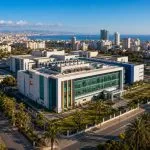
Algeria’s First AI-Dedicated GPU Facility
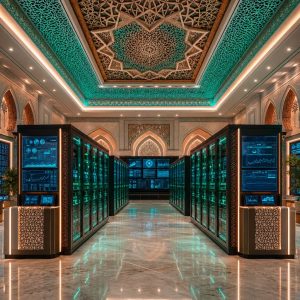
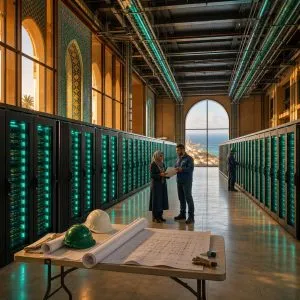
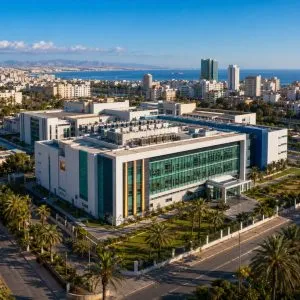
On March 16, 2025, Algeria laid the foundation stone for its first high-performance computing center exclusively dedicated to artificial intelligence. Minister of Post and Telecommunications Sid Ali Zerrouki and Higher Education Minister Noureddine Ouadah presided over the ceremony in Oran’s Akid Lotfi district, an area already anchoring the city’s growing technology footprint. Unlike general-purpose data centers, this facility is being built around GPU accelerators — the hardware backbone of modern machine learning — and is intended to serve researchers and companies across Algeria, not a single institution.
The project was framed by officials and covered by Algerian state media as a strategic advance toward digital sovereignty. Today, Algerian AI teams that want to train serious models typically rent compute from cloud providers outside the country, which raises cost, latency, and data residency issues. A domestic GPU facility in Oran changes that equation.
What the Center Is Designed to Do
According to coverage in Horizons, TSA Algérie, and Data Center Dynamics, the Oran center will be equipped with latest-generation GPUs and is intended to provide intensive compute capacity for AI application development. Four priority verticals were cited by officials at the groundbreaking: healthcare, industry, cybersecurity, and smart cities.
Exact specifications — number of GPUs, networking topology, power envelope, expected flops — have not been published. What officials have disclosed is the three-pillar strategy the center is meant to operationalize: infrastructure and compute capacity through high-performance data centers and AI-optimized cloud architectures; training and research via partnerships with Algerian universities and specialized research centers; and industrial development, with startups and enterprises building AI products on top of the shared infrastructure.
Advertisement
Who Can Use It — and Why It Matters
The center is positioned as a shared national resource. Officials have explicitly mentioned three user categories: Algerian researchers, startups, and companies developing AI applications. That framing is deliberate. Algeria already has three specialized institutions in this space — ENSIA (the National Higher School of AI), the National Higher School of Mathematics, and a dedicated robotics-focused school — and a Scale Centers network providing free AI training. But none of these institutions previously had priority access to serious accelerated compute.
For PhD students running experiments on multilingual language models, radiology startups training medical imaging classifiers, or public-sector teams modeling energy demand, a domestic GPU center removes one of the most persistent bottlenecks: the moment your training run outgrows a single laptop or a modest on-premise server. It also creates a legitimate Algerian alternative to the reflex of spinning up foreign cloud GPUs, where export of sensitive data is a compliance headache.
Where It Fits in Algeria’s AI Stack
The Oran center does not exist in a vacuum. It anchors a broader stack that now includes: the Algérie Télécom AI investment fund (1.5 billion DZD for AI, cybersecurity, and robotics startups); three AI and mathematics universities founded since 2023; the ASF public venture fund and the new FCPR framework for private VC; and a stated national target of AI contributing 7% to GDP by 2027. The center, in effect, is the compute layer of a policy stack that has spent three years building everything around it — training, financing, and regulation.
Two open questions will define the facility’s impact. First, the allocation model: will compute be rationed by grant, paid access, or hybrid, and will startups compete fairly with state actors? Second, the specification: AI workloads at frontier model scale demand thousands of GPUs; at Algerian research and early-startup scale, even hundreds of well-architected GPUs would be meaningful. What gets deployed in the first tranche will signal the project’s real ambition.
Frequently Asked Questions
Where exactly is Algeria’s first AI-dedicated compute center being built?
It is being built in the Akid Lotfi district of Oran. The foundation stone was laid on March 16, 2025, by Minister of Post and Telecommunications Sid Ali Zerrouki and Higher Education Minister Noureddine Ouadah.
What kind of workloads is the Oran center designed for?
Officials have described the center as a GPU-accelerated facility for AI application development in four priority areas: healthcare, industry, cybersecurity, and smart cities. It is meant to support AI research, startup product development, and enterprise deployments rather than general-purpose cloud hosting.
Who will be able to use the center?
The center is explicitly positioned as a shared national resource for Algerian researchers, startups, and companies. Detailed access modalities, pricing, and allocation criteria have not yet been published, but institutions such as ENSIA (the National Higher School of AI) and specialized research labs are expected to be among the first users.
Sources & Further Reading
- Algerian gov’t breaks ground on AI data center in Oran — Data Center Dynamics
- First high-performance computing center focused on AI in Algeria: Strategic step toward digital sovereignty — Horizons
- Intelligence artificielle : l’Algérie lance son premier data center dédié à l’IA — TSA Algérie
- Algérie : Pose de la première pierre d’un centre de calcul IA doté de GPU — L’Express DZ
- Sid Ali Zerrouki et Noureddine Ouadah à Oran : Un data center réservé à l’intelligence artificielle — El Moudjahid
- Algeria Breaks Ground on New AI Data Center in Oran — MEA Tech Watch