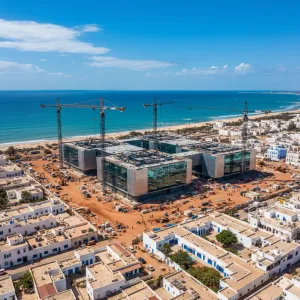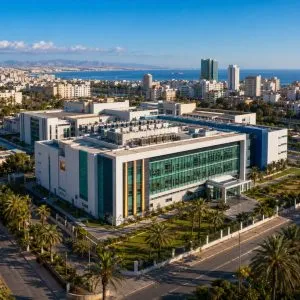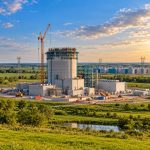
Algeria broke ground in late 2025 on a state-backed AI data center in Oran, positioning the facility as the anchor of the country’s sovereign-compute strategy. Announced by the Ministry of Post and Telecommunications and aligned with the wider Stratégie Nationale de Transformation Numérique (SNTN) roadmap of 500+ digital projects for 2025-2026, the Oran facility is designed to give Algerian researchers, universities, and startups structured access to domestic GPU capacity — a resource that has so far been available only via foreign hyperscalers or expensive imports.
Why a sovereign AI data center, and why Oran
Three factors drove the site selection and the sovereign framing.
Location economics. Oran sits close to power-generation capacity, Mediterranean cable landing points, and the country’s second-largest university cluster. It is far enough from Algiers to diversify national compute geography while retaining redundant fiber paths eastward.
Sovereignty of training data. For health data, judicial records, educational datasets, and administrative archives, Algerian institutions have regulatory and strategic reasons to keep training and inference on domestic soil. Routing Arabic-dialect NLP or Algerian-specific computer-vision workloads through U.S. or European clouds is legally acceptable in many cases but operationally fragile.
Ecosystem enablement. The country’s AI research community — concentrated in Bab Ezzouar, Oran, Constantine, and Tlemcen — needs accessible GPU hours for PhD research, startup prototyping, and applied projects. A domestic tier reduces the cost and latency barrier that has kept most promising work confined to notebooks and small-scale experiments.
What the facility is designed to host
Public statements from the Ministry and partner communications describe a multi-tenant facility supporting:
- Research workloads from universities and the new public AI research programs (model training for Arabic and Tamazight NLP, medical imaging, remote-sensing, geology).
- Startup compute credits for qualifying early-stage teams, likely distributed through incubators and the startup-labeled ecosystem.
- Government AI workloads tied to e-government services, document analysis, and public-sector forecasting.
- Commercial tenants on paid IaaS terms as capacity allows.
Reporting by Data Center Dynamics confirms the Oran facility is part of a broader push that includes additional planned sites across the country. The Black Ridge Research project database lists multiple announced data-center investments in Algeria through 2027, suggesting the Oran project is a first, not the only, node of a national compute footprint.
What workloads it realistically supports
Early-stage facilities rarely match the scale of Frankfurt, Paris, or Dubai hyperscaler regions. For 2026-2027 planning, Algerian teams should assume Oran will be well-suited for:
- Fine-tuning mid-sized open-weight models (7B-70B parameters) on Algerian datasets
- Inference serving for production applications with moderate traffic
- Classical ML and deep-learning research at the PhD and startup prototype level
- Batch training jobs that can tolerate queuing
Less well-suited, at least initially:
- Multi-thousand-GPU frontier-model training
- Latency-critical applications targeting global users (still better served by CDN edge providers)
- Workloads requiring specific proprietary accelerators not yet procured
Advertisement
What Algerian CTOs and Research Leads Should Do Before the Facility Opens
The facility is in construction. The teams that define their use cases now will be the ones who get early compute allocation when access programs open. These four moves determine whether the Oran center becomes a competitive advantage or a footnote.
1. Map Data Residency Requirements Across All Workloads
If your product handles Algerian personal data, health records, judicial archives, or public-sector datasets, the regulatory and strategic case for domestic compute is clear under the amended data protection framework (Law 18-07 as amended by Law 25-11). The practical exercise is a workload inventory: list every model or pipeline, classify the training data it touches (sovereign, sensitive, or public), and map which workloads should run on domestic infrastructure versus foreign hyperscaler. Teams that complete this inventory now will have a well-scoped compute request ready when the Oran access program opens, rather than arriving with a vague infrastructure need. The New Lines Institute’s 2026 assessment explicitly identifies sovereign data governance as a differentiating factor in Algeria’s regional AI positioning.
2. Design for Mixed-Cloud Portability From Day One
The realistic 2026–2027 pattern is Oran-hosted fine-tuning and inference for sovereign workloads, combined with AWS, Google Cloud, or Azure capacity for non-sensitive scale-out. Data Center Dynamics reporting confirms the Oran facility is designed as a multi-tenant national compute node — not a hyperscaler replacement. The practical implication is that model pipelines should be containerized and infrastructure-agnostic from the first prototype, running on CUDA-compatible stacks that can be scheduled equally by a domestic Kubernetes orchestrator or a foreign managed GPU service. Teams that hard-code hyperscaler-specific APIs into their training code will spend weeks on porting when they shift workloads to Oran; teams that use standard open-weight model frameworks (Hugging Face, vLLM) and standard orchestration (Kubernetes, Kubeflow) will port in hours.
3. Engage the Access Program Before Quota Allocation Is Set
Research grants, startup credits, and university partnerships will be the first distribution channels for Oran compute. Black Ridge Research’s Algeria data-center project database and Tech Review Africa’s infrastructure coverage both point to an access-program design that prioritizes early-engaged institutions. The practical move for research teams is to contact the Ministry of Post and Telecommunications and the national AI council with a defined project scope — not a general interest expression. A submission that names the workload (fine-tuning a 13B-parameter Arabic NLP model on Algerian administrative documents), quantifies the GPU hours needed (estimate from comparable cloud runs), and describes the output (a production-deployable model with defined accuracy targets) will receive earlier allocation consideration than an open-ended research proposal.
4. Set a Portability Benchmark Before Writing a Line of Training Code
The least expensive infrastructure decision a team can make is to design portability in at the architecture stage rather than retrofitting it after the fact. Oran’s first-mover phase will support fine-tuning mid-sized open-weight models (7B–70B parameters) and inference serving at moderate traffic — the workloads where a domestic alternative is immediately viable. For workloads beyond that range, foreign infrastructure remains necessary. The benchmark exercise: run your target workload on a cloud GPU instance (A100 or equivalent), record wall-clock time and cost, and use that as the baseline against which Oran credits are measured. That comparison will surface whether the sovereign-compute option is cost-competitive for your specific use case or primarily a regulatory-compliance choice.
The wider context
Algeria’s AI positioning is part of a broader effort documented by the New Lines Institute, which describes the country as “positioned to become North Africa’s AI leader” given its research density, demographic scale, and recent infrastructure investments. Reporting by Tech Review Africa frames the Oran facility alongside the National E-Governance Platform and fiber backbone as the three infrastructure pillars of the 2025-2026 digital agenda. Together these layers point to a plausible path where Algerian teams can, by 2027, build end-to-end AI products with domestic access, data, and compute.
Bottom line
The Oran AI data center is a significant infrastructure signal, not a finished product. For CTOs, research leads, and founders, the practical question is how to architect work now so that domestic GPU capacity becomes a competitive advantage the moment it comes online, rather than a footnote added after the fact.
Frequently Asked Questions
Who can access the Oran AI data center?
Public communications describe a multi-tenant model covering research institutions, qualified startups, government agencies, and paying commercial tenants. Details of access programs are expected to be published as the facility comes online.
Can it replace AWS, Google Cloud, or Azure for Algerian teams?
Not for frontier-model training or globally distributed applications. For fine-tuning, inference, and sovereign-data workloads, it is expected to be a viable domestic option.
How does the Oran facility fit into Algeria’s broader digital strategy?
It is one of several infrastructure pillars — alongside the national fiber rollout and the E-Governance Platform — that form the SNTN 2025-2026 roadmap of 500+ digital projects.
Sources & Further Reading
- Algerian Government Breaks Ground on AI Data Center in Oran — Data Center Dynamics
- Algeria Accelerates Digital Transformation with New E-Governance Platform and Infrastructure Investments — Tech Review Africa
- Algeria Data Center Projects Database — Black Ridge Research
- Why Algeria Is Positioned to Become North Africa’s AI Leader — New Lines Institute