From Ride-Hail to Super-App — And Now to Wallet
Yassir launched as a ride-hailing app in Algiers and has since extended into last-mile delivery, quick commerce (through the Yassir UNO hypermarket format) and retail media. Its YC profile describes it as “the leading Super App for French-speaking Africa.” Public figures from Yassir’s own about page and reporting put the platform at more than 8 million users and roughly 100,000 partners — drivers, couriers, merchants, suppliers and wholesalers — across 45 cities.
The unfinished piece is finance. A super-app without a licensed wallet is a marketplace; a super-app with a licensed wallet is a bank-adjacent consumer platform. That transition is the explicit playbook laid out by Grab in Singapore and Gojek in Indonesia, and it is the one Yassir is now pursuing in Algeria and the wider region.
Why the Payment-Institution Track Matters
The Fintech Times’ 2026 overview of Algeria’s fintech ecosystem identifies Yassir as the ecosystem’s most prominent success story and highlights Algeria’s Fintech Strategy 2024-2030 as the regulatory backdrop. A payment-institution authorization — the intermediate licence between light-touch payment service provider status and a full banking licence — would give Yassir the legal capacity to hold customer funds in a segregated wallet, issue prepaid instruments, process peer-to-peer transfers and run merchant acquiring under its own brand.
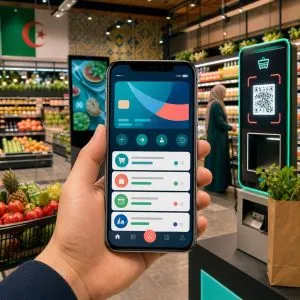
For consumers, the user-experience shift is straightforward: the same Yassir app used to book a ride or order groceries would gain a balance, a payment card (virtual or physical), and eventually savings and credit products layered on top of existing transaction data. For merchants in Yassir’s delivery and quick-commerce network, the shift is bigger: instant settlement to a Yassir wallet, reconciliation within the same app that already manages orders, and — over time — working-capital credit underwritten against sales history.
The Grab Benchmark: What “Super-App Finance” Actually Looks Like
Singapore’s Grab is the cleanest benchmark for what Yassir is aiming at. Grab added a digital wallet in 2016, obtained a digital bank licence in 2020 (operational 2022) and now runs GrabPay, GrabFin lending, GrabInvest and a full GXS Bank offering on top of its mobility and food-delivery core. The commercial logic: acquisition cost drops to near-zero because every ride and every order is a potential wallet top-up or loan trigger, and unit economics improve because payment fees are recaptured internally rather than paid to external card networks.
Yassir cannot replicate Grab’s bank licence in Algeria in one step — Algeria’s regulatory framework makes a full banking licence a much longer path. But the payment-institution tier is both achievable under the Fintech Strategy 2024-2030 and sufficient to unlock most of the super-app finance playbook. Saving product features can be launched in partnership with commercial banks; credit can be piloted through B2B merchant-cash-advance structures that do not require a deposit-taking licence.
What Algerian Consumers Gain
For Algerian consumers, a licensed Yassir wallet answers three concrete pain points. First, cash-free daily commerce: paying for a ride, a grocery delivery and a restaurant order from the same balance, without separate card taps or cash reconciliation. Second, integrated diaspora remittance reception: a licensed wallet can receive cross-border transfers, potentially via the Pan-African Payment and Settlement System (PAPSS) to which the Bank of Algeria joined in 2025, and make them instantly spendable inside the app. Third, access to working-capital credit: millions of gig drivers, couriers and small merchants in Yassir’s network currently sit outside formal credit, and their in-app transaction history is exactly the dataset lenders need to underwrite them.
Advertisement
The Complementary Layer With Algerie Poste
The Yassir thesis does not conflict with Algerie Poste’s CCP Business Cashless launch earlier this year. The two layers serve different jobs. Algerie Poste’s strength is reach — 4,000-plus post offices, 5 million BaridiMob users, strong penetration among unbanked populations. Yassir’s strength is engagement — a younger, urban, smartphone-first user base that already transacts daily inside the app. A healthy Algerian fintech ecosystem has both: a public-sector rail optimised for inclusion and scale, and a private-sector super-app optimised for engagement and convenience.
As The State of Software Engineering in Algeria’s e-payment overview notes, the country’s digital-payment landscape is moving from single-purpose checkout solutions toward integrated platforms. Yassir’s payment-institution track is the clearest signal that the integration wave has arrived.
What To Watch Over 12 Months
Three markers will tell the market whether the Yassir wallet thesis is real. First, a formal licence announcement or regulatory sandbox admission inside Algeria. Second, the launch of a branded wallet balance and payment card — even in a soft pilot — inside the app. Third, the first merchant-cash-advance or working-capital product targeted at Yassir’s driver and courier network. Any two of those three, visible by mid-2027, would mark the definitive arrival of super-app finance in Algeria.
What Algerian SME Merchants and Independent Fintech Builders Should Do Now
Yassir’s payment-institution bid will produce a market outcome whether it succeeds or stalls. Merchants in Yassir’s network need to act in either case. Independent fintech builders need to identify which gaps Yassir will not fill. The following three prescriptions address both audiences.
1. SME Merchants: Pressure-Test Whether Integrated Wallet Settlement Improves Your Economics
Merchants already operating inside Yassir’s delivery and quick-commerce network should model what integrated wallet settlement would mean for their working capital. The current model — cash-on-delivery or CIB card settlement with a 2-to-5 day delay — locks working capital for the settlement window and creates refusal-rate exposure on every COD order. If Yassir’s wallet enables instant settlement to a merchant balance usable for Yassir-platform purchases (restocking, ad placements, logistics fees), the unit-economic improvement per order could be 3 to 6 percent of GMV depending on the merchant’s COD share and settlement delay. Grab’s merchant settlement data from its 2016-2018 wallet rollout in Singapore showed that merchants who adopted GrabPay settlement reduced their average working-capital cycle by 11 days compared to mixed-payment cohorts. Algerian merchants with high Yassir order volumes should prepare by cleaning up their transaction records now — a documented 12-month sales history inside the app is precisely the dataset a working-capital credit underwriter will use for the first Yassir merchant-lending pilots.
2. Independent Fintech Builders: Target the Gaps a Super-App Will Not Prioritise
Yassir’s super-app strategy will naturally concentrate on the workflows that generate the most transaction volume: ride settlement, grocery payment, restaurant orders. Three adjacent layers will receive less attention: diaspora remittance reception (the matching problem with PayPal World and USDPT corridors is a B2B integration challenge, not a consumer UX challenge), micro-insurance layered on top of gig-worker income data, and credit-scoring for the long tail of micro-merchants who are too small to matter to Yassir’s merchant-lending programme. The Fintech Times’ 2026 Algeria ecosystem overview notes that the Fintech Strategy 2024-2030 is explicitly structured to encourage multiple licensed entrants rather than a single dominant platform. Builders who identify one of these adjacent layers and structure their regulatory application around the same payment-institution track as Yassir will benefit from the regulatory infrastructure that Yassir’s application creates, rather than competing against it head-on.
3. Policymakers: Design the Licensing Pathway for Multiple Entrants, Not a Single Champion
The licensing decision for Yassir’s payment-institution application will set a precedent that determines whether Algeria’s consumer fintech ecosystem produces competitive diversity or a winner-take-most outcome. Yassir’s 8-million user base and $900 million in reported cumulative funding give it structural advantages that a new entrant cannot match on consumer acquisition. The regulatory design question is whether the licensing framework — terms, capital requirements, data-access rules, interoperability obligations — enables a second and third payment institution to compete on product rather than distribution. The BCG fintech wave analysis for Africa shows that markets with two or more licensed payment institutions achieve 40 to 60 percent lower consumer remittance fees and 25 to 35 percent higher merchant adoption rates than single-platform markets within three years of the second licence being granted. Building those conditions into the initial licensing design is substantially less costly than imposing them after market concentration has occurred.
The Regulatory Question
The licensing decision for Yassir’s payment-institution application is, in regulatory terms, the most consequential fintech ruling Algeria’s supervisory authorities will make in the current decade. It will set the structural precedent for whether the Algerian consumer finance market develops as a competitive ecosystem or consolidates around a single dominant platform. Yassir’s advantages — 8 million users, USD 900 million in cumulative funding, and an established merchant and driver network across 45 cities — are substantial enough that a licensing framework designed without interoperability and multi-entrant provisions would effectively foreclose meaningful competition for the next five to seven years.
The Fintech Strategy 2024-2030 explicitly addresses this risk by targeting multiple licensed entrants rather than a national champion model. BCG’s fintech wave analysis for Africa shows that markets with two or more licensed payment institutions achieve 40 to 60 percent lower remittance fees and 25 to 35 percent higher merchant adoption within three years of the second licence being granted. Those outcomes require that the licensing pathway — capital requirements, data-access rules, interoperability obligations, and reserve standards — be designed with a second and third applicant in mind from the start, not retrofitted after market concentration has occurred.
The regulatory question is therefore not whether to license Yassir — the Fintech Strategy creates a clear pathway and the application reflects legitimate market development. It is whether the licensing conditions include the interoperability and portability standards that allow a Yassir competitor licensed in 2027 or 2028 to compete on product quality rather than on distribution reach alone.
Frequently Asked Questions
What is a “payment institution” licence and how is it different from a bank licence?
A payment institution licence authorises a company to hold customer funds in a segregated wallet, process payments, issue prepaid instruments and run merchant acquiring, but does not permit it to take deposits or issue credit from its own balance sheet the way a licensed bank can. It is the intermediate licensing tier used by most global super-apps (Grab, Gojek, Mercado Pago) before they either partner with a bank or apply for a full digital-banking licence.
How many users and countries does Yassir currently operate in?
Yassir reports more than 8 million users and roughly 100,000 partners (drivers, couriers, merchants) across 45 cities. Its operating footprint covers Algeria, Morocco and Tunisia as core markets, with additional expansion into France, Canada and parts of sub-Saharan Africa, according to public company materials.
Does a Yassir wallet compete with BaridiMob and CCP Business Cashless?
Not directly. BaridiMob and CCP Business Cashless are Algerie Poste’s public-sector rails, optimised for reach and inclusion with more than 4,000 post offices and 5 million consumer users. A Yassir wallet would be a private-sector super-app layer focused on engagement — ride, delivery and commerce transactions that already happen inside one app. The two layers are more complementary than competitive, and most merchants will ultimately support both.
Sources & Further Reading
- Algeria’s Fintech Ecosystem in 2026: Building Momentum — The Fintech Times
- Yassir company profile — Y Combinator
- Yassir: Our Story, Value, and the People Behind It — Yassir
- E-Payment Solutions — The State of Software Engineering in Algeria
- 10 Startups to Watch in 2025 in North Africa — Tech in Africa
- Top Startups in Algeria — StartupBlink