The Deal That Redefined Hyperscale Power Procurement
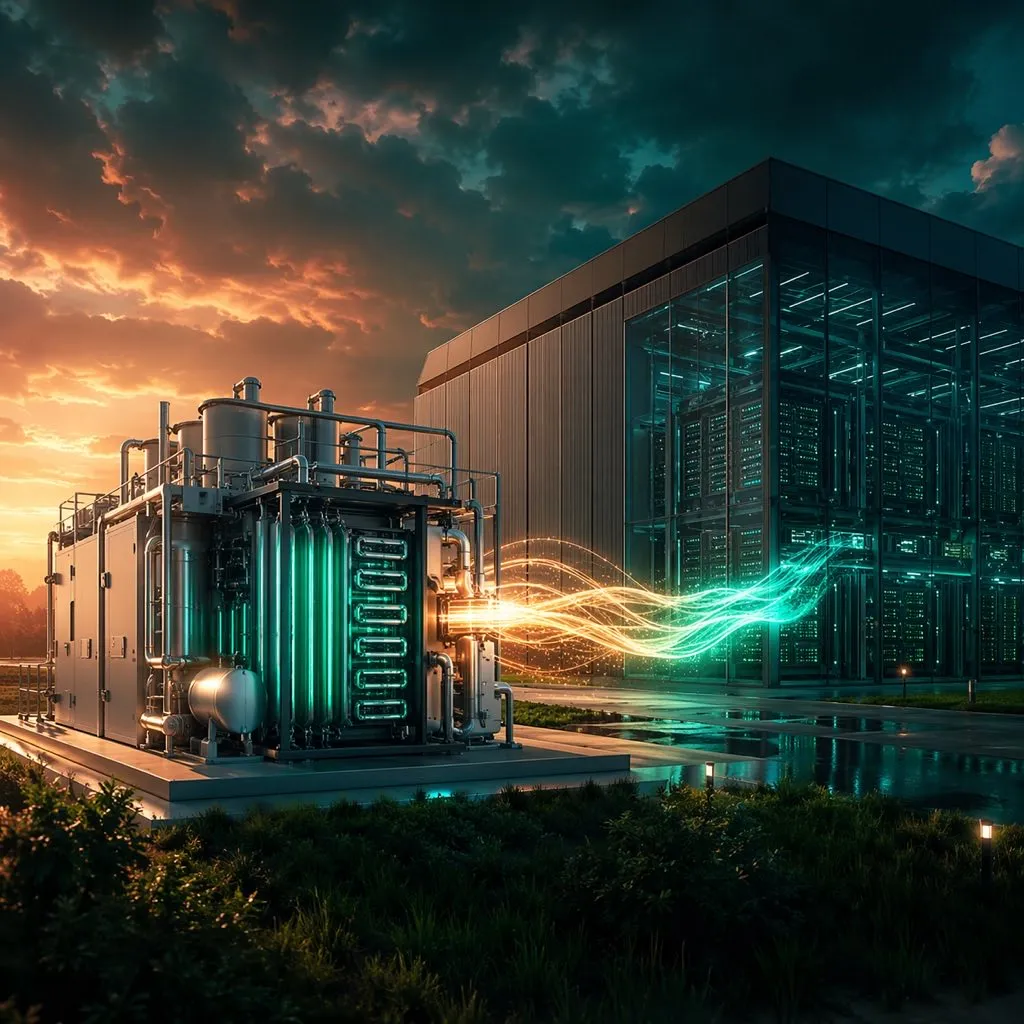
On April 14, 2026, Bloom Energy and Oracle announced an expanded strategic partnership under which Oracle will procure up to 2.8 gigawatts of Bloom’s solid oxide fuel cell (SOFC) systems. An initial 1.2 GW is already contracted, with deployment underway and continuing into the following year. The systems will power Oracle Cloud Infrastructure (OCI) projects across the US, targeting the AI workloads that are pushing traditional grid connections past their limits.
The financial market reaction tracked the strategic weight. Bloom stock jumped roughly 22% and Oracle shares rose a second day after the announcement. The deal also builds on a previously disclosed structure: on April 9, 2026, Bloom issued a warrant for Oracle to purchase about 3.5 million shares at $113.28, extending commercial and equity alignment between the two companies.
Why Fuel Cells Won the AI Power Fight
Three technical realities are driving hyperscaler adoption of on-site SOFC architectures:
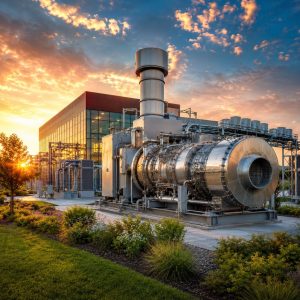
- Speed to power. On-site SOFCs can be installed in roughly 90 days versus 18–24 months for new high-voltage grid interconnections — and Bloom delivered a fully operational Oracle system in 55 days, a month ahead of the 90-day schedule. In an AI buildout where every month of compute capacity is revenue, that delta is existential.
- Load-following performance for AI. AI training and inference workloads are spikier and more variable than traditional enterprise workloads. SOFCs provide steady, load-following on-site generation that traditional grids were not designed to deliver at the same speed.
- Fuel flexibility and decarbonization path. Bloom’s cells are fuel-flexible: natural gas, biogas, or hydrogen. Early deployments can run on gas today while preserving an operational path to green hydrogen as electrolysis supply scales — a pragmatic answer to the zero-carbon pressure hyperscalers face from investors and regulators.
Advertisement
A $7.65B Signal About the Power Stack
The Oracle deal is not an outlier. Bloom has stacked a series of multi-gigawatt commercial wins in quick succession:
- A $5 billion financing framework with Brookfield Asset Management for AI data center power.
- A 1 GW agreement with American Electric Power to procure SOFC capacity.
- An estimated $7.65 billion in data-center-related contracts in a 90-day period in early 2026.
Analysts increasingly frame SOFCs as the designated primary power for new AI infrastructure builds rather than a backup or supplemental source. Bloom’s own research note projects that almost one in three US data centers plan to go fully off-grid by 2030 — a structural shift in how hyperscaler power procurement is architected.
What This Changes for Cloud Customers, Regulators, and Grid Operators
The 2.8 GW Oracle deal has second-order consequences beyond the two companies:
- For cloud customers: OCI regions built around fuel cell power gain a differentiated availability story — fewer unplanned outages tied to grid events and faster regional expansion. This may show up in regional pricing and SLA negotiations, particularly for AI training customers who can tolerate regionalization.
- For regulators: On-site fuel cell plants change the permitting conversation. They reduce the need for new transmission upgrades but introduce on-site combustion (even if clean) and water handling considerations that previously sat with utilities.
- For grid operators: A hyperscaler base that partially self-generates reduces interconnection queue pressure but also shifts grid operators from sole supplier to peak/backup supplier — a different revenue mix that utilities are still pricing out.
The Emerging-Market Angle
For markets outside the US — particularly those rich in natural gas or positioned for green hydrogen export — the Oracle-Bloom deal is a template. The ability to land a 100–500 MW AI data center without waiting 18–24 months for grid reinforcement is precisely the capability that can turn hydrocarbon or renewable endowments into low-carbon compute exports. Countries with both strong gas infrastructure and renewable-hydrogen roadmaps are now closer to being competitive hosts for AI data centers than the historical “power follows the grid” assumption would suggest.
The 2.8 GW number is large — it is roughly double Oracle’s previously contracted Bloom capacity. But the real headline is architectural: hyperscaler AI power is being rebuilt around on-site, load-following, fuel-flexible generation. The grid still matters, but it is no longer the only path to a gigawatt.
Frequently Asked Questions
What is the scope of the Bloom Energy and Oracle 2.8 GW deal?
Oracle has agreed to procure up to 2.8 GW of Bloom Energy’s solid oxide fuel cell systems to power Oracle Cloud Infrastructure AI projects in the US. An initial 1.2 GW has already been contracted with deployment underway. Bloom also issued a warrant on April 9, 2026 for Oracle to purchase about 3.5 million shares at $113.28 per share.
Why are hyperscalers turning to fuel cells instead of grid power for AI?
AI workloads are pushing traditional grid interconnections past their limits. On-site SOFCs can be deployed in roughly 90 days — Bloom delivered one Oracle system in 55 days — versus 18-24 months for new high-voltage grid hookups. They also provide steady load-following generation suited to AI’s spiky compute patterns and can run on natural gas today with a transition path to green hydrogen.
Can this model work outside the US?
Yes — any market with a strong gas network and a green hydrogen roadmap can adapt the pattern. The combination of fast deployment and fuel flexibility makes fuel-cell-powered data centers particularly attractive for emerging markets that have energy endowments but long grid interconnection queues. The caveat is that SOFC service networks, operator training, and spares supply chains need local development to reach the same delivery speeds Bloom offers in the US.
Sources & Further Reading
- Bloom Energy and Oracle Expand Strategic Partnership to Deploy up to 2.8 GW — Bloom Energy Investor Relations
- Oracle Expands Fuel Cell Supply Deal with Bloom Energy to 2.8GW — DCD
- Oracle Jumps, Bloom Energy Soars 22% on AI Data Center Power Deal — CNBC
- Oracle Expands Bloom Energy Deal After $400M Stock Warrant — CNBC
- Oracle Taps Bloom for Fuel Cells to Support Datacenter Binge — The Register
- Bloom Energy’s 2026 Data Center Power Report — Hydrogen Fuel News
- Bloom Energy — Data Center Power Solutions
- How Fuel Cells Help Solve the Data Center and AI Challenge — FCHEA