What the Akid Lotfi Centre Actually Is
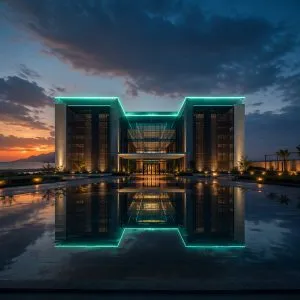
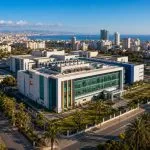
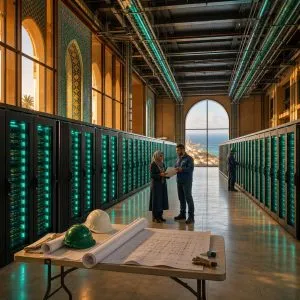
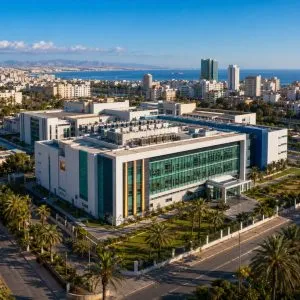
On March 16, 2025, Algeria’s Minister of Post and Telecommunications, Sid Ali Zerrouki, laid the foundation stone for the country’s first high-performance computing (HPC) centre dedicated to artificial intelligence, sited in the Akid Lotfi district of Oran. According to Data Center Dynamics, the facility will be equipped with state-of-the-art graphics processing units (GPUs) — the specialised accelerators that AI model training and inference depend on — and is designed to support AI applications across healthcare, industry, cybersecurity, and smart cities.
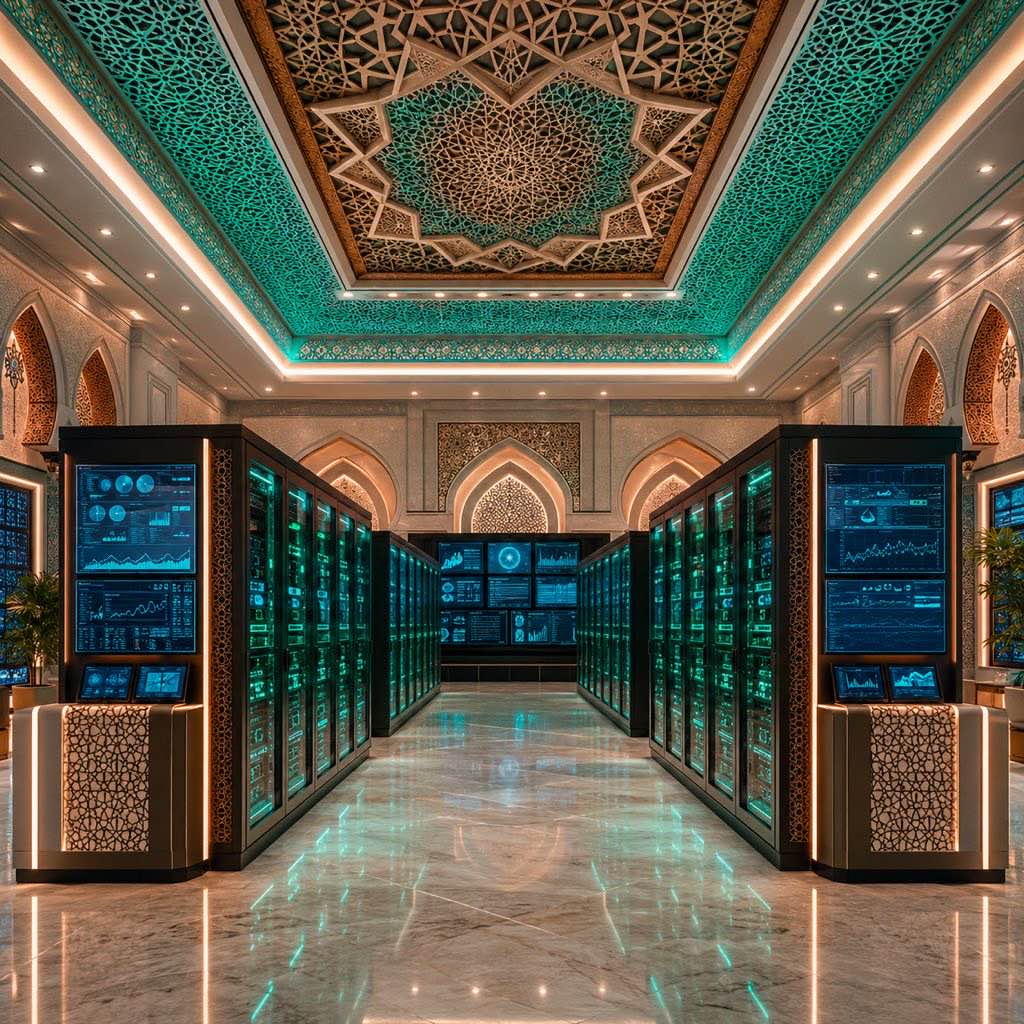
This is a supercomputing centre in the precise sense: not a general-purpose colocation hall, but a GPU-dense compute facility purpose-built for the parallel arithmetic that deep learning requires. The distinction matters. Training a modern model or running large-scale inference is bottlenecked by GPU memory and interconnect bandwidth, not by ordinary server CPUs. By concentrating latest-generation GPUs in one national facility, the Akid Lotfi centre creates capacity that Algerian researchers and companies can reach without exporting their workloads — and, critically, without exporting their data.
The choice of Oran is itself a strategic signal. Algeria’s second city is being positioned as a regional technology pole, and placing the country’s flagship AI compute asset there extends digital capability beyond the Algiers corridor. The centre’s stated mission, as summarised by the AMAN Alliance, is to make computing resources accessible to startups and academic institutions and to foster a dynamic AI ecosystem — framing it as shared national infrastructure rather than a single-tenant government system.
Why Sovereign Compute Is the Real Story
The centre is described by Algerian officials as a strategic step toward digital sovereignty, and that phrase carries concrete meaning. When a research team or a startup trains a model on a foreign cloud, three things leave the country: the data, the spend, and the dependency. Sovereign compute reverses all three. Sensitive datasets — health records, industrial telemetry, security logs — can be processed on national soil under national law. The capital that would have flowed to overseas hyperscalers stays in the domestic economy. And the strategic capability to build AI is held locally rather than rented from abroad.
This is why the Akid Lotfi centre sits at the centre of a broader plan rather than standing alone. In December 2025, Algeria’s National AI Council adopted a National Artificial Intelligence Strategy, chaired by Professor Merouane Debbah, organised across six pillars: scientific research, talent development, hardware and infrastructure investment, ecosystem and investment promotion, data protection and regulation, and sector-specific deployment in agriculture, healthcare, and cybersecurity. The Oran centre is the physical embodiment of the hardware-and-infrastructure pillar — the compute layer the other five pillars depend on.
The economic ambition behind it is specific. Speaking at the third CTO Forum Algeria in February 2025, Minister Zerrouki set a target of AI contributing 7% of Algeria’s GDP by 2027. A goal of that scale is not reachable on rented foreign capacity alone; it requires domestic compute that local teams can build on at predictable cost. Complementing the hardware, Algérie Télécom has committed 1.5 billion dinars — roughly $11 million — to fund AI, cybersecurity, and robotics startups, signalling that the strategy pairs infrastructure with capital for the teams that will use it.
Advertisement
Who Benefits — and How Access Is Framed
The centre’s three named beneficiary groups — researchers, startups, and enterprises — each gain something different. University and research labs get the GPU density needed for genuine experimentation in fields the strategy prioritises: precision agriculture, energy resource management, climate modelling, and medical AI. Startups gain a national alternative to burning scarce runway on foreign GPU bills, which today can consume a disproportionate share of an early-stage AI company’s costs. Enterprises in sectors such as energy, industry, and finance gain a domestic option for AI workloads that touch regulated or sensitive data.
What the public record does not yet specify is the exact GPU model, the total core count, the operating entity, or the formal commissioning date. Those operational details will define the centre’s real-world capacity and the terms on which teams can book time. For now, the engagement signal from officials is clear — accessibility to startups and academia is an explicit design goal — but the access model, pricing, and allocation process are still to be published. That uncertainty is itself actionable: the organisations that prepare early will be best placed when the booking window opens.
What Algerian researchers, startups, and enterprises should do
1. Make your AI workloads portable now, before the centre opens
The single biggest determinant of whether you can use the Akid Lotfi centre on day one is whether your work is already containerised and reproducible. Package training and inference jobs in Docker or Singularity images, pin your dependency versions, and script your data pipelines so they can run anywhere a GPU is available. Teams that build directly against one foreign cloud’s proprietary services will face costly rework to migrate; teams that standardise on portable, open frameworks (PyTorch, JAX, standard CUDA) will be able to redirect a job to national infrastructure with a configuration change rather than a rewrite. Treat portability as the migration insurance it is.
2. Build the data-governance case for moving sensitive workloads home
Sovereign compute only pays off if you actually move the workloads that benefit from it. Audit your datasets now and classify which ones — health, industrial, security, or personal data — carry residency, confidentiality, or regulatory weight that argues for domestic processing. For each, document the compliance rationale and the current foreign-processing risk. When the centre’s access terms are published, you will be able to move quickly with a governance case already written, rather than starting the analysis from scratch. This is also the argument that wins internal budget: “we reduce data-residency exposure” lands harder with a board than “we save on cloud costs.”
3. Engage the national AI ecosystem and position for funding
The Oran centre is one node in a strategy that also includes startup capital — notably Algérie Télécom’s 1.5-billion-dinar (~$11M) fund for AI, cybersecurity, and robotics ventures. Founders should track the National AI Council’s published programmes, attend forums such as CTO Forum Algeria and the African Start-up Conference where these initiatives are announced, and align their roadmaps with the six strategy pillars. A startup whose product maps cleanly onto a priority sector — precision agriculture, energy, healthcare, or cybersecurity — is positioned both to access subsidised compute and to compete for the ecosystem funding the strategy is releasing. Visibility with the ecosystem now is what converts to allocation later.
Algeria’s Sovereign Compute Moment
The Akid Lotfi centre is best understood not as a single building but as a statement of intent: that Algeria intends to own the foundational layer of its AI economy rather than rent it. The pieces are deliberately interlocking — a national strategy with six pillars, a flagship GPU facility in a deliberately chosen regional hub, a 7%-of-GDP economic target, and seed capital for the startups expected to fill the ecosystem. Each reinforces the others.
The work that remains is operational, and it is where reader attention should sit. The published GPU specification, the operating model, the access and pricing terms, and the commissioning date will determine how much of this ambition becomes usable capacity for ordinary research teams and founders. The organisations that win from this investment will be the ones that prepared — portable workloads, a governance case, and ecosystem visibility — before the doors open, rather than the ones that wait to react. Sovereign compute is being built; the opportunity now is to be ready to use it.
Frequently Asked Questions
What is the Akid Lotfi supercomputing centre?
It is Algeria’s first high-performance computing facility dedicated to artificial intelligence, located in the Akid Lotfi district of Oran. The foundation stone was laid on March 16, 2025, by the Minister of Post and Telecommunications, Sid Ali Zerrouki. The centre will be equipped with latest-generation GPUs to support AI development across healthcare, industry, cybersecurity, and smart cities.
Who will be able to use the centre’s GPU compute?
Officials have named three beneficiary groups: researchers, startups, and enterprises. The stated goal is to make computing resources accessible to startups and academic institutions and to foster a dynamic national AI ecosystem. The exact access model, pricing, and allocation process have not yet been published.
How does the centre fit into Algeria’s national AI strategy?
The centre is the hardware-and-infrastructure component of the National Artificial Intelligence Strategy adopted in December 2025 by the National AI Council, chaired by Professor Merouane Debbah. The strategy spans six pillars and supports the national target of AI contributing 7% of GDP by 2027.
Sources & Further Reading
- Further Reading
- Algerian gov’t breaks ground on AI data center in Oran — Data Center Dynamics
- First high-performance computing center focused on AI in Algeria — AMAN Alliance / APS
- Algeria Targets 7% GDP from AI by 2027 with Investment and Infrastructure Plans — We Are Tech Africa
- Algeria Launches Construction of an AI Supercomputing Center — We Are Tech Africa
- Algeria: AI Council adopts National Strategy for Artificial Intelligence — Digital Policy Alert
🔗 Related Intelligence

Algeria’s First AI Supercomputing Center in Oran

Inside Oran’s New AI Supercomputing Center: GPU Clusters for Algerian Researchers and Startups
Akid Lotfi AI Centre: Algeria’s First GPU Compute Facility and What It Means for Researchers
Oran’s Akid Lotfi AI Centre: How Algerian Enterprises and Startups Can Access the Compute