A Single Platform for the Entire AI Data-Center Supply Chain
On July 15, 2026, ACS Group and Global Infrastructure Partners (GIP) formally launched Coravel, the operating brand for the 50-50 joint venture the two firms first announced in November 2025. According to ACS Group’s press release, the venture launched with an initial 1.7 GW development portfolio across Europe, the United States, and Australia, valued at approximately EUR 2.0 billion on a 100% basis — split between roughly EUR 1.0 billion in cash and up to EUR 1.0 billion in earn-outs, plus a further EUR 200 million tied to pipeline project milestones.
The joint venture is the product of two very different kinds of scale. GIP became part of BlackRock after BlackRock’s investor relations office confirmed the acquisition closed on October 1, 2024, giving Coravel access to a parent platform managing more than $200 billion in infrastructure assets. ACS Group, the Spanish construction and engineering conglomerate led by CEO Juan Santamaría, brings roughly 157,000 employees and 2025 revenue exceeding $57 billion, according to Yahoo Finance’s report on the launch. That combination — capital depth on one side, construction and engineering execution on the other — is the structural thesis behind Coravel: that the bottleneck in AI infrastructure is no longer demand or even chip supply, but the ability to actually deliver gigawatts of power-dense, purpose-built capacity on a predictable schedule.
Coravel is led by CEO Howard Boville, and the platform’s initial 1.7 GW portfolio includes 1.2 GW of IT load already under development. Beyond that initial footprint, ACS Group’s announcement states the platform is evaluating a further pipeline exceeding 11 GW of potential projects across North America, Europe, and Asia-Pacific — a scale that, if even a fraction converts into signed capacity, would place Coravel among the largest dedicated AI-era data-center developers globally.
The Dallas-Fort Worth Deal: What 140 MW Actually Buys
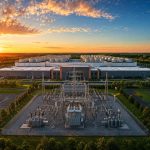
Coravel’s public debut came bundled with proof of demand: a signed lease with an undisclosed hyperscaler customer. Per W.Media’s coverage of the announcement, the agreement covers approximately 140 MW of critical IT load across three purpose-built facilities on a campus in Dallas-Fort Worth, Texas, with the customer also holding rights to roughly 100 MW of future expansion capacity across two additional facilities on the same site. Construction is being handled by Turner, an ACS Group company, with delivery phased through 2028.
That structure — an anchor lease plus contractual expansion rights, built by a construction firm owned by the same parent that financed and sited the campus — is the clearest illustration of what “vertical integration” means in practice for Coravel. Instead of a developer securing land and power, then contracting out construction to a third party, then selling capacity to a hyperscaler through a separate leasing process, all three functions sit inside one accountable structure. Telecom Ramblings’ roundup of the deal notes that the Dallas-Fort Worth campus is one of several active projects feeding into Coravel’s broader pipeline, positioning the JV as an early mover in a data-center market where power availability — not capital — has become the binding constraint on new supply.
Advertisement
Why Vertical Integration Is Becoming the AI Data-Center Default
The Coravel structure responds to a specific failure pattern that has slowed AI data-center delivery over the past two years: fragmented ownership across the supply chain means that a power delay, a permitting dispute, or a construction bottleneck anywhere in the chain can stall an entire project, with no single party accountable for the schedule. By combining site origination, energy procurement, design, construction, capital, and operations under one 50-50 ownership structure, Coravel is betting that hyperscalers will pay a premium for delivery certainty over the marginal cost savings of a fragmented, multi-vendor build.
The financial structure reinforces that bet. The earn-out-heavy deal terms disclosed in ACS Group’s press release — up to EUR 1.0 billion in earn-outs on top of EUR 1.0 billion cash, plus EUR 200 million tied to pipeline conversion — mean ACS is paid more as Coravel actually delivers signed capacity, not simply for contributing land and construction capability upfront. That aligns ACS’s incentives with GIP’s capital-allocation discipline, and it is a structural pattern other infrastructure funds are likely to copy as they chase the same AI buildout: pair a balance sheet with an execution engine, then tie payouts to delivered megawatts rather than announced gigawatts.
What Enterprise Cloud Buyers Should Do About the New AI Data-Center Supply Chain
1. Re-score data-center vendors on delivery accountability, not headline capacity
Procurement teams evaluating colocation or build-to-suit capacity have historically scored developers on announced pipeline size and price per kW. Coravel’s structure argues for a different scorecard weighted toward accountability: does one entity control land, power, construction, and operations, or will a delay in any one of those functions become “someone else’s problem” that still lands on your delivery date? A developer that owns its own general contractor, like Coravel with Turner, removes one common point of finger-pointing when timelines slip.
2. Treat power interconnection queues as the real constraint, not chip allocation
The 140 MW Dallas-Fort Worth lease with 100 MW of expansion rights signals that hyperscalers are now securing power-backed capacity years ahead of use, phased through 2028. Enterprise buyers negotiating cloud or colocation capacity should ask vendors for the actual interconnection queue position and substation timeline behind any quoted delivery date — not just a construction schedule — since power procurement, not chip supply, is now the longer lead-time item in most AI infrastructure builds.
3. Negotiate expansion rights into initial contracts, not renewal cycles
The undisclosed hyperscaler in the Coravel deal secured contractual rights to 100 MW of future capacity as part of its original agreement, rather than waiting to renegotiate later. Enterprise buyers signing multi-year capacity agreements should push for similar first-refusal or expansion-rights clauses at signing, when leverage is highest, rather than assuming additional capacity will be available on the same terms once a campus is fully leased.
4. Diversify across vertically integrated and traditional developers to hedge model risk
Vertical integration reduces coordination risk but concentrates counterparty risk in a single entity’s balance sheet and execution capability. Buyers with large, multi-site infrastructure footprints should avoid putting all capacity commitments behind one integrated platform, however well-capitalized — GIP’s $200 billion in assets under management and ACS’s $57 billion in 2025 revenue are reassuring scale signals, but a genuinely resilient sourcing strategy still spreads exposure across two or more developer models.
Where This Fits in 2026’s AI Infrastructure Race
Coravel is not the first attempt to vertically integrate the data-center supply chain, but its scale and timing make it a useful marker for where the market is heading. The AI buildout has moved past the phase where announcing a gigawatt pipeline was itself newsworthy; the differentiator now is whether a platform can convert pipeline into signed, financed, power-secured megawatts on a schedule a hyperscaler is willing to underwrite years in advance. Coravel’s answer — a JV that owns capital, siting, energy strategy, and its own construction arm — is a direct response to two years of AI infrastructure headlines dominated by delays tied to power availability and permitting, not to demand.
The bigger signal is what this means for the rest of the industry: infrastructure funds with balance-sheet depth but no construction capability, and construction and engineering firms with delivery capability but no long-duration capital, are increasingly likely to pair up the way ACS and GIP have. Expect more announcements structured as earn-out-heavy joint ventures rather than simple project financings over the next 12-18 months, as both sides of the AI infrastructure market converge on the same conclusion Coravel is betting on: in a power-constrained buildout, the winning model is the one that controls the fewest external dependencies.
Frequently Asked Questions
What is Coravel and who owns it?
Coravel is the operating brand for a 50-50 joint venture between Spain’s ACS Group and Global Infrastructure Partners (GIP), the infrastructure investment arm BlackRock acquired in a deal that closed on October 1, 2024. The venture formally launched on July 15, 2026, with an initial 1.7 GW data-center development portfolio across Europe, the United States, and Australia.
How big is the hyperscaler deal Coravel just signed?
Coravel’s first publicly disclosed hyperscaler customer signed a lease for approximately 140 MW of critical IT load across three facilities at a Dallas-Fort Worth, Texas campus, with contractual rights to an additional 100 MW of expansion capacity across two more facilities. Construction is being carried out by Turner, an ACS Group company, with delivery phased through 2028.
Why does vertical integration matter for AI data centers specifically?
AI-era data centers require far more power density and faster delivery timelines than traditional cloud facilities, and delays increasingly stem from power interconnection and permitting rather than construction itself. A vertically integrated model like Coravel’s — combining site origination, power strategy, construction, capital, and operations in one entity — is designed to remove the coordination gaps between separate vendors that have caused delivery delays across the industry.
Sources & Further Reading
- ACS is Joined by Global Infrastructure Partners to Launch a Global Data Center Development Platform — ACS Group Pressroom
- ACS Group, Global Infrastructure Partners Launch Coravel, Secure First Major Hyperscaler Customer Agreement — Yahoo Finance
- Coravel Secures First Hyperscaler Customer as ACS-GIP Data Center Platform Begins Operations — W.Media
- Thursday Roundup: Macquarie Data Centers, Coravel, MCNC, Lightpath — Telecom Ramblings
- BlackRock Announces Expected Closing Date for Acquisition of Global Infrastructure Partners — BlackRock Investor Relations
🔗 Related Intelligence
AI Data Centers: The Architecture Behind the AI Revolution
Emerald AI’s $150M Series A: Betting That the Grid, Not the Chip, Is the Real AI Bottleneck
AI Data Centers: How They Work and Why They Matter
AI Infrastructure: The Physical Foundation of Artificial Intelligence