The Round That Reframes AI’s Scaling Problem
On August 25, 2026, Emerald AI announced it had raised a $150 million Series A at a $1.05 billion valuation, according to the company’s announcement carried by BusinessWire. The round was led by Energize Capital and DCVC and lifts the company’s total funding to roughly $220 million. The investor list is unusually heavy with strategics whose core business is power and hardware rather than software: Nvidia, Siemens, GE Vernova, RWE, Samsung Ventures, Aramco Ventures, and JERA Ventures all took part, alongside venture backers Radical Ventures, Energy Impact Partners and Lowercarbon Capital.
That composition is the story. When Nvidia, a grid operator’s worth of utilities, and a national oil company’s venture arm all write into the same $150 million round, they are not betting on another AI model. They are betting that the scarcest input in the AI build-out is no longer the GPU — it is the megawatt.
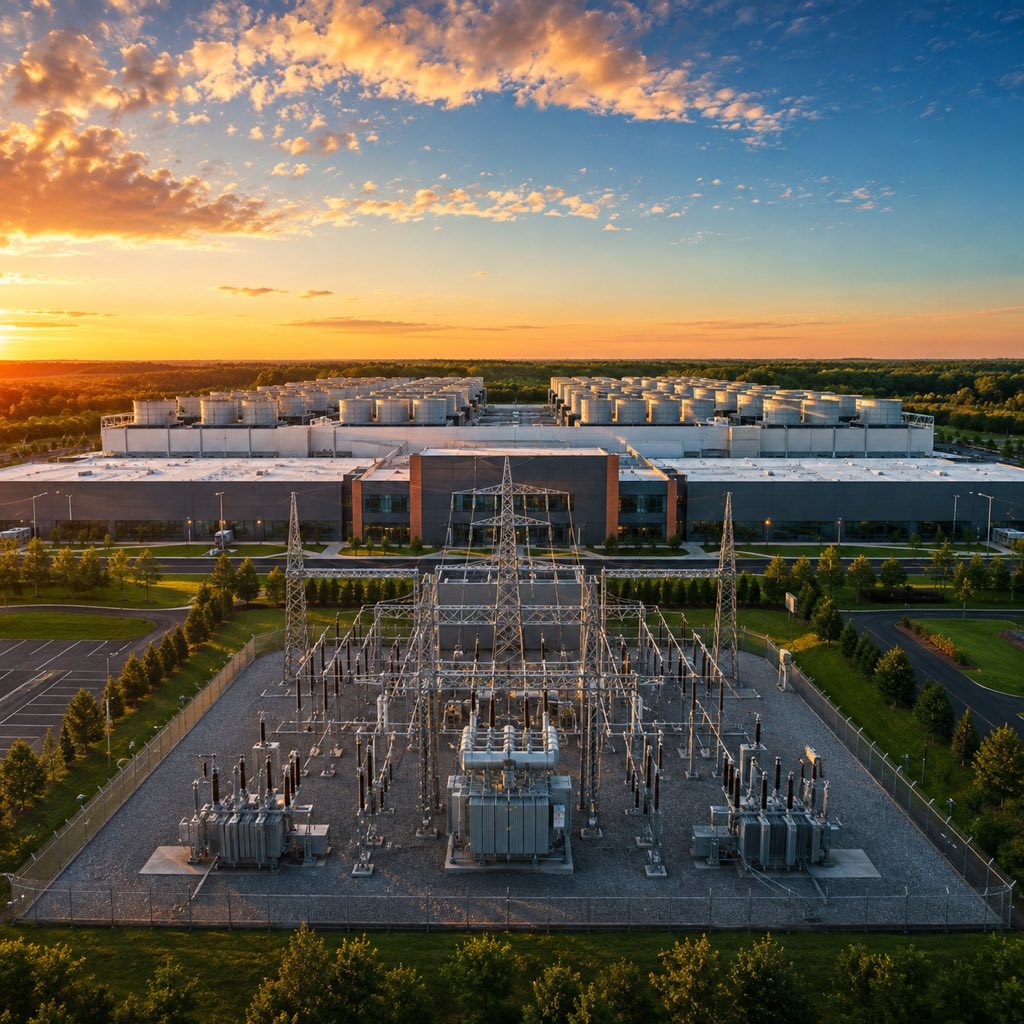
Emerald AI is a barely two-year-old company led by CEO Varun Sivaram, a former energy executive and physicist. Its product, Emerald Conductor, is software that schedules AI workloads against the batteries and generation available on-site, letting a data center reduce the power it pulls from the grid during moments of stress while keeping critical jobs running. In plain terms: instead of a data center being a fixed, always-maxed load the grid must plan around, it becomes a dial the grid can turn down for a few hours when demand peaks.
Why 100 Gigawatts Is the Number That Sold the Round
The headline valuation is $1.05 billion. The number that actually underwrites it is 100 gigawatts. Emerald claims that if AI data centers operated flexibly rather than at constant full draw, more than 100 gigawatts of capacity could be unlocked on the existing US system — years before new transmission and generation could be built. For scale, that is roughly the output of 100 large power plants, freed not by pouring concrete but by rescheduling software.
This maps onto a documented crunch. US utilities and grid planners have spent 2025 and 2026 warning that AI data-center demand is outrunning their ability to add capacity. The Electric Power Research Institute has projected that data centers could consume up to 17% of total US electricity by 2030, up from around 4% today. The bottleneck is not just generation — it is the multi-year queue to interconnect new load and build transmission. A data center that can promise to flex its demand jumps that queue, because a utility can approve a flexible load without waiting on new wires.
Emerald has moved past slideware. The company points to a demonstration at the Vera Rubin AI Research Factory in Manassas, Virginia, and to deployments and trials spanning Arizona, Illinois, Oregon and London, with partners and customers including Nvidia, Oracle, Digital Realty and the municipal utility Silicon Valley Power. Being named to the 2026 TIME100 Most Influential Companies list added a credibility stamp that helped turn a technical thesis into an oversubscribed round.
Advertisement
The Physical-AI Turn in Venture Capital
Emerald’s raise is not an isolated data point — it is part of a visible rotation. In the same late-August window, autonomous-trucking firm Gatik raised $200 million, and, as Crunchbase News noted in its weekly funding roundup, a large share of that week’s venture dollars flowed to companies connecting AI to the physical economy — power, grids, robotics, logistics — rather than to another layer of generic software.
The logic is straightforward. The market has concluded that frontier models are increasingly commoditized and capital-intensive, while the infrastructure that lets those models run — power, cooling, interconnection — is scarce, defensible, and regulated. A software company that can measurably free grid capacity sits on the profitable side of that scarcity. That is why a company two years old, with a single flagship product, cleared a billion-dollar valuation.
What This Means for Emerging-Market Operators and Investors
Emerald’s thesis travels. Any market planning large AI or cloud capacity against a strained grid faces the same interconnection math — and several of Emerald’s own backers (Aramco Ventures, RWE, JERA) sit in exactly those markets. Here is how operators and investors outside the US should read this.
1. Treat grid flexibility as a siting advantage, not an afterthought
When you plan a data center in a power-constrained market, the ability to flex demand is not a sustainability line item — it is what determines whether you get an interconnection agreement at all. Design for on-site batteries and workload scheduling from day one. In a queue-constrained grid, a flexible load can be approved while a fixed load waits years.
2. Read the cap table as a market map before you read the pitch
The signal in Emerald’s round is who invested, not just how much. Strategics like Siemens, GE Vernova and Aramco Ventures back infrastructure they intend to deploy in their own territories. For a local investor, tracking which grid-and-power strategics are funding which startups is a cheaper way to forecast where flexible-load technology lands next than any market report.
3. Separate the flexible-load thesis from the specific vendor
The durable insight is that flexible demand unlocks stranded grid capacity — that outlives any one company. Before committing to Emerald or a rival, verify the local rules: does your utility have a tariff that rewards flexible load? Without a demand-response or interruptible-load tariff, the software saves money but earns nothing back, and the business case is far weaker.
The Bottleneck Has Moved — and So Has the Money
For two years the AI scaling story was told in chips: who has the most GPUs, who controls the fabs, who wins the accelerator war. Emerald AI’s $150 million round is a marker that the constraint has shifted downstream, to the wires and the megawatts. The most valuable position may no longer be making the models or even the silicon, but owning the software layer that decides when the grid can afford to run them.
The risk is real. Emerald’s valuation runs ahead of its revenue, its flexible-load model depends on utility tariffs and regulatory approvals it does not control, and a downturn in AI capital spending would hit the data centers it sells into. But the direction of travel is unambiguous: when Nvidia, a national oil company and a fleet of utilities all fund the same power-scheduling startup, the market is telling you the next phase of the AI build-out will be won or lost on the grid — and the capital has already started to move there.
Frequently Asked Questions
How much did Emerald AI raise and at what valuation?
Emerald AI raised a $150 million Series A at a $1.05 billion valuation, announced on August 25, 2026. The round was led by Energize Capital and DCVC and brought the company’s total funding to roughly $220 million. Strategic investors included Nvidia, Siemens, GE Vernova, RWE, Samsung Ventures and Aramco Ventures.
What does Emerald AI actually do?
Its product, Emerald Conductor, is software that schedules AI workloads against on-site batteries and generation so a data center can reduce the power it pulls from the grid during periods of stress while keeping critical jobs running. This turns a data center from a fixed load into a flexible one that a utility can dial down at peak demand.
Why is this round significant for the AI industry?
It signals that investors now see electricity and grid capacity — not GPUs — as the binding constraint on AI’s expansion. Emerald claims flexible operation could unlock more than 100 gigawatts on the existing US grid years before new construction could deliver it, and the round drew strategic power-and-hardware backers rather than pure software investors.
Sources & Further Reading
- Emerald AI Raises $150 Million Series A at $1.05 Billion Valuation — BusinessWire
- Data center power startup Emerald AI raises $150M at $1.05B valuation — SiliconANGLE
- The Week’s 10 Biggest Funding Rounds: AI, Defense, Fintech, Robotics — Crunchbase News
- Powering Intelligence: Analyzing Data Center and AI Load Growth — EPRI
- 2026 TIME100 Most Influential Companies — TIME
🔗 Related Intelligence

Baseten’s $1.5B Series F: Inside AI Inference’s Infrastructure Gold Rush

AI Agent Economics: Why Token Prices Fall But Enterprise Costs Explode
AI’s Energy Crisis: The Trillion-Dollar Power Problem Behind the AI Boom
AI Infrastructure: The Physical Foundation of Artificial Intelligence