The Scale of Algeria’s Grid Challenge
Sonelgaz is not just Algeria’s power utility — it is one of Africa’s largest energy companies, responsible for generating, transmitting, and distributing electricity to over 12.5 million subscribers across the largest country on the continent. With 99% electricity coverage achieved as of 2025, the grid spans 2.38 million square kilometers, from dense Mediterranean coastal cities to remote Saharan communities connected by transmission lines stretching hundreds of kilometers across open desert. Managing this infrastructure with legacy analog systems is no longer sustainable.
Algeria’s electricity consumption has grown substantially over the past decade — by some estimates tripling since 2011 — driven by population growth, urbanization, and surging air conditioning demand. The AC market alone has expanded rapidly, with the number of units nearly doubling from 2.9 million in 2011 to 4.7 million by 2016, and continuing to climb since. The grid regularly faces acute stress during July and August heat waves, with peak demand hitting a record 20,628 MW in July 2025. Localized outages in southern cities remain a recurring frustration. Sonelgaz’s installed generation capacity exceeds 26 GW, with plans to expand to over 27 GW during 2025, but transmission and distribution bottlenecks mean that capacity does not always reach where it is needed, when it is needed.
The most urgent financial driver for modernization is losses. Algeria’s combined technical and commercial electricity losses are significant — estimated in the range of 12-15%, compared to 6-8% in well-managed European grids, though losses spike higher during summer heat waves and vary considerably by region. Technical losses come from aging transformers, undersized conductors, and long rural distribution lines. Commercial losses — essentially theft and metering errors — are harder to quantify but represent billions of dinars in unrealized revenue annually. Smart grid technology directly addresses both categories, which is why Sonelgaz has made modernization a strategic priority, with a DZD 656 billion ($4.94 billion) investment plan for 2025 alone that includes grid infrastructure upgrades and approximately 10,000 km of new high-voltage transmission lines.
Smart Meters: The Foundation Layer
The backbone of any smart grid is the Advanced Metering Infrastructure (AMI) — smart meters at every connection point, communicating usage data back to utility systems in near-real-time. Sonelgaz’s broader grid modernization program envisions smart meter deployment targeting major urban centers first, as part of the comprehensive SCADA and distribution overhaul launching in 2026. The scale of the full rollout is staggering: replacing or upgrading over 12 million analog meters across a territory larger than all of Western Europe combined.
Smart meters do far more than digitize billing. They enable time-of-use pricing, where electricity costs more during peak hours and less at night — a demand management tool that can shift 10-15% of peak load without building new generation capacity. They detect tampering and unauthorized connections in real time, directly reducing commercial losses. They provide granular consumption data that allows Sonelgaz to identify overloaded transformers, predict equipment failures, and plan network upgrades based on actual usage patterns rather than estimates.
The connectivity challenge is significant. Urban meters can communicate via cellular networks (4G/LTE) or power-line communication (PLC), but rural and Saharan installations face coverage gaps. A hybrid communication architecture is the most likely solution for Algeria’s diverse geography: RF mesh networks for dense urban clusters, cellular for suburban areas, and LPWAN (Low-Power Wide-Area Network) technologies like LoRaWAN or NB-IoT for remote sites. Each technology has different range, bandwidth, and cost profiles, and the optimal mix for Algeria will likely differ from solutions deployed in smaller, more homogeneous countries. The meter data management (MDM) platform — the central system that ingests, validates, and analyzes data from millions of meters — represents a major IT infrastructure investment in its own right, requiring robust data centers, redundant connectivity, and cybersecurity protections.
Advertisement
SCADA and Grid Automation: The Intelligence Layer
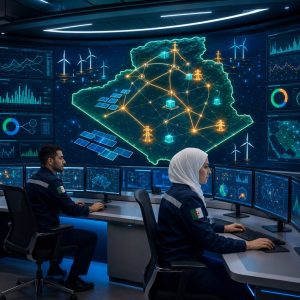
Above the metering layer sits the Supervisory Control and Data Acquisition (SCADA) system — the nervous system of the power grid. SCADA monitors substations, transmission lines, and generation plants in real time, allowing operators to detect faults, reroute power, and balance supply and demand. Sonelgaz operates SCADA systems across its transmission network, but much of the distribution grid — the last-mile infrastructure that delivers power to homes and businesses — still relies on manual monitoring and field crew inspections.
In a significant step forward, Algeria’s Energy Ministry confirmed in late 2025 that a full SCADA system overhaul will launch in 2026, with a five-year implementation timeline. The contractor has already been selected, and the first phase will begin in major cities before being progressively extended to all wilayas. This project aims to enhance real-time monitoring, control, and regulation of electricity flows across the national grid from regional control centers — a direct response to rising demand, grid expansion, and an increasingly diversified generation mix.
Modernizing distribution SCADA requires deploying intelligent electronic devices (IEDs) at thousands of distribution substations and switching points: automated reclosers that can isolate faults in seconds rather than the hours it takes for a field crew to respond, voltage regulators that maintain power quality as renewable generation fluctuates, and sensors that monitor transformer oil temperature, conductor sag, and other indicators of equipment health. This is where IoT meets the power grid — thousands of connected devices generating continuous telemetry data that feeds into analytics platforms. GE Vernova has already secured a major order for grid equipment and solutions in Algeria, signaling that international vendors are actively competing for this modernization work.
The analytics opportunity is substantial. Modern distribution management systems (DMS) use machine learning to predict equipment failures before they cause outages, optimize voltage and reactive power across the network to reduce technical losses, and coordinate distributed energy resources like rooftop solar. For Sonelgaz, predictive maintenance alone could significantly reduce outage frequency and duration, while Volt-VAR optimization has been shown to reduce line losses by up to several percentage points in deployments worldwide — potentially translating to hundreds of millions of dollars in recovered energy annually for a grid of Algeria’s scale. However, deploying these systems requires not just hardware and software but a fundamental shift in operational culture from reactive maintenance to data-driven decision-making.
Renewable Integration: The Coming Complexity
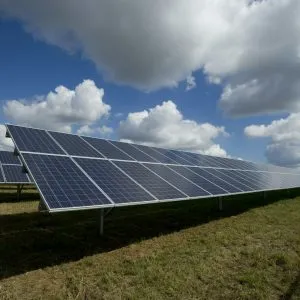
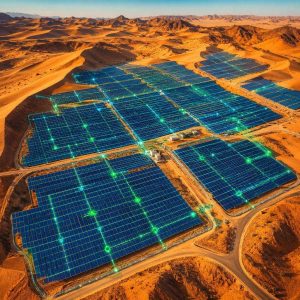
Algeria’s smart grid modernization is happening against the backdrop of an evolving renewable energy target. The government’s current program targets 15 GW of installed renewable capacity by 2035 — revised from an earlier and more ambitious 22 GW by 2030 target — encompassing solar PV as the primary technology alongside wind and other sources. Current installed renewable capacity stands at approximately 437-450 MW (primarily solar PV), but 3.2 GW of new solar capacity has been provisionally awarded through major tender rounds, with the first projects expected to come online progressively. If the program maintains momentum, renewables would represent a growing share of Algeria’s generation mix. This fundamentally changes what the grid needs to do.
Solar generation is inherently variable. Output ramps up rapidly in the morning, peaks at midday, and drops to zero at sunset — precisely when residential demand peaks as people return home and turn on air conditioning, lighting, and appliances. This creates the “duck curve” that grid operators worldwide are grappling with: excess generation during the day and a steep demand ramp in the evening. Without smart grid capabilities, integrating large-scale solar leads to grid instability, curtailment of renewable generation, and potentially dangerous frequency deviations.
A smart grid addresses this through multiple mechanisms. Demand response programs, enabled by smart meters and time-of-use pricing, can shift flexible loads like water heating and EV charging to midday solar peaks. Battery energy storage systems (BESS), coordinated through grid management software, can absorb excess solar generation and discharge during evening peaks. Advanced inverter controls on solar installations can provide grid support services — voltage regulation, frequency response, reactive power — that were traditionally supplied only by thermal generators. Algeria’s grid operator will need all of these capabilities, plus accurate solar generation forecasting and real-time visibility into distributed solar installations, to manage the transition. The smart grid is not just a modernization initiative — it is a prerequisite for Algeria’s renewable energy ambitions.
Workforce and Implementation Realities
The technology for smart grid modernization exists and is proven globally. The harder challenge for Algeria is implementation at scale — and that starts with people. Operating a modern smart grid requires skills that are fundamentally different from those needed for a traditional utility: data scientists who can build predictive models from meter and sensor data, cybersecurity specialists who can protect critical infrastructure from attacks on IoT devices, telecommunications engineers who can design and maintain the communication networks connecting millions of smart devices, and software engineers who can develop and maintain the analytics platforms.
Sonelgaz employs over 90,000 people across its group of subsidiaries, making it one of Algeria’s largest employers. The workforce has deep expertise in traditional electrical engineering and grid operations, but the smart grid skills gap is real. Training programs, partnerships with international smart grid vendors — Schneider Electric (which operates a facility in Algeria), Siemens, ABB, and GE Vernova all have active grid modernization divisions — and collaboration with Algerian universities to develop relevant curricula are all necessary. Countries that have successfully deployed smart grids at national scale — Italy’s Enel was the global pioneer, deploying over 32 million smart meters between 2001 and 2006 — invested heavily in workforce development alongside technology deployment.
The financial model also matters. Smart grid investments are capital-intensive upfront but generate returns through loss reduction, deferred generation investment, and operational efficiency. Enel’s Italian Telegestore smart meter deployment cost approximately EUR 2 billion but generated savings of approximately EUR 500 million annually through reduced commercial losses, remote meter reading, and operational efficiencies. For Sonelgaz, the business case is compelling given Algeria’s loss rates and grid scale. International development finance institutions are potential partners: the African Development Bank approved a new 2025-2030 Country Strategy for Algeria focused on infrastructure development and economic diversification, while the World Bank has committed $30 billion from 2024 to 2030 for energy access programs across Africa. Algeria’s scale and strategic energy position make it an attractive candidate for such financing.
Frequently Asked Questions
What is algeria’s smart grid ambitions?
Algeria’s Smart Grid Ambitions: How Sonelgaz Is Modernizing the Power Network with IoT covers the essential aspects of this topic, examining current trends, key players, and practical implications for professionals and organizations in 2026.
Why is algeria’s smart grid ambitions important for Algeria?
This topic is significant for Algeria because it intersects with the country’s digital transformation goals, economic diversification strategy, and growing technology ecosystem. The article provides specific context for Algerian stakeholders.
How does smart meters: the foundation layer work?
The article examines this through the lens of smart meters: the foundation layer, providing detailed analysis of the mechanisms, trade-offs, and practical implications for stakeholders.
Sources & Further Reading
- Algeria Reaches 99% Electricity Coverage — DzairTube
- Algeria Plans 2026 Overhaul of National Electricity Control System — Ecofin Agency
- Algeria To Launch SCADA System Modernisation in 2026 — EnergyNews
- Sonelgaz Plans $4.94 Billion Electricity Investment in 2025 — Energy in Africa
- Algeria Powers Ahead with Huge Renewable Energy Plans — IEF
- Algeria’s PV Capacity Tops 436.8 MW — PV Magazine
- Algeria Power Market Analysis — Mordor Intelligence
- Smart Meters: An Italian Idea Taking on the World — Enel X
- Enel Telegestore Project — Smart Energy International
- GE Vernova Secures Major Order for Grid Solutions in Algeria — GE Vernova
- AfDB Approves 2025-2030 Country Strategy for Algeria — African Development Bank
- Algeria Country Profile — International Energy Agency