The Channels Where Algeria Actually Buys
Ask ten Algerian consumers where they discovered the last three products they bought, and at least seven will say Instagram, TikTok, or Facebook. The shift from “social media = content” to “social media = storefront” is the defining digital commerce story of 2026 in Algeria.
The platform numbers back this up. According to DataReportal’s 2025 and 2026 digital snapshots:
- TikTok: 24.8 million Algerian adult users by late 2025, up from 21.1 million at the start of the year. TikTok ads reach 80.1% of all adults 18+ — one of the highest penetration rates in North Africa.
- Instagram: 12 million Algerian users in early 2025, with ad-audience growth of 5.1% (+650,000 users) in just three months between July and October 2025.
- Facebook: Remains the anchor, especially for older demographics and Marketplace-style direct messaging sales.
Add ubiquitous WhatsApp usage for customer conversations and Algeria has exactly the conditions that built TikTok Shop into a $30 billion GMV machine globally in 2025.
How Algerian Micro-Merchants Actually Operate
The most common Algerian social commerce playbook, assembled from practitioner guides and e-commerce agencies operating in 2026, looks like this:
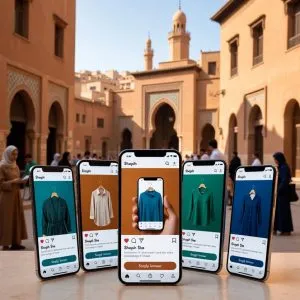
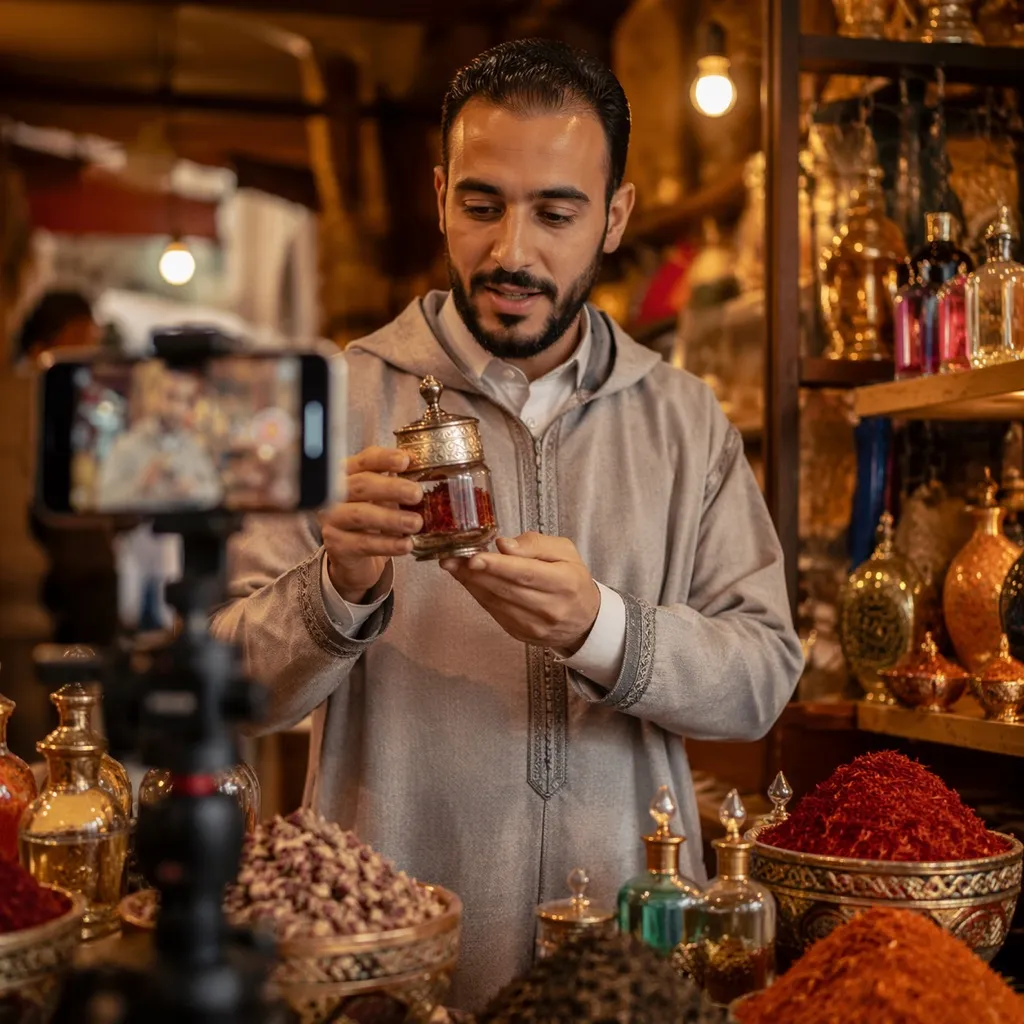
- Discovery: A merchant posts a short-form video or carousel on TikTok or Instagram showcasing a product — cosmetics, fashion, home goods, food specialties, traditional crafts.
- Interest: Viewers comment or DM. The merchant responds directly, often via WhatsApp for serious conversations.
- Order confirmation: The buyer sends address, phone, preferred wilaya, and chosen variant via messaging.
- Fulfilment: The merchant dispatches through a COD logistics partner — Yalidine, ZR Express, or Kazitour — who deliver the package, collect cash from the buyer, and deposit it to the merchant’s account.
- Reputation: Positive customer comments and re-shares fuel the next cycle; negative comments are handled privately to preserve brand image.
This funnel has two superpowers: near-zero fixed costs and near-unlimited geographic reach inside Algeria. A merchant in Mostaganem can sell to a buyer in Tamanrasset without owning a shop, a website, or even a merchant bank account.
What’s Changing in 2026
Four specific developments make 2026 different from the organic social commerce of the past three years.
1. Instagram’s native affiliate tagging. Instagram rolled out native affiliate commerce across all commerce markets in spring 2026, with Reels tagging that makes every video a shoppable surface. For Algerian creators with audiences, this creates a formal revenue path that previously required third-party link-in-bio hacks.
2. TikTok Shop’s regional momentum. TikTok Shop accounted for ~20% of global social commerce in 2025 and is expanding its MENA footprint. Algeria is a high-priority market given audience reach — and any formal Algerian rollout would transform the sector overnight.
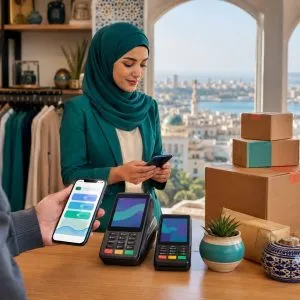
3. Mobile wallet interoperability. The DZMobPay Switch reaching 15 interoperable banks in 2026 (see our separate coverage) means social commerce merchants can finally offer a credible alternative to COD. Buyers paying via QR at a bank-agnostic merchant-of-record unlock faster settlement, less logistics risk, and higher-trust transactions.
4. Formal micro-importation regime. New 2026 regulations allow registered self-entrepreneurs to import small commercial quantities with reduced bureaucracy, letting TikTok-native merchants legally source inventory abroad — a critical enabler for dropship and white-label plays.
Advertisement
The Monetization Ladder
Algerian social merchants typically progress through a predictable value ladder:
- Level 1 — Pure DM commerce. Facebook page + Instagram feed + WhatsApp closes. Lowest barrier, hardest to scale past ~10 orders per day.
- Level 2 — Dedicated storefront on YouCan.shop or a similar COD-native platform. Built specifically for North African markets, includes upselling tools, synced with TikTok Ads and Instagram catalogues. This is the first “operational business” step.
- Level 3 — Paid media plus creator partnerships. Merchants scaling past level 2 invest in TikTok Ads, Instagram Ads, and micro-influencer collaborations. CAC rises but repeatable growth becomes possible.
- Level 4 — Full brand operations. Owned logistics relationships, multiple sales channels, registered commercial entity, formal accounting. The few Algerian social commerce brands that reach this level often graduate to national retailer distribution too.
The Supporting Ecosystem
Three infrastructure layers have matured around Algerian social commerce:
- Logistics: Yalidine and ZR Express now deliver reliably across all 58 wilayas, with COD collection and merchant dashboards. Last-mile reliability used to be the main bottleneck; in 2026 it’s a solved problem for most merchant profiles.
- Platforms: YouCan.shop has emerged as the default “Shopify for COD markets,” with features specifically tuned for Algerian (and wider North African) behavior patterns.
- Capital and training: The Women Entrepreneurs Finance Initiative (We-Fi), supported by a network of 51 certified coaches, has trained nearly 120 women artisans and entrepreneurs in e-commerce and digital marketing. Most saw turnover growth, with about one in five achieving gains above a third. Programs like this turn informal social sellers into registered micro-businesses.
Challenges That Remain
Honest assessment of what still holds back Algerian social commerce:
- Returns and trust. COD means buyers can refuse packages on delivery. Return rates in social commerce can exceed 20–30%, eating margins. The shift to upfront QR payments via DZMobPay will gradually reduce this, but trust is a cultural shift, not just a technical one.
- Counterfeit and quality perception. TikTok-driven “miracle product” hype has generated buyer skepticism. Brands that invest in quality signals — professional packaging, customer video testimonials, verified pages — outperform.
- Platform moderation risk. Algerian merchants operating without formal business registration risk sudden account suspensions. Formalization is a defensive necessity, not just a compliance checkbox.
- Advertising spend discipline. Many merchants burn money on unoptimized ad spend before learning the craft. The creator economy around Algerian marketing tutors is starting to fill this gap.
Why This Matters for the Ecosystem
Social commerce is the single most inclusive economic channel Algeria has ever had. A 24-year-old in Setif with a smartphone and a product idea can build a four-figure monthly income without capital, without formal employment, and without leaving their neighborhood. Multiply that across hundreds of thousands of Algerians and the aggregate effect on household income, formal business creation, and digital fluency is substantial.
The next wave of Algerian tech startups — payments, logistics, B2B SaaS, creator tools — will be built by founders who learned commerce on TikTok first. That’s how ecosystems compound.
Frequently Asked Questions
Which platforms drive Algerian social commerce in 2026?
TikTok is the largest reach engine — 24.8 million Algerian adult users by late 2025 and 80.1% ad penetration among adults 18+. Instagram follows with 12 million users and 5.1% ad-audience growth in just three months between July and October 2025. Facebook remains important for older demographics and Marketplace-style direct-message sales, while WhatsApp is the universal closing channel.
How do Algerian merchants handle deliveries and payments?
Most orders flow through cash-on-delivery logistics providers: Yalidine, ZR Express, and Kazitour deliver across all 58 wilayas and collect cash from buyers. Payments are increasingly shifting to QR via DZMobPay as interoperability reaches 15 banks in 2026. YouCan.shop acts as the “Shopify for COD markets” with built-in tooling for the region.
What is the biggest risk for Algerian social commerce merchants?
Return rates on cash-on-delivery can exceed 20–30%, which directly eats margin. Platform moderation is also a risk for unregistered sellers — sudden account suspensions are common without formal business registration. Formalizing as a self-entrepreneur, investing in quality signals (professional packaging, verified pages), and shifting volume to upfront QR payments mitigate both risks.
Sources & Further Reading
- Digital 2026: Algeria — DataReportal
- Digital 2025: Algeria — DataReportal
- How to Start an E-commerce Business in Algeria — Webdispo
- Top E-commerce Trends in Algeria You Should Know
- How Women Entrepreneurs in Algeria Are Going Digital — World Bank
- E-commerce in Algeria 2026: Laws, Taxes, Commercial Register — Ecommaps