The Rails Are Finally Connected
For most of the last decade, Algerian digital payments lived in silos. BaridiMob ran Algérie Poste’s postal network. CIB handled interbank cards. Individual banks had their own mobile apps with their own customer pools. Paying a merchant usually meant hoping you and the merchant happened to bank at the same institution — otherwise cash won.
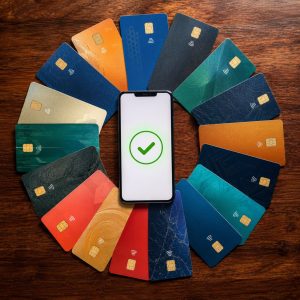
June 2024 changed that foundation. The GIE Monétique and SATIM launched the Switch Mobile interoperability platform, built on the DZMobPay infrastructure. By early 2025, seven banks plus Algérie Poste had joined: BNA, CPA, BDL, BEA, CNEP-Banque, AGB, Al Salam Bank, and Algérie Poste via BaridiMob. BADR and Fransabank Algérie were confirmed to join before the end of 2025, bringing the count to nine. The stated target for 2026 is 15 participating institutions — effectively the entire Algerian retail banking sector.
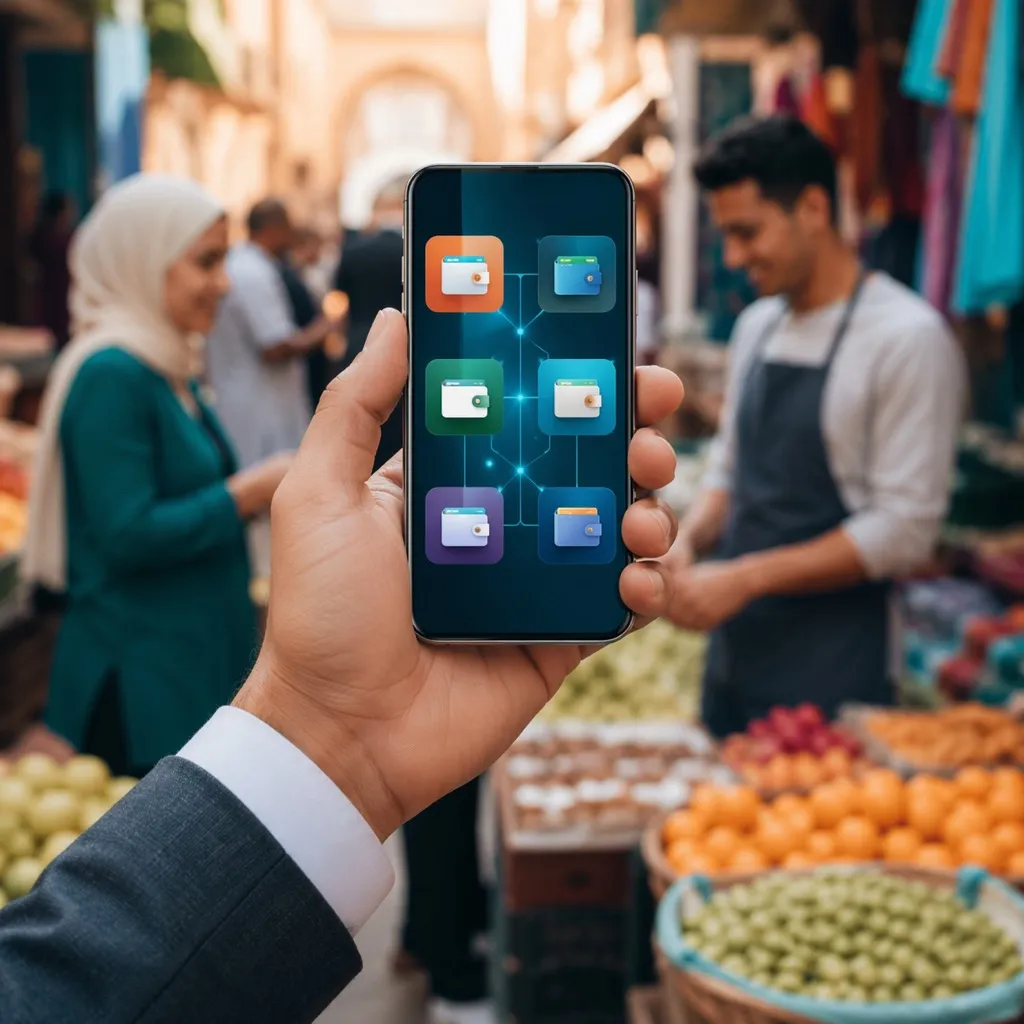
The practical consequence: a customer of any connected bank can pay a merchant connected to any other bank by scanning a QR code, and the funds move instantly across the DZMobPay rails. Interoperability is no longer an aspiration; it is the default.
What Interoperability Actually Delivers
Three concrete shifts are now visible for end users and merchants.
For users: A single app (the bank’s mobile app) now pays at any participating merchant, regardless of which bank that merchant uses. This is the same experience UPI delivered in India or Pix delivered in Brazil — and it is the essential precondition for digital payments to replace cash at scale. BaridiMob users, CIB-app users, and private-bank app users now operate in the same economic network.
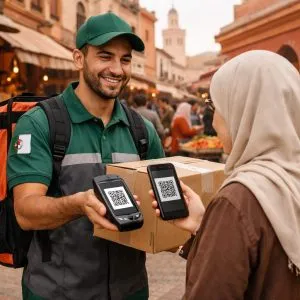
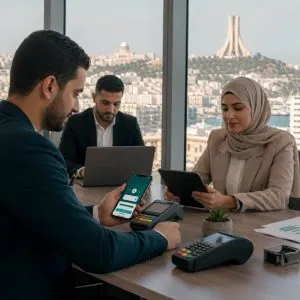
For merchants: A merchant with a single QR code accepts payments from any Algerian bank customer, instead of needing multiple POS terminals or bank relationships. The GIE Monétique is also considering incentives to drive merchant QR adoption further. With 11,873 merchants already onboarded in the first 10 months and 15-bank coverage arriving in 2026, the merchant value proposition gets stronger every quarter.
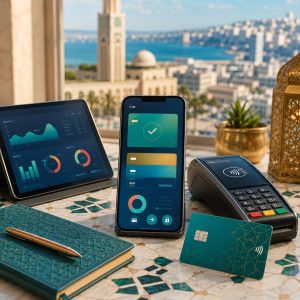
For the cash economy: Algeria remains a heavily cash-based economy, and interoperability alone does not change that overnight. But it removes the single biggest structural barrier to digital merchant acceptance. Combined with Baridi Pay — Algérie Poste’s QR-based mobile payment service launched in June 2025 — and the planned NFC / SoftPOS rollout, the alternatives to cash are multiplying.
The Stack: Who Does What
Understanding the architecture matters because it explains why 2026 is different from earlier digital-payment waves:
- SATIM (Société d’Automatisation des Transactions Interbancaires et de Monétique) — operates the DZMobPay platform, the unified infrastructure ensuring secure, continuous processing of all interbank transactions. SATIM is the technical backbone.
- GIE Monétique — the industry consortium of Algerian banks that governs the rules, onboarding, and commercial terms. GIE Monétique sets the ambition and the roadmap.
- Algérie Poste — a first-among-equals participant via BaridiMob, historically Algeria’s largest consumer payment footprint by account count.
- Individual banks — each runs its own consumer-facing mobile app that plugs into the DZMobPay Switch for outbound payments and QR acceptance.
- CIB (Carte Interbancaire) — the card network that became interoperable with Edahabia in January 2020, laying the institutional groundwork for later mobile interoperability.
This is the same architectural pattern every successful national instant-payment system uses: a central switch, unified standards, and a roster of participating banks. Algeria’s innovation has been executing it without a greenfield rebuild — layering interoperability on top of existing BaridiMob and CIB infrastructure.
Advertisement
The User Experience in Practice
A typical interoperable payment in 2026 looks like:
- A merchant prints (or displays) a single QR code linked to their acquiring bank.
- A customer opens their bank’s mobile app — BaridiMob, BNA Mobile, CIB-linked app, or any participating institution.
- The customer scans the QR, sees the merchant name and amount, confirms with a PIN or biometric.
- The DZMobPay Switch routes the transaction through SATIM, the customer’s account is debited, the merchant’s account is credited instantly.
- Both parties receive confirmation in real time.
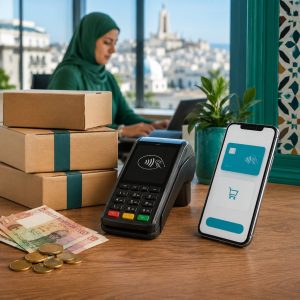
No card reader. No POS terminal. No cross-bank friction. For small merchants — a boulangerie in Bab Ezzouar, a clothes shop in Bejaia, a café in Oran — the cost barrier to accepting digital payment collapses.
What Still Needs Work
Honest assessment of the remaining gaps:
- Rural and informal coverage. The 11,873 merchants on DZMobPay as of November 2025 are a starting line, not a finish line. Algeria has hundreds of thousands of small merchants, especially in informal markets and inland wilayas, where onboarding has barely begun.
- Smartphone penetration and data cost. QR payments require a functioning smartphone with data — still a constraint in lower-income segments. NFC / SoftPOS rollouts planned for late 2026 will help, but affordability matters.
- Cross-border and e-commerce integration. Domestic interoperability is the priority, but Algerian merchants selling to the diaspora or across borders still face heavy frictions. Integration with international payment rails remains a multi-year agenda.
- Merchant settlement time. Instant consumer-to-merchant transfers are in place, but merchant settlement calendars and bank clearing practices are still catching up — a minor issue that matters for cashflow-sensitive small businesses.
- Fintech layer above the rails. Algeria’s neobank and pure-play fintech segment is still embryonic. Mature interoperable rails open the door for startups that build loyalty, credit, and merchant analytics on top of DZMobPay — this is the next ecosystem wave.
Why 2026 Matters for the Ecosystem
A connected 15-bank switch is an economic inflection point. It means any fintech startup can now realistically promise “accept payments from any Algerian customer” without building N individual bank integrations. That dramatically lowers the cost of starting a consumer fintech or merchant-services company in Algeria.
It also aligns with other pieces of the 2026 digital economy puzzle: the Law 18-07 enforcement pushing data local, the AfCFTA opening pan-African trade routes, Algeria’s logistics startups going south (see our Sahel expansion coverage), and a maturing healthtech and edtech base that all need payments infrastructure.
For the first time, an Algerian founder building a consumer product can assume the payments layer “just works.” That changes everything downstream.
Frequently Asked Questions
What is the DZMobPay Switch Mobile?
DZMobPay is Algeria’s unified mobile payment interoperability platform, operated by SATIM and governed by the GIE Monétique consortium of banks. It acts as a central switch that routes instant QR-based payments between any two connected banks, so a customer of one bank can pay a merchant who banks elsewhere without friction. The model mirrors UPI in India and Pix in Brazil.
Which banks are connected to DZMobPay in 2026?
As of early 2025, seven banks plus Algérie Poste were live: BNA, CPA, BDL, BEA, CNEP-Banque, AGB, Al Salam Bank, and Algérie Poste via BaridiMob. BADR and Fransabank Algérie joined before the end of 2025, bringing the total to nine. The 2026 target is 15 institutions — effectively the entire Algerian retail banking sector.
How does interoperability change the merchant experience?
A single QR code now accepts payment from any Algerian bank customer. Merchants no longer need multiple POS terminals or relationships with every major bank. Combined with Baridi Pay and upcoming NFC/SoftPOS rollouts, the cost and complexity barriers to accepting digital payment collapse — especially for small merchants in Bab Ezzouar, Bejaia, Oran, and smaller wilayas.
Sources & Further Reading
- Paiement mobile : l’interopérabilité élargie à 15 banques en 2026 — Algerie Eco
- Avenir du paiement mobile en Algérie : 15 banques interconnectées d’ici 2026 — Maghreb Émergent
- Algérie Poste Launches “Baridi Pay” Mobile Payment Service — DzairTube
- Mobile payments: 15 banks soon to be linked by QR code — Algeria Invest
- Exploring Local Payment Methods and Digital Finance in Algeria — Transfi
- Algeria Instant Payments: Rails, Fees, and the Lightning Network — Lightspark