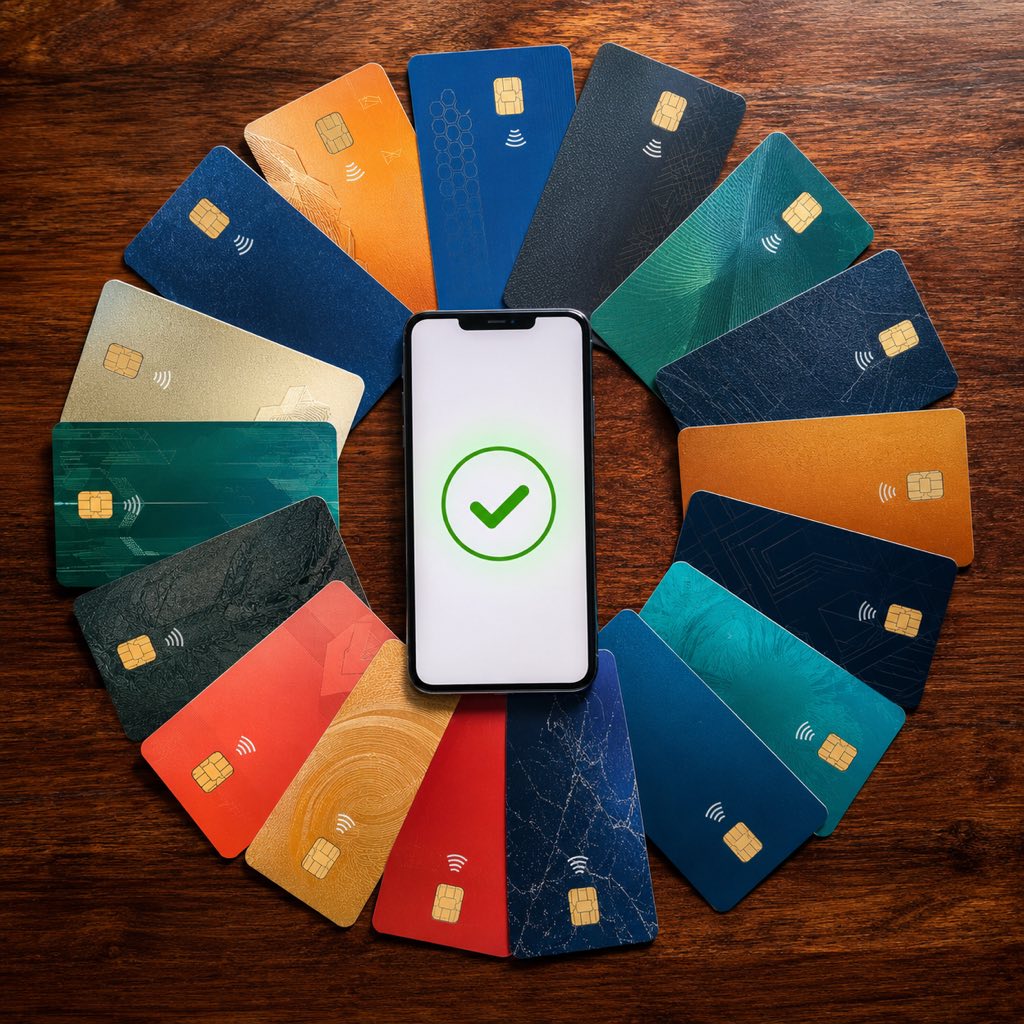
Algeria’s Biggest Invisible Fintech Infrastructure Upgrade
Most of Algeria’s digital payment headlines focus on the numbers users can see: terminals deployed, transactions processed, cards issued. What rarely makes the news is the infrastructure layer that makes those user-facing metrics possible — and in 2026, that layer is undergoing its most significant upgrade since the national interbank switch was launched in June 2024.
Algeria’s Switch Mobile — the national interoperability backbone managed by GIE Monétique — is expanding from its initial 7-bank pilot to at least 15 banking establishments by end-2026. As Algérie Eco reported in November 2025, once this expansion is complete, DZMobPay users will be able to transfer money and pay merchants regardless of which bank holds their account or which bank holds the merchant’s account. The underlying switch handles the routing — invisibly, in seconds.
This matters more than it sounds. Without a shared interoperability layer, each bank’s mobile payment app is effectively a closed ecosystem: a Banque Nationale d’Algérie customer cannot pay a merchant enrolled through Crédit Populaire d’Algérie via QR without both parties using the same bank. The Switch Mobile eliminates that constraint. It is Algeria’s answer to what India’s UPI did in 2016 or what Kenya’s Pesalink did in 2017 — a shared rails layer that makes fragmented banking apps into a unified payment network.
What the Expansion Actually Changes
The technical architecture of the Switch Mobile is built around a unified QR code standard. Merchants display a single QR code; any DZMobPay-compliant app from any participating bank can scan and pay it. The switch routes the transaction to the correct accounts. No bank-to-bank agreements needed at the merchant level.
When DZMobPay launched in January 2025 with 7 pilot banks plus Algérie Poste, the initial participants included the National Bank of Algeria, Crédit Populaire d’Algérie, the Local Development Bank, the Foreign Bank of Algeria, the National Savings and Provident Fund, Algeria Gulf Bank, and Al Salam Bank. By end-2025, the platform had accumulated 95,014 personal accounts and 14,283 merchant accounts, processing 12,682 QR code transactions and 44,369 peer-to-peer transfers in its inaugural year.
Those numbers are modest by any global fintech standard. But the platform’s value is not the year-one transaction count — it is the infrastructure maturity that 15-bank coverage represents. Once the majority of Algeria’s banking system is connected to a single interoperability layer, the marginal cost of adding new institutions drops to near-zero, and the network effects of universal acceptance begin to compound.
Algeria’s total e-payment volume reached 939 billion dinars in 2025 — a 46% year-on-year increase — driven largely by public utility digitization and the DZMobPay launch. Mobile peer-to-peer transfers reached 647.4 billion dinars across 47.5 million transactions, a 31% increase. Intra-bank QR mobile payments rose 19% to 69.3 million operations worth 57.3 billion dinars.
Advertisement
What Is Still Missing
The 15-bank target represents the majority of Algeria’s banking institutions, but the expansion leaves critical gaps in the system’s merchant utility. The key constraint is not the number of banks connected but the number of merchants enrolled. As of end-December 2025, DZMobPay had 14,283 merchant accounts against a declared merchant base of 1.2 million — barely 1.2% coverage.
Interoperability without merchant enrollment is infrastructure in search of an audience. The Switch Mobile expansion solves the bank-side fragmentation problem. The merchant-side adoption problem requires a separate set of incentives, and those are not yet clearly in place.
A second emerging capability with significant implications is SoftPos. The CEO of GIE Monétique has confirmed that SoftPos — which transforms an NFC-enabled phone into a payment terminal — is scheduled for rollout by end-2026. Meatechwatch has documented that this technology could fundamentally change merchant onboarding economics: instead of deploying expensive hardware terminals, any merchant with a compatible smartphone becomes an acceptance point. Combined with the 15-bank interoperability layer, SoftPos would create the first genuinely mass-market mobile payment acceptance infrastructure in Algeria.
What Algerian Banks and Fintech Teams Should Build for the 15-Bank Layer
1. Integrate the Switch Mobile API into every bank-facing product before Q4 2026
For any fintech holding or pursuing a PSP license under Bank of Algeria Instruction 06-2025, the 15-bank expansion creates both an obligation and an opportunity. Obligation: any payment service that routes through the national switch must maintain compliance with GIE Monétique’s technical specifications, which will be updated for the expanded participant set. Opportunity: third-party apps built on top of the Switch Mobile can immediately reach customers across all 15 banks without individual bank partnerships. Build to the standard, not to the bank.
2. Enroll merchants now, before competitors discover the gap
The 14,283 merchant accounts enrolled on DZMobPay against 1.2 million declared merchants is a 1.2% coverage rate. That is an acquisition market, not a saturated one. The merchants who enroll now — through bank business apps, through PSP onboarding, through any DZMobPay-compliant channel — will be the ones with established QR codes, payment histories, and digital transaction records by the time the broader merchant adoption push accelerates in 2027. Early merchant enrollment also generates the alternative credit data (payment frequency, revenue consistency) that will matter when digital lending products emerge.
3. Position your app for the SoftPos rollout before the hardware terminal ceiling becomes visible
The 100,000 hardware terminal ceiling is already visible: SATIM officials say one million more are needed and current deployment rates will not close the gap before 2030. SoftPos removes the hardware constraint entirely. Any fintech with a mobile app should begin designing the SoftPos merchant flow — scan to enroll, NFC tap to accept, instant settlement to the Switch Mobile — now. When GIE Monétique confirms the rollout specifications, companies with working integration prototypes will move to production in weeks; companies starting from scratch will take quarters.
The Structural Lesson
Algeria’s Switch Mobile story is fundamentally about sequence. The country built the interbank switch before most merchants were enrolled, before most consumers had a usage habit, and before SoftPos technology was available. That sequence looks premature from a utilization standpoint — 10 transactions per terminal per month, 14,283 merchant accounts on a platform designed for millions — but it is strategically correct.
Infrastructure built ahead of demand scales when demand arrives; infrastructure built after demand arrives always lags. India’s UPI had 12 million monthly transactions after its first year. Today it processes 14 billion. The architecture was there when the volume came. Algeria’s Switch Mobile, with 15-bank coverage by end-2026, a SoftPos rollout in the same window, and a 46% annual growth rate in total e-payment volume, is positioned for the same compounding trajectory — if merchant enrollment and consumer behavior change can be accelerated to match the infrastructure’s capacity.
Frequently Asked Questions
What is Algeria’s Switch Mobile and how does it work?
The Switch Mobile is Algeria’s national interbank mobile payment routing platform, managed by GIE Monétique and launched in June 2024. It operates a unified QR code standard: a merchant displays one QR code, and any DZMobPay-compliant app from any participating bank can pay it — the switch routes the transaction to the correct accounts invisibly. This eliminates the need for bank-to-bank agreements at the merchant level.
How many banks are connected to DZMobPay and what is the 2026 target?
DZMobPay launched in January 2025 with 7 banks plus Algérie Poste. These include the National Bank of Algeria, Crédit Populaire d’Algérie, the Local Development Bank, the Foreign Bank of Algeria, the National Savings and Provident Fund, Algeria Gulf Bank, and Al Salam Bank. The 2026 expansion target is at least 15 banking establishments, covering the majority of Algeria’s formal banking system.
What is SoftPos and when will it be available in Algeria?
SoftPos technology converts any NFC-enabled smartphone into a payment acceptance point, allowing merchants to receive card and QR payments without purchasing dedicated hardware terminals. GIE Monétique has confirmed a SoftPos rollout by end-2026. Combined with the Switch Mobile interoperability layer, SoftPos could enable mass merchant enrollment at dramatically lower cost than traditional terminal deployment.
Sources & Further Reading
- Paiement mobile : l’interopérabilité élargie à 15 banques en 2026 — Algérie Eco
- Le montant des paiements électroniques s’est élevé à 939 milliards de dinars en 2025 (+46%) — Algérie Eco
- E-paiement: 939 milliards de dinars en 2025, +46% — Algeria Invest
- Algeria Launches Mobile Payment Interoperability to Boost Financial Inclusion — Meatechwatch
- Lancement du Switch Mobile : une révolution numérique — Algeria Invest
- Algeria’s Electronic Payment Market Surpasses 22 Million Cards — We Are Tech Africa
🔗 Related Intelligence

Algeria Digital Wallets: Interoperability Hits 15 Banks on the Switch Mobile in 2026

Algeria’s Instant Payment Switch: Real-Time Interbank Transfers Power the Cashless Shift
Algeria’s Cashless 2030 Strategy: Tiered Wallets, Mobile Banking, and the Path to Financial Inclusion

Algeria’s Digital Banking Infrastructure: How Neobank Licensing Is Reshaping Enterprise IT