The Largest Solar Addition in Algeria’s History
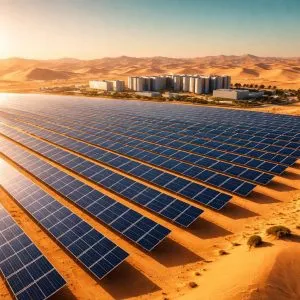
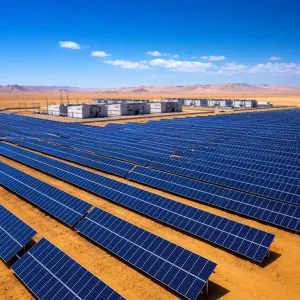
By August 2026, Algeria will commission nine photovoltaic solar plants with a combined capacity of 1,480 megawatts. This is the largest single-year addition of renewable energy capacity in Algeria’s history, arriving precisely when the country’s digital ambitions demand reliable, affordable electricity for data centers, sovereign cloud platforms, 5G networks, and AI workloads.
The solar commissioning is part of a first phase targeting 3,200MW of renewable capacity, contributing to a national goal of 15,000MW by 2035. The immediate impact is concrete: nine plants across multiple wilayas will begin generating clean electricity within months.
The Nine Plants and Their Timeline
Two facilities led the commissioning schedule. The 200MW El Ghrous plant in Biskra and the 200MW Tendla plant in El M’Ghair were expected to begin operations by late January 2026, making them the first to come online.
The flagship project is the M’Sila solar plant, a 1,000MW facility that represents one of the largest single-site solar installations in Africa. The plant is a joint venture between China Petroleum Engineering & Construction Corp (CPECC) and the Algerian Energy Company (AEC), with $1.2 billion in secured financing. When fully operational, M’Sila alone will generate approximately 2 terawatt-hours of clean electricity annually.
Additional projects include a 200MW plant in Batna developed by a Masdar-led consortium (expected Q2 2026), a 100MW plant in Biskra also by Masdar (Q3 2026), and plants in Laghouat and Ghardaia developed by state-owned Sonelgaz totaling over 500MW.
The combined output projects an estimated 4GW of clean energy capacity by end of 2026, covering roughly 20% of Algeria’s projected national electricity demand.
Sonelgaz: The $4.94 Billion Backbone
State-owned utility Sonelgaz planned $4.94 billion in electricity investment in 2025, a 56% increase from 2024, spanning both conventional and renewable generation. Sonelgaz advances solar projects in Laghouat and Ghardaia while managing grid infrastructure upgrades needed to integrate intermittent solar generation.
Sonelgaz’s role extends beyond generation. The utility must upgrade transmission and distribution networks to handle variable solar output. Grid-level battery storage, demand response mechanisms, and smart grid technologies will be needed as solar’s share grows. For the technology sector, this modernization requires sophisticated software for load forecasting, energy trading, and grid stability analysis, creating opportunities for Algerian tech companies with expertise in data analytics, IoT, and industrial automation.
Advertisement
The Digital Energy Nexus
The 1,480MW solar commissioning has direct implications for Algeria’s digital infrastructure:
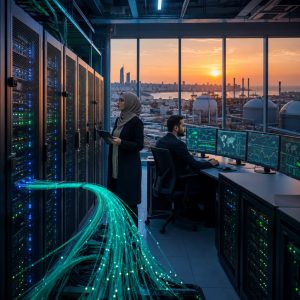
Data centers. Algeria’s two national data centers under construction at Mohammadia and Blida will require substantial, reliable electricity. A modern hyperscale data center can consume 20-50MW continuously. Solar generation, supplemented by grid power, can reduce operating costs and carbon footprints. Djezzy’s sovereign cloud platform, launched in February 2025, adds further demand.
5G expansion. Djezzy, Mobilis, and Ooredoo are deploying 5G across Algeria, with Djezzy expanding to 18 provinces. 5G base stations consume two to three times more electricity than 4G equipment. Solar capacity additions help ensure Algeria’s grid absorbs this demand without straining conventional generation.
AI workload foundation. As Algeria develops AI capabilities through ENSIA and the National School of Cybersecurity, compute demand will grow. While Algeria does not currently host GPU-class data centers, the energy foundation being built now is a prerequisite for any future AI infrastructure.
Algeria’s Solar Advantage
Algeria possesses one of the highest solar irradiance levels in the world, with average insolation of 2,500 to 3,500 hours per year across Saharan regions. Solar plants in Algeria generate more electricity per installed megawatt than equivalent installations in Europe, making deployment economics particularly favorable.
PV Magazine described 2024 as “a turning point for Algerian solar,” noting installed PV capacity had reached 436.8MW. The jump from 436MW to approximately 1,900MW in roughly two years represents a quadrupling of capacity that fundamentally changes Algeria’s renewable energy profile.
International Partnerships Driving the Build
China: CPECC leads the M’Sila megaproject ($1.2 billion), reflecting China’s significant role in African renewable energy development with cost competitiveness and rapid execution timelines.
UAE: Masdar, Abu Dhabi’s renewable energy company, develops multiple sites including the 200MW Batna and 100MW Biskra plants, bringing Gulf capital markets access and technical expertise.
Domestic capacity building: While international EPC firms lead construction, long-term operation and maintenance will require domestic technical capacity. Solar plant O&M demands skills in electrical engineering, SCADA systems, predictive maintenance, and performance analytics.
The 15,000MW Roadmap
The nine plants represent just the first phase. Algeria’s National Renewable Energy Program (PNER) targets 15,000MW by 2035, with the broader program encompassing up to 22,000MW by the end of the decade. Beyond 2026, additional phases will expand into wind energy, solar thermal, and potentially green hydrogen production. Algeria has expressed ambitions to become a green energy exporter, leveraging solar resources and geographic proximity to European markets.
Frequently Asked Questions
How much solar capacity is Algeria adding in 2026?
Algeria is commissioning nine photovoltaic plants with a combined 1,480MW by August 2026, quadrupling installed PV capacity from 436MW. The flagship M’Sila plant accounts for 1,000MW and will generate approximately 2 TWh annually. This is part of a first phase targeting 3,200MW toward a national goal of 15,000MW by 2035.
How does solar energy affect Algeria’s digital infrastructure?
Solar generation provides the electricity foundation for data centers, 5G networks, and future AI workloads. Algeria’s two national data centers, Djezzy’s sovereign cloud, and expanding 5G deployments all require reliable, affordable power. The solar capacity additions help ensure grid stability while reducing energy costs for digital infrastructure operators.
Who is building Algeria’s solar plants?
International partnerships lead construction: China’s CPECC leads the $1.2 billion M’Sila megaproject, the UAE’s Masdar develops plants in Batna and Biskra, and state-owned Sonelgaz advances projects in Laghouat and Ghardaia. Long-term operation and maintenance will increasingly require Algerian technical professionals skilled in SCADA, predictive maintenance, and performance analytics.
Sources & Further Reading
- Nine Solar Plants to Go Online in Algeria in 2026 — Renewables Now
- Algeria to Commission 1.48GW of Solar Capacity by August — ESI Africa
- Algeria Solar Energy: Impressive Plant Expansion by 2026 — PVknowhow
- Sonelgaz Plans $4.94 Billion Electricity Investment in 2025 — Energy in Africa
- A Turning Point for Algerian Solar — PV Magazine
- Algeria Renewable Energy Capacity Target 2035 — Energy Capital & Power