From Algerian Fields to the Global Stage
FarmAI, an Algerian startup specializing in AI-driven agricultural solutions, has captured international attention by winning the People’s Choice Award at Huawei’s prestigious Tech4Good competition, securing a $100,000 investment prize. The victory is more than a trophy — it validates Algeria’s emerging capacity to produce world-class AI solutions tailored to real agricultural challenges.
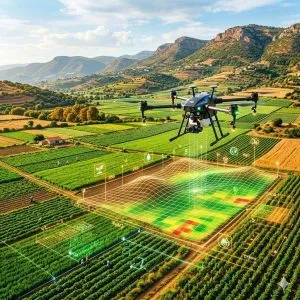
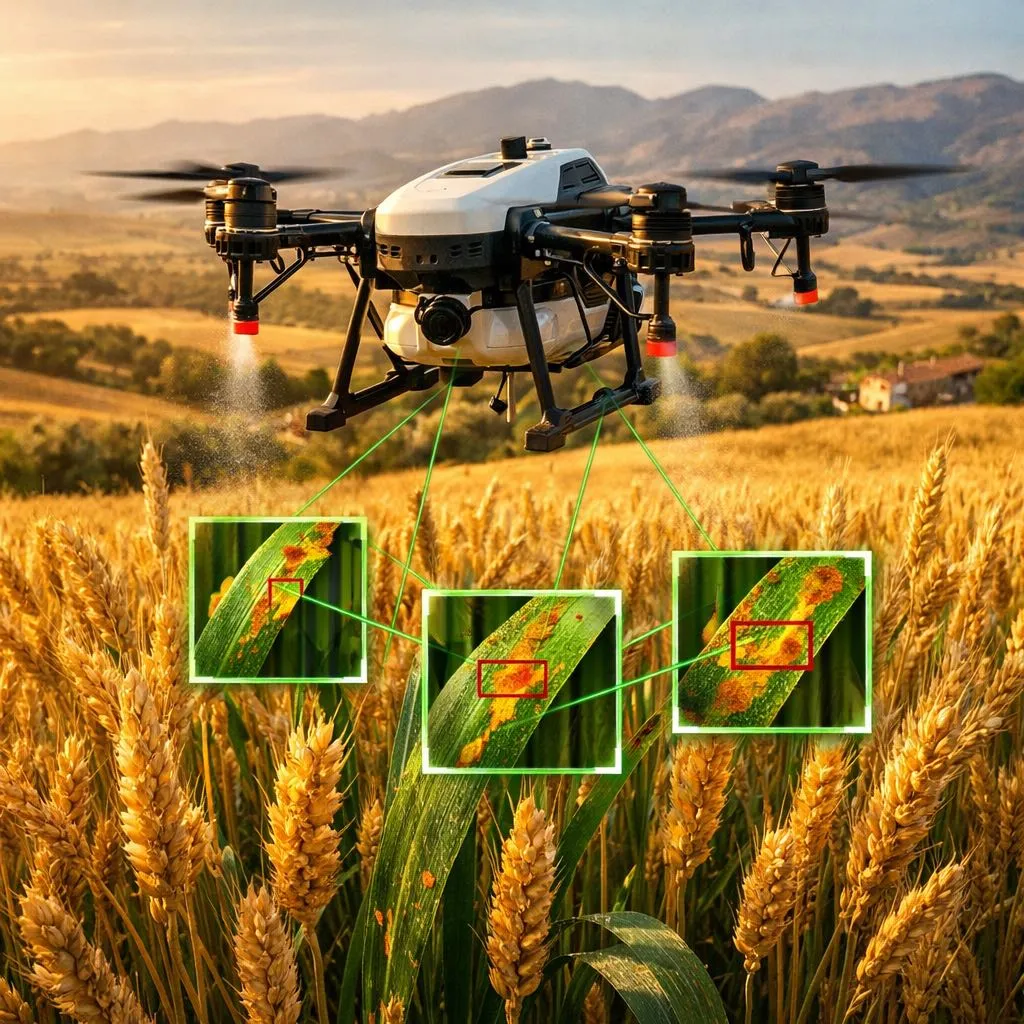
The startup’s core innovation addresses one of the most devastating threats to Algeria’s wheat production: rust disease. Using a combination of drone surveillance and computer vision algorithms, FarmAI can detect early signs of wheat rust across vast agricultural areas before the disease becomes visible to the naked eye. This early warning system gives farmers a critical time advantage, potentially saving entire harvests.
Why Wheat Rust Matters for Algeria
Algeria is one of the world’s largest wheat importers, spending billions annually to supplement domestic production. Wheat rust — a fungal disease that can destroy up to 70% of a crop if left unchecked — represents an existential threat to the country’s food security ambitions. The Algerian government has made agricultural self-sufficiency a strategic priority, and FarmAI’s technology directly supports that goal.
Traditional rust detection relies on manual field inspections, which are slow, labor-intensive, and often too late. By the time visible symptoms appear, the disease has already spread. FarmAI’s drones equipped with multispectral imaging and AI classification models can scan hundreds of hectares in hours, identifying infected zones with precision that human inspectors cannot match.
The Technology Behind the Win
FarmAI’s system operates on three integrated layers. First, agricultural drones capture high-resolution multispectral imagery of wheat fields. Second, a computer vision pipeline trained on thousands of labeled images of healthy and diseased wheat processes the data in near real-time. Third, an alert dashboard delivers actionable intelligence to farmers and agricultural cooperatives, mapping infection hotspots and recommending targeted treatment zones.
The AI model achieves detection accuracy rates that rival laboratory analysis, but at a fraction of the cost and time. According to research published in Nature Scientific Reports, AI-driven drone technology combined with computer vision represents a breakthrough in crop disease detection at scale, enabling surveillance across large agricultural areas that would be impossible with ground-based methods alone.
Advertisement
Government Recognition and National Impact
FarmAI’s recognition extends beyond the Huawei competition. The startup was invited to the opening of Algeria’s Forum on Food Security in Durum Wheat at the International Conference Center in Algiers, an event inaugurated by the Prime Minister and held under the patronage of the President of the Republic. This high-level engagement signals that the government views AI-powered agriculture as a strategic asset, not just an experimental technology.
Algeria’s agricultural sector employs roughly 25% of the workforce and contributes significantly to GDP. The integration of AI tools like FarmAI’s platform into the agricultural value chain could transform productivity, reduce crop losses, and decrease dependence on wheat imports — a triple benefit that aligns with the country’s economic diversification goals.
What This Means for Algeria’s Tech Ecosystem
FarmAI’s success on the global stage sends a powerful signal to Algeria’s broader startup ecosystem. It demonstrates that Algerian founders can build deep-tech solutions that solve local problems while attracting international recognition and investment. The $100,000 prize from Huawei provides capital to scale operations, but the real value lies in the credibility and network effects that come with a global competition win.
The victory also highlights the potential of sector-specific AI applications in Algeria. While much of the AI conversation globally focuses on large language models and generative AI, FarmAI’s approach — applying computer vision to a specific agricultural problem — represents the kind of practical, high-impact AI deployment that developing economies need most.
For aspiring Algerian tech entrepreneurs, the message is clear: deep expertise in a local problem domain, combined with strong technical execution, can compete with teams from anywhere in the world.
The Road Ahead: Scaling and Replication
FarmAI’s immediate challenge is scaling from pilot deployments to nationwide coverage. Algeria has over 3.4 million hectares of cereal-producing land, and covering this area requires partnerships with agricultural cooperatives, government agencies, and drone operators. The startup must also adapt its models to other crops and diseases beyond wheat rust.
The broader opportunity extends beyond Algeria’s borders. North Africa and the Sahel region face similar agricultural challenges, and a proven drone-based detection system could be exported to neighboring countries. Huawei’s investment and partnership network could accelerate this regional expansion, positioning FarmAI as a pan-African agritech player.
Frequently Asked Questions
What is FarmAI and what does it do?
FarmAI is an Algerian agritech startup that uses drones equipped with AI-powered computer vision to detect wheat rust disease in agricultural fields. The system captures multispectral imagery from the air and uses machine learning to identify early signs of infection before they are visible to the human eye, giving farmers a critical early warning to protect their crops.
How significant is the Huawei Tech4Good award?
The Tech4Good competition is Huawei’s global initiative recognizing technology solutions that address social challenges. FarmAI won the People’s Choice Award along with a $100,000 investment prize, competing against teams from around the world. The win provides both capital and international credibility, opening doors for partnerships and regional expansion.
Can FarmAI’s technology be applied to other crops beyond wheat?
While the current system is optimized for wheat rust detection, the underlying technology — drone-based multispectral imaging combined with computer vision — is adaptable to other crops and diseases. Expanding to olive groves, date palms, and other strategic Algerian crops would require training new AI models on disease-specific datasets, but the core platform architecture supports this evolution.
Sources & Further Reading
- Huawei congratulates FarmAI from Algeria for winning People’s Choice Award — Huawei on X
- Huawei: an Algerian startup ranked 2nd in the final of the Tech4Good competition — ENTV
- AI-driven drone technology and computer vision for early detection of crop disease — Nature Scientific Reports
- FarmAI Company Page — LinkedIn
- Algeria Tech and AI Startup Ecosystem in 2026 — AlgeriaTech