What Ouadah Actually Proposed in Kazan
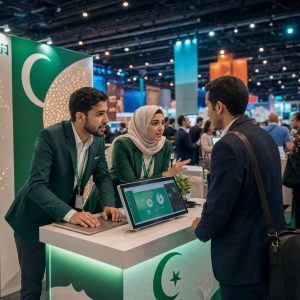
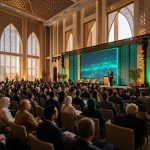
For years, Algeria–Russia cooperation stayed anchored to energy and infrastructure. KazanForum 2026 signaled a deliberate pivot. Algeria’s Minister of the Knowledge Economy, Startups, and Micro-Enterprises, Noureddine Ouadah, traveled to the annual “Russia – Islamic World” forum in Kazan (May 12–17, 2026) as part of a delegation spanning more than 90 countries. His message was unusually concrete for a bilateral forum: stop relying on historical goodwill and start building institutional funding architecture.
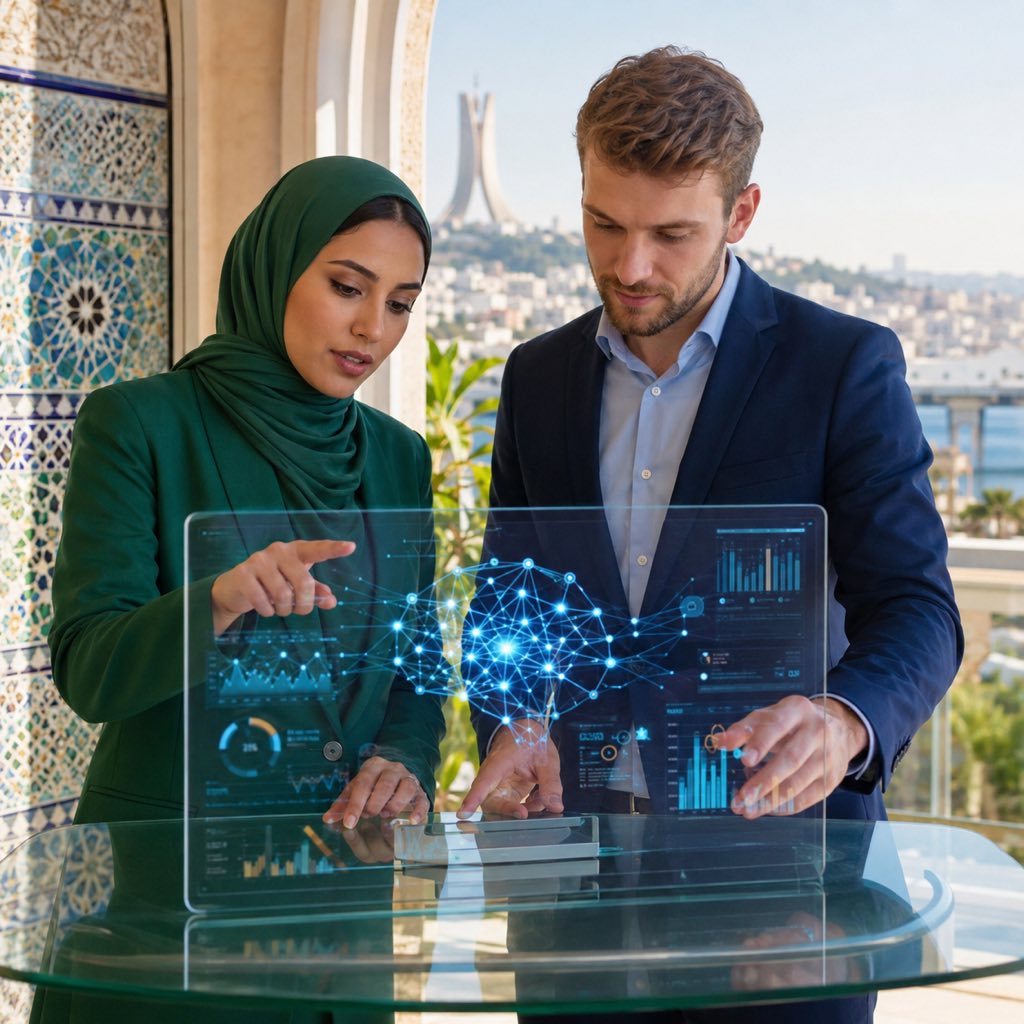
Ouadah told iAfrica that the two sides should “go forward and strengthen this collaboration with an extension on research and development and funding mutual projects between Algerian universities and Russian universities.” He outlined three cooperation pillars: joint startup financing mechanisms, university research partnerships anchored in AI and data science, and co-development of AI companies with dual export targets — African and European markets.
The minister also invoked a historical anchor that rarely appears in modern tech-diplomacy: Soviet academics and engineers who helped build Algeria’s scientific institutions during the 1960s and 1970s. The framing was strategic — it positioned the proposed AI cooperation not as a new bet on an untested partner, but as a resumption of an interrupted educational relationship under updated terms.
No specific funding amounts were committed at the forum. What was established is a policy-level framework that ministerial working groups can now operationalize. For Algerian founders, the next 6–12 months will reveal whether Ouadah’s proposals translate into actionable programs — or remain as forum-level intentions.
Why the Islamic World Forum Matters as a Launchpad
KazanForum is not a traditional bilateral summit; it functions as a multilateral economic diplomacy platform that Russia uses to deepen trade and technology ties across the Muslim-majority world. According to Radio Algérie, Ouadah framed Algeria’s openness to the digital economy and AI as a core part of its engagement at the 2026 edition, emphasizing “big data centers to keep pace with the massive development in AI applications” as a strategic priority. The KazanForum 2026 press center confirmed the event drew delegations from over 90 countries, spanning Africa, the Gulf, Central Asia, and Southeast Asia.
The significance for startups is structural: KazanForum operates as an entry point into the broader Russia–Islamic World commercial ecosystem, including access to investor networks, technology licensing arrangements, and government procurement channels in participating countries. For Algerian AI ventures, being referenced in ministerial-level bilateral discussions opens doors that cold outreach never could.
The forum’s May 2026 edition attracted delegations from multiple African states alongside Gulf, Central Asian, and Southeast Asian partners. In that context, Ouadah’s pitch — Algerian AI firms as developers of products targeting both African and European markets — was positioning Algeria as a bridge technology exporter, not merely an import destination.
Advertisement
What This Means for Algerian Startup Founders
1. Map Your Product Against Russia’s Institutional Demand — Now
Ouadah’s proposals center on AI companies with export capability. Before any funding mechanism is launched, Russian institutional partners — universities, state-backed tech funds, and industry bodies — will profile the landscape of Algerian AI ventures. Founders who can document a production-ready product, an identifiable customer segment in Africa or Europe, and a development roadmap are the ones who will be invited into early pilot programs. Generic “AI startup” positioning will not be enough.
Specifically, sectors where Russian institutions have deep R&D capacity that complements Algerian market reach include: natural language processing for Arabic and Tamazight, agricultural AI applied to semi-arid conditions, cybersecurity tooling, and logistics optimization for African corridors. Founders in these verticals should begin mapping counterpart institutions in Russia and preparing two-page technical briefs in both English and Russian.
2. Engage the Ministry of Knowledge Economy’s International Cooperation Desk
The ministerial delegation at KazanForum 2026 was led by Ouadah’s own ministry — Ministère de l’Économie de la Connaissance, des Startups et des Micro-Entreprises. That ministry operates the formal interface for any joint funding or university partnership program that emerges from these discussions. Founders should not wait for a public announcement to appear in the Official Gazette; they should proactively register their interest with the ministry’s international cooperation desk and signal readiness to participate in any pilot program.
Concretely: submit a company profile and product brief to the ministry’s startup directory (kept updated under the Algeria Startup Label program), and flag your interest in bilateral Russia programs. When program administrators need to populate early cohorts, they pull from the registered pool. If your startup is not in it, you will not be considered regardless of eligibility.
3. Build the University Partnership Track in Parallel
Ouadah’s most specific language was about university-to-university partnerships: joint R&D projects co-funded by Algerian and Russian institutions. Muslim Network TV reported that the minister explicitly referenced transferring knowledge through Russian professors and engineers at Algerian universities, building on a relationship that dates to Soviet-era technical cooperation. Algerian universities with strong computer science or AI programs — USTHB, École nationale Polytechnique, Université des Sciences et de la Technologie d’Oran — are the likely institutional anchors on the Algerian side.
Founders who are spin-offs from these institutions, or who maintain active advisory relationships with their faculty, are in the strongest position to benefit. If you are not, now is the time to formalize a relationship. A signed research collaboration agreement with a domestic university gives your startup credibility as a bilateral program participant — and positions you to co-author grant applications when Russian counterpart institutions begin issuing calls.
Where This Fits in Algeria’s 2026 Startup Ecosystem
Ouadah’s KazanForum push does not exist in isolation. It follows a consistent pattern from the ministry: diversify Algeria’s startup capital and technology relationships beyond the European orbit. Earlier in 2026, the ministry signaled interest in Gulf technology partnerships; the KazanForum proposals extend that logic eastward to Russia and, by proxy, to Central Asia and Southeast Asia via the Russia–Islamic World network.
For the ecosystem at large, this is net-positive: more capital sources, more technology licensing opportunities, and more export market entry points mean a larger addressable market for Algerian AI ventures. The structural caveat is that bilateral programs routed through government ministries move slowly — 12 to 24 months from a ministerial proposal to an operational program is a realistic baseline, not a worst case.
What makes 2026 different from earlier diplomatic overtures is the specificity of the AI mandate. Ouadah did not speak generically about “digital cooperation” — he named AI, big data infrastructure, university R&D, and export market development as the operational targets. That specificity creates accountability and gives working groups a defined scope. Whether the programs that follow match the ambition of the proposals will be the real test — and Algerian founders who engage early will have the best chance of shaping that outcome.
Frequently Asked Questions
What specific AI cooperation did Algeria propose at KazanForum 2026?
Minister Noureddine Ouadah proposed three cooperation tracks: joint startup financing mechanisms connecting Algerian and Russian institutions, university research partnerships in AI and data science, and co-development of AI companies targeting African and European export markets. No specific funding amounts were committed at the forum — the proposals established a policy-level framework for subsequent ministerial working groups to operationalize.
How does KazanForum differ from a standard bilateral summit for Algerian startups?
KazanForum functions as a multilateral economic diplomacy platform operating under the “Russia – Islamic World” framework, which gives participating countries access to commercial networks across Central Asia, the Gulf, and Southeast Asia — not just Russia. For Algerian founders, this means the ministerial-level endorsement at KazanForum is a potential entry point into a broader ecosystem of investor networks and government procurement channels, not just a bilateral funding conversation.
What should Algerian AI startups do right now to position for any programs that emerge?
Founders should take two immediate steps: first, register a current company profile with the Ministry of Knowledge Economy’s startup directory under the Algeria Startup Label program so they are in the pool when program administrators assemble early cohorts. Second, founders in relevant sectors — Arabic NLP, agricultural AI, logistics optimization, cybersecurity — should formalize research collaboration agreements with Algerian universities, which are the likely domestic institutional anchors for any joint Russia–Algeria R&D program.
Sources & Further Reading
🔗 Related Intelligence
Algeria’s AI Startup Map: 50-60 Active Companies and the Sectors They’re Targeting
Algeria National AI Fund: What the 1.5B DZD Cohort Means for Startups
Algeria’s AI & Cybersecurity Cluster: How Startups Can Join and Benefit

Algeria Startup Challenge 2026: Inside the 8th Edition and Its Open-Innovation Playbook