The Energy Gap Nobody Is Talking About
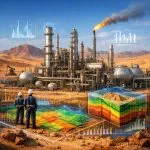
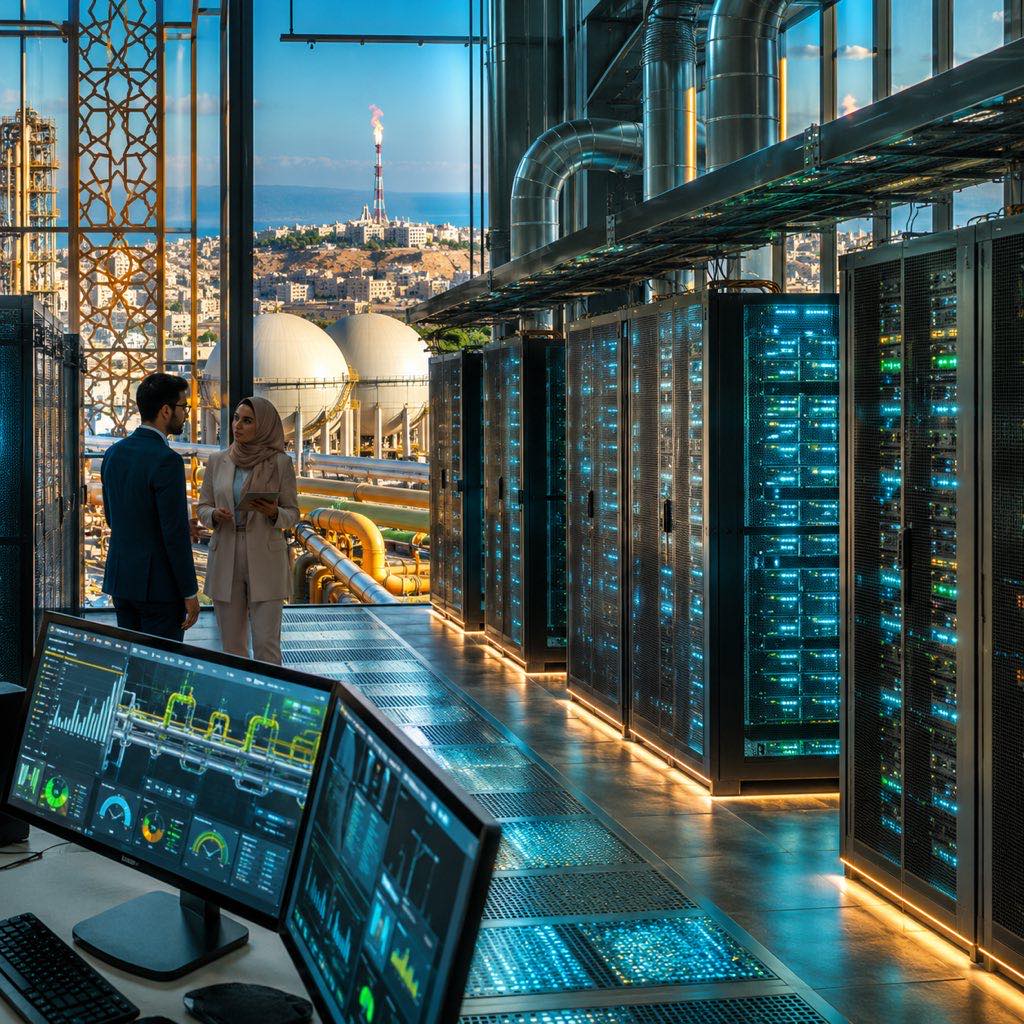
The global race to build AI infrastructure has a bottleneck that has nothing to do with chips, algorithms, or talent: it is power. Data centers running large language models and inference workloads consume electricity at a rate that strains even the most mature grids. For Africa, this dynamic presents a rare asymmetry — the continent is gas-rich and data-center-poor at the same time.
According to an April 2026 analysis published by the African Energy Chamber, Africa holds over 600 trillion cubic feet of proven natural gas reserves, yet its entire operational data center capacity stands at roughly 360 MW — a fraction of what single hyperscaler campuses in Europe or North America consume. The continent’s data center power demand is growing at 20–25% annually, with projected needs reaching 8,000 GWh in coming years. That gap between supply readiness and demand growth is precisely where Algeria enters the conversation.
NJ Ayuk, Executive Chairman of the African Energy Chamber, put it plainly: “AI data centers require constant, reliable power at scale, and natural gas is the only resource Africa has today that can deliver that immediately.” The key word is immediately. Solar and wind are expanding across the continent, but they cannot yet deliver the 24/7, firm-power guarantee that hyperscale and colocation operators require. Natural gas-fired generation can.
Algeria’s positioning in this context is structural, not speculative. The country possesses extensive gas production and export infrastructure through Sonatrach, a functioning domestic power grid tied to natural gas generation, and Mediterranean pipeline corridors that already move Algerian gas to European markets. Redirecting a fraction of that capacity toward domestic power generation for high-density computing loads is operationally feasible in a way that it simply is not for most other African nations.
What the Data Center Opportunity Actually Looks Like
Before unpacking Algeria’s specific position, it is worth understanding the scale of the opportunity. The African Data Centres Association’s 2026 market report projects a 3.5 to 5.5 times increase in Africa’s total installed data center capacity by 2030, requiring $10–20 billion in investment. The continent currently has approximately 1.2 GW of active, planned, and pipeline capacity — a number that looks large until compared to a single AWS availability zone.
The structural driver is demand, not supply. Every mobile app, every digital payment, every AI-powered government service, and every enterprise cloud migration adds to the regional compute burden. The closest affordable data center for much of North Africa remains in Europe — meaning latency is high, data sovereignty is compromised, and costs are denominated in euros rather than local currency. An Algerian data center operator with reliable, competitively priced power would serve the entire Maghreb market from a single facility.
For the AI workload layer specifically, the calculus shifts further. AI inference — the process of serving a model’s output to end users — requires low-latency access to compute. Running inference from a Frankfurt or Amsterdam data center adds 60–100 milliseconds to every Algerian user interaction. That is imperceptible for a search result, but material for real-time translation, fraud detection, or medical image analysis. Bringing compute closer requires bringing power to data centers closer.
Advertisement
What Algerian Decision-Makers Should Do Now
The opportunity is real, but it does not activate itself. The window is open for approximately three to five years before East African and West African alternatives mature. Here is how Algerian institutional and private-sector players can act within that window.
1. Map the Power-to-Data-Center Corridor from Existing Gas Infrastructure
The first practical step is not a new investment — it is an audit. Sonatrach and the Ministry of Energy should map which existing gas-fired power plants have spare capacity or underutilized output that could serve colocation operators. The Hassi R’Mel gas hub and associated pipeline network, the Alger-West generation corridor, and underserved industrial zones near Constantine and Annaba all represent potential anchor points for data center campuses. A public mapping exercise — ideally published through the Agency for the Promotion of Investment (AAPI) — would give international operators the information they need to begin site feasibility assessments. International data center developers want credible power reliability studies before committing capex, and publishing a standardized format for such studies is the next step that would unlock this.
2. Create a Fast-Track Power Purchasing Agreement Framework for Digital Infrastructure
Operators building data centers need long-term, fixed-price power contracts — typically 10 to 15 years — to justify capital expenditure. Designing a standardized Power Purchasing Agreement (PPA) framework for digital infrastructure buyers is the next step. The Ministry of Energy, in coordination with the Electricity and Gas Regulatory Commission (CREG), can build a fast-track PPA template specifically for data center operators: fixed tariff, indexed to gas production costs, with grid-priority clauses that guarantee uptime above 99.95%. Singapore’s Economic Development Board ran exactly this playbook between 2010 and 2018, attracting hyperscalers by offering transparent, bankable energy contracts before the data centers were built.
3. Pilot a Gas-Powered Colocation Zone at One Strategic Site
Rather than waiting for a comprehensive national framework, Algeria can move faster by designating one strategic pilot site for a gas-powered colocation zone. The ideal candidate is a location that combines proximity to the gas network, access to fiber backbone (the Oran–Algiers–Annaba axis), and existing industrial land classification that reduces permitting delays. A pilot of this type — even at modest initial scale of 20–30 MW — would generate the operational data, investor confidence, and regulatory learning that a national rollout requires. Rwanda’s Kigali Innovation City and Morocco’s CasaShore both began as single-site pilots before scaling into national programs.
The Structural Lesson
Algeria’s natural gas position is a genuine and time-limited comparative advantage for digital infrastructure development. The window is time-limited because alternatives are emerging: East Africa is deploying geothermal and solar at data-center grade, and North African competition from Egypt and Morocco is intensifying. Oracle chose Casablanca for its first North African cloud region in April 2026 — not Algiers.
What that decision reveals is not that Algeria is permanently uncompetitive, but that the structural enablers — clear PPA frameworks, published power reliability data, streamlined permitting — are not yet in place. The New Lines Institute analysis on Algeria’s AI positioning identifies infrastructure readiness as the primary gap separating Algeria’s potential from realized outcomes. Ecofin Agency’s coverage of Algeria’s December 2024 AI strategy launch confirms that the national strategy itself lists data centers and reliable internet among the three critical prerequisites for AI development — meaning the government has already diagnosed the gap.
The natural gas advantage buys Algeria time — perhaps three to five years — to build the regulatory and institutional scaffolding that converts energy abundance into digital infrastructure investment. That is a meaningful window. Whether it is used depends on decisions made in 2026 and 2027, not 2030.
Frequently Asked Questions
What makes Algeria particularly suited to power AI data centers compared to other African nations?
Algeria combines three structural advantages that most African countries lack simultaneously: proven natural gas reserves and production infrastructure through Sonatrach, an existing domestic grid largely powered by natural gas, and Mediterranean pipeline corridors that demonstrate operational reliability. While Nigeria has larger reserves, its grid reliability challenges reduce its attractiveness for hyperscale operators requiring 99.95%+ uptime. Algeria’s infrastructure maturity gives it a head start, provided the regulatory framework catches up.
What is stopping international data center operators from investing in Algeria today?
The primary barrier is not energy availability — it is bankability. International data center developers require long-term, fixed-price Power Purchasing Agreements (PPAs) in standardized formats that their financial models can underwrite. Algeria currently has no PPA framework designed specifically for digital infrastructure buyers. Without a credible, published power reliability framework and a fast-track permitting pathway, international operators cannot complete feasibility studies — and without feasibility studies, capital does not move.
How does Algeria’s data center opportunity connect to its broader AI strategy?
Algeria’s December 2024 National AI Strategy explicitly identifies digital infrastructure — data centers, reliable internet, and cloud computing — as a prerequisite for AI development. Building domestic compute capacity serves two goals simultaneously: it attracts international hyperscaler investment and it provides the affordable, sovereign compute that Algerian AI developers, research universities (with 74 AI master’s programs across 52 universities), and startups need to avoid routing their workloads through European clouds at euro-denominated prices.
Sources & Further Reading
- Gas Supply in the Age of AI: Can Africa’s Natural Gas Power the Continent’s Digital Future? — Zawya
- From Hydrocarbons to Hyperscale: Oil and Gas Must Power Africa’s Data Center Boom — Social News XYZ
- Data Centres in Africa 2026 Report — African Data Centres Association
- Why Algeria Is Positioned to Become North Africa’s AI Leader — New Lines Institute
- Algeria Unveils AI Strategy to Boost Digital Transformation — Ecofin Agency
🔗 Related Intelligence

Algeria’s Gas Grid: A $60B Energy Base That Could Anchor Africa’s First Hyperscale Hub

AI Adoption Across Algeria’s Energy Sector: Oil, Gas, and Utilities Playbook 2026
AI Transforms Oil and Gas: Deep Learning Optimizes Algeria’s Energy Sector
Sonatrach AI: ML-Powered LNG Quality Control to Protect Algeria’s Export Revenue