Why Algeria’s Energy AI Moment Is Now
Algeria’s energy sector is the backbone of the national economy — hydrocarbons account for roughly 93% of total export revenues and approximately 30% of GDP. For decades, Sonatrach and Sonelgaz have operated on engineering instinct and field experience rather than data-driven decision systems. That is changing fast, and the catalyst is not ideology but economics: unplanned equipment downtime at a Saharan compressor station costs more in lost production than a year of AI tooling.
The structural driver is the upstream market scale. Algeria’s oil and gas upstream market is projected to grow from USD 7.14 billion in 2025 to USD 7.31 billion in 2026, with development and production services capturing 66.78% of that market — the segment where AI predictive maintenance, digital twin technology, and real-time production optimization sit. This is not a niche; it is where the largest capital allocations are being made.
Sonatrach’s immediate structural challenge is well documented: the company operates more than 200 subsidiaries and 10+ horizontal functional departments, with information historically transferred via Excel spreadsheets and manually compiled reports. Data silos between departments and subsidiaries mean that a compressor failure pattern visible in production data may never surface to the maintenance team. AI integration is, at its core, a data-infrastructure problem before it is an algorithm problem — and solving the infrastructure layer unlocks massive operational gains.
On the electricity side, Sonelgaz manages Algeria’s national grid serving 47+ million citizens across a territory of 2.38 million square kilometres — one of the most geographically challenging distribution problems in the world. AI-powered SCADA optimization and demand-forecasting tools are not optional at that scale; they are operationally necessary as Algeria expands its renewable energy capacity and must manage increasingly complex generation mixes.
Four AI Application Layers in Algeria’s Energy Stack
1. Predictive Maintenance for Upstream Production Equipment
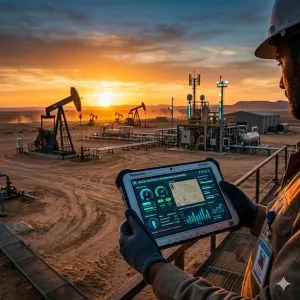
Predictive maintenance is the highest-ROI entry point for energy AI. Baker Hughes’ AI-powered digital oilfield services deployed under the December 2024 Sonatrach contract include real-time production optimization and predictive maintenance systems across multiple Saharan facilities. The USTHB-Sonatrach collaborative research program has documented measurable improvements: reduced equipment downtime, more accurate resource forecasting, and accelerated data analysis cycles. The academic research, published in the CyberSystem Journal (2025), confirms that machine learning, computer vision, and natural language processing are all being applied to Sonatrach’s industrial diagnostic challenges. The pattern of failure prediction — identifying pump degradation 2–6 weeks before breakdown, for example — is exactly the use case where industrial ML earns its cost within 12–18 months of deployment.
2. Digital Twins for Reservoir and Infrastructure Simulation
Digital twins — real-time virtual replicas of physical assets — are the next frontier for Sonatrach’s upstream operations. Research on digital twins in upstream oil and gas shows that the technology reduces unplanned downtime by 10–25% and improves capital allocation for maintenance scheduling. For Algeria, where many production facilities are aging and located in remote Saharan locations where emergency response is costly, the digital twin layer provides a continuous diagnostic window that is simply not achievable with manual inspection cycles. Sonatrach is partnering with Huawei on a three-phase digital transformation strategy that includes cloud computing and cybersecurity infrastructure — the foundational prerequisites for digital twin operation at scale.
3. Smart Grid Optimization for Sonelgaz
Sonelgaz faces a distinct but equally urgent AI opportunity: managing an electrical grid that is expanding rapidly as Algeria adds 1,480 MW of solar generation capacity (commissioned in 2026) while demand grows with population and industrial development. AI-powered demand forecasting, fault detection, and load balancing tools allow grid operators to manage renewable intermittency without costly reserve capacity buildout. Operational technology (OT) AI — systems that run directly on grid hardware rather than in the cloud — is the appropriate architecture for Algerian grid conditions, where connectivity to central data centers cannot be guaranteed across all substations. This means Sonelgaz’s AI roadmap must include edge-computing infrastructure as a parallel track.
4. Exploration Data Analysis and Seismic Interpretation
The least visible but potentially highest-value AI application in Algeria’s energy sector is subsurface data analysis. Sonatrach sits on petabytes of seismic survey data and well logs from 60+ years of exploration across the Sahara. Machine learning models trained on this data can identify previously missed hydrocarbon zones, optimize drilling targets, and reduce the cost of dry wells — which run at USD 20–50 million per failure in Algeria’s Saharan context. Deep learning applied to oil and gas exploration is an active research area at Algerian universities, and Sonatrach’s academic partnerships provide a route to develop proprietary exploration AI rather than relying entirely on imported vendor solutions.
Advertisement
What Algerian Energy Engineers and IT Teams Should Do
1. Certify in Industrial AI and OT Security — The Skills Gap Is the Bottleneck
The Baker Hughes contract and Huawei partnership will bring technical platforms, but the operators, maintenance engineers, and IT staff who configure, monitor, and interpret these systems must be Algerian. Academic research on Algeria’s AI transition identifies workforce readiness as one of the three primary barriers to sector-wide AI adoption (alongside data infrastructure and regulatory frameworks). Engineers should target certifications in industrial ML platforms (C3.ai, AVEVA, OSIsoft PI), OT cybersecurity (ICS/SCADA security standards), and data engineering for time-series industrial data. The Sonatrach-USTHB research track offers a direct entry point for Algerian graduates: pursuing a thesis in industrial AI diagnostic systems at USTHB creates a career pathway into Sonatrach’s digitalization programs.
2. Build Interoperability Between OT and IT Systems Before Adding AI
The single most common failure mode for energy sector AI projects is deploying an algorithm on top of a broken data pipeline. Sonatrach’s Excel-and-manual-report workflow is the primary data quality problem — not the lack of algorithms. Algerian energy IT teams should prioritize deploying industrial data historians (OSIsoft PI or equivalent), standardizing sensor data formats, and establishing OT-to-IT data bridges before acquiring any AI tooling. This architecture work — unglamorous but foundational — is where the real competitive advantage lies: a vendor who can deliver clean, structured sensor data from a Saharan compressor station is far more valuable than one who arrives with a machine learning model and no data to feed it.
3. Start with Closed-Loop Predictive Maintenance Pilots in Non-Critical Assets
Energy sector executives are rightly conservative about deploying autonomous AI systems on critical production infrastructure. The appropriate entry point is a pilot on non-critical auxiliary equipment: cooling systems, lighting controls, non-production pumps. Run the pilot for 90 days, measure mean time between failures (MTBF) before and after AI intervention, and document the cost savings. That pilot data becomes the business case for scaling to production-critical assets — compressors, pipelines, turbines. Skipping the pilot phase and deploying directly on critical assets is the most common reason energy AI projects fail: the algorithm is wrong about something, and the downside is a production stoppage rather than a minor inconvenience.
Where This Fits in Algeria’s 2026 Energy Ecosystem
Algeria’s AI energy adoption is happening against a backdrop of two simultaneous transformations: the hydrocarbon sector digitizing its existing operations, and the renewable energy sector building new grid infrastructure from scratch. The AI opportunity at the intersection of these two tracks — grid management systems that optimize both fossil and solar generation simultaneously — is genuinely novel and specifically Algerian.
The USD 180 million Baker Hughes contract signals that international oilfield services companies have priced Algeria’s AI transition into their revenue forecasts. The Huawei Sonatrach digital transformation partnership adds cloud and cybersecurity infrastructure. The opportunity area for Algerian-built AI tooling sits right on top of this foundation: applications that understand Sonatrach’s specific well data formats, Sonelgaz’s grid topology, and the bilingual (Arabic/French) operational environment that international platforms consistently underserve.
The 24-month window to build locally-owned AI tools for Algeria’s energy stack is open now. Energy startups, university spin-outs, and Sonatrach subsidiary teams that move in this window will own the reference implementations that Ministry-level procurement committees will look for in 2028 and beyond.
Frequently Asked Questions
What is the Baker Hughes AI deal with Sonatrach and what does it cover?
In December 2024, Baker Hughes secured a USD 180 million contract extension with Sonatrach to provide digital oilfield services across multiple Saharan production facilities. The scope includes AI-powered predictive maintenance systems and real-time production optimization technologies — making it the largest single AI services investment in Algeria’s energy sector history.
What is the difference between Sonatrach’s AI needs and Sonelgaz’s AI needs?
Sonatrach’s primary AI applications are upstream-focused: predictive maintenance for drilling and production equipment, digital twins for reservoir simulation, and seismic data analysis for exploration optimization. Sonelgaz’s AI needs are grid-centric: demand forecasting, fault detection, load balancing, and managing the integration of Algeria’s growing solar generation capacity into the national grid. Both require OT-to-IT data integration as a prerequisite.
How can Algerian graduates enter the energy AI sector?
The USTHB-Sonatrach research partnership provides the most direct academic pathway. Algerian graduates should pursue certifications in industrial ML platforms (C3.ai, AVEVA), OT cybersecurity, and time-series data engineering. The USTHB research track on AI-driven diagnostic systems offers an entry point into Sonatrach’s digitalization programs for engineering graduates who want to build domain-specific expertise before industry placement.
—
Sources & Further Reading
- Algeria Oil and Gas Upstream Market — Mordor Intelligence
- AI for Oil and Gas — Baker Hughes
- Transforming Algerian Industry Through Intelligence — CyberSystem Journal
- Digital Twins in the Upstream Oil and Gas Industry — ResearchGate
- Deep Learning for Oil and Gas Exploration Algeria — ASJP
- Algeria’s Evolving Energy Strategy — Energy Intelligence
🔗 Related Intelligence

AI in Algerian Fields: Smart Farming and Oil & Gas Operations Lead First Wave
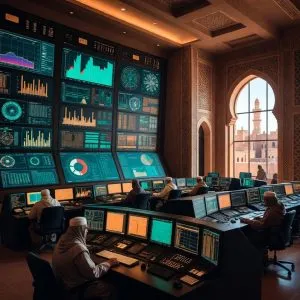
AI in Algeria’s Oil and Gas Sector: How Sonatrach Is Betting on Machine Intelligence
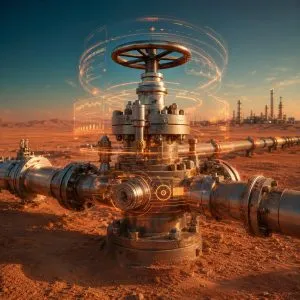
Sonatrach’s AI Predictive Maintenance: The Highest-Value AI Use Case in Algeria’s Economy
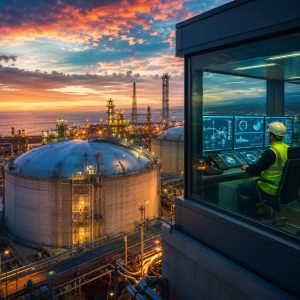
Sonatrach AI: ML-Powered LNG Quality Control to Protect Algeria’s Export Revenue