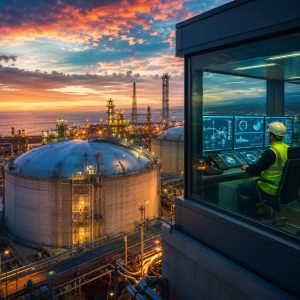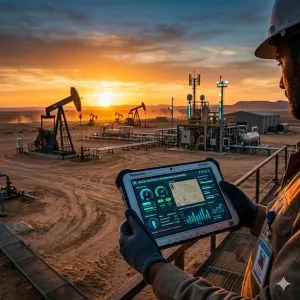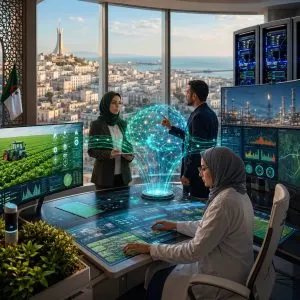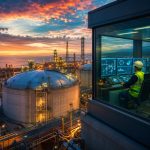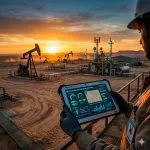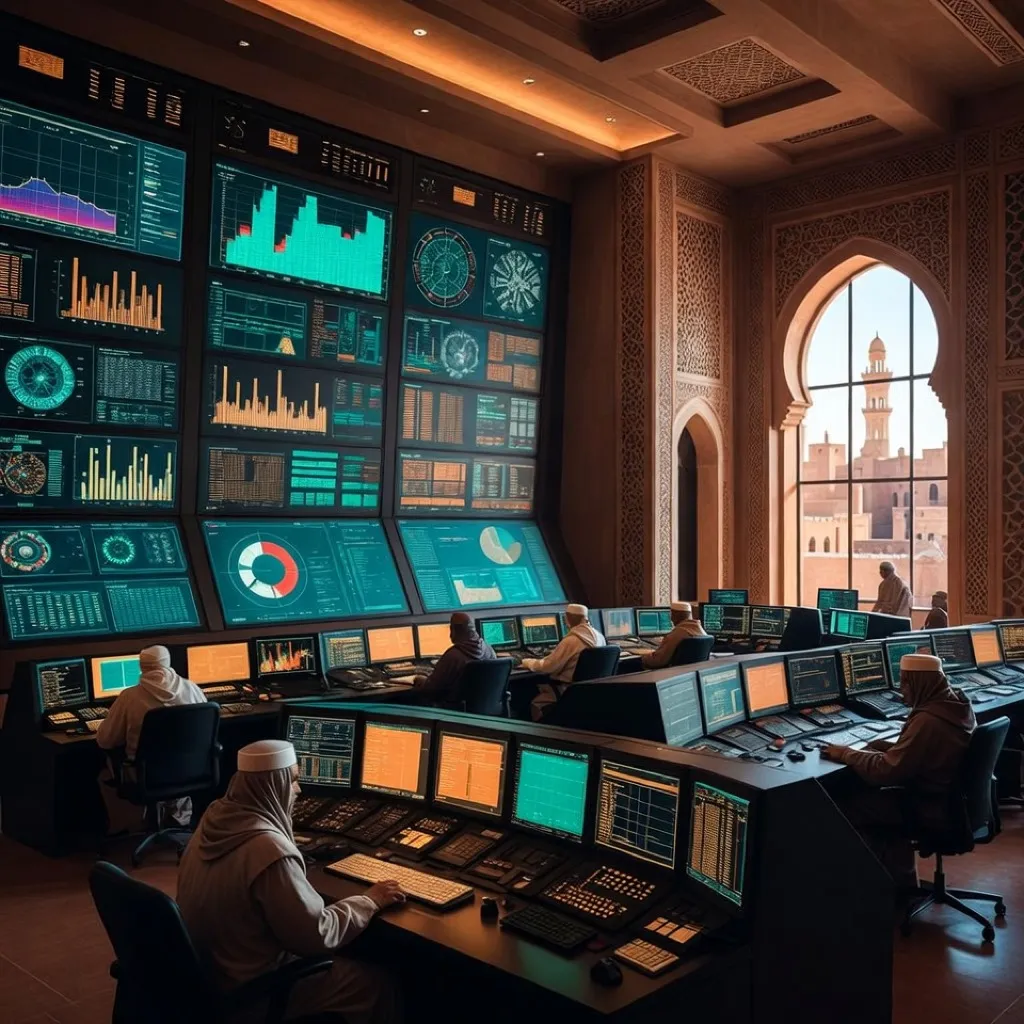
Algeria’s economic engine runs on hydrocarbons. Sonatrach, the state oil and gas company, is the country’s largest enterprise and the dominant force in its economy, funding approximately 60% of the national budget through hydrocarbon export revenues. As the company navigates declining field productivity, rising operational costs, and global pressure to reduce carbon intensity, artificial intelligence has emerged as the most credible lever for extending the productive life of Algeria’s reserves while reducing extraction costs.
This is not a future scenario. AI adoption in oil and gas is accelerating globally, and Sonatrach is actively integrating machine intelligence across its operations — from reservoir modeling to predictive equipment maintenance. The company has announced a $60 billion investment plan spanning exploration, production modernization, and digital transformation — an investment envelope that signals the scale of its ambition.
The Business Case: Why AI in Oil and Gas Makes Financial Sense
Industry analysts estimate that AI and advanced analytics could generate tens of billions of dollars in additional value per year across the global oil and gas sector by reducing unplanned downtime, optimizing drilling parameters, and improving reservoir recovery rates.
For Sonatrach specifically, the numbers are compelling:
- Unplanned downtime in the Algerian hydrocarbon sector costs an estimated $2–4 million per day per major installation when compressors, separators, or pipelines fail unexpectedly
- Recovery rates in Algeria’s mature fields average around 35% — advanced reservoir modeling powered by AI could push this toward 45–50%, releasing billions of dollars of additional recoverable reserves
- Energy consumption at compressor stations represents one of the largest operational cost items; AI-optimized compression reduces fuel gas consumption by 8–15% in comparable deployments globally
What Sonatrach Is Actually Doing
Predictive Maintenance
Sonatrach has begun deploying digital monitoring systems across critical equipment — compressors, turbines, and pipeline pumping stations — feeding real-time performance data into machine learning models that predict failure 14–30 days in advance. This shift from reactive maintenance (fix it when it breaks) to predictive maintenance (fix it before it breaks) is already operational at the Hassi Messaoud and Hassi R’Mel complexes, Algeria’s two most productive hydrocarbon fields.
Early results reported internally suggest a 23% reduction in unplanned outages at instrumented facilities, though Sonatrach has not published formal case study data. The predictive maintenance deployment represents one of the most commercially mature AI use cases in oil and gas — global operators like Shell, BP, and Saudi Aramco have demonstrated that sensor-driven predictive models consistently outperform time-based maintenance schedules in reducing both cost and risk.
Reservoir Modeling and Seismic Interpretation
Traditional seismic interpretation — analyzing underground data to identify reservoir locations and estimate recoverable volumes — takes teams of geoscientists months per survey. AI-powered interpretation tools, trained on global seismic datasets, can process the same survey in days to weeks while identifying subtle reservoir features that human analysts often miss.
Sonatrach signed a technical cooperation agreement with French energy major TotalEnergies in 2024 that includes provisions for technology collaboration and knowledge transfer — part of a broader partnership covering exploration and production activities in Algeria. Access to TotalEnergies’ advanced digital capabilities, including AI-powered seismic interpretation tools, is a key component of this partnership’s value for Sonatrach’s digital transformation.
Drilling Optimization
At the wellsite, AI models can optimize weight on bit, rotary speed, and mud flow rate in real time, maximizing drilling penetration rate while minimizing bit wear and the risk of stuck pipe — one of the most expensive drilling incidents. Several Sonatrach drilling operations in the southern Saharan basins are piloting this technology through service company partnerships with Schlumberger (SLB) and Halliburton, both of which have active contracts in Algeria.
New Strategic Partnerships
Sonatrach’s AI ambitions are expanding through new international agreements that extend beyond traditional energy partnerships.
In January 2026, Sonatrach signed a research and development cooperation agreement with Ghana’s GNPC (Ghana National Petroleum Corporation), covering digitalization, AI applications in exploration, and technical knowledge sharing — a South-South technology partnership that signals Sonatrach’s growing role as an AI capability builder among African national oil companies.
Sonatrach has also signed a Memorandum of Understanding with Honeywell covering advanced process control, automation, and digital solutions for its refining and petrochemical operations. Honeywell’s Connected Plant platform — which uses AI for real-time process optimization — represents the kind of integrated industrial AI solution that could be deployed across Sonatrach’s downstream operations.
Other key partnerships powering the digital transition include:
- TotalEnergies: Technical cooperation covering AI, digital twins, and seismic interpretation (2024 agreement)
- Eni (Italy): Long-term partnership including technology transfer in reservoir characterization
- SLB and Halliburton: Service contracts that include proprietary AI-powered drilling optimization tools
- Microsoft Azure: Sonatrach is among the early Algerian enterprises exploring cloud-based analytics platforms for operational data — subject to data sovereignty constraints under Law 18-07
Advertisement
The Cybersecurity Risk: OT/IT Convergence
The deployment of AI in industrial operations creates a critical cybersecurity exposure that Algeria’s energy sector cannot ignore: Operational Technology (OT) and Information Technology (IT) convergence.
Traditional oil and gas infrastructure ran on isolated OT networks — SCADA systems, distributed control systems, and programmable logic controllers that managed physical operations but were never connected to the internet. AI-driven optimization requires connecting these systems to data networks so that sensor data can flow to analytics platforms and control signals can flow back. This connectivity creates attack surfaces that did not previously exist.
In February 2025, Resecurity reported that the Belsen Group had listed access to a North African energy sector network on the dark web at $20,000 — with Sonatrach identified as the likely target. While no confirmed breach was reported, this intelligence indicates that organized threat actors have established reconnaissance against Algerian energy infrastructure.
Presidential Decree No. 26-07 (January 2026) mandates cybersecurity units in all public institutions — Sonatrach included. The companion Decree 25-321, establishing the National Cybersecurity Strategy 2025–2029, provides the broader framework within which Sonatrach’s OT security posture must develop. The practical implementation challenge is securing AI-connected OT networks that were never designed with cybersecurity in mind.
The Talent Pipeline Challenge
Implementing AI in an industrial context requires a rare combination: engineers who understand both oil and gas operations and machine learning. Algeria has deep engineering talent in petroleum engineering (through the Institut Algérien du Pétrole and the ENP) and in computer science (through USTHB and ESI). The gap is engineers who bridge both disciplines.
Sonatrach’s human capital strategy includes partnering with these institutions to create data science specializations within petroleum engineering programs — a model pioneered by Saudi Aramco’s collaboration with KAUST. The first cohort of graduates from this specialized track is expected by 2027. The broader national ecosystem — with 57,700 students across 74 AI-related master’s programs — provides a growing base from which to recruit, but translating academic AI knowledge into industrial deployment capability requires hands-on experience that only operational partnerships can provide.
Looking Ahead
The global oil and gas sector will spend an estimated $4.7 billion on AI applications by 2027, growing at 11% annually. Sonatrach’s AI investment positions Algeria’s most critical economic institution to maintain competitiveness in an industry where digital laggards face irreversible productivity disadvantages.
For Algerian tech companies and international vendors: the Sonatrach ecosystem represents the single largest addressable market for industrial AI in the country. The procurement cycles are long and requirements demanding — but the contract values are commensurately large. The $60 billion investment plan and the expanding partnership portfolio with companies like Honeywell and GNPC signal that the procurement pipeline is active and growing.
Frequently Asked Questions
How is Sonatrach using AI in its operations?
Sonatrach is deploying AI for predictive maintenance of pipeline infrastructure, seismic data interpretation for exploration, production optimization through real-time sensor analytics, and environmental monitoring to reduce gas flaring and detect leaks.
What is the ROI potential of AI in Algeria’s oil and gas sector?
Predictive maintenance alone can reduce unplanned downtime by 30-50%, worth hundreds of millions annually for Sonatrach. AI-driven exploration optimization can improve well success rates by 20-30%, and production optimization typically yields 2-5% output increases.
What AI skills are needed in Algeria’s energy sector?
The sector needs ML engineers with domain knowledge in geoscience, data engineers who can handle sensor/IoT data pipelines, computer vision specialists for pipeline inspection, and operations research experts for production scheduling optimization.
Sources & Further Reading
- Resecurity — Energy Sector Cyber Threats 2025
- McKinsey — AI in Oil and Gas
- Sonatrach Official Website
- TotalEnergies Algeria Partnership
- IEA — Digitalisation and Energy
- Zscaler — Ransomware Surge in Energy Sector 2024
- Algeria Cybersecurity Framework — TechAfrica News
- Honeywell Connected Plant Solutions