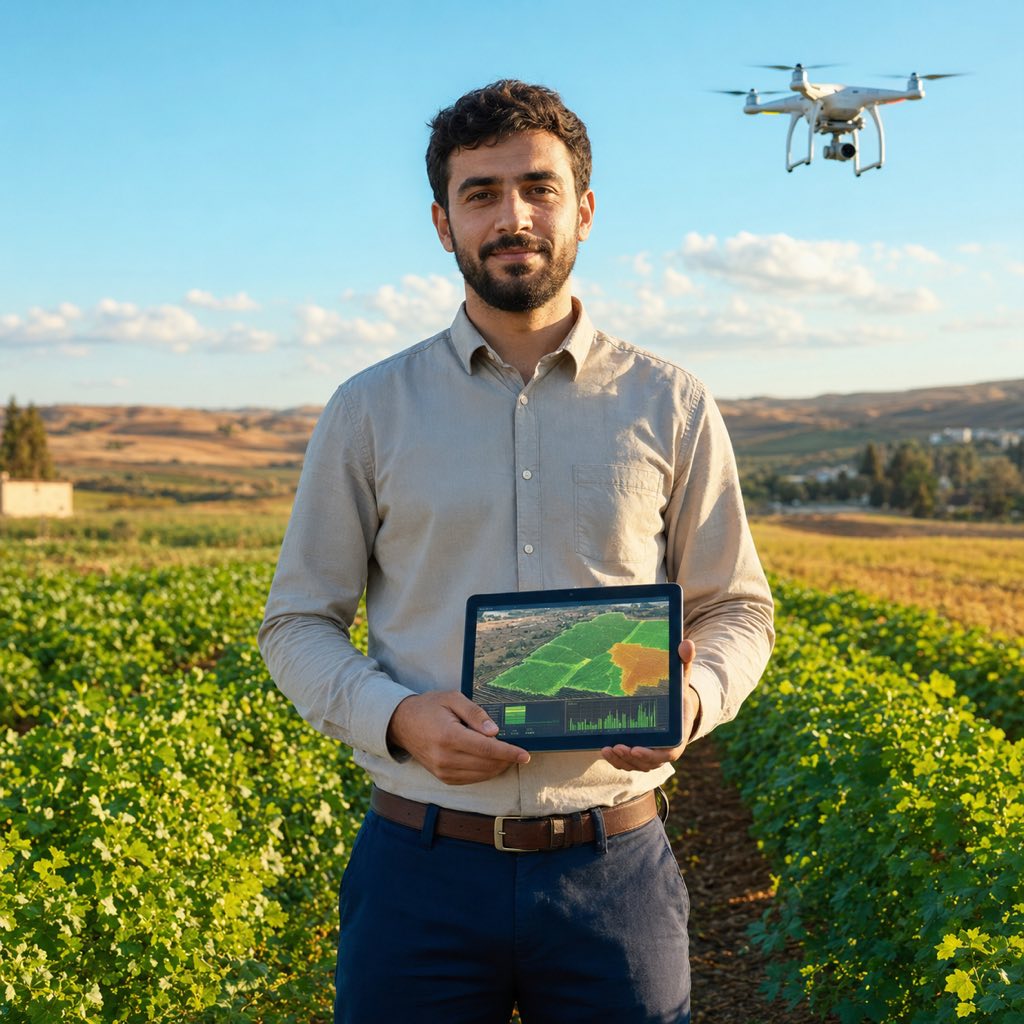
Why an Agritech Incubator Matters for a 13%-of-GDP Sector
Agriculture is not a side story in Algeria’s economy. The sector contributes roughly 13% of GDP — World Bank data compiled by Trading Economics puts agriculture, forestry and fishing at about 13.1% in 2023 — and it employs close to a tenth of the workforce. Yet productivity per hectare and water efficiency have room to climb, and the country still imports large volumes of staple grain. According to the USDA grain outlook reported by World Grain, Algeria is projected to import around 9.2 million metric tons of wheat in the 2025-26 marketing year.
That combination — a large sector, a heavy import bill, and a clear appetite to lift domestic yields — is exactly the gap technology is meant to close. The newly launched Agripreneurs programme is the vehicle now channeling international funding, mentorship and hard engineering into that opportunity.
What the Agripreneurs Programme Actually Is
The Algerian Agripreneurs programme is a support cycle designed to accelerate innovation in the agribusiness and agritech sector. As Trends N Africa reported, it is co-financed by the European Union and the German government and implemented on the ground by GIZ, the German agency for international cooperation, sitting within the broader Development of Digital and Green Entrepreneurship project. It runs under the Ministry of Knowledge Economy, Start-ups and Micro-enterprises.
According to Innovation Village, the current cycle is set to support 40 innovators and 25 startups, selected through a competitive process known as the Agripreneurs Challenge. The official programme portal describes what founders receive: specialized training and coaching, structured mentorship, networking with mentors and investors, and facilitated access to financing. In other words, it is a full incubation-to-acceleration pipeline rather than a one-off hackathon or a symbolic award.
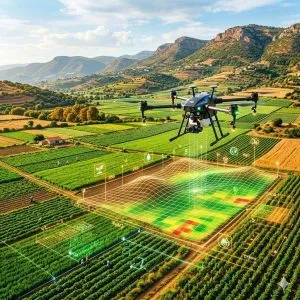
The technology focus is deliberately narrow and practical: artificial intelligence, the Internet of Things (IoT), and drones. These are not abstract categories. AI powers crop-disease detection and yield prediction; IoT sensors drive soil-moisture and micro-climate monitoring; drones handle aerial inspection, mapping and targeted spraying. Each maps to a concrete economic pain point on an Algerian farm.
Advertisement
Where the Automation Actually Pays Off
The reason AI, IoT and drones are the chosen stack is that their return is measurable. The Borgen Project cites a 2025 study in which precision-agriculture techniques cut water consumption by 43% while crop yields improved — a decisive result in a country where water is the binding constraint on cultivation. IoT integration, the same analysis notes, reduces input waste and lifts productivity across water, energy and land.
Drones compress a task that used to take days into hours: multispectral imaging flags rust and disease outbreaks before they spread across a wheat field, and variable-rate spraying puts chemicals only where sensors say they are needed. AI ties the loop together, turning sensor and image streams into a prescription a farmer can act on the same morning. For a sector where staple-grain self-sufficiency is a national priority, a few percentage points of yield gain and a double-digit cut in water use are not marginal — they are the difference between importing and producing.
What Algerian Agritech Founders Should Do About It
1. Apply through the Agripreneurs Challenge, not around it
The programme’s 25 startup and 40 innovator slots are the front door to EU- and German-backed funding and GIZ mentorship — an infrastructure that until now typically required relocating to Europe to access. Build your application around a single, specific agricultural problem with a measurable metric (water saved, yield lifted, disease caught earlier), because Innovation Village’s account makes clear the Challenge selects on scalability and technology readiness, not on breadth of ambition. A narrow, provable solution beats a broad platform pitch. Do not treat the Challenge as a grant lottery — treat it as an investor screen you can prepare for.
2. Design for water first, because that is where the ROI is provable
The 43% water-reduction figure cited by The Borgen Project is the single most fundable number in Algerian agritech right now. Anchor your product on a water-efficiency claim you can demonstrate on a real plot: soil-moisture IoT tied to drip irrigation, satellite-plus-sensor evapotranspiration models, or drone-mapped variable-rate application. Avoid vanity dashboards that display data without changing an irrigation decision. Mentors and institutional buyers will fund a system that cuts pumping costs and water draw on a named farm — not a prettier interface over the same watering schedule.
3. Pilot on cereals, where the import bill creates the buyer
With wheat imports near 9.2 million tons a year per the USDA outlook, any technology that lifts domestic cereal yield has an obvious institutional customer and a clear policy tailwind. Target rust and disease detection on durum and bread wheat, where early identification directly protects harvest volume. Build your pilot with a cooperative or a large private grower who can give you multi-hectare ground truth — a demo on a research plot will not convince a buyer who farms at scale. Document cost-per-hectare, not just accuracy, because procurement decisions turn on economics.
4. Bank the GIZ network as distribution, not just funding
The most durable asset in the programme is not the cheque — it is the GIZ and ministry network that connects a founder to institutional pilots, cooperatives and investors. Use the mentorship phase to secure a paying pilot commitment before the cycle ends, so you exit with revenue traction rather than a certificate. The official Agripreneurs programme explicitly offers investor networking and financing facilitation — treat those introductions as the real deliverable and prepare a data room accordingly.
Where This Fits in Algeria’s Food-Security Push
The Agripreneurs programme is one visible piece of a larger shift toward turning research-stage agritech into working farm technology. Its significance is less about any single startup and more about the pipeline it establishes: international co-financing, structured mentorship, and a technology focus tied to Algeria’s most concrete economic pressures — water scarcity and staple-grain self-sufficiency. If even a handful of the 25 selected startups reach commercial deployment, the payoff compounds, because each proven system becomes a template other farms can adopt.
The broader lesson is that agritech modernization in Algeria will be won on measurable field outcomes, not on technology novelty. Drones and AI are means, not ends. The programmes, buyers and investors that matter are the ones asking how many liters of water were saved and how many quintals of wheat were protected. Founders who internalize that discipline early — and use the EU- and German-backed cycle to prove it on real plots — are the ones most likely to still be building when the funding cycle closes.
Frequently Asked Questions
What is Algeria’s Agripreneurs programme and who funds it?
The Algerian Agripreneurs programme is an agritech incubation and acceleration cycle co-financed by the European Union and the German government and implemented by GIZ, the German agency for international cooperation. It runs under the Ministry of Knowledge Economy, Start-ups and Micro-enterprises within the Development of Digital and Green Entrepreneurship project, and offers selected startups training, mentorship and access to financing.
How many startups does the current cycle support and what technologies are prioritized?
The current cycle is set to support 40 innovators and 25 startups, selected through the competitive Agripreneurs Challenge. The technology focus is deliberately narrow: artificial intelligence for crop-disease detection and yield prediction, IoT sensors for soil and micro-climate monitoring, and drones for aerial inspection, mapping and targeted spraying.
Why does agritech modernization matter so much for Algeria specifically?
Agriculture contributes roughly 13% of Algeria’s GDP, yet the country is projected to import about 9.2 million metric tons of wheat in 2025-26. Technology that lifts domestic yields and cuts water use — one 2025 study cited a 43% reduction in water consumption — addresses both the import bill and water scarcity, making it a direct food-security lever rather than a novelty.
Sources & Further Reading
- Algeria Launches EU-Backed Agritech Incubation and Acceleration Programme — Trends N Africa
- Algeria Unveils EU-Backed Agritech Program to Support Startups and Transform Farming — Innovation Village
- The Incorporation of the InnovAgro Program in Agriculture in Algeria — The Borgen Project
- Welcome to the Algerian Agripreneurs Cycle — Algerian Agripreneurs
- Algeria to Import Over 9 Million Tonnes of Wheat — World Grain
- Algeria — Agriculture, Value Added (% of GDP) — Trading Economics
🔗 Related Intelligence

Algeria’s InnovAgro: The EU-Backed Agritech Accelerator Betting on Drone AI and Precision Farming
Smart Farming in Algeria: How AI Startups Are Modernising a 12% GDP Sector

Smart Farming in Algeria: AI Agritech Startups Target Wheat & Crop Security

Algeria AI in Agriculture: Precision Farming Startups Target a 12% GDP Sector