Algeria does not lack ambition in agriculture. It is the largest country on the African continent by land area, with more than 8.5 million hectares under cultivation and an agriculture sector that contributes roughly 13 percent of GDP. What it has historically lacked is a structured pipeline for turning research-driven agricultural innovation into market-ready technology. That gap is now being addressed head-on.
In early 2026, Algeria’s Ministry of Knowledge Economy, Start-ups and Micro-enterprises officially launched the InnovAgro incubation and acceleration programme — a national initiative co-financed by the European Union and the German government, and implemented on the ground by the Deutsche Gesellschaft für Internationale Zusammenarbeit (GIZ). The programme sits within the broader Development of Digital and Green Entrepreneurship (DGA) project and represents one of the most substantive international partnerships Algeria has secured for its startup ecosystem to date.
What InnovAgro Is, and Why It Matters
The programme is not a one-off competition or a symbolic hackathon. It is a structured incubation and acceleration cycle designed to take early-stage agritech startups from validated concept to market-ready product, with access to mentorship, technical resources, laboratory facilities through GIZ and CERIST networks, and a pathway to institutional pilots.
Startups entering InnovAgro were selected through the Agripreneurs Challenge, a rigorous national competition launched in 2025 under the Algerian Agripreneurs programme. The challenge evaluated applicants on technology readiness, scalability potential, team composition, and the specificity of the agricultural problem being addressed.
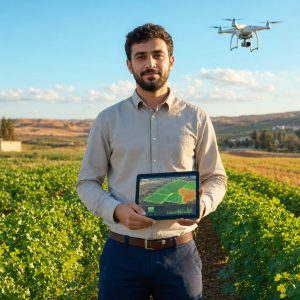
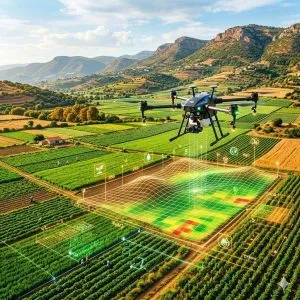
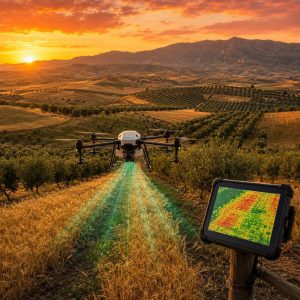
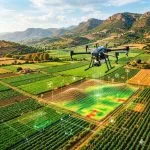
The technology focus is deliberately narrow and practically relevant: IoT systems for field monitoring, AI-powered crop disease detection, drone-based inspection and spraying, precision agriculture via satellite monitoring, hydroponics for water-scarce regions, and agricultural robotics. These are not theoretical categories. Algeria loses significant wheat and cereal yields every year to rust diseases and irrigation inefficiency. The Saharan south offers enormous potential for hydroponic production if costs can be brought down. Each technology vertical in InnovAgro maps to a concrete economic pain point.
What This Means for Algerian Agritech Founders
1. The pathway from idea to market just got structurally shorter
Before InnovAgro, an Algerian agritech founder had to piece together a support system from scattered components: a university incubator here, an ASF grant there, a GIZ workshop on the side. There was no single institutional pipeline that combined international technical expertise, access to farmland pilots, and exposure to institutional buyers in one programme.
InnovAgro changes that calculus. With GIZ providing the implementation backbone and the European Union and Germany providing co-financing, selected startups can access a quality of mentorship and infrastructure that previously required relocating to Europe or Singapore to find. The fact that this is happening in Algiers, for Algerian founders building solutions for Algerian farms, is the entire point.
Founders should apply aggressively to the next Agripreneurs Challenge cycle when applications open. The programme is a genuine accelerator, not a showcase.
2. Food security creates government procurement tailwinds
Algeria imports approximately 50 to 60 percent of its cereal consumption annually, a strategic vulnerability that successive governments have committed to reducing. Agritech startups that can demonstrate measurable impact on yield improvement, water use efficiency, or disease detection have a natural institutional buyer: the state itself, through the Ministries of Agriculture and Knowledge Economy.
InnovAgro creates an implicit signal: startups with verified results will have a claim on public pilot programmes. Founders building for the institutional market should document their impact metrics rigorously from day one, because the procurement door will open for those who can show the numbers.
3. International co-financing is a credibility multiplier for private investors
The EU-Germany co-financing structure is not just about the operational budget of the programme. It is a credibility signal to private and diaspora investors who are cautious about the Algerian market. When the European Union bets on an Algerian startup programme, it creates a reference point that local angel investors and the Algerian Startup Fund (ASF) can point to when building conviction around agritech deals.
Historically, agritech in North Africa has attracted limited VC attention compared to fintech or logistics. InnovAgro could serve as the catalyst that changes that narrative for Algeria specifically, the way M-PESA once changed the narrative for Kenyan fintech by demonstrating that mobile infrastructure could solve a real problem at scale.
Advertisement
The Broader Agritech Ecosystem Signal
InnovAgro does not exist in isolation. It arrives alongside a cluster of ecosystem signals that collectively suggest Algeria is building a credible agritech innovation layer.
Earlier in 2026, Huawei Algeria rewarded winning student teams at its Tech4Connect hackathon, which specifically challenged participants to build AI-powered agritech and smart city prototypes using Huawei Cloud. More than 200 students competed in the 48-hour event, and the Minister of Knowledge Economy, Noureddine Ouadah, attended the awards ceremony personally — a signal of political salience that Algerian tech watchers should not underestimate.
FarmAI, the Algerian agritech startup behind an AI-powered wheat rust detection system using drones, had already won second place globally and the People’s Choice Award at Huawei’s global Tech4Good competition, securing $100,000 in investment. SevenG, the student team behind FarmAI, is exactly the kind of deep-domain startup that InnovAgro is designed to take from prize-winner to market player.
The convergence of these signals — InnovAgro, Tech4Connect, FarmAI’s international recognition — suggests Algeria is developing a genuine agritech innovation cluster, not just a collection of one-off moments.
Where This Fits in 2026’s Startup Cycle
InnovAgro represents something structurally important for the Algerian startup ecosystem: the institutionalization of the agritech pipeline. Up to now, the most visible Algerian startup success stories have been in mobility (Yassir, Temtem), e-commerce (Diar Dzair), and traveltech (VOLZ). These are consumer-facing plays built on urban connectivity.
Agritech is a different animal. The market is fragmented, the buyers are often rural smallholders or government agencies, and the technology cycle is slower because it has to align with growing seasons. But the opportunity is structurally larger for Algeria than for most countries: agriculture employs roughly 10 percent of the workforce and Algeria is explicitly trying to reduce its import bill in cereals, oilseeds, and vegetables.
The startups that emerge from InnovAgro will not be unicorns in two years. But they could be the foundation of an agritech export story for North and West Africa within five — if they build on verifiable impact and not slide decks.
Frequently Asked Questions
What is InnovAgro and who runs it?
InnovAgro is an agritech incubation and acceleration programme under Algeria’s Development of Digital and Green Entrepreneurship (DGA) initiative. It is co-financed by the European Union and the German government and implemented by GIZ. Startups are selected through the Agripreneurs Challenge competition.
What technologies does InnovAgro focus on?
The programme focuses on AI, IoT, drone technology, precision agriculture, satellite monitoring, hydroponics, and agricultural robotics — all applied to Algerian agricultural challenges like wheat rust detection, water efficiency, and Saharan food production.
How does InnovAgro help agritech founders access the market?
Selected startups receive structured mentorship, access to GIZ and CERIST research infrastructure, and a pathway to institutional pilots with government bodies. The EU co-financing also serves as a credibility signal that can attract follow-on investment from ASF and private angel investors.