What Huawei Is Actually Saying — and Why Algeria Should Listen
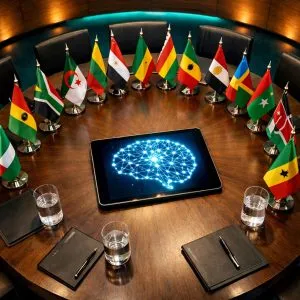
On April 28–29, 2026, Huawei convened its first Intelligent Africa Congress at The St. Regis New Capital in Cairo. The gathering drew over 1,000 decision-makers under the theme “Advancing Industrial All Intelligence for Africa.” The phrase matters: “Industrial AI” is Huawei’s architecture for the next wave of enterprise AI adoption — not consumer chatbots or coding assistants, but AI embedded directly into manufacturing, financial services, energy operations, and logistics infrastructure.
This is a meaningful reframing. Previous cycles of tech investment in Africa were dominated by connectivity (4G rollout, fibre backbone) and enterprise software (ERP, cloud migration). Industrial AI implies a different set of requirements: real-time sensor integration, edge computing at the factory or field level, sector-specific model training, and data sovereignty architectures that keep operational data inside national borders. Each of these requirements is a procurement category that African governments and enterprises will be navigating over the next 36 months.
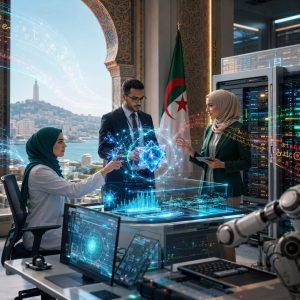
Algeria’s relevance here is not incidental. Huawei and Algeria signed a digital economy cooperation agreement under which Huawei will train 8,000 Algerians in cloud computing, cybersecurity, and AI — with the programme starting September 2026 according to data from the Newlines Institute. A China-Algeria Joint Laboratory for AI was established as recently as July 2023. These are not legacy partnerships: they are active commitments whose practical content — what gets built, on what architecture, at what cost — is precisely what the Industrial AI framework now defines.
Three Signals in the Intelligent Africa Congress Structure
Signal 1: The congress theme encodes a procurement roadmap, not just a brand statement
“Industrial All Intelligence” is Huawei’s terminology for the convergence of cloud infrastructure, AI model inference, and physical-world integration at the sector level. For procurement teams in Algerian enterprises — particularly in energy (Sonatrach and its subsidiaries), logistics (port and rail), and financial services (public banks undergoing digital transformation) — the congress agenda is effectively a forward-looking catalogue of what Huawei will be selling and supporting in Africa through 2028.
The shift to industrial framing is significant because it moves the sales conversation from connectivity (priced as commodity) to sector-specific AI solutions (priced as professional services and long-term managed contracts). Algerian public enterprises that have existing Huawei relationships at the network layer should assess whether those relationships are structured to expand into AI and compute, or whether they will need renegotiation as the product mix changes.
Signal 2: Cairo as hub signals Huawei’s North Africa anchor — creating competitive pressure for Algeria
Huawei chose Cairo’s New Administrative Capital as the congress venue, and the congress framing explicitly describes Egypt as a “regional technology hub.” This is Huawei’s commercial positioning, not a geographical accident. If Egypt consolidates as the preferred base for Huawei’s regional AI programme delivery and reference architecture deployment, Algerian enterprises will face a structural disadvantage: solutions will be designed for Egyptian operating conditions (Arabic dialect, regulatory environment, sector mix) first, with Algerian adaptation as a secondary step.
Algeria’s advantage — its formal cooperation agreement, the July 2023 joint AI laboratory, and a domestic market large enough to justify localised deployment — needs to be actively asserted in the partnership conversations that the Intelligent Africa Congress will accelerate. The congress is where Huawei’s enterprise sales teams and regional government affairs units will be setting priorities for the next 12 months. Algerian public-sector interlocutors should be in the room — or at minimum briefed on what the room produced.
Signal 3: Gulf AI infrastructure investment creates the cost baseline Algeria’s negotiations should reference
A parallel trend shapes the context: Gulf sovereign wealth funds deployed $66 billion into AI and digital infrastructure in 2025, with UAE-Africa trade reaching $107 billion in 2024. Gulf-funded AI infrastructure is setting price and capability benchmarks that African countries will use as reference points in their own negotiations. For Algeria, which has historically negotiated major tech partnerships bilaterally without regional benchmarking, the Congress era creates an implicit competitive dynamic: the terms Algeria secures with Huawei will implicitly be compared to what Gulf-backed deals are delivering elsewhere in the region.
Advertisement
What Algerian Technology Leaders Should Do Next
1. Translate the Huawei cooperation agreement into specific Industrial AI deliverables before September 2026
The September 2026 start date for Huawei’s 8,000-person training commitment is less than five months away. Training 8,000 people in cloud computing, cybersecurity, and AI is a significant throughput — but without a clear specification of what competency level, what toolchain, and what infrastructure those trainees will use, the programme risks producing credentialled but contextually adrift practitioners. The Industrial AI framework from the Congress gives Algerian ministry interlocutors a structured vocabulary to use in those specification conversations. Terms like “edge inference,” “sector-specific model deployment,” and “data sovereignty architecture” should appear in the cooperation agreement’s implementation plan by Q3 2026.
2. Assess Sonatrach and energy sector AI readiness against Huawei’s industrial stack
The oil and gas sector efficiency gains from AI deployment could deliver $200 million–$300 million in annual cost reductions according to Newlines Institute analysis. Sonatrach’s operational scale — Algeria’s largest enterprise and one of Africa’s largest energy producers — makes it both the highest-value target for Industrial AI deployment and the most complex integration challenge. Huawei’s industrial AI offerings, which combine cloud backend with edge-compute hardware at the production site, map directly onto upstream oil and gas operations. Public-sector technology officers within the energy sector should be reviewing the Congress outputs for architecture models they can benchmark against current Sonatrach IT roadmaps.
3. Build an Algerian Industrial AI reference case before Huawei builds one in Cairo
Reference architecture cases — real deployments with documented outcomes — are what enterprise sales cycles run on. If Huawei deploys its first Africa Industrial AI reference case in Egypt (its stated regional hub), that case will define what “Industrial AI in Africa” looks like for the next several years of procurement conversations across the continent. Algeria has the scale, the existing partnership, and the sector complexity to host a compelling reference case. The conversation about which Algerian sector hosts the first such deployment needs to happen at the ministry level in May–June 2026 — not after Cairo has already set the precedent.
Where This Fits in Algeria’s 2026 AI Ecosystem
The Intelligent Africa Congress is arriving at a specific moment in Algeria’s AI architecture. Domestically, the 12-week vocational AI programme has just launched, the Sidi Abdellah AI and cybersecurity startup cluster is operational, and over 500 digitalisaton projects are in pipeline for 2025–2026. This is not a moment of strategic uncertainty — it is a moment of execution. The question is not whether Algeria will invest in AI infrastructure, but whether the international partnerships it has already committed to (Huawei, China-Algeria AI Lab, Italy Medusa submarine cable, U.S. university partnerships) will be implemented with enough specificity to produce competitive outcomes.
The Congress is Huawei’s public statement about what Industrial AI will look like on this continent for the next investment cycle. Algeria’s existing commitments give it a legitimate seat in that conversation. The risk is not being excluded — the partnerships are signed. The risk is being included at a generic tier while Egypt and other early movers in the Cairo hub orbit get customised architecture and first-mover reference status. Converting partnership agreements into Industrial AI implementation specifics before September 2026 is the single highest-leverage action available to Algerian technology and economic ministries in the weeks immediately following this Congress.
Frequently Asked Questions
What is “Industrial AI” and how does it differ from general AI tools?
Industrial AI refers to AI systems integrated directly into sector-specific operational workflows — factory production lines, energy field operations, financial transaction processing — rather than consumer-facing or general-purpose tools. The key distinction is that Industrial AI requires real-time sensor data integration, edge computing (processing at the source rather than in a distant cloud), and sector-specific model training. For Algeria, the energy sector (oil, gas, renewable) and logistics (port, rail, customs) are the most immediate Industrial AI application domains.
Does Algeria have a formal relationship with Huawei that covers AI specifically?
Yes. A digital economy cooperation deal covering cloud computing, cybersecurity, and AI training of 8,000 Algerians is set to begin in September 2026. Additionally, a China-Algeria Joint Laboratory for AI was established in July 2023. These are active frameworks, not aspirational agreements — but their implementation specifics (which tools, which architectures, which sectors) are not yet publicly detailed. The Congress outputs provide the architecture vocabulary those specifications should use.
How does the Gulf’s $66 billion AI infrastructure investment affect Algeria’s negotiations?
Gulf sovereign wealth funds deployed $66 billion into AI and digitalisaton in 2025, setting a pricing and capability benchmark for the region. For Algeria, this matters because it establishes what comparable economies are getting for major AI infrastructure commitments. Algerian negotiators can now benchmark their Huawei partnership terms — training depth, local data centre commitments, sector-specific solution development — against what Gulf-backed deployments are delivering in nearby markets.
—