Algeria Appointed to the Inaugural Africa AI Council
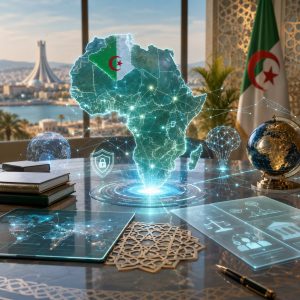
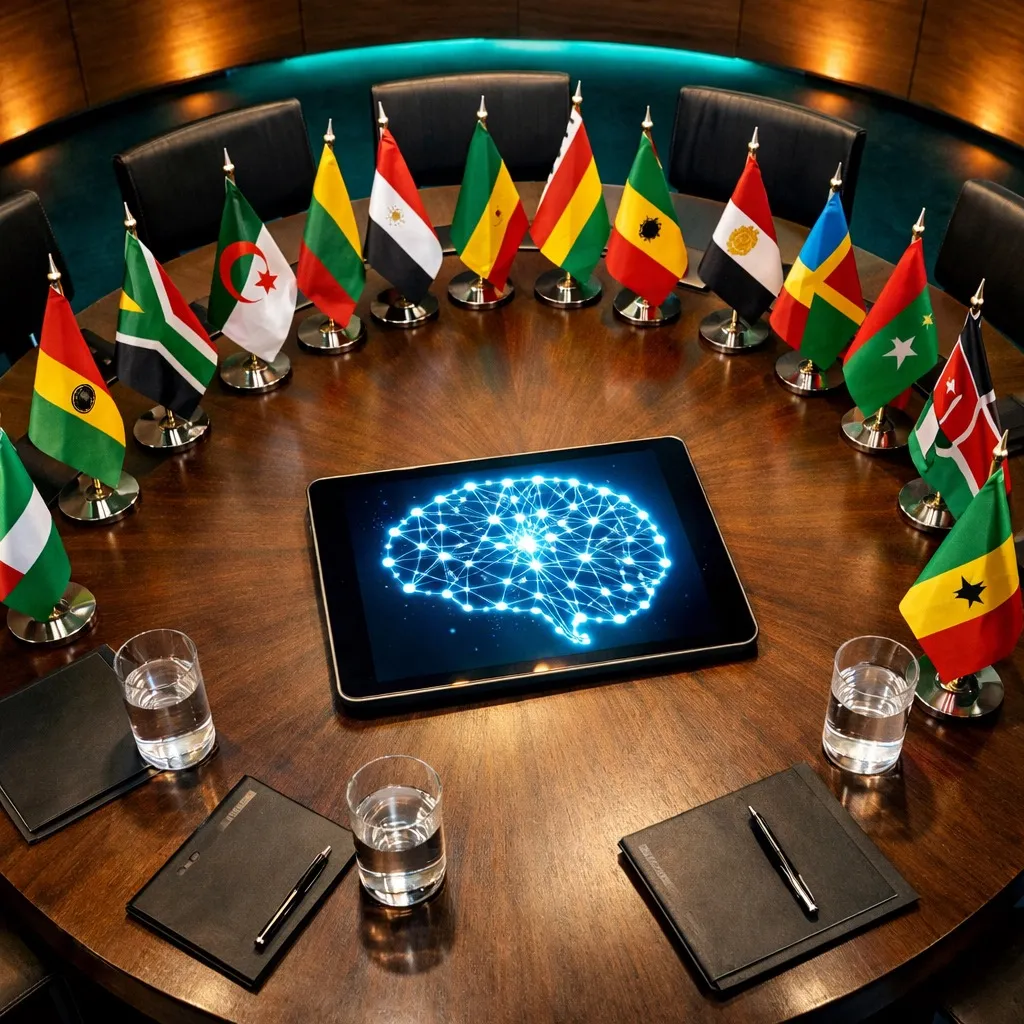
On November 17, 2025, the Smart Africa Board formally unveiled the Africa Artificial Intelligence Council in Conakry, Guinea. Minister of Post and Telecommunications Sid Ali Zerrouki was appointed as one of 15 inaugural members, placing Algeria alongside Chad, Kenya, Nigeria, Rwanda, Togo, and Zimbabwe in the government tier. Eight independent members from organizations including Microsoft, Google, InstaDeep, the Bill & Melinda Gates Foundation, Orange, and the University of Pretoria round out the Council.
The Council emerged from the African Declaration on Artificial Intelligence, signed by 54 nations at the inaugural Global AI Summit in Kigali on April 4, 2025. Co-chaired by the African Union Commission and the International Telecommunication Union, and housed under the Smart Africa Steering Committee, the Council’s mandate spans regulatory harmonization, data sovereignty frameworks, capacity building, and ethical AI standards across the continent.
The formation followed a continent-wide call for nominations that attracted over 400 applications from 57 nationalities. Algeria’s selection reflects several factors: it is Africa’s largest country by area, one of the continent’s biggest economies by GDP, and it formally adopted a comprehensive National AI Strategy in December 2024.
Six Pillars of Algeria’s National AI Strategy
Algeria’s National AI Strategy, formally adopted on December 8, 2024, provides the domestic foundation for the country’s continental ambitions. The strategy is organized across six pillars.
Scientific research prioritizes building applied AI research capacity. The National School of Artificial Intelligence (ENSIA) in Sidi Abdellah, which opened in the 2021-22 academic year, serves as the anchor institution, teaching in both English and French with specializations in AI theory, data science, and entrepreneurship.
Talent development targets training thousands of AI specialists. The broader SNTN-2030 (National Digital Transition Strategy), unveiled in May 2025, sets a goal of developing 500,000 active ICT experts by 2030 and reducing tech talent emigration by 40%.
Hardware and infrastructure addresses the computational gap. In March 2025, Minister Zerrouki launched construction of Algeria’s first AI-dedicated high-performance computing center in Oran, equipped with GPU clusters for training and deploying AI models at scale.
Investment and ecosystem establishes frameworks for attracting capital. Algerie Telecom’s 1.5 billion dinar ($11 million) fund for AI, cybersecurity, and robotics startups represents the first major corporate commitment under this pillar.
Data protection and regulatory framework addresses the legal infrastructure for responsible AI, including personal data protection and algorithmic transparency. Algeria enacted Law No. 25-11 in July 2025, introducing a data classification and dual-regime transfer framework for digital sovereignty.
Sector-specific AI applications targets energy and hydrocarbons, agriculture, healthcare, education, and public administration, with dedicated sub-strategies for each.
Algeria’s AI Market: The $1.69 Billion Trajectory
The numbers framing Algeria’s ambitions are substantial. The country’s AI market, valued at approximately $499 million in 2025, is projected to reach $1.69 billion by 2030 at a compound annual growth rate of 27.67%. The government has set a national target of AI contributing 7% of GDP by 2027, announced by Minister Zerrouki at the CTO Forum Algeria in February 2025.
Several factors underpin these projections. Algeria’s population of nearly 48 million, with a median age of 28.8 years and 42% under age 25, provides both a large domestic market and a young workforce. The country’s hydrocarbon sector, which still accounts for roughly 95% of export earnings, offers massive opportunities for AI-driven optimization. And the government has backed strategy with infrastructure: 265,000 kilometers of fiber optic cable deployed, 1,400 new 4G sites operational, and 7,000 more planned.
At the continental level, Africa’s AI market is projected to grow from approximately $4.9 billion in 2025 to $16.5 billion by 2030, according to a Mastercard whitepaper. The $60 billion Africa AI Fund announced alongside the Kigali Declaration signals the scale of continental ambition.
Advertisement
DjazairIA and the Emerging AI Ecosystem
Among the most consequential developments is DjazairIA, Algeria’s first incubator dedicated exclusively to artificial intelligence. Unlike generalist startup programs, DjazairIA provides AI-specific resources: access to computing infrastructure, mentorship from AI practitioners, curated datasets for Algerian use cases, and connections to international research networks. The program is partially subsidized and requires no equity from participating startups.
DjazairIA focuses on AI applications in energy, healthcare, agriculture, and education, aligning directly with the national strategy’s sector pillars. Its emergence alongside Algerie Telecom’s $11 million fund creates a nascent but real pipeline from incubation to commercialization.
The 500+ digital projects planned for 2025-2026, announced by High Commissioner for Digitalization Meriem Benmouloud, create demand across the ecosystem. Seventy-five percent of these projects focus on modernizing public services, spanning e-government, smart agriculture, healthcare informatics, and education technology. Algeria currently ranks 116th of 193 countries in the 2024 UN E-Government Development Index, a position these projects aim to improve significantly.
What Continental Harmonization Means for Algerian Startups
For Algerian tech companies, the Africa AI Council’s work on regulatory harmonization could unlock concrete benefits.
Cross-border market access. An Algerian AI company building a medical imaging diagnostic tool currently faces 55 different regulatory environments across Africa. Harmonized governance standards would allow products approved in Algeria to deploy across multiple countries with minimal additional overhead, opening a market of 1.4 billion people.
Data flow agreements. Training effective AI models requires large, diverse datasets. Continental data-sharing frameworks could allow Algerian companies to access anonymized datasets from across Africa. This is particularly relevant for Arabic and Amazigh natural language processing, where data scarcity is a fundamental bottleneck.
Collective negotiating power. African countries individually have limited leverage negotiating with global tech giants on data localization, algorithmic transparency, and fair taxation. A coordinated position through the Africa AI Council carries substantially more weight, meaning better terms for technology partnerships and stronger protections for local industry.
The Execution Challenge
Algeria’s AI ambitions face practical obstacles that merit honest assessment. The gap between strategy adoption and operational implementation has historically been wide: Algeria ranked 132nd globally in the 2012 UN e-government survey despite having launched its e-Algeria 2013 strategy years earlier.
The talent pipeline remains shallow. Algeria’s most skilled AI researchers face recruitment pressure from European and Gulf employers offering salaries five to ten times higher than local rates. The SNTN-2030’s target of reducing tech emigration by 40% acknowledges the problem but requires competitive compensation and career pathways that are still forming.
The funding gap is real. Algerie Telecom’s $11 million investment, while significant domestically, is modest next to regional competitors. Morocco’s Digital 2030 strategy has earmarked $1.2 billion for digital transformation from 2024-2026 and launched the JAZARI network of AI excellence centers, targeting a $10 billion GDP boost from AI by 2030.
Continental coordination itself is complex. The Africa AI Council must build consensus among nations with vastly different AI maturity levels, institutional capacities, and strategic priorities. Algeria’s effectiveness as a member will depend on translating domestic strategy into credible continental leadership.
Frequently Asked Questions
What is the Africa AI Council and what role does Algeria play?
The Africa AI Council is a 15-member body established on November 17, 2025 by the Smart Africa Board in Conakry, Guinea. It oversees continental AI governance, regulatory harmonization, and ethical standards. Algeria’s Minister of Post and Telecommunications, Sid Ali Zerrouki, was appointed as one of seven government representatives, alongside ministers from Chad, Kenya, Nigeria, Rwanda, Togo, and Zimbabwe.
How large is Algeria’s AI market and what are the growth targets?
Algeria’s AI market was valued at approximately $499 million in 2025 and is projected to reach $1.69 billion by 2030, a compound annual growth rate of 27.67%. The government has set a target for AI to contribute 7% of GDP by 2027, backed by Algerie Telecom’s $11 million startup fund and a new AI-dedicated high-performance computing center in Oran.
How does continental AI policy harmonization benefit Algerian tech companies?
Harmonized AI governance standards across Africa would allow products approved in one country to be deployed across multiple markets with minimal additional regulatory overhead. For Algerian startups, this means access to a potential market of 1.4 billion people rather than just 48 million domestically, with particular advantages for Arabic and Amazigh NLP applications that benefit from cross-border data sharing agreements.
Sources & Further Reading
- Zerrouki Appointed Member of Africa AI Council — Algerie Presse Service
- Smart Africa Board Unveils Inaugural Africa AI Council — Smart Africa
- Algeria Targets 7% GDP from AI by 2027 — We Are Tech Africa
- Algeria National AI Strategy — Digital Policy Alert
- Algerie Telecom Creates $11M AI Startup Fund — Middle East AI News
- Algeria Launches AI Supercomputing Center in Oran — We Are Tech Africa
- Algeria Plans Over 500 Digital Projects by 2026 — We Are Tech Africa
- Africa’s AI Market to Hit $16.5B by 2030 — Mastercard/CoinGeek
- Algeria Aims for Full Digital Transformation by 2030 (SNTN-2030) — We Are Tech Africa