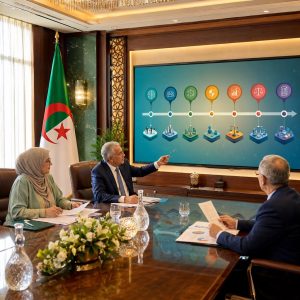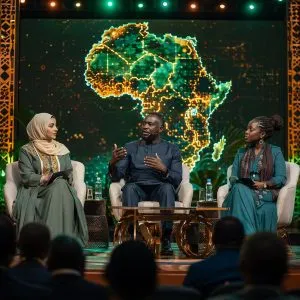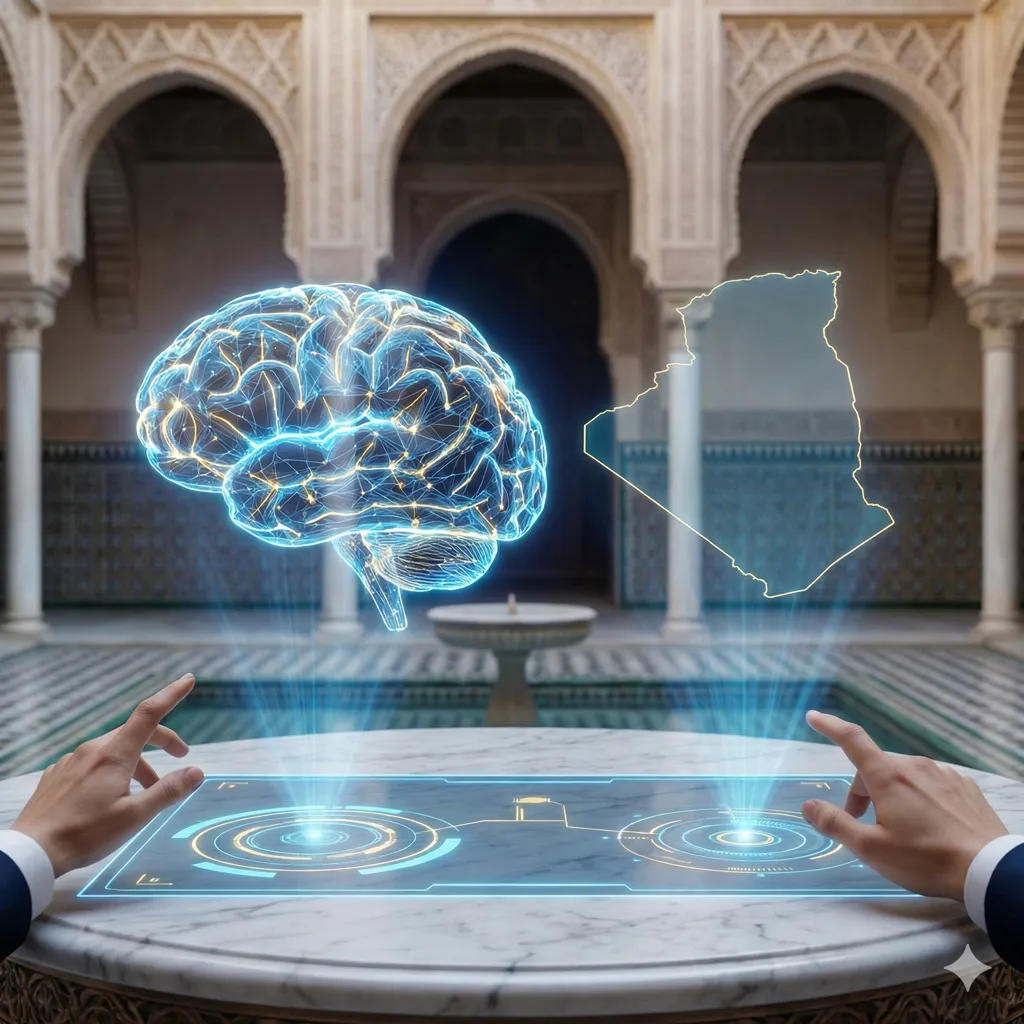
Algeria has officially entered the global artificial intelligence race. On December 8, 2024, the country’s National AI Council — led by Professor Merouane Debbah, president of the AI Scientific Council, founding Director of the 6G Research Center at Khalifa University in Abu Dhabi, and one of the world’s most-cited researchers in telecommunications — adopted a National Artificial Intelligence Strategy. The comprehensive framework targets six pillars: scientific research, startup support, digital infrastructure, skills development, international partnerships, and ethical AI governance. The government set a bold headline target: AI must account for 7% of Algeria’s GDP by 2027.
For tech companies and entrepreneurs operating in or watching Algeria, the strategy is not just political rhetoric. It is backed by real money, real institutions, and real deadlines — with the broader AI market projected to grow from $498.9 million in 2025 to $1.69 billion by 2030.
The $11 Million Bet on AI Startups
In February 2025, Algérie Télécom launched a 1.5 billion dinar (approximately $11 million USD) investment fund specifically targeting AI, cybersecurity, and robotics startups — the clearest policy signal yet that AI is being treated as an industrial priority. This was channeled through the national telecom operator alongside the broader Algeria Startup Fund (ASF), which is backed by six public banks with DZD 2.4 billion in capital and DZD 58 billion across 58 regional funds.
Simultaneously, the government launched Skills Centers — training hubs in major cities designed to train young Algerians in AI, cloud computing, IoT, and cybersecurity. The first Skills Center was inaugurated in Setif in February 2025 at former Algérie Télécom premises, with additional centers in Annaba and Oran, offering free training — a model designed for replication across wilayas.
The ambition: to help grow Algeria’s estimated 50–60 active AI-enabled startups into a roster of 20,000 labeled startups by the end of the decade, supported by 124 active university incubators engaging 60,000 students in startup-oriented final-year projects.
Regional Context: Where Algeria Stands in the Maghreb
The comparison with peer economies in North Africa is more nuanced than often presented. Tunisia was the first Maghreb country to develop a national AI strategy, doing so in 2018-2019, and leads the region in the Oxford Government AI Readiness Index (ranked 69th globally). Tunisia also has a significantly higher developer density — approximately 4,120 developers per million people compared to Algeria’s estimated 477 per million — reflecting a more mature IT outsourcing ecosystem.
Morocco launched its own ambitious “Maroc IA 2030” strategy only in January 2026, paired with a $1.2 billion digital transformation plan for 2024-2026. Morocco’s advantage is its established position as a nearshore IT services hub for European companies.
Algeria’s differentiator is scale: the largest Arabic-speaking country by land area, the third largest by population (nearly 48 million), with the largest computer science student base on the African continent and unique linguistic assets in Darija and Tamazight that neither neighbor possesses. The question is whether Algeria can convert these structural advantages into commercial outcomes.
A University Ecosystem Ready to Scale
Algeria’s most underrated asset in the AI race is its academic infrastructure. As of 2025, 57,700 students are enrolled across 74 AI-related master’s programs in 52 universities — the largest such pipeline on the African continent. The National School of Artificial Intelligence (ENSIA) at Sidi Abdellah specifically trains engineers in NLP, speech processing, and computer vision. The National Higher School of Cybersecurity, inaugurated in September 2024, trains engineers and doctoral researchers in penetration testing, security operations, and AI-native detection.
Institutions like the University of Science and Technology Houari Boumediene (USTHB) in Algiers have produced generations of mathematicians and computer scientists who form the backbone of any serious AI industry. A 2024 survey of Algerian developers found that 60% of those working for Algerian companies already have remote work options — an ecosystem ready for cross-border collaboration.
The challenge, however, is converting academic output into commercial output. Research by the Algerian Journal of Science and Technology reveals that most universities are not yet ready to adopt AI policies due to lack of updated curricula, hardware resources, and trained faculty. The gap between producing engineers and deploying products remains the central bottleneck.
Advertisement
Six Strategic Pillars Explained
The National AI Strategy organizes action around six areas:
- Scientific Research: Funding for AI research labs, publication quotas, and international collaboration agreements. Algeria has also signed cooperation frameworks with UNDP for digital transformation support and with South Korea’s KOICA for cybersecurity capacity building.
- Startup Environment: Simplified incorporation, tax exemptions (4-6 years under the Startup Label), access to the ASF and Algérie Télécom fund. The first private FCPR venture capital fund (Afiya Investments) was approved in 2025, creating a new private funding channel.
- Human Capital: Skills Centers, AI integration into university curricula, and alignment with SNTN-2030’s target to train 500,000 ICT specialists by 2030 and reduce tech talent emigration by 40%.
- Sectoral AI Application: Smart agriculture (leveraging the sector’s approximately 13% GDP contribution per World Bank 2023 data), optimized oil and gas extraction via Sonatrach partnerships, and AI-powered public services through the Bawabatak portal’s 342 digitized services.
- AI for Export: Development of Arabic-language AI tools and services for regional markets — a genuine competitive advantage. Algerian researchers have produced DziriBERT (the first Transformer model for Algerian Arabic), the Hadretna project (an LLM trained on 2 billion tokens of Darija and Tamazight), and Nojoom.ai’s Arabic search and document analysis tools.
- Governance and Ethics: A proposed national AI ethics charter and regulatory sandbox framework, building on the existing data protection law (Law 18-07 and its 2025 amendment Law 11-25) and the cybersecurity mandate (Decree 26-07).
Infrastructure: Building the Foundation
The AI strategy does not exist in a vacuum — it rests on substantial infrastructure investments already underway:
- AI Supercomputing Center in Oran: Foundation stone laid March 16, 2025, equipped with GPU clusters for AI workloads, targeting researchers, startups, and academia in precision agriculture, energy management, and climate modeling.
- National Data Centers: The El Mohammedia data center is operational (80% complete), with a second facility under construction in Blida (50% complete).
- Fiber optic network: Over 140,000 km deployed (up to 200,000 km including all segments), with 2.5 million FTTH subscribers covering 27% of households and international bandwidth of 9.8 Tb/s.
- 5G rollout: Only began in late 2025, but the DjazairIA incubator — Algeria’s first AI-dedicated incubator — is already operational, offering coworking spaces, coaching, and international marketing support for AI startups.
Risks and Honest Assessments
No strategy document survives contact with implementation without friction. Algeria’s AI roadmap faces three structural risks:
- Brain drain: Highly trained Algerian engineers continue to emigrate to France, Canada, and the Gulf. Without competitive salaries and working environments, the talent pipeline will leak faster than it fills. The 500,000 ICT specialist target and 40% emigration reduction goal are ambitious and will require sustained effort to achieve.
- Bureaucratic friction: Foreign tech companies report that licensing, import regulations for hardware (especially GPUs), and currency controls (the Bank of Algeria Instruction No. 06-2025 restricts all payment operations to Algerian dinars) remain significant barriers to market entry.
- Connectivity gaps: AI deployment at scale requires reliable, high-speed internet. 5G rollout only began in late 2025, rural connectivity remains poor, and fiber penetration at 27% leaves significant ground to cover.
Despite these challenges, the trajectory is clear. The government has aligned political will, financial resources, and institutional architecture behind a coherent AI strategy for the first time in the country’s history. The first startup IPO (Moustachir, early 2025), the first ASF exit (VOLZ, December 2025 at 3.35x return), and the first private VC fund (Afiya Investments) all happened in the same year — demonstrating that the ecosystem is producing real outcomes, not just policy announcements.
For any company building in Arabic NLP, smart agriculture, or public sector AI — Algeria is a market you cannot afford to ignore in 2026.
Frequently Asked Questions
What are the key targets of Algeria’s 2025-2030 AI strategy?
The strategy targets a 7% GDP contribution from AI by 2027, establishment of Scale AI Centers across multiple wilayas, construction of the Oran AI Data Center, and training of 10,000 AI specialists. It prioritizes agriculture, energy, health, and public administration.
How realistic are the strategy’s implementation timelines?
The timelines are ambitious. The Oran Data Center and Scale Centers are on track, but the 10,000 AI specialist target requires dramatically scaling training programs. The biggest risk is execution speed — similar strategies in the region have faced 2-3 year delays.
What opportunities does the strategy create for Algerian tech professionals?
Direct opportunities include positions at Scale AI Centers, the Oran Data Center, and government AI projects. Indirect opportunities include consulting, training delivery, and building AI products for newly digitized public services.
Sources & Further Reading
- Why Algeria Is Positioned to Become North Africa’s AI Leader — New Lines Institute
- Algeria Unveils AI Strategy to Boost Digital Transformation — Ecofin Agency
- Algeria Launches $11 Million AI Investment Fund — Startup Researcher
- National AI Strategy — Digital Policy Alert
- North African AI Large Language Model — Middle East AI News
- AI in Algeria Deep Dive — TechaHub
- World Bank — How Algeria Is Crafting a Dynamic Economy
- Statista — AI Market Algeria Forecast