Agriculture Meets Innovation in Algeria
Algeria’s agricultural sector stands at a crossroads. The country is one of the largest food importers in Africa, spending billions of dollars annually on wheat, dairy, and other staples. Yet Algeria possesses 8.5 million hectares of arable land, significant water resources in the south, and a young population eager for economic opportunity beyond hydrocarbons. The missing ingredient has been technology.
That is changing. A growing cohort of Algerian agritech startups is applying artificial intelligence, Internet of Things sensors, satellite imagery, and data analytics to transform how the country farms. From the fertile Mitidja plain near Algiers to the oasis agriculture of the Saharan south, precision agriculture is moving from concept to field deployment.
The Scale of the Opportunity
Agriculture accounts for approximately 12% of Algeria’s GDP and employs over 20% of the workforce, making it the second-largest sector after hydrocarbons. The government has identified food security as a strategic priority, with the goal of reducing import dependency across key staple crops including cereals, milk, and red meat.
The challenges are well documented. Water scarcity is intensifying, with Algeria classified as a water-stressed country. Soil degradation affects significant portions of arable land. Post-harvest losses are estimated at 20-30% for fruits and vegetables due to inadequate cold chain and logistics infrastructure [VERIFY]. Climate change is shifting rainfall patterns and increasing the frequency of droughts, particularly in the high plateaus and steppe regions that support livestock and cereal production.
These challenges are precisely the problems that agritech solutions are designed to address. Precision agriculture optimizes water and input usage. AI-powered crop monitoring detects disease and stress early. Data-driven supply chain tools reduce post-harvest waste.
Algerian Startups Leading the Charge
Several Algerian startups are building technology solutions for the agricultural sector, leveraging Algeria’s growing AI talent pool and the country’s extensive agricultural geography.
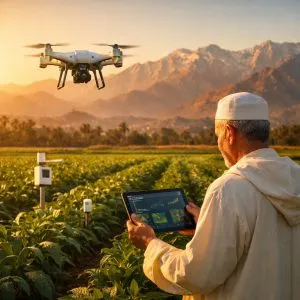
Smart Irrigation Systems. Water management is the most urgent agricultural challenge in Algeria. Startups are deploying IoT sensor networks that monitor soil moisture, weather conditions, and crop water requirements in real time, automatically adjusting irrigation schedules to eliminate waste. Given that agriculture consumes roughly 65% of Algeria’s water resources, even modest efficiency gains have national-scale impact.
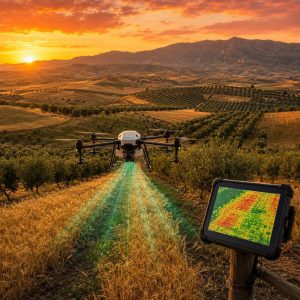
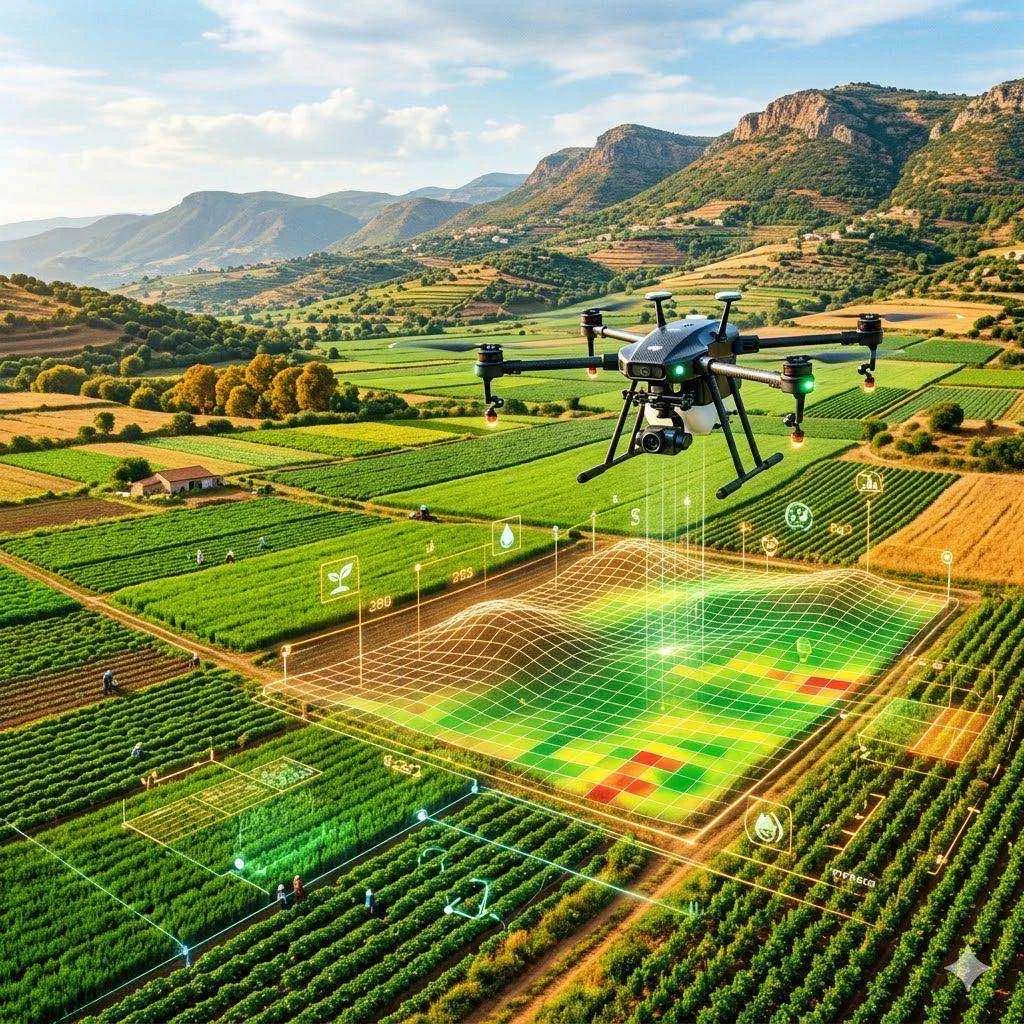
Drone-Based Crop Monitoring. Unmanned aerial vehicles equipped with multispectral cameras can survey hundreds of hectares per day, generating detailed maps of crop health, nutrient deficiencies, and pest infestations. This technology is particularly valuable for Algeria’s large-scale cereal farms in the high plateaus, where manual field scouting is impractical.
AI-Powered Disease Detection. Mobile applications using computer vision can identify crop diseases from smartphone photos, providing instant diagnosis and treatment recommendations to farmers who may be far from agricultural extension services. This democratizes access to agronomic expertise, particularly for smallholder farmers in remote areas.
Supply Chain and Market Access Platforms. Digital marketplaces connecting farmers directly to buyers, cold chain monitoring solutions, and logistics optimization tools are addressing the post-harvest loss problem by shortening and digitizing the path from farm to consumer.
Advertisement
Policy Tailwinds for AgriTech
Algeria’s regulatory environment is becoming increasingly supportive of agritech innovation. The startup ecosystem law (Law 20-254), enacted in 2020, provides tax incentives, simplified registration, and access to public procurement for certified startups. Agricultural technology companies can access these benefits while also tapping into sector-specific support programs.
The government’s push toward food self-sufficiency creates natural demand for agritech solutions. Algeria’s cereal import bill alone runs into billions of dollars annually, creating strong political will to support any technology that can boost domestic production. The 2025-2029 agricultural development plan emphasizes modern farming techniques, water-efficient irrigation, and the integration of digital technology into agricultural extension services.
Algeria’s participation in the ICT Africa Summit 2026 in Algiers, which includes a dedicated HealthTech and EnergyTech track, also provides a platform for agritech startups to gain continental visibility and connect with investors and partners from across Africa.
The Saharan Agriculture Frontier
One of Algeria’s most distinctive agritech opportunities lies in Saharan agriculture. The country’s southern regions, particularly around Ghardaia, Biskra, and Adrar, have developed significant greenhouse and oasis farming operations that produce tomatoes, dates, and other crops.
These Saharan operations are inherently technology-intensive, relying on controlled environments, desalinated or borehole water, and precise input management. AI and IoT technologies are natural fits for optimizing greenhouse climate control, water recycling, and nutrient delivery in these settings.
The Saharan frontier also presents opportunities for solar-powered agritech solutions, combining Algeria’s exceptional solar resources with smart farming technology. Solar-powered IoT sensors, solar irrigation pumps, and off-grid cold storage units could transform the economics of desert agriculture.
Skills and Talent for AgriTech
Building a vibrant agritech ecosystem requires professionals who combine agricultural domain knowledge with technology skills. Algeria’s agricultural engineering programs at universities in Blida, Mostaganem, and Batna produce graduates with strong agronomic foundations, but they need exposure to AI, IoT, and data analytics to build the next generation of agritech innovators.
The intersection of Algeria’s growing AI talent pool, estimated at 50-60 active AI startups, with its large agricultural sector creates a unique opportunity. Unlike pure software startups that compete globally from day one, agritech solutions benefit from deep local knowledge of soil conditions, climate patterns, crop varieties, and farming practices that foreign competitors cannot easily replicate.
For Algerian tech professionals considering entrepreneurial paths, agritech offers a rare combination: large addressable market, strong government support, clear social impact, and natural competitive moats from local agricultural knowledge.
Frequently Asked Questions
Why is agritech particularly important for Algeria right now?
Algeria is one of Africa’s largest food importers, spending billions annually on staple crops while possessing 8.5 million hectares of arable land. Water scarcity, soil degradation, and post-harvest losses of 20-30% for perishable crops create urgent demand for technology solutions. The government has made food self-sufficiency a strategic priority, creating strong policy support for agritech innovation.
What types of agritech solutions are Algerian startups building?
Algerian agritech startups are focusing on four key areas: IoT-enabled smart irrigation systems that reduce water waste in a country where agriculture consumes 65% of water resources, drone-based crop monitoring using multispectral imaging for large-scale cereal farms, AI-powered mobile disease detection apps for smallholder farmers, and digital marketplace platforms that reduce post-harvest losses by connecting farmers directly to buyers.
How can tech professionals enter Algeria’s agritech sector?
Professionals with AI, IoT, or data analytics skills can partner with agricultural engineers to build solutions with deep local knowledge. Algeria’s startup ecosystem law (Law 20-254) provides tax incentives and simplified registration for certified startups. The Saharan agriculture frontier is especially technology-intensive, offering opportunities in solar-powered IoT, greenhouse automation, and precision water management that combine Algeria’s solar resources with smart farming technology.