A Record Two Quarters That Reset Expectations
Microsoft’s fiscal year 2026 is shaping up to be the largest capital expenditure program in corporate history. Q1 FY26 capex came in at $34.9 billion, a record at the time. Q2 FY26 broke that record at $37.5 billion. Combined, the first two quarters of FY26 delivered $72.4 billion of capex — nearly the entire $88 billion spent across all of FY25.
If the second half of the year maintains the same run rate, Microsoft will close FY26 near $140 billion of capital expenditure, a roughly 59% increase over FY25. Leadership has not yet given explicit full-year guidance at that level, but the company’s own commentary — “FY26 growth rate expected to be higher than FY25” and an 80% boost in AI capacity already announced — points in that direction.
The spending composition tells its own story. Of the $37.5 billion in Q2 alone, approximately 67% — about $25 billion — went into short-lived assets, primarily GPUs, custom silicon and specialized AI servers with 3-5 year useful lives. That is a structural shift away from traditional long-lived real estate and toward depreciation-heavy silicon, and it has already sparked debate among analysts about whether this capex cycle will generate adequate returns.
What $140B Actually Buys
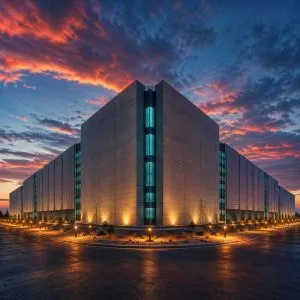
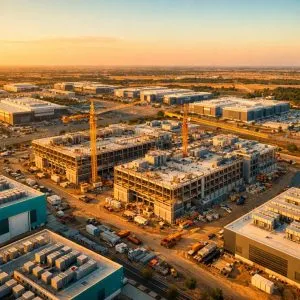
The headline number is striking, but the physical output is even more so. Microsoft added nearly 1 gigawatt of new data center capacity in Q2 FY26 alone — enough to power a mid-sized metropolitan area and larger than the entire capacity of most individual hyperscaler sites just five years ago.
Context matters. Global hyperscaler capex is on track to hit roughly $690 billion in 2026 across Microsoft, Amazon, Google, Meta and Oracle combined. Microsoft is not operating in isolation; it is competing with Amazon’s $200 billion capex plan, Google’s high-double-digit program, and Meta’s hyperscale push. Total US data center capacity is expected to cross 125 GW before the end of the decade.
At the individual contract level, Microsoft’s remaining performance obligation (RPO) backlog has doubled to roughly $625 billion, a staggering multi-year commitment book dominated by OpenAI-related cloud consumption. That backlog is what makes the capex defensible on paper — but only if the infrastructure can be built fast enough to serve it.
The Power Bottleneck Is Now the Binding Constraint
Here is where the story changes character. Microsoft can find the money. It cannot always find the power.
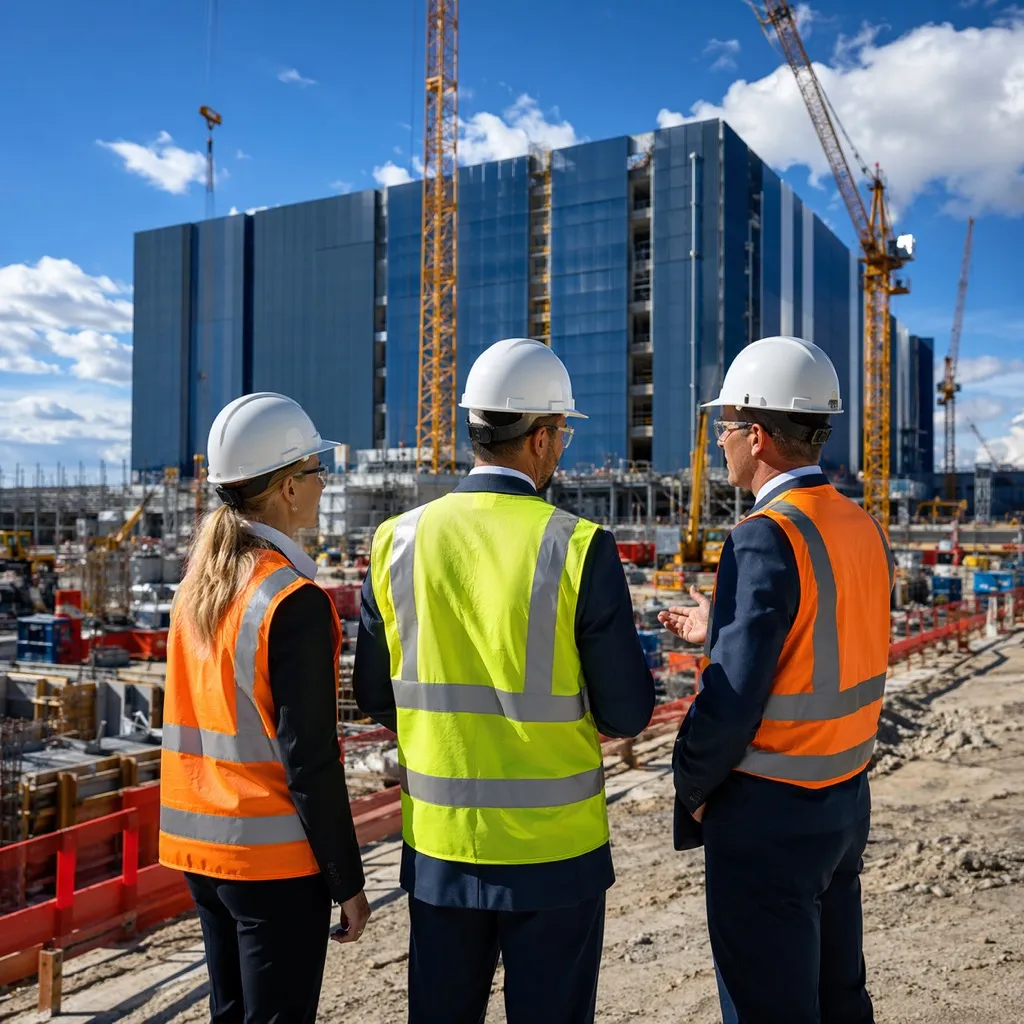
Power transformer lead times have stretched to 128 weeks on average — roughly 2.5 years — with unit prices up 77% since 2019. Northern Virginia data center developers now face seven-year delays to connect new facilities to the grid, up from two to three years pre-2022. Microsoft’s own internal forecasts acknowledge that the Azure capacity crunch is likely to extend well into 2026, constraining new subscriptions in key US hubs.
Microsoft has been unusually candid about this. Azure CTO Mark Russinovich publicly stated that US data centers “will soon hit the limits of the energy grid.” In response, the company is pursuing four parallel strategies:
- Off-grid natural gas — siting new capacity with on-site generation where utility interconnect is blocked or delayed.
- Geographic diversification — shifting new builds out of Northern Virginia, Texas and Phoenix into secondary markets with available grid capacity.
- Direct utility infrastructure funding — Microsoft has committed to “paying its way” on grid upgrades, directly financing transformer purchases, substations, and transmission lines it would normally wait for utilities to build.
- Nuclear partnerships — long-term power purchase agreements with small modular reactor (SMR) developers and existing nuclear operators, including the Three Mile Island restart.
Advertisement
The Investor Anxiety Behind the Number
Not everyone is cheering. Microsoft’s Q2 FY26 earnings beat on revenue and EPS, but the stock sold off sharply on the capex figure, with investors asking the question that has loomed over every hyperscaler since mid-2024: is the AI capex cycle delivering returns fast enough to justify the depreciation?
The concern has teeth. Short-lived assets — GPUs and silicon — depreciate on 3-5 year schedules, so 67% of the current quarter’s $37.5 billion will be hitting the P&L in full by 2029-2030. If revenue growth from AI services does not scale at a matching pace, Microsoft faces the same margin compression story that took Meta’s stock down 70% during its metaverse capex surge.
The counter-argument is the $625 billion backlog. Microsoft has legally-contracted cloud commitments roughly equal to four years of Azure revenue already on the books. That is a different signal from speculative capex. But the backlog is heavily concentrated in OpenAI consumption, which means the entire investment thesis is now coupled to one customer’s trajectory.
Enterprise Implications
- Azure capacity remains rationed. If your organization is planning new AI workloads in North America, assume Northern Virginia, Phoenix and central Texas capacity will remain constrained through 2026. Book capacity early or route to European and Asian regions.
- Pricing discipline is eroding. At $140 billion of annual capex, Microsoft needs premium pricing to keep AI services margin-accretive. Expect fewer discounts on committed-use deals and upward pressure on list prices for premium AI SKUs.
- Power-aware procurement. Enterprise buyers should begin evaluating cloud providers not only on price and performance but on grid position — which regions can actually serve new workloads without queueing. This is a new procurement axis most CIOs have not operationalized yet.
- The AI bubble question is no longer abstract. $140 billion is real money that either generates returns or writes down. Every quarter, the question moves closer to an answer.
What to Watch Next
- Q3 FY26 capex guidance — the single most watched number in hyperscaler earnings.
- OpenAI revenue disclosure — any quantification of OpenAI’s cloud consumption inside the $625 billion backlog.
- Grid interconnect timelines — PJM, ERCOT and CAISO queue statistics published quarterly.
- SMR partnerships — first commissioning dates for the nuclear deals signed in 2024-2025.
Microsoft has decided that the AI infrastructure buildout is a multi-decade structural shift worth betting the balance sheet on. $140 billion in a single fiscal year is the clearest expression of that conviction yet. Whether it pays off, or whether it becomes the cautionary tale of this cycle, will not be known for several years. In the meantime, the grid — not the cash — is what decides how fast.
Frequently Asked Questions
Why is Microsoft spending so much more on capex in FY26?
Two reasons. First, AI customer demand — especially OpenAI-related consumption inside Microsoft’s $625 billion remaining performance obligation backlog — requires matching infrastructure. Second, Microsoft expects the AI infrastructure buildout to be a multi-decade structural shift and is willing to compress decades of investment into a few years to lock in capacity and land positions before rivals do.
Will Azure have capacity for my new AI workloads in 2026?
Not everywhere. Microsoft’s own internal forecasts flag an Azure capacity crunch extending through 2026, concentrated in Northern Virginia, Phoenix, and central Texas. Secondary US markets and most European and Asian regions have more room. Book capacity early, lock in committed-use contracts where possible, and plan for regional diversification rather than assuming a single region will serve all growth.
Is Microsoft’s $140 billion capex sustainable?
That is the core investor debate. The bull case is the $625 billion contracted backlog, which implies roughly four years of Azure revenue already committed. The bear case is that 67% of current capex is short-lived silicon depreciating on 3-5 year schedules — if AI revenue does not scale at the same pace, Microsoft faces the same margin compression that hit Meta during its metaverse cycle. The honest answer will not be clear until 2027-2028.
Sources & Further Reading
- Microsoft Q1 FY2026: The $35 Billion Quarter — Global Data Center Hub
- Microsoft Q2 FY26 Record Capex Spooks Investors — Fintool
- Hyperscaler CapEx Hits $690B in 2026 — Introl
- Azure Capacity Crunch Extends into 2026 — Windows Forum
- Microsoft Q1 FY’26 earnings: cloud supply constraints — Directions on Microsoft