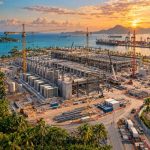
The Scale That Changes Everything
Numbers at the scale of hundreds of billions of dollars lose their meaning quickly. It is worth converting them to something tangible. According to Fortune’s April 2026 analysis of hyperscaler spending, the four major hyperscalers collectively committed to spending approximately $700 billion on AI infrastructure in calendar year 2026, with no moderation signal visible in their public guidance. That figure is larger than the GDP of most African nations combined. It represents a 36% increase over 2025, which was itself a record year.
Futurum Group’s AI infrastructure analysis characterized 2026 as “the $690B infrastructure sprint” — a race where each hyperscaler is making a calculated bet that the AI compute they build now will be the platform constraint that determines market position for a decade. The bet’s logic: cloud market share in 2030 will correlate more closely with compute reserved in 2025-2026 than with product feature parity, because AI models require purpose-built infrastructure (custom silicon, liquid cooling, ultra-low-latency networking fabrics) that takes 18-36 months to bring online from ground-break to production.
The practical consequence of this spending surge for enterprise cloud customers is not lower prices. It is scarcity. When every available NVIDIA H100 and H200, every Google TPU v5, and every AWS Trainium2 chip is allocated to hyperscaler-internal workloads or committed to a handful of AI frontier labs, enterprise customers requesting on-demand GPU capacity receive multi-week provisioning queues rather than the on-demand instant provisioning that became an expectation in the 2015-2022 era.
Goldman Sachs’s infrastructure build-out tracker noted in its May 2026 update that the market is operating on three critical assumptions: that AI model capabilities will continue scaling with compute, that enterprise demand for AI inference will grow faster than training demand, and that power infrastructure — not silicon supply — will be the binding constraint by 2027. All three assumptions carry significant uncertainty, and the tracker explicitly modeled a scenario where a capability plateau or demand deceleration causes a $200-300B annual capex correction. Understanding that correction scenario is as important as understanding the bull case.
How This Reshapes the Cloud Procurement Landscape
The hyperscaler capex surge is not symmetrically distributed across all cloud services. It is concentrated in three areas: AI training infrastructure (GPU clusters, custom silicon, networking fabric), inference serving capacity (high-memory, low-latency instances for serving frontier models), and power infrastructure (data center construction, on-site power generation, cooling systems). Standard compute — the EC2 instances, Cloud Run containers, and Azure VMs that run most enterprise workloads — is not supply-constrained and will not experience the pricing or availability shifts described below.
What is supply-constrained: H100/H200-class GPU instances, high-bandwidth memory instances optimized for large-context LLM inference, and colocation space at AI-grade data centers with liquid cooling. For enterprises running AI workloads, this supply constraint translates into three specific procurement challenges.
First, reserved instance pricing for GPU compute has become a negotiation rather than a catalog transaction. Enterprises that committed to 3-year GPU reservations in 2024 are sitting on significant savings versus the 2026 spot market; enterprises that waited are discovering that on-demand GPU availability in many regions requires joining a waitlist. Techblog COMSOC’s December 2025 analysis projected that cloud infrastructure spending on GPU-optimized services would grow 58% faster than total cloud market growth in 2026 — a gap that compresses enterprise budget flexibility.
Second, hyperscalers are increasingly tiering their enterprise customer relationships around compute commitment levels. Customers with $1M+ annual commitments receive dedicated capacity allocation managers; customers below that threshold access GPU capacity through shared queues. For mid-market enterprises with $200,000-$800,000 annual cloud spend, this creates a structural disadvantage in GPU access compared to larger peers — at the same time that AI is becoming competitively important for their products.
Third, new data center locations are coming online faster than the grid can support them, creating regional availability asymmetries. A region that opened a new AI-grade data center in Q1 2026 may have excellent GPU availability; an adjacent region that has been stable since 2019 may be supply-constrained for GPU upgrades for 18+ months while power and cooling infrastructure catches up. Enterprise architects need to track regional availability at the instance-type level, not just the region level.
Advertisement
What This Means for Enterprise Cloud Strategy
The trillion-dollar capex era does not require enterprises to match hyperscaler scale. It requires them to adapt procurement and architecture strategies to a market where compute is a managed scarcity rather than an on-demand commodity. The following adaptations are sequenced by the window of opportunity available in 2026.
1. Lock In 3-Year GPU Reservations Before Q3 2026 If You Have an AI Roadmap
Reserved instance pricing for GPU compute in Q1 2026 is between 40-65% lower than on-demand pricing depending on the instance type and region. Every quarter without a reservation is a quarter at on-demand rates — and on-demand GPU availability is not guaranteed in all regions. If your organization has an AI training or inference workload that is expected to run consistently for 18+ months, converting it to a 3-year reservation is the highest-return-on-time action available in cloud procurement today. The risk — that the AI roadmap changes — is manageable with a reserved instance exchange policy that most hyperscalers now offer. The alternative risk — paying 2x on-demand pricing at peak GPU scarcity — is not manageable.
2. Audit Regional Availability at the Instance-Type Level Before Your Next Architecture Decision
An architecture decision that made sense when GPU instances were available on-demand in every major region may need revision in a world where specific instance types have 4-6 week provisioning queues. Before finalizing any AI workload architecture in 2026, run a regional availability check for the specific instance types required (not just the region’s general availability status). If your preferred region is constrained, evaluate running training in a higher-availability region with cross-region data transfer, against the architecture complexity that introduces. The 2026 instance availability map changes monthly and requires active monitoring.
3. Build a Cloud Commitment Ladder That Advances Your Tier Status
Hyperscaler enterprise tier thresholds are not published, but the pattern is consistent: larger committed spenders receive earlier access to new instance types, dedicated capacity managers, and preferential positioning in GPU allocation queues. If your organization is spending $300,000-$700,000 annually across two clouds, consolidating to one cloud at $500,000-$700,000 may advance you to a tier with meaningfully better GPU access — offsetting the strategic cost of reduced multicloud optionality with a tactical gain in compute access. Model this tradeoff explicitly rather than assuming multicloud always wins; in a supply-constrained environment, access wins over optionality.
4. Track the Capex Correction Scenario and Build a Hedge Into Your Roadmap
The Goldman Sachs model identified a capex correction scenario — driven by an AI capability plateau or enterprise demand deceleration — that could reduce hyperscaler infrastructure spending by $200-300B annually by 2028. In that scenario, GPU supply becomes unconstrained, prices fall sharply, and on-demand availability returns to 2022 norms. Enterprises that locked into 3-year GPU reservations at 2026 pricing would face an overpayment relative to the new on-demand market. Hedge against this scenario by reserving the minimum GPU capacity needed for your committed 12-month AI roadmap — not the aspirational 3-year roadmap — and maintaining the ability to reduce reservations at annual renewal.
5. Pressure-Test Your Cloud Architecture Against Power Availability in Your Chosen Regions
The science-technology analysis of hyperscaler AI-driven capex surge highlighted power availability as the constraint that will determine which data centers can support AI workloads at scale by 2027. Some regions currently hosting enterprise workloads will not receive the power upgrades needed to support next-generation GPU instances — because the local grid cannot support the load. Build a power-availability assessment into your 2027 architecture review: which hyperscaler regions have confirmed power expansion plans, which are constrained by grid capacity, and which are investing in on-site generation (nuclear, solar, natural gas). Architecture decisions made now will need to account for these constraints before the capacity crunch arrives.
The Decade-Scale Bet
The hyperscaler capex surge of 2026 is, at its core, a strategic bet by the world’s most cash-generative technology companies that AI compute capacity reserved now will translate into platform control for the next decade. The bet could be right — in which case the enterprises that secured compute commitments early will have structural cost advantages over late movers. Or the capability trajectory could plateau, demand could grow more slowly than projected, and the capex bubble could correct — in which case the hyperscalers absorb the write-down and enterprises with flexible commitments benefit from falling prices.
What is not uncertain: the next 24 months will be the highest-uncertainty period in enterprise cloud procurement since 2013, when AWS’s reserved instance model was first introduced and enterprises had to decide whether to commit or stay on-demand. The enterprises that analyzed that decision systematically — rather than defaulting to inertia — captured 40-65% cost advantages that compounded for years. The same decision framework applies today, with GPU compute replacing VM instances as the key resource and supply constraints replacing demand uncertainty as the dominant variable.
Frequently Asked Questions
Why is $700 billion in hyperscaler capex considered supply-constrained rather than demand-driven?
Supply-constrained means that the limiting factor on how much compute is available is the production capacity for AI-grade hardware (NVIDIA H100/H200 GPUs, custom silicon, power infrastructure) — not the demand from cloud customers. Hyperscalers are committing capital faster than manufacturing and grid capacity can fulfill. The result is that even with record investment, GPU instance availability is tighter in 2026 than in 2024, because the demand (from frontier AI labs, governments, and enterprises) is growing faster than the supply chain can expand.
How does the capex surge affect cloud pricing for standard compute (non-GPU)?
Standard compute — the virtual machines, containers, and storage that run most enterprise workloads — is not supply-constrained and will not experience the pricing volatility affecting GPU instances. Hyperscalers have significant excess capacity in standard compute, and competitive pressure from AWS, Azure, and Google continues to drive modest price reductions in this category. The pricing pressure and availability constraints described in this article apply specifically to GPU instances, high-bandwidth memory instances, and AI-optimized silicon — not to general-purpose cloud compute.
What should a small enterprise with a $100,000 annual cloud budget do about the GPU supply situation?
A small enterprise at that budget level should not attempt to reserve GPU instances — the minimum commitment thresholds for meaningful GPU reservations typically start at $50,000-$100,000 for a 3-year term, which would consume the entire budget. Instead, focus on token-based inference APIs (OpenAI, Anthropic, Google) which provide GPU-equivalent capability without direct infrastructure management, and plan for workload architecture that uses GPU compute intermittently (batch jobs during off-peak provisioning windows) rather than as a continuous reserved resource. Revisit the reservation question when annual cloud spend exceeds $300,000.
Sources & Further Reading
- Big Tech Hyperscalers Will Spend $700 Billion on AI Infrastructure This Year — Fortune
- AI Capex 2026: The $690B Infrastructure Sprint — Futurum Group
- Hyperscaler Capex $600B+ in 2026: A 36% Increase Over 2025 — Techblog COMSOC
- Tracking Trillions: The Assumptions Shaping the Scale of the AI Build-Out — Goldman Sachs
- The AI-Driven Surge in Hyperscaler Capital Expenditure — Science Technology News
🔗 Related Intelligence

Hyperscaler Capex 2026: Inside the $690 Billion AI Infrastructure Sprint
$700B Hyperscaler Capex: AI Infrastructure Supercycle or Overbuild?
Hyperscaler Capex Tops $600B in 2026: Inside the 36% AI Infrastructure Spending Surge

Hyperscaler Capex Crosses $600B in 2026: Where the AI Money Actually Goes