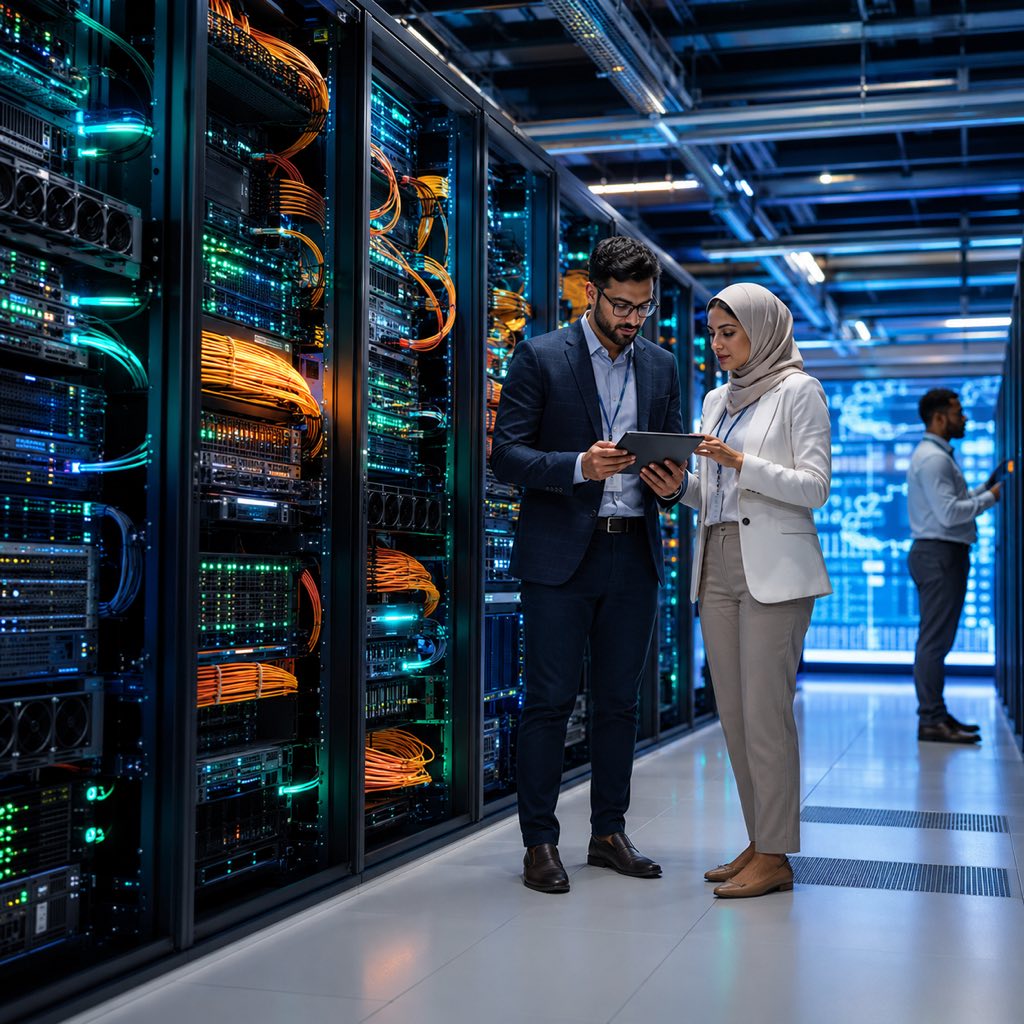
The Scale of the 2026 AI Infrastructure Sprint
Nothing in the history of enterprise computing compares to the capital deployment underway in 2026. TrendForce’s analysis of the top nine cloud service providers — AWS, Google, Meta, Microsoft, Oracle, ByteDance, Tencent, Alibaba, and Baidu — puts their combined 2026 capex at approximately $830 billion. To put this in perspective: $830 billion is larger than the GDP of all but 18 countries in the world. The nine companies on this list will spend more on AI compute infrastructure in a single year than the entire global semiconductor industry generates in annual revenue.
The individual company numbers are equally striking. AWS exceeds $230 billion — a 50%+ increase on an already massive baseline. Microsoft commits $190 billion (130% growth). Google allocates $180-190 billion (100%+ growth). Meta guides between $125-145 billion (approximately 85% growth). The Chinese hyperscalers — Alibaba and ByteDance — are identified as the main expansion drivers within the group, though specific figures were not broken out in TrendForce’s release.
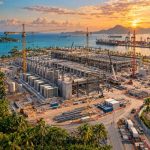
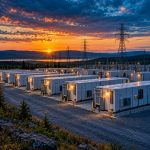
This spending is not maintenance capital. It is not replacing aging servers or upgrading networking equipment at existing facilities. It is greenfield capacity: new data centers, new GPU clusters, new AI-optimized networking fabrics, new cooling infrastructure, and new power delivery systems. Data center demand forecasts are being reset upward in real time as AI workload growth outpaces the most aggressive projections from 18 months ago.
What Is Actually Being Built: Compute, Architecture, and Power
The $830 billion is not simply buying more of what existed before. The architectural shift in what hyperscalers are building reflects a fundamental change in the kind of computation AI requires compared to conventional cloud workloads.
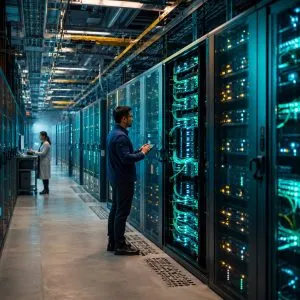
GPU cluster density is the headline change. Conventional cloud compute — web servers, databases, application services — runs efficiently on general-purpose CPUs at 5-10 kW per rack. AI training and inference runs on GPU clusters at 30-100 kW per rack and sometimes higher for liquid-cooled configurations. Microsoft’s Fairwater AI campuses use closed-loop liquid cooling systems that eliminate operational water consumption while handling this extreme power density. The company has deployed custom Azure Maia 100 accelerators and Cobalt 100 CPUs interconnected by 120,000 miles of dedicated fiber on an AI Wide Area Network.
Geographic diversification is accelerating. The 2026 buildout is not US-centric: AWS has committed to Thailand, Malaysia, New Zealand, and Saudi Arabia ($5.3 billion committed to a Saudi region); Microsoft operates 70+ Azure regions with 400+ global data centers; Google is expanding into Sweden, South Africa, Mexico, Malaysia, and Thailand with its 42-region, 127-availability-zone footprint; Oracle has 147 active regions with 64 under development. The practical implication is that the $830 billion in hyperscaler capex is seeding AI compute infrastructure across every major economic geography — creating the supply conditions that will determine cloud pricing for the next five years.
Power is the binding constraint. Global installed data center power capacity is expected to reach approximately 155 GW in 2026, up 29% year-over-year. AI servers are projected to surpass general-purpose servers in total electricity consumption by 2026. As of June 2025, more than 36 projects representing $162 billion in investment were either blocked or significantly delayed due to power availability, electrical equipment lead times, and local opposition — the physical world friction that capital alone cannot solve.
Advertisement
What Enterprise CIOs and Cloud Architects Should Do
The $830 billion hyperscaler sprint creates concrete implications for enterprise cloud strategy that go beyond watching the industry news. Here is the structured action framework for the stakeholders most directly affected.
1. Lock in Long-Term GPU and AI Compute Commitments Before the Capacity Crunch Peaks
The 2026 buildout will not translate into available cloud capacity instantly. New data centers take 18-36 months from groundbreaking to power-on, and electrical equipment shortages are adding 12-24 months to that timeline in many markets. Enterprises with committed AI workloads that have not yet secured reserved GPU capacity — AWS reserved GPU instances, Azure AI infrastructure contracts, Google Cloud TPU reservations — are operating in a window where reserved pricing is still available before the capacity constraint tightens further. The AI demand reset means that spot pricing for GPU compute will likely increase materially over the next 12-18 months as demand growth outpaces new capacity coming online.
2. Redesign Your Architecture Around Inference Cost, Not Training Flexibility
The 2026 investment wave is increasingly oriented toward inference infrastructure — the compute that runs AI models in production — rather than training infrastructure. This matters for enterprise architecture because inference and training have different cost optimization profiles. Training runs are intermittent and GPU-intensive; inference runs continuously and benefits from hardware specialization. The hyperscaler investment in custom ASICs — Google’s TPUs, Microsoft’s Maia 100, AWS’s Trainium/Inferentia — reflects this shift: proprietary chips that are 30-60% more efficient for inference at scale than general GPU. Enterprises running high-volume AI inference workloads (chatbots, recommendation engines, document processing) should evaluate whether moving to provider-native inference infrastructure (rather than renting raw GPU and running their own stack) reduces total cost of ownership by 20-40%.
3. Use the Global Buildout to Negotiate Regional Redundancy Into Your Cloud Contracts
The geographic diversification of the 2026 buildout — new AWS regions in Southeast Asia and the Middle East, Google’s expansion into Sub-Saharan Africa, Microsoft’s 400+ global facility footprint — creates negotiating leverage that enterprises should use explicitly. When renewing multi-year cloud agreements, require contractual SLAs that include cross-regional redundancy: if your primary region goes down (or if capacity is constrained), your workload automatically routes to a secondary region within defined latency bounds. The hyperscalers have the capacity to offer this; the question is whether enterprise procurement teams are asking for it.
The Overbuild Scenario: What Could Go Wrong
No analysis of the $830 billion AI infrastructure sprint is complete without the correction scenario. The historical precedent most cited by infrastructure economists is the 2000-era telecom fiber buildout: a massive, rational-looking capital wave that ended with 95% of installed fiber dark, dozens of carriers bankrupt, and a decade of depressed network equipment pricing.
The AI infrastructure analogue is not identical — AI demand is real and growing, not speculative — but the pattern warrants attention. BNEF analysis of the data center buildout notes that demand forecasts are being revised continuously upward, and the 2026 projects adding 20 GW of new capacity represent genuine commitments with long lead times. The overbuild risk is concentrated in specific market segments: GPU compute for training (where model efficiency improvements could reduce compute requirements faster than the buildout adds them) and co-location facilities in emerging markets where demand projections may be more speculative than in established hyperscaler territories.
For enterprise planners, the overbuild scenario is actually favorable: excess cloud infrastructure capacity means lower spot pricing, more negotiating leverage with hyperscalers, and more options for regional deployment. The scenario to hedge against is not overbuild — it is the constrained build scenario, where demand continues to outpace supply and spot GPU pricing increases materially above reserved contracts.
Frequently Asked Questions
Why are hyperscalers investing 79% more in 2026 than in 2025 when AI is already widespread?
The 79% growth reflects a phase transition in AI deployment: from research and experimentation (2023-2024) to production inference at scale (2025-2026). Running AI models in production — chatbots serving millions of users, recommendation engines processing every transaction, document AI embedded in every enterprise workflow — requires orders of magnitude more compute than training those models. The models get trained once; they run inference continuously. The hyperscalers are building the production inference infrastructure that real-world AI deployment demands.
What does the hyperscaler buildout mean for smaller cloud providers and co-location operators?
The $830B spend concentrates AI compute capacity in nine companies, creating structural advantages for hyperscalers over smaller providers. Smaller cloud providers cannot match the GPU cluster density, the custom ASIC efficiency, or the geographic footprint that hyperscaler scale enables. The strategic response for smaller providers is specialization: vertical AI (healthcare, legal, financial) with proprietary datasets and compliance credentials that hyperscalers cannot easily replicate; edge and sovereign infrastructure where latency or regulatory requirements prevent hyperscaler deployment; and managed services that layer value on top of hyperscaler raw infrastructure rather than competing on raw compute pricing.
Will the $830B capex result in lower cloud prices for enterprise customers over time?
In theory, massive supply additions should compress pricing over time — and the 2028-2030 period is likely to see more competitive cloud pricing as the current buildout comes online. However, the near-term picture (2026-2027) is more nuanced: GPU spot pricing is likely to increase as near-term demand growth outpaces new capacity coming online, while reserved pricing for committed workloads may remain stable. Enterprises locking in reserved pricing now are likely to be at an advantage in 2027-2028 relative to those who wait for the “lower prices” that bulk supply should eventually deliver.
—
Sources & Further Reading
- North American AI Data Center Expansion Drives 2026 CapEx of Top Nine CSPs to US$830 Billion — TrendForce via PR Newswire
- AI Demand Is Resetting 2026 Data Center Capacity Forecasts — DataCenters.com
- 2026 Data Center Projects That Could Add 20 GW of New Capacity — DataCenters.com
- AI Data Center Build Advances at Full Speed: Five Things to Know — BNEF
- Data Center World 2026: AI Pushes Infrastructure to New Limits — Data Center Knowledge
🔗 Related Intelligence

The $112 Billion Quarter: Inside the Q1 2026 Hyperscaler AI Infrastructure Sprint

Hyperscaler Capex Crosses $600B in 2026: Where the AI Money Actually Goes

Hyperscaler Capex 2026: Inside the $690 Billion AI Infrastructure Sprint

FinOps 2026: Why 98% of Teams Now Manage AI Spend as Cloud Crosses $1 Trillion