From 24GW to 147GW: The Infrastructure Sprint in Numbers
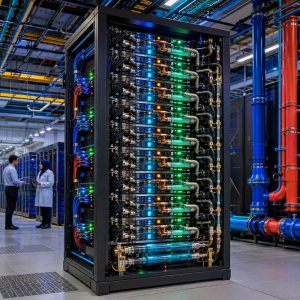
The scale of what is happening in hyperscaler infrastructure is difficult to overstate. A May 2026 analysis on hyperscaler data center capacity projects active IT load growing from 24 gigawatts today to more than 147 gigawatts by 2035 — a 6x increase in under a decade. This is not organic growth — it is AI-driven infrastructure buildout at a scale the data center industry has never seen.
The financial commitment is equally staggering. Futurum Group’s analysis of 2026 AI capex puts combined hyperscaler infrastructure spending at $690 billion in 2026 alone. Microsoft, Google, Amazon, and Meta have each committed to infrastructure buildouts that individually exceed the GDP of mid-size nations. Microsoft’s fiscal year 2026 data center plan was reported at $140 billion; Meta committed to $60-65 billion in capex.
CIO Dive’s analysis of hyperscaler market concentration finds that hyperscalers will control approximately two-thirds of global data center capacity by 2031 — up from roughly half today. For enterprise buyers, this trajectory means a market where the largest cloud providers become structurally more dominant, not less, over the planning horizon most enterprises use for IT investment.
The power constraint is the most binding variable. JLL’s data center market outlook for 2026 documents a global power availability crisis — hyperscalers have an estimated $80 billion in construction backlog tied up waiting for grid connectivity approval. The 6x capacity surge is not simply a matter of building; it requires adding power infrastructure at a pace that utilities are struggling to match.
What Enterprise Cloud Buyers Must Understand About This Market
The 6x capacity surge is not a story about hyperscalers winning — it is a story about market structure reshaping enterprise negotiating dynamics, pricing power, and availability risk over the next decade.
Pricing: Economies of scale work in both directions. Hyperscalers at 147GW have more capital leverage, but they also face higher absolute infrastructure costs (power, land, construction). The more accurate prediction is pricing differentiation by tier: commodity storage and compute will continue to see price compression, while specialized GPU compute for AI inference — the scarce resource driving the buildout — will command premium pricing for several years. Enterprises that locked in GPU reserved capacity in 2024-2025 will benefit; those who did not face spot pricing that has been volatile.
Availability: The power grid constraint documented by JLL is the most important near-term risk. Data center availability depends on power availability, and the grid is not being built as fast as hyperscaler capacity plans assume. Enterprises relying on single-region deployments for production workloads are exposed to the risk that capacity in their preferred region is constrained. Data Center Knowledge’s analysis of hyperscalers in 2026 identifies availability guarantees — not just pricing — as the primary procurement concern for enterprise buyers in high-density AI compute regions.
Vendor lock-in: At 6x current capacity, hyperscalers will have invested so deeply in proprietary AI chip architectures (Google TPUs, AWS Trainium, Azure Maia) that switching costs for AI workloads become structural, not just contractual. Enterprise AI workloads built on hyperscaler-specific ML infrastructure in 2026 will be expensive to migrate in 2030.
Advertisement
What Enterprise CIOs Should Do About It
1. Renegotiate Reserved Capacity Before the Power Grid Constraint Tightens Further
Enterprise cloud commitments (Reserved Instances, Savings Plans, Committed Use Discounts) were priced against a market where capacity was abundant. The power grid backlog documented in the JLL data center outlook changes that equation: capacity in premium AI-compute regions will become scarcer over 2026-2028, and the leverage enterprises have today — to renegotiate terms, exit underperforming reserved commitments, or switch regions — will diminish as competition for available capacity intensifies. Enterprise cloud buyers should audit all multi-year cloud commitments this year, identify any that expire in 2027-2028, and renegotiate now while the market is still competitive. Commitments signed into a tightening market will have worse terms than those renegotiated today.
2. Architect Multi-Cloud with AI Workload Portability as the Explicit Constraint
The proprietary AI chip race — Google TPUs, AWS Trainium, Azure Maia — is creating an AI infrastructure layer that is significantly harder to port than standard compute. Enterprise architects designing AI workloads in 2026 should make portability an explicit architectural constraint, not an afterthought. Practically, this means: prefer open-weight model formats (ONNX, Safetensors) over provider-specific model storage; use framework-agnostic training code (PyTorch over provider SDKs); and maintain a secondary inference environment on a different hyperscaler or on-premise that can absorb workloads if the primary provider faces availability issues. The cost of portability is modest — 10-20% engineering overhead. The cost of single-vendor AI lock-in at 6x hyperscaler scale is measured in years of migration effort.
3. Treat Power Availability as a Cloud Procurement Factor, Not an Infrastructure Afterthought
Enterprise cloud buyers traditionally evaluate providers on pricing, feature set, geographic coverage, and SLAs. The 2026 power grid constraint adds a fourth factor: power availability in preferred deployment regions. Before signing a major cloud commitment in a specific region, enterprise procurement teams should assess: whether the hyperscaler has publicly disclosed construction backlogs in that region; whether the region’s power grid has known capacity constraints; and whether the provider has backup power commitments (SMR nuclear, on-site solar, battery storage) that protect availability. JLL’s data center market data makes these regional power profiles increasingly accessible. Enterprises that fail to assess power availability now will discover the constraint when it affects their SLAs.
The Structural Lesson for 2035 Cloud Strategy
The 6x capacity surge through 2035 is best understood as a structural shift in the cloud industry’s center of gravity — from a market with multiple competitive tiers to one dominated by three to four mega-providers controlling two-thirds of global capacity. This is not inherently bad for enterprise buyers: scale produces reliability, feature velocity, and pricing efficiency on standard workloads. But it does change the nature of enterprise leverage.
In a concentrated market, leverage comes from two sources: the credible threat to switch (which requires genuine multi-cloud portability) and the volume of committed spend (which gives procurement leverage, but also creates lock-in risk). Enterprises that build their 2026-2028 cloud strategy around both of these levers — portability by design and disciplined commitment management — will be better positioned than those who assume the competitive market dynamics of 2019-2023 will persist through 2030.
The 147GW endpoint is not just a data center statistic. It is the market structure that will govern enterprise cloud economics for the rest of this decade.
Frequently Asked Questions
What does the hyperscaler 6x capacity surge mean for cloud pricing in practice?
The 6x surge does not mean prices will fall uniformly. Commodity compute (standard virtual machines, standard storage) will continue to see 15-20% annual price decreases. GPU compute for AI inference — the scarce resource driving the buildout — will remain premium-priced as demand continues to outpace supply through at least 2027. The most accurate prediction: standard cloud bills will stay flat or decrease slightly, but AI-specific cloud bills will grow as enterprises shift from experimentation to production AI workload deployment.
How does hyperscaler market concentration affect enterprise negotiating leverage?
When two-thirds of global data center capacity is controlled by three to four providers, the credible threat of switching becomes harder to execute. In a concentrated market, all providers face similar structural costs and will offer similar terms. Enterprise leverage shifts from “I’ll switch to another hyperscaler” to “I have genuine on-premise or sovereign colocation alternatives.” Organizations that build genuine hybrid architectures — combining hyperscaler cloud with on-premise or colocation infrastructure — maintain negotiating leverage that cloud-only organizations cannot.
What is the power grid constraint and why does it matter to enterprise cloud buyers?
Hyperscalers have contracted to build far more data center capacity than local electrical utilities can connect to the grid in their planned timeframes. JLL estimates the global construction backlog waiting for grid approval at approximately $80 billion. When grid approvals are delayed, data center capacity in that region is delayed. Enterprises relying on specific regions for production AI workloads are exposed to the possibility that their primary provider cannot provision additional capacity in their preferred region as fast as their growth requires, creating both availability and SLA risk.
—
Sources & Further Reading
- Hyperscaler Data Center Capacity to Surge More Than 6x by 2035 — GlobeNewswire
- AI Capex 2026: The $690B Infrastructure Sprint — Futurum Group
- Hyperscalers in 2026: What’s Next for the World’s Largest Data Center Operators — Data Center Knowledge
- Hyperscalers to Control Two-Thirds of Data Center Capacity by 2031 — CIO Dive
- Data Center Market Outlook 2026 — JLL
🔗 Related Intelligence

The $112 Billion Quarter: Inside the Q1 2026 Hyperscaler AI Infrastructure Sprint

Hyperscalers Will Spend $830 Billion on AI Infrastructure in 2026: What This Arms Race Means for the Cloud Market

Hyperscaler Capex 2026: Inside the $690 Billion AI Infrastructure Sprint
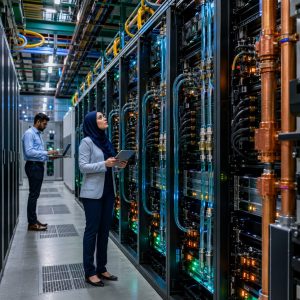
The $700B Hyperscaler Bet: Why Power and Cooling Are Now the AI Infrastructure Ceiling