The $1.8 Billion Signal That Changes Enterprise AI Architecture
On May 8, 2026, Anthropic confirmed a 7-year compute contract with Akamai worth $1.8 billion — the largest commercial deal in Akamai’s history. CNBC’s coverage of the deal reported Akamai’s stock surging 26.58% on the announcement day, closing at $147.71. Bloomberg’s reporting on the Anthropic-Akamai contract confirmed the deal is structured around Claude’s expansion in coding and enterprise automation workloads — specifically the inference layer, not training.
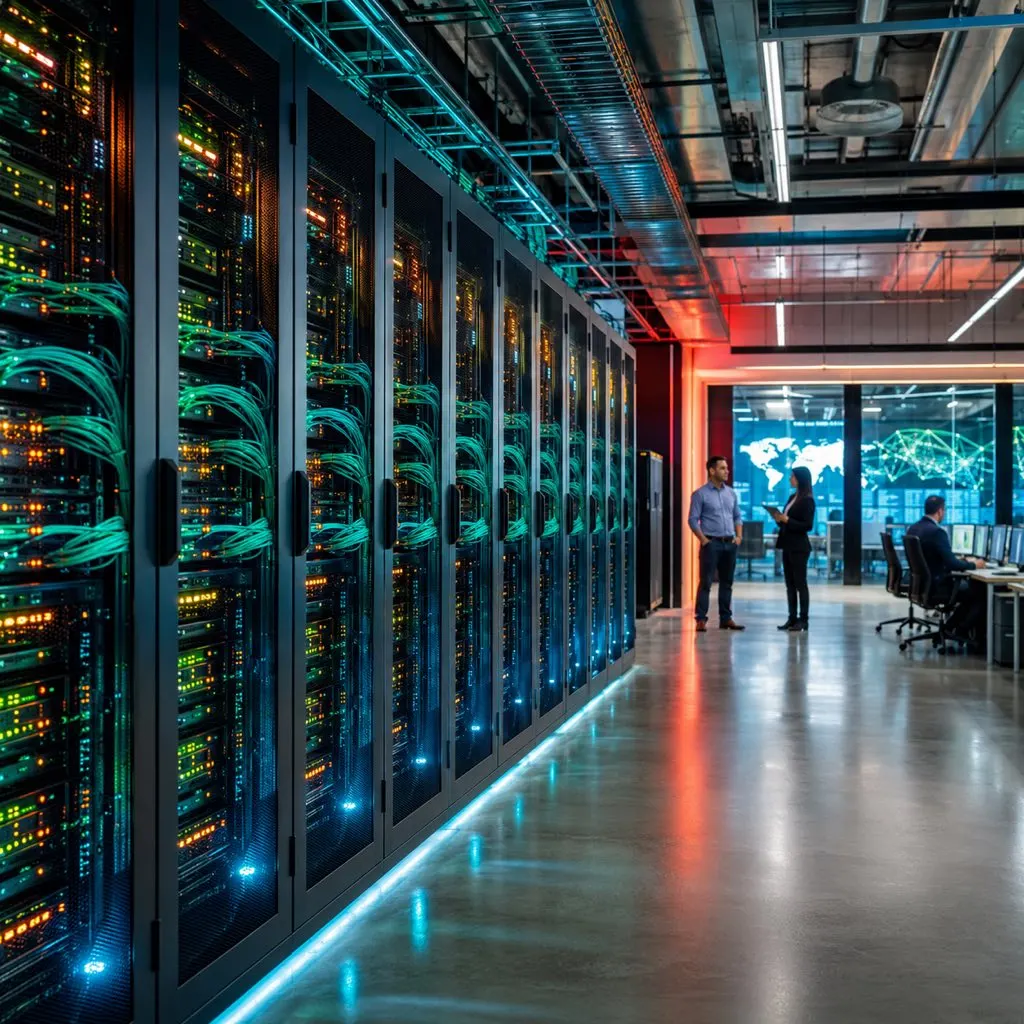
The architectural significance of this deal is not the dollar figure — it is what the deal is for. Anthropic is not buying centralized cloud capacity from AWS or Google. It is purchasing distributed inference capacity across Akamai’s 4,400-site GPU grid — a geographically dispersed network of inference nodes deployed at Akamai’s existing points of presence (PoPs) around the world. The purpose is to run Claude inference close to where enterprise users are generating requests, rather than routing every request to a centralized data center campus.
This is not a one-company experiment. RD World Online’s analysis of 2026 AI infrastructure trends identifies inference-at-the-edge as the dominant architecture pattern emerging across the industry — driven by the basic economics of inference: it is latency-sensitive, geographically distributed, and demand-continuous in ways that training is not.
What Inference-at-the-Edge Means for the AI Infrastructure Stack
The shift from centralized training to distributed inference is not just a deployment preference — it fundamentally changes the economics and architecture of the AI infrastructure stack.
Training vs. inference economics: Training a large language model is a batch workload — expensive, long-running, but parallelizable across a concentrated GPU cluster. A model trains once (or infrequently) and the job is done. Inference is structurally different: it runs on every user request, is latency-constrained (users notice response times above 300ms), and scales linearly with user count. The inference cost of a widely-deployed model quickly exceeds its training cost. For Claude, serving enterprise coding and automation requests globally at low latency means inference infrastructure must be where users are — not in three hyperscaler regions.
The CDN parallel: Akamai’s selection for this infrastructure role is not coincidental. The company pioneered content delivery networks (CDN) for the exact same reason inference networks are now being built: content served from a central origin is too slow for users at distance, so content is cached at edge nodes near users. AI inference is the next CDN problem — responses generated from a central GPU cluster are too slow for real-time enterprise applications, so inference must move to edge nodes. The New Stack’s analysis of Akamai’s edge AI strategy documents this parallel explicitly, identifying the CDN-to-inference evolution as the logical extension of Akamai’s edge computing history.
Latency math: A round-trip from a user in Singapore to a centralized US East Coast AI cluster adds approximately 200ms of network latency alone. For enterprise applications where AI is embedded in workflows — code generation, document analysis, automated customer responses — 200ms per inference call compounds into seconds of user-visible latency across a workday. Edge inference nodes in Singapore reduce that network latency to under 10ms.
Advertisement
What Enterprise AI Architects Should Do About It
1. Audit Which AI Workloads Are Latency-Sensitive Enough to Justify Edge Deployment
Not all enterprise AI workloads benefit from edge inference. Batch analytics, model training, overnight processing jobs, and non-interactive AI tasks are unaffected by network latency and should remain in centralized cloud for cost efficiency. The workloads where edge inference creates measurable business value are interactive applications: real-time code completion (latency < 200ms budget), customer service AI with live conversation (< 500ms), production quality inspection from live video streams (< 100ms), and industrial control systems with AI-guided decisions (< 50ms). Enterprise architects should produce a workload taxonomy that categorizes each AI application by latency requirement. This taxonomy is the prerequisite for any rational edge inference deployment decision — without it, edge infrastructure is either under-deployed (missing latency-critical applications) or over-deployed (edge nodes running non-latency-sensitive batch jobs).
2. Evaluate Edge AI Inference APIs Before Building Custom Infrastructure
The Anthropic-Akamai deal signals that enterprise edge inference will increasingly be available as a managed service — not something enterprises need to build themselves. Within 2-3 years, it is likely that the major AI API providers (Anthropic, OpenAI, Google Gemini) will offer edge-optimized inference endpoints with regional selection options, similar to how CDNs offer regional caching configurations. Enterprise architects who are building custom edge inference infrastructure today — deploying and managing their own GPU nodes at network edge locations — should evaluate whether a managed edge inference API will make that infrastructure obsolete within their planning horizon. The right architecture may be: use managed edge inference APIs for latency-sensitive workloads now, while preserving the option to shift workloads back to centralized cloud as APIs mature.
3. Design Application Layers to Abstract Inference Location
Enterprise AI applications built with a fixed assumption about inference location (either always-edge or always-cloud) will require expensive re-architecting as the market evolves. The highest-value architectural decision for 2026 is to design application layers that are location-agnostic about inference: the application specifies latency requirements and inference constraints, and an orchestration layer routes requests to the appropriate inference node (edge, regional cloud, or central cloud) based on current latency, cost, and capacity conditions. This pattern is directly analogous to how modern applications use content delivery networks — the application does not hardcode where content is cached; CDN policy handles routing. Enterprise architects who build AI applications to this pattern will be able to take advantage of the Anthropic-Akamai infrastructure developments without rewriting application logic.
The Structural Question: Will All AI Inference Move to the Edge?
The answer is no — and understanding why matters for investment decisions. Not every AI use case has the latency requirements that justify edge infrastructure. Large-context-window workloads (processing an entire contract, analyzing a database dump) benefit more from centralized high-memory GPU clusters than from edge nodes. Model fine-tuning and training will always be centralized. Offline batch processing of documents, images, or datasets will remain in centralized cloud.
What will move to the edge is the real-time conversational, interactive, and control-loop AI that is most visible to end users and most embedded in enterprise workflows. The Akamai deal is specifically about Claude’s enterprise coding and automation workloads — the interactive tier, not the batch tier. Enterprises should mentally separate their AI workloads into interactive (edge-candidate) and batch (cloud-optimized) and build infrastructure accordingly.
The $1.8 billion Anthropic-Akamai deal is the market’s clearest signal yet that this separation is not theoretical. It is being funded, built, and deployed now.
Frequently Asked Questions
What is the difference between training AI models and inference?
Training is the process of teaching an AI model using large datasets — it runs once (or occasionally for updates), requires massive parallelized GPU clusters, and can be done in batch over hours or days. Inference is running a trained model to generate outputs on demand — it runs on every user request, requires fast response times (milliseconds), and scales with user count. Training is compute-intensive and centralized; inference is latency-sensitive and geographically distributed. The Anthropic-Akamai deal is specifically about inference infrastructure, not training.
Why did Akamai specifically win this $1.8 billion Anthropic contract over AWS or Azure?
Akamai’s 4,400-node edge network — built originally for CDN content delivery — gives it a geographical footprint that AWS and Azure cannot match at the edge tier. AWS and Azure have large regional data centers in major cities; Akamai has inference-capable nodes in thousands of locations, including tier-2 cities and emerging markets. For Anthropic’s enterprise customers globally, Akamai’s distributed footprint means lower latency than routing inference through AWS US East or Azure US data centers. Akamai is not replacing AWS for training or centralized compute — it is becoming a specialized inference delivery layer.
How long until managed edge AI inference APIs are widely available to enterprise buyers?
Based on the Anthropic-Akamai deal timeline (7-year contract, infrastructure buildout now underway), and similar edge AI API initiatives from Google (distributed TPU pods) and Microsoft (Azure Edge Zones), managed edge inference APIs with regional selection and latency-optimized routing are likely to reach general enterprise availability in 2027-2028. The current state (mid-2026) is early infrastructure deployment. Enterprises should treat 2026-2027 as the planning and pilot period, 2027-2028 as the adoption period for latency-critical interactive applications.
—
Sources & Further Reading
- Akamai Pushes AI Inference to the Edge with Orchestrated GPU Grid Across 4,400 Sites — EdgeIR
- Anthropic Inks $1.8 Billion Computing Deal with Akamai — Bloomberg
- Akamai Stock Surges 26.58% on AI Cloud Infrastructure Deal — CNBC
- Akamai Edge AI Inference — The New Stack
- 2026 AI Story: Inference at the Edge, Not Just Scale in the Cloud — RD World Online
🔗 Related Intelligence

Meta Deepens AI Infrastructure With 1B CoreWeave Deal

Sovereign GPU Cloud: The Enterprise Compliance Playbook for AI in Regulated Industries

Flexera 2026 Cloud Report: 29% Cloud Waste Returns as AI GPU Spend Creates New FinOps Gap

GPU Cloud Wars: CoreWeave, Lambda, and the Challengers to AWS AI Infrastructure