The Scale of the 2026 Build-Out
For years, industry analysts described hyperscaler capital spending as “large.” In 2026 it is a category of its own. According to projections compiled by Comsoc’s tech blog, aggregate capex from the top hyperscalers is on track to cross $600 billion in 2026 — a roughly 36% increase over 2025, which itself was a record year.
To put that in context, $600B in a single year is bigger than the annual GDP of most countries. It is spent on a narrow set of activities: buying GPUs from NVIDIA and AMD, building data centers, securing long-duration power contracts, laying fiber, deploying liquid cooling, and hiring the workforce to operate all of it.
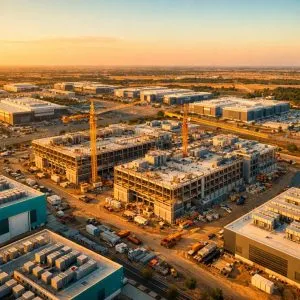
Data Center Knowledge’s April 2026 roundup of new facility announcements shows the pattern at a physical level: dozens of multi-billion-dollar data center projects broke ground or were announced in a single month, spread across the US, Europe, Northeast Asia, the Gulf, and emerging hubs in Latin America and Southeast Asia.
Where the Spend Is Going
The $600B+ number breaks down along predictable axes:
- GPUs and AI accelerators: The single largest line item. NVIDIA’s revenue trajectory is a direct function of hyperscaler orders.
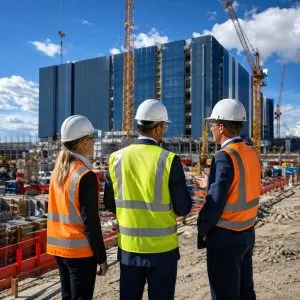
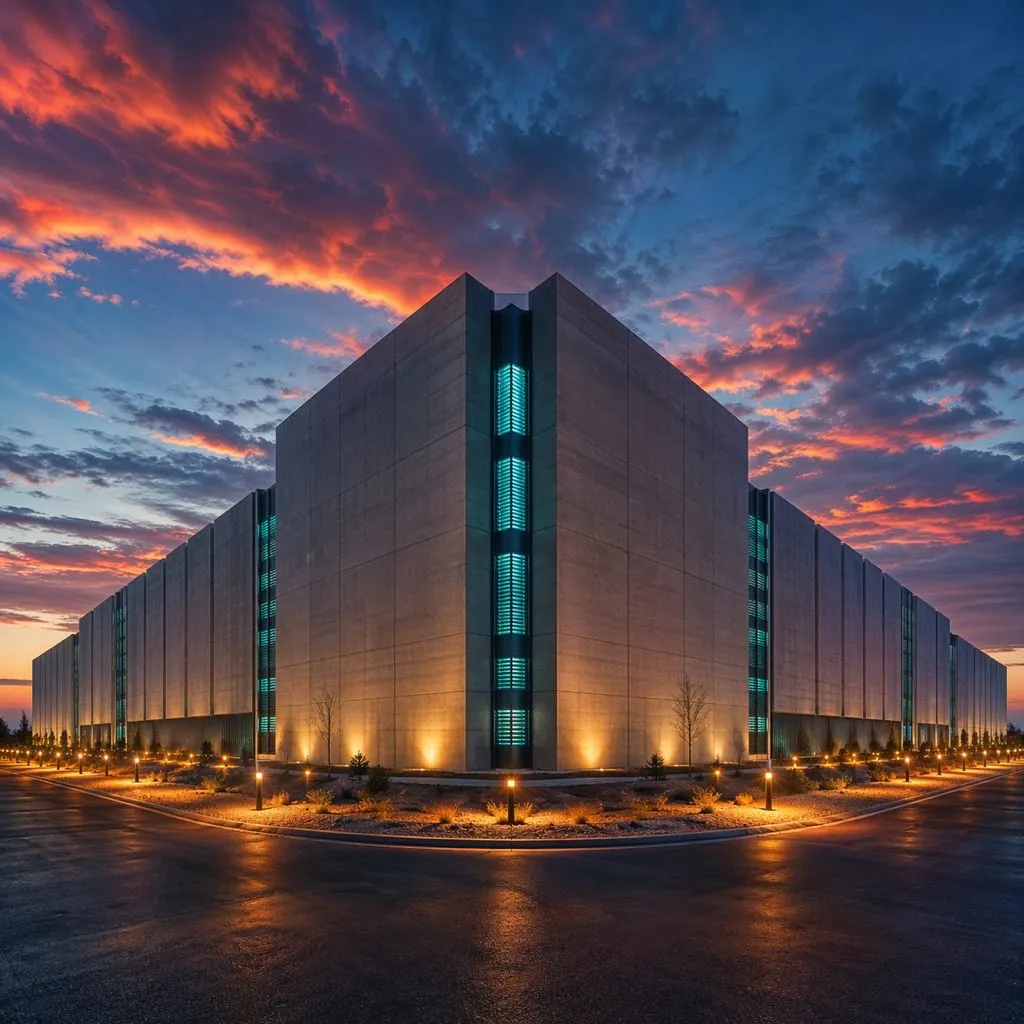
- Data center construction: Purpose-built AI facilities with 100-500 MW footprints, often co-located with dedicated substations or power plants.
- Power and grid: Long-term PPAs (power purchase agreements), small modular reactor commitments, and gas turbine deployments for sites where grid capacity is insufficient.
- Cooling: Liquid cooling is now the default for AI racks drawing 100-120 kW each; traditional air-cooled designs no longer apply.
- Networking: 400G and 800G optical infrastructure to connect GPU clusters across buildings and regions.
- Land and real estate: Data-center-adjacent real estate in Northern Virginia, Texas, Ireland, Singapore, and the Gulf has become an investment asset class.
Advertisement
What Backlogs Reveal
Network World reporting on hyperscaler backlogs makes the demand picture explicit: customer contracts committed but not yet delivered (the “RPO” or remaining performance obligation line in cloud financials) are at record highs across AWS, Azure, and Google Cloud. In some quarters, growth in committed future cloud revenue has outpaced current revenue growth by double-digit percentage points.
This is important because it tells us the $600B capex is not speculative. Hyperscalers are building against signed enterprise contracts — Fortune 500 AI commitments, government AI programs, frontier-model lab deals — that require capacity in 2026, 2027, and 2028. Capacity shortages are real: some customers wait multiple quarters for GPU instance availability in specific regions.
The Second-Order Effects
The capex surge reshapes more than hyperscaler balance sheets:
Pricing pressure on non-AI cloud
Hyperscalers historically subsidized compute, storage, and networking with scale economies. As AI workloads consume the bulk of new capacity, general-purpose cloud instances and services face less pricing deflation — and in some cases, outright price increases for GPU-adjacent services.
Power becomes the binding constraint
In several major markets, power availability — not land, capital, or compute — is now the slowest-moving variable in data-center development. This is why nuclear PPAs (including small modular reactor commitments), gas turbines, and even off-grid data center concepts are surging.
Semiconductor supply chain strain
$600B flowing into AI infrastructure translates to unprecedented GPU and HBM memory demand. This has triggered memory shortages, DRAM price increases, and TSMC / Samsung / SK Hynix capacity allocation wars that affect PC, smartphone, and automotive markets.
Carbon and ESG tension
The scale of AI power draw is forcing hyperscalers to revisit net-zero commitments. Some have acknowledged that 2030 carbon goals will be harder to hit without accelerated clean-energy deployment — and have paired the capex surge with matching investments in clean generation.
What Enterprise IT Should Do
For enterprises buying cloud, the $600B capex story translates to a few concrete moves:
- Lock in multi-year commitments for critical workloads. Reserved capacity beats on-demand in a supply-constrained market.
- Diversify across providers. Single-cloud strategies are more fragile when capacity is tight; multi-cloud for AI workloads hedges regional shortages.
- Plan for rising cloud costs, not falling ones. The 2015-2022 era of continuous cloud price deflation is over for AI-adjacent services.
- Understand regional capacity. GPU availability varies dramatically by region; “cloud is cloud” no longer holds for AI workloads.
- Scrutinize the carbon story. If AI infrastructure is a major carbon line in your corporate footprint, factor hyperscaler clean-energy commitments into procurement.
The $600B figure will almost certainly be revised upward again through 2026 as hyperscalers respond to stronger-than-expected demand. For enterprises, the era of assuming cloud capacity is infinite and cheap is over.
Frequently Asked Questions
How much will hyperscalers spend on infrastructure in 2026?
Aggregate hyperscaler capital expenditure is projected to exceed $600 billion in 2026, representing roughly a 36% increase over 2025, according to industry analysis compiled by Comsoc’s tech blog. The figure covers the largest global cloud operators — primarily AWS, Microsoft Azure, Google Cloud, and Meta — with AI infrastructure accounting for the majority of incremental spend.
Why are hyperscalers building so much capacity?
The build-out is driven by signed enterprise and government AI contracts, frontier-model training demand, and rapidly growing inference workloads. Network World reports that hyperscaler backlogs (committed but undelivered cloud revenue) are at record highs, meaning the capex is largely underwritten by existing customer commitments rather than speculation.
Does the AI capex surge affect non-AI cloud customers?
Yes, indirectly. As AI workloads consume the bulk of new capacity, pricing deflation for general-purpose cloud services has slowed or reversed. Memory and GPU shortages are also spilling into broader server, PC, and consumer electronics pricing. Enterprise buyers should budget for flatter or slightly rising cloud costs through 2027 rather than the 10-20% annual decline seen in the 2015-2022 era.