The March 2026 Announcement and Why Timing Matters
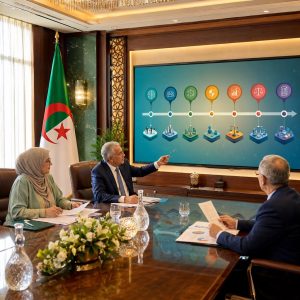
During a field visit to the Wilaya of Médéa, a Ministry of the Knowledge Economy official stated that the growing importance of artificial intelligence across sectors had prompted Algeria to develop its own models — ones that respect Algerian traditions, culture and societal values, as reported by iAfrica. This is not a throwaway line. It lands eighteen months into the rollout of the National AI Strategy, adopted by the AI Council and documented on the Digital Policy Alert registry.
The timing matters because three of Algeria’s biggest AI policy decisions — sovereign compute siting, public-sector data sharing rules, and the eligibility criteria for the Algerie Telecom 1.5 billion DZD fund — are still being shaped. A cultural-sovereignty frame changes which vendors, datasets, and languages get prioritized.
What “Culturally-Rooted Models” Actually Requires
There is no technical definition of a culturally-rooted model in the public strategy document. But based on how similar programs have played out from the UAE (Falcon) to Chile’s LatamGPT, three engineering commitments are implicit:
- Local-language training data at scale. Algeria is trilingual in practice — Arabic, Tamazight, and French — with dialect variation (Darija) that base frontier models handle poorly. Building a sovereign model means collecting, cleaning, and labeling Arabic news, legal codes, religious texts, and ideally Tamazight corpora. The New Lines Institute Algeria analysis notes that talent exists but dataset infrastructure lags.
- Values alignment documentation. Western frontier models are aligned to Western norms (marriage equality, drug policy, religious expression). A sovereign model serving Algerian institutions needs transparent alignment documentation — what topics are refused, what reasoning patterns are encouraged. Without this, government deployment is a procurement risk.
- Data residency guarantees. Training data, fine-tuning artifacts, and inference logs need to stay inside Algerian jurisdiction. This is the concrete link between “cultural values” and the National AI Center planned under the strategy.
Advertisement
How This Fits the National AI Strategy 2025-2030
The National AI Strategy, officially adopted in early 2025, sets two quantified targets that the cultural-values framing reinforces. First, the Ministry of Higher Education has committed to expanding AI-specialized training, with the strategy calling for the creation of dedicated institutions in AI, robotics, and mathematics. Second, as reported by EcoFin Agency, the government plans for AI to contribute approximately 7% of national GDP by 2027 — a target that requires deployment across public administration, healthcare, and hydrocarbons, sectors where cultural/legal context cannot be outsourced to generic US models.
The sovereign model discourse also aligns with the Algerie Telecom 1.5 billion DZD (~$11M USD) fund for AI, cybersecurity, and robotics startups. Startups building Arabic-native or Tamazight-native tooling are increasingly favored in public procurement narratives.
What Could Go Wrong
Sovereign AI programs fail predictably. The common failure modes, drawn from comparable national efforts:
- Model size overreach. Announcing a 70B-parameter sovereign model without the GPU infrastructure to train it results in an indefinite slippage. A more realistic path for Algeria is fine-tuning an open-weights base (Qwen, Mistral, or a Cohere-style multilingual base) on curated Algerian data.
- Dataset silos. If ministries and public entities do not share data under a clear legal framework, the “sovereign” model trains on the same scraped Arabic internet as everyone else. Data-sharing rules are the hidden bottleneck.
- Talent leakage. The TechaHub AI-in-Algeria deepdive flags that Algeria graduates strong engineers but loses many to France and the Gulf. Sovereign programs that don’t offer competitive compensation recreate the brain-drain problem at a larger scale.
- Benchmarking void. Without Algeria-specific evaluation suites (Darija QA, Tamazight NER, Algerian legal reasoning), there is no way to tell whether the sovereign model is actually better than GPT-5 or Claude Opus for local tasks.
The Three Decisions That Follow
For Algerian CIOs, founders, and policy watchers, the March 2026 signal translates into three near-term decisions:
For public-sector CIOs: any RFP issued in 2026 for large-scale AI deployment should require a data-residency clause and a plan for Arabic/Tamazight evaluation. Generic procurement of Microsoft Copilot or OpenAI Enterprise without these clauses contradicts the announced direction and creates reversal risk.
For startup founders: positioning as an Arabic-native or sector-specialized (agritech, hydrocarbons, public health) application layer on top of open-weights models is aligned with the policy direction. Generic GPT wrappers are not.
For researchers and universities: there is now public-facing political cover to request funding for Arabic and Tamazight NLP datasets. The bottleneck is no longer legitimacy — it is execution speed and dataset governance.
The March statement is not a product launch. It is a direction of travel. Whether it becomes a real sovereign model or a press-release ceiling depends on how the next twelve months of procurement, data-sharing, and GPU decisions play out.
Frequently Asked Questions
What did Algeria’s ministry actually announce in March 2026?
A Ministry of the Knowledge Economy official, speaking during a visit to the Wilaya of Médéa, stated that Algeria is developing its own AI models rooted in national traditions, culture and societal values. The statement reinforces the National AI Strategy 2025-2030 and signals that sovereign AI — not reliance on foreign frontier models — is the working direction for public-sector deployments.
How does this connect to the Algerie Telecom 1.5 billion DZD AI fund?
The fund, announced by the Minister of Post and Telecommunications at CTO Forum Algeria, targets AI, cybersecurity, and robotics startups. A culturally-rooted AI framing favors startups that build Arabic-native, Tamazight-native, or sector-specialized (healthcare, hydrocarbons, agriculture) tooling rather than generic GPT wrappers. Founders should align positioning accordingly.
What should an Algerian CIO do differently now?
Any 2026 RFP for AI services should include three clauses: data residency inside Algeria, Arabic/Tamazight evaluation benchmarks, and transparent alignment documentation. Procurement of Microsoft Copilot, OpenAI Enterprise, or Google Vertex without these clauses contradicts the announced direction and creates reversal risk when sovereign options mature.
Sources & Further Reading
- Algeria Works to Develop Homegrown AI Models Rooted in National Culture and Values — iAfrica
- Why Algeria Is Positioned To Become North Africa’s AI Leader — New Lines Institute
- Algeria: National Artificial Intelligence Strategy — Digital Policy Alert
- Algeria Unveils AI Strategy to Boost Digital Transformation — EcoFin Agency
- AI in Algeria: Insights & Practical Implementation Strategy — TechaHub