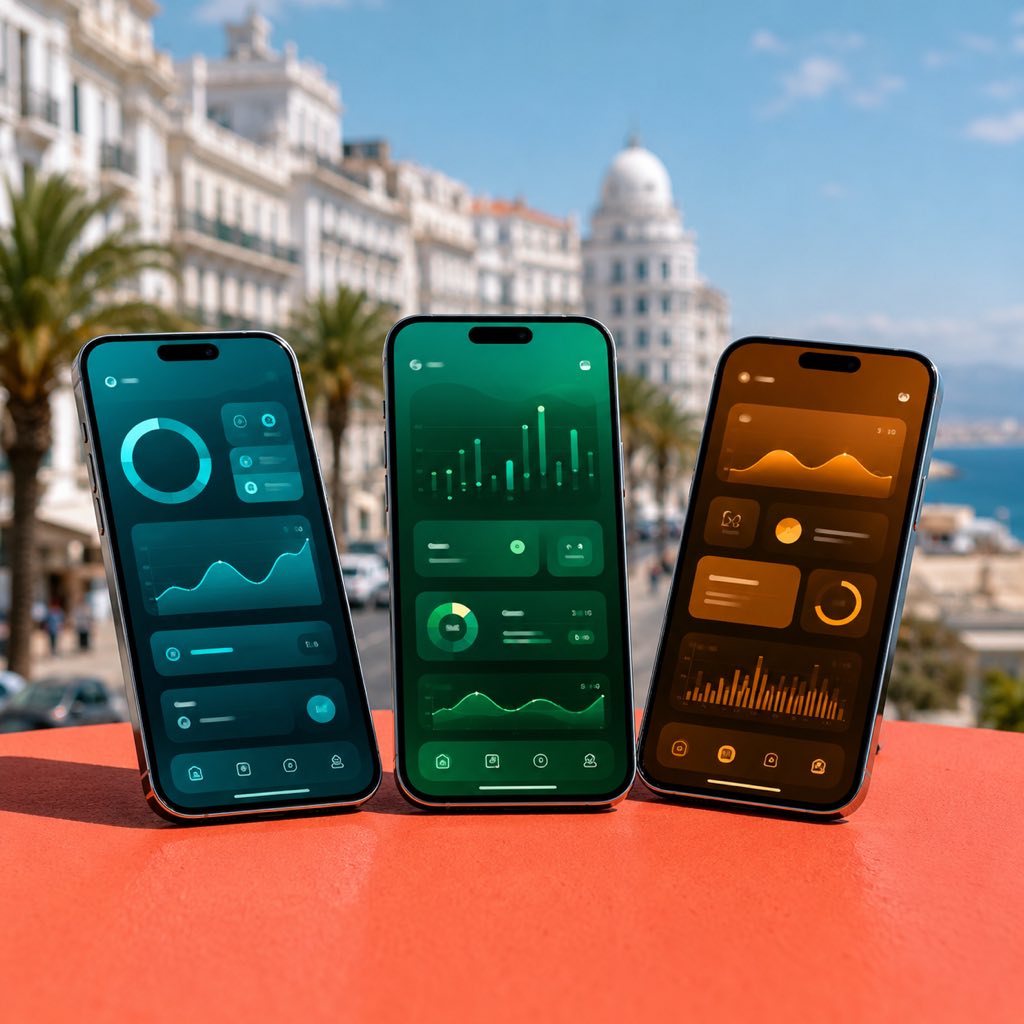
The Hype Gap: Why Algeria’s Second Wave Gets Overlooked
Yassir’s $150 million Series B in 2022 defined the story of Algerian tech for the past three years. Every subsequent startup pitch deck has been benchmarked against it, every investor conversation has returned to it, and every policy document has cited it. But the singular focus on Yassir has obscured a more interesting phenomenon: a second cohort of Algerian startups is building durable, differentiated businesses without billion-dollar ambitions in their first pitch decks.
These second-wave companies — Temtem, Gifty, and Qareeb are the clearest examples — share a structural characteristic that distinguishes them from the Yassir generation. They are solving problems at the intersection of informal commerce, agricultural reality, and cash-dominated consumer behavior. They are not trying to be Algerian versions of global apps. They are building infrastructure for the Algerian market’s specific constraints.
According to Mag Startup’s 2026 ecosystem analysis, this cohort faces a shared 2026 test: converting early traction into structuring corporate contracts — the signed, multi-year relationships with institutional partners that transform a promising startup into a bankable business. Understanding where each company stands on that test reveals which model is closest to breakout.
Three Companies, Three Bets on Algeria’s Reality
Temtem One, founded in 2017 by Kamel Haddar (ESCP Europe), has accumulated $5.7 million in cumulative funding including a $4 million Series A in 2019. The platform has expanded to cover transport, delivery, home healthcare, repair, shopping, and a diaspora channel — operating across 21 of Algeria’s 48 wilayas. Corporate partnerships include Decathlon, Puma, Huawei, and Ooredoo, making Temtem the most institutionally embedded of the three. The company’s declared 2026 focus is “effective monetization of the diaspora channel” — a bet that connects the platform’s existing services to Algeria’s 5 million-strong diaspora community in France, Canada, and the Gulf.
Gifty, founded in 2023 by Abderrahmane Anemiche, has taken a different route entirely. Rather than building a logistics or transport layer, Gifty targets the gap between digital payment infrastructure and the physical convenience store network that most Algerians already trust. With over 100,000 downloads on Google Play and approximately 18,000 declared partner points of sale — accepting CIB card, EDahabia, and physical cash transactions — Gifty is building the merchant rails that a broader digital payments ecosystem requires. Its 2026 goal is transforming its wallet into an everyday payment tool, competing not with Yassir but with the informal payment habits of daily Algerian life.
Qareeb, founded in 2023 by Adam Debba (ENP Algiers, PhD from IMT Atlantique, ex-Capgemini), has chosen the highest-technical-risk path: edge AI that operates locally without remote data transfer. Its Q-Farming product uses LoRa technology that transmits sensor data up to 30 km without mobile network coverage — solving the connectivity problem that has blocked precision agriculture in Algeria’s vast semi-arid regions. The Q-Vision surveillance product and Q-Access access control system extend the same architecture to security and industrial use cases. Qareeb won the Greentech Challenge, represented Algeria at LEAP 2025 in Riyadh, and has a documented pilot with SETRAM — validating the technology without yet generating commercial scale.
Advertisement
What This Means for the Algerian Startup Ecosystem
These three companies are not just individual stories — they are a stress test for whether Algeria’s startup ecosystem can produce the second and third wave of companies that distinguish a real ecosystem from a one-hit-wonder. Here is what each model reveals about the ecosystem’s structural health.
1. Multi-Service Super-Apps Work in Algeria — But Only at Wilaya Scale
Temtem’s 21-wilaya footprint after eight years of operation is a data point that should recalibrate expectations. Algeria’s market is geographically and demographically fragmented in ways that make national rollout slower and more capital-intensive than it appears on a map. The winning strategy for super-apps appears to be depth-first — owning a service category in a city before adding the next city — rather than breadth-first national expansion. Founders building horizontal platforms should plan for five to eight years of geographic expansion before they approach Yassir’s footprint.
2. Merchant Infrastructure Is the Unlocked Layer
Gifty’s 18,000 point-of-sale network represents a genuinely scarce asset: physical distribution for digital services in a market where bank branch penetration and smartphone payment adoption are growing but uneven. No Algerian fintech has successfully monetized this merchant layer at scale. If Gifty converts those outlets into active transaction points — rather than nominal partners — it will have built the distribution backbone that every subsequent fintech needs. Investors should watch Gifty’s active merchant ratio (declared partners vs. monthly-active merchants) as the key signal for 2026.
3. Edge AI Without Connectivity Is Algeria’s Most Exportable Innovation
Qareeb’s LoRa-based, connectivity-independent architecture is not just a workaround for Algeria’s rural internet gaps — it is a genuinely exportable technology for the 54 African countries with similar connectivity challenges. The Q-Farming product’s ability to transmit crop and soil data across 30 km without mobile coverage addresses the same problem facing precision agriculture in the Sahel, East Africa, and Southern Africa. If Qareeb signs a structuring contract in 2026, the international expansion case becomes straightforward: the problem is universal, the technology works, and Algeria’s regulatory environment is increasingly hospitable to agritech. The continental prize is available.
4. The 2026 Corporate Contract Test Separates Survivors from Casualties
According to Mag Startup’s analysis, the single variable that separates the 2026 optimistic scenario from the pessimistic one for this cohort is the signing of structuring corporate contracts. For Gifty, this means an enterprise agreement with a major telecom or bank. For Qareeb, it means a national agritech deployment with a ministry or major agricultural cooperative. For Temtem, it means expanding the institutional partnership base beyond consumer brands into logistics or healthcare procurement. Founders who have not closed such a contract by Q4 2026 face a difficult 2027 fundraising environment in which international investors will demand commercial validation before committing.
The Bigger Picture: Algeria’s Second Wave as Ecosystem Signal
The coexistence of Temtem, Gifty, and Qareeb — three companies with genuinely distinct business models, serving distinct market gaps, with distinct technology stacks — is itself the most encouraging signal about Algeria’s startup maturation. First-wave ecosystems produce one or two successful companies through founder heroics. Second-wave ecosystems produce a cohort of companies through institutional support: accelerators that teach, investors that pattern-match, and corporates that buy.
Algeria is visibly transitioning between those two phases. The Startup Label system has certified over 2,300 companies. University incubators are engaging 60,000 students annually. The challenge now is not the supply of startups — it is the demand for what they build. Whether Algerian corporations, state enterprises, and institutional investors step up as anchor customers in 2026 will determine whether the second wave becomes a permanent feature of Algeria’s economy or a statistical footnote in a decade-end review.
The stakes are higher than individual company outcomes. A successful second wave proves that the ecosystem can produce entrepreneurs without needing a Yassir-scale exit as the founding myth of every new cohort. That proof is what transforms a promising moment into an enduring one.
Frequently Asked Questions
Q: How does Temtem One compare to Yassir in terms of scale?
Yassir raised $150 million in its 2022 Series B and operates across multiple African countries. Temtem has raised approximately $5.7 million and operates across 21 of Algeria’s 48 wilayas. The comparison is instructive: Temtem has chosen depth over speed, building institutional partnerships (Decathlon, Puma, Huawei, Ooredoo) that create recurring revenue rather than relying primarily on consumer growth metrics.
Q: Is Gifty’s 18,000 point-of-sale network verified?
Gifty reports approximately 18,000 partner points of sale, but this figure is company-declared and unaudited as of May 2026. The key metric to watch is the active merchant ratio — how many of those outlets conduct regular monthly transactions through the platform — which has not yet been publicly disclosed.
Q: Why does Qareeb’s LoRa technology matter beyond Algeria?
LoRa (Long Range) is a wireless protocol that can transmit sensor data across distances of up to 30 km without requiring cellular or Wi-Fi connectivity. In agricultural contexts, this allows farmers in remote areas to collect real-time crop and soil data without investing in network infrastructure. This capability is valuable across virtually every developing-country agricultural market, making Qareeb’s technology directly applicable to sub-Saharan Africa, South Asia, and Latin America — markets with similar connectivity gaps.
Sources & Further Reading
- 10 Algerian Startups to Watch in 2026: Beyond the Noise — Mag Startup
- Gifty Transforms Everyday Payments in Algeria with Mobile-First Fintech — The Ouut
- Temtem Series A Funding Round — MENAbytes
- Algeria Tech and AI Startup Ecosystem in 2026 — AlgeriaTech
- Algeria Startup Ecosystem Rankings and Insights — StartupBlink
🔗 Related Intelligence
Temtem’s Enterprise Bet: How Algeria’s Super-App Is Building a B2B Logistics Layer

Algeria’s SME Software Wave: ERP and Invoicing Startups Filling the Enterprise Gap

Yassir’s Next Chapter: Algeria’s Super-App Playbook in a Tougher VC Climate

Algeria’s Startup M&A Wave: How Consolidation Is Reshaping the Local Tech Ecosystem