Why the 2026 Event Lands at a Pivotal Moment
Algeria’s cybersecurity policy landscape shifted dramatically at the start of 2026. Presidential Decree 26-07, issued January 7 and published January 21, mandates that every public institution establish a dedicated cybersecurity unit — one that reports directly to the institutional head, operates independently of IT management, and conducts continuous monitoring, risk mapping, and immediate incident reporting. This is not a future aspiration; it is current law.
The scale of the challenge is significant. Kaspersky data cited by the Algerian government places Algeria as the 17th most-targeted nation globally, with more than 70 million attempted cyberattacks registered in a single year, over 13 million phishing attempts blocked, and nearly 750,000 malicious email attachments neutralized. Against this backdrop, Cyber Security Days 2026 offers practitioners concentrated exposure to the tools, frameworks, and peers relevant to building cybersecurity capability under Decree 26-07.
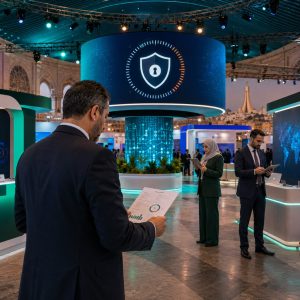
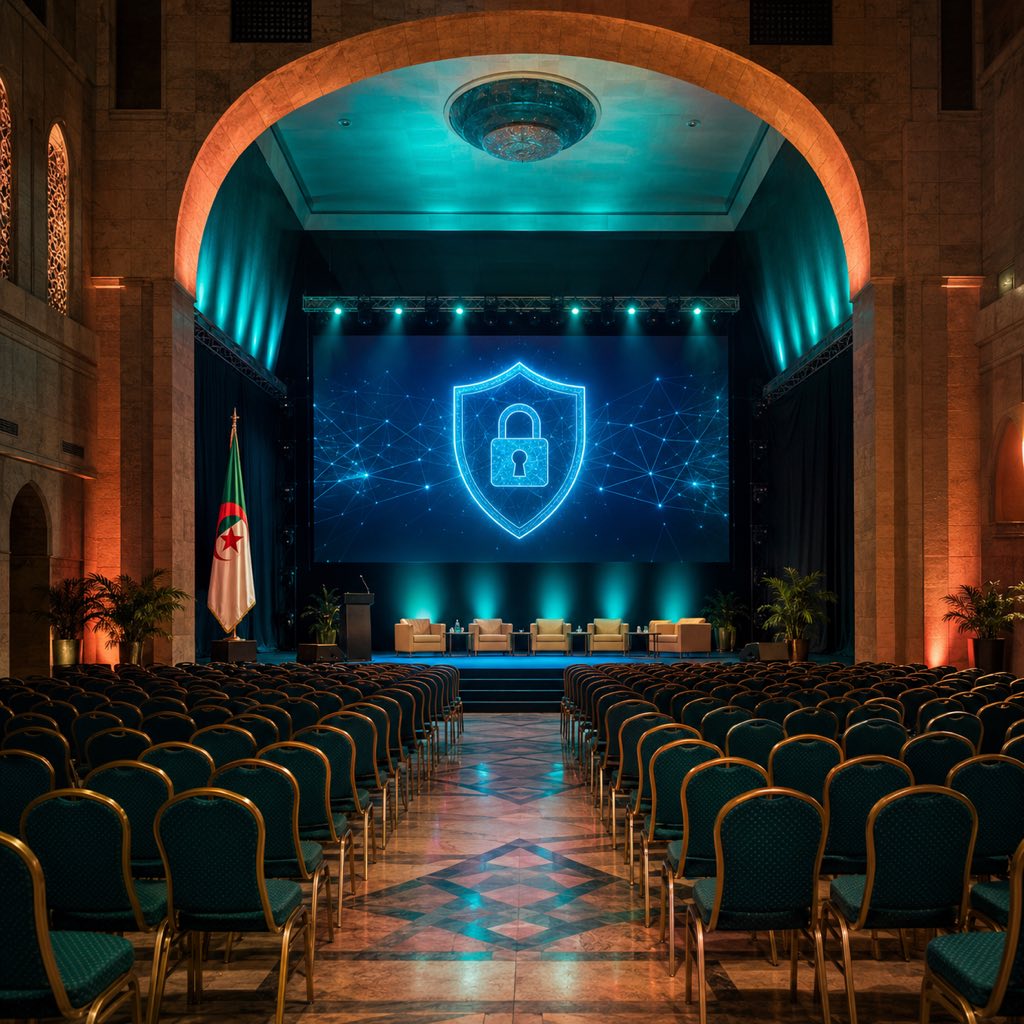
The three-day event at the Palais de la Culture Moufdi Zakaria — one of Algiers’ most storied cultural venues — draws together enterprise CISOs, security vendors, academic researchers, and early-career practitioners in a format deliberately built for exchange rather than passive consumption.
What Attendees Will Find on the Floor
Cyber Security Days is structured around three parallel tracks that run concurrently throughout June 14–16:
Exhibition Hall. A curated floor showcasing Algerian and international IT companies, cybersecurity solution providers, and managed security service players. For enterprise teams evaluating vendors under Decree 26-07, this is an efficient procurement intelligence opportunity — walking the floor once provides market comparisons that would otherwise require months of individual vendor meetings.
Workshop Rooms. Two dedicated rooms running 30-minute technical sessions followed by 15-minute group discussions. This format is intentional: it prioritizes skill transfer over keynote theatre. Workshop sessions are built around hands-on skills such as penetration testing fundamentals, SIEM configuration, social engineering simulations, and incident response tabletop exercises.
Expert Conferences and Panel Discussions. The main conference track addresses macro challenges facing the sector — regulatory developments and threat intelligence trends. These sessions are where policy intersects with operations, and where practitioners can ask questions that rarely get answered in formal written guidance.
The organizer traces Cyber Security Days to a first cybersecurity initiative held in 2023, and describes the June 2026 gathering as the first edition under the Cyber Security Days name.
Advertisement
What Algerian Security Teams Should Prioritize
1. Map your Decree 26-07 compliance gaps before you arrive
Decree 26-07 is explicit about what each public institution’s cybersecurity unit must do: develop and implement cybersecurity policy, conduct risk mapping, perform continuous monitoring, run regular audits, and report incidents immediately to national authorities. Before attending any session, your team should produce a one-page self-assessment rating your current capability against each of these five obligations. The workshops and vendor exhibitions then become targeted acquisition missions rather than general browsing. Walk into each 30-minute workshop with a specific gap you are trying to close.
2. Use the exhibition to validate your SIEM and SOC tooling choices
Algeria’s compliance environment is maturing fast. The exhibition floor at Cyber Security Days is one of the only venues in Algeria where you can benchmark multiple vendors’ approaches to local regulatory requirements in a single day. Ask each vendor two specific questions: Does your platform support Arabic-language alert interfaces? Do you have existing Algerian government clients, and can you provide references? These two filters will narrow a field of a dozen vendors to two or three worth evaluating seriously.
3. Get your incident-reporting workflow ready before an incident happens
Decree 26-07 requires institutions to report incidents immediately to the relevant national authorities. It helps to understand Algeria’s cyber-defense architecture correctly. ASSI — the Agence de la Sécurité des Systèmes d’Information, the operational agency under the Ministry of National Defence — coordinates national information-systems security. DZ-CERT, Algeria’s national Computer Emergency Response Team, is hosted by CERIST and handles incident coordination. The CNSSI sets strategic policy. These are distinct institutions. Use the event’s workshops to pressure-test your own incident-response plan and reporting procedures now — do not wait for an incident to discover the gaps.
4. Bring junior talent and position it as career investment
Algeria faces a genuine cybersecurity skills gap. The SOLTIC Algérie compliance event earlier this year highlighted that organizations must invest in awareness training alongside policy and technology — a finding consistent with global research showing that human-layer defense is as important as technical controls. Sending one senior manager is insufficient; the ROI on a Cyber Security Days investment multiplies when junior analysts and recently certified practitioners attend workshops, interact with vendors, and see how experienced peers operate in practice. Budget for two or three seats, not one.
Who Should Be in the Room
The event serves a wide practitioner base but delivers differentiated value depending on role:
CISOs and IT Security Managers will extract most value from the conference track and vendor meetings. The keynote sessions and panel discussions address regulatory interpretation, budget justification strategies, and threat landscape briefings that map directly to board-reporting requirements.
Security Analysts and SOC Operators should target the workshop rooms. Thirty-minute hands-on sessions are structurally better for skill acquisition than hour-long presentations, and the discussion component enables peer learning that classroom environments rarely replicate.
Vendors and Solution Providers should be present primarily to listen, not pitch. Understanding where enterprise and public-sector buyers in Algeria are in their compliance journey is market intelligence that should shape product localization and pricing decisions for the 2026-2027 procurement cycle.
Students and Early-Career Practitioners will benefit from networking above all else. Cyber Security Days is one of the few Algerian events where structured networking is built into the format rather than limited to coffee breaks. The contacts made here have historically translated into internships, first jobs, and mentorship relationships.
The Structural Lesson: Compliance Deadlines Create Learning Urgency
Cyber Security Days has its roots in a cybersecurity initiative first held in 2023. The dynamic changes in 2026. Decree 26-07 means that thousands of public-sector institutions are now legally required to build operational cybersecurity units — and most of them are doing this for the first time, without a deep bench of experienced practitioners, and against a threat landscape that Kaspersky places among the world’s most active.
The event at the Palais de la Culture Moufdi Zakaria offers one accessible way to compress that learning curve. Three days of structured exposure to frameworks, vendors, and peers won’t replace months of institutional work, but it provides the orientation and relationships that make the subsequent work faster and more targeted.
Registration and full program details are available at cysd-dz.com.
Frequently Asked Questions
What is the official venue and date for Cyber Security Days 2026?
Cyber Security Days 2026 takes place June 14–16, 2026 at the Palais de la Culture Moufdi Zakaria in Algiers, Algeria. The event is organized by EURL Sixième Sens Communication and can be reached at [email protected] or +213 560 06 69 01. Registration and program details are available at cysd-dz.com.
What does Decree 26-07 require of Algerian organizations?
Presidential Decree 26-07, issued January 7, 2026, requires every Algerian public institution to establish a dedicated cybersecurity unit that reports directly to the institution’s head and operates separately from IT management. The unit must develop and implement cybersecurity policy, conduct risk mapping and remediation, perform continuous monitoring and audits, and report incidents immediately to national authorities including DZ-CERT.
How serious is Algeria’s current cyber threat landscape?
According to Kaspersky data cited by the Algerian government, Algeria faced more than 70 million attempted cyberattacks in a single year and was ranked 17th globally among the most-targeted nations. More than 13 million phishing attempts were blocked, and nearly 750,000 malicious email attachments were detected and stopped — figures that underscore why Decree 26-07 compliance is treated as urgent rather than aspirational.
Sources & Further Reading
- Cyber Security Days 2026 — Official Website (cysd-dz.com)
- Algeria Orders Cybersecurity Units in Public Sector Amid Surge in Cyberattacks — EcoFinAgency
- Algeria Strengthens Cybersecurity Framework to Protect National Infrastructure — TechAfrica News
- Journée Conformité & Cybersécurité 2026 à Alger — SOLTIC Algérie
🔗 Related Intelligence

Algeria’s Cybersecurity Strategy 2025-2029: An Enterprise Compliance Readiness Guide

Algeria’s Decree 26-07: A 90-Day Implementation Roadmap for Public-Sector Cyber Units
Decree 26-07 Six Months In: How Algerian Public Bodies Are Standing Up Cybersecurity Units in 2026
CCA 2026: Algeria’s Cybersecurity Conference and the Enterprise Readiness Gap It Exposes