The Milestone That Changes the Builder Calculus
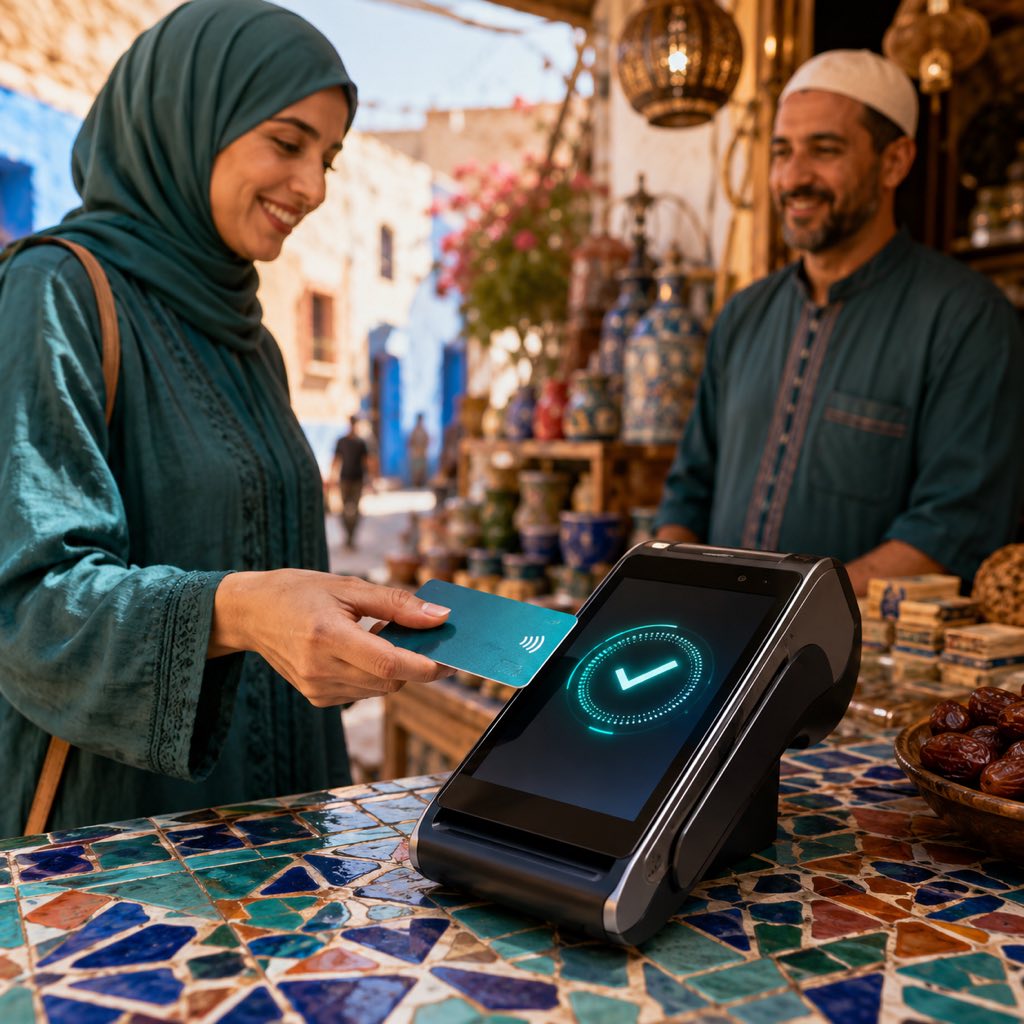
On May 14, 2026, Finance Minister Abdelkrim Bouzred told the Council of the Nation that Algeria now counts more than 22 million payment cards in circulation at the end of March 2026, with nearly 18 million Edahabia cards issued by Algérie Poste and approximately 4.5 million CIB cards from the banking sector. The accompanying infrastructure footprint is just as material: 4,713 ATMs processing around 235 million operations, and an electronic payment terminal (POS / TPE) network that crossed 104,000 units — up from roughly 68,000 at the end of 2024.
The number that lifts this above a status report is the transaction volume. Electronic payments reached 939 billion DZD in 2025 — roughly $7 billion — versus 643.8 billion DZD in 2024, a 46% year-on-year increase. Inside that aggregate, online payments grew 179% to 145 billion DZD across more than 27 million transactions, POS settlement value doubled to 89.5 billion DZD, and mobile QR-code volumes climbed 19% to 69.3 million operations. Card issuance is no longer running ahead of usage — the curves are now compounding together.
Why The 46% Print Matters More Than The 22M Headline
A card count is a vanity metric. A 46% growth in real settlement value, sustained alongside a 50%+ expansion of the merchant terminal fleet, is a market signal. It tells builders that the demand side has cleared the activation threshold: people are paying utility bills, telecom top-ups, AADL 3 housing instalments, and an increasing share of retail purchases through Algerian rails rather than cash.
The composition of the growth matters. The DZ Mob Pay interoperability rollout — currently live in seven banks plus Algérie Poste — is targeted to reach 15 banks during 2026, generalising QR-code interbank payments. Telecommunications dominated online payments with over 12 million transactions, followed by administrative services (7.6 million) and utility bills. That sectoral mix tells builders where the willingness to pay digitally is highest, and where horizontal fintech products will find first revenue.
The under-indexed number is the merchant gap. With approximately 1.2 million declared merchants in the country and roughly 104,000 active POS terminals, less than 10% of Algerian merchants currently accept card or QR payments. That is not a problem to lament — it is a 1.1 million-merchant runway for whoever ships the right acquiring product.
Advertisement
What’s Powering the Capacity Build-Out
Three structural moves explain why the supply side is finally catching up. First, Algérie Poste has tripled Edahabia card production: the Edahabia production line now outputs 50,000 cards per day versus 20,000 previously, removing the issuance bottleneck that throttled financial inclusion through 2024.
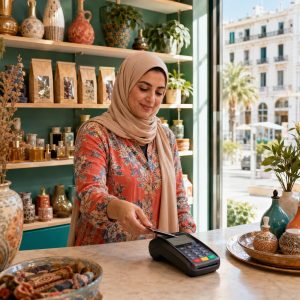
Second, the December 2025 launch of DZ Mob Pay introduced a QR-based interbank rail that does not require POS hardware deployment. A small merchant with a smartphone and a printed QR sticker can accept payment from a customer at any of the participating banks. That collapses the cost of merchant onboarding from several hundred euros (POS terminal + connectivity + maintenance) to effectively zero. The 19% growth in mobile QR volumes in 2025 was achieved with only seven banks live; the path to 15 banks during 2026 mechanically multiplies the reachable user base.
Third, SATIM — the interbank monetics operator — has continued certifying e-commerce merchants and PSPs, and the Bank of Algeria’s fintech sandbox framework is now active. The result is a stack where issuance, acceptance, and digital commerce all have a national operator and a permissioned path for private builders to plug in.
What Algerian Fintech Builders Should Do Now
The 22 million / 104K / 939B milestone is the green light Algerian fintech teams have been waiting for. Here is how to convert that milestone into product-market fit before the next data print.
1. Ship Vertical Acquiring Products for the 1.1M Underserved Merchants
The acquiring market is no longer about chasing the 100,000 merchants who already have a SATIM-certified POS. It is about the 1.1 million who do not. Build a soft-POS or QR-first product targeted at a specific vertical — small grocery, ride-hail drivers, hair salons, pharmacies, neighbourhood restaurants — where the merchant economics are tight enough that the traditional POS rental model never closed. Anchor on DZ Mob Pay rails to skip the hardware cost. Price the merchant fee against the cash-handling friction (deposit trips to the bank, change management, theft risk) rather than against international interchange benchmarks. Build vertical-specific reporting (daily settlement, simple VAT exports, multi-shift cashier views) into the merchant dashboard — generic horizontal acquiring will lose to anyone who solves one vertical deeply.
2. Build Embedded-Finance Layers on Top of CIB and Edahabia Rails
The 22 million cards and 939 billion DZD in volume are an addressable user base for embedded credit, instalments, savings, and insurance products that ride existing card rails rather than trying to replace them. The 179% surge in online payments — anchored heavily by the AADL 3 housing programme — proved that Algerian consumers will execute high-value digital transactions when the UX is clean and the trust signals are right. The natural next layer is consumer credit at point of sale: BNPL for appliances, instalment plans for school fees, tied-savings products for AADL housing deposits. Build the credit-scoring layer using cashflow data from card spending and Baridi Mob mobile money, not paper salary slips. Partner with a CIB-issuing bank as the regulated balance-sheet provider; you ship the front-end and the underwriting algorithm.
3. Launch B2B Treasury and SME Payment Products Built for the New Rails
The flip side of consumer payment growth is that 200,000 active online merchants — and far more SMEs running cash businesses — now have a treasury problem. They have card receipts arriving from SATIM, cash takings, supplier invoices to pay, and tax obligations to manage. Today, most reconcile this in Excel or paper ledgers. Build the SME treasury layer: a single dashboard pulling card settlement, e-commerce gateway payouts, Baridi Mob receipts, and bank balances, with one-click bulk supplier payments via interbank transfer. Price per-merchant (8,000-15,000 DZD/month) rather than per-transaction. Hook into the Bank of Algeria’s PSP sandbox for the regulated piece and partner with an accounting software vendor for the books integration. The market exists today — it has just never had a product built for it.
4. Specialise In Vertical Compliance and Settlement Stacks (Telco, Admin, Utilities)
The sectoral concentration in the 2025 data — telecoms led online payments with 12 million transactions, administrative services 7.6 million, utility bills 1.8 million — tells builders where the institutional buyers sit. These are not consumer-app opportunities; they are settlement, reconciliation, and reporting platform opportunities. A telco moving 12 million monthly digital top-ups needs a tier-1 settlement engine with revenue assurance, fraud monitoring, and chargeback workflows. A wilaya digitising fee collection needs a citizen-facing payment portal with audit trails and Treasury integration. Build the back-office stack that the operator buys at 200,000-2,000,000 DZD per deal, not a consumer wallet that needs 500,000 downloads to break even. The acquisition cost per institutional client is one quarter of one consumer marketing budget.
The Structural Lesson
The 22 million cards / 104,000 POS / 939 billion DZD print is not the finish line — it is the runway lighting up. For three years, Algerian fintech ambitions ran ahead of the rails: the cards existed but acceptance did not, the regulators were drafting but PSPs could not licence, the merchant population was huge but the activation cost was prohibitive. Each of those constraints has now eased simultaneously. Production capacity tripled. Acceptance terminals grew 50% in fifteen months. DZ Mob Pay turned a smartphone into a free POS. The Bank of Algeria’s sandbox gave private builders a legal pathway. The 46% volume jump shows the demand was always there.
What this means strategically: the next twelve months will define the shape of Algeria’s fintech sector for the rest of the decade. Builders who ship vertical, opinionated, infrastructure-aware products now will compound usage on rails that are still being laid. Builders who wait for “more clarity” will arrive after the SATIM-certified PSPs, the bank partnerships, and the wilaya-level public-sector contracts have already been allocated. The opportunity window is open, the rails are operational, and the numbers are no longer hypothetical. The story has moved from “when will Algeria’s digital payments take off” to “who will build the products that ride them”.
Frequently Asked Questions
What does the 22 million payment cards milestone actually unlock for Algerian fintech builders?
It unlocks an addressable user base large enough to support vertical fintech products that previously could not reach minimum scale. With 18 million Edahabia and ~4.5 million CIB cards, plus a 939 billion DZD annual settlement volume, builders can now design products around realistic conversion math instead of theoretical projections. The 46% year-on-year volume growth in 2025 also signals that consumer payment behaviour has shifted from one-off withdrawals to recurring digital spending, which is the precondition for embedded credit, instalments, and SME treasury products.
How can a small Algerian merchant accept digital payments without buying a POS terminal?
Through DZ Mob Pay, the QR-code interbank payment system live since December 2025. Currently seven banks plus Algérie Poste (via Baridi Mob) support it, with the network expanding to 15 banks during 2026. A merchant can print a static QR code or use a smartphone app to receive payment from any participating bank’s customer, with no terminal hardware required. This is the rail that closes the merchant acceptance gap — only ~10% of Algeria’s 1.2 million merchants have a traditional POS today, but DZ Mob Pay can onboard the other 1.1 million at effectively zero hardware cost.
Which sectors are driving Algeria’s digital payment growth and where are the build opportunities?
Telecommunications led online payments in 2025 with over 12 million transactions, followed by administrative services (7.6 million), service providers, utility bills, and the AADL 3 housing programme (which alone drove a record 3.6 million December transactions). The build opportunities cluster in three layers: consumer-facing vertical acquiring for underserved merchants, embedded-finance products (BNPL, savings, micro-insurance) riding existing CIB/Edahabia rails, and back-office settlement and reconciliation platforms sold to telcos, wilayas, and utilities.
Sources & Further Reading
- Algeria’s Electronic Payment Market Surpasses 22 Million Cards — We Are Tech Africa
- Electronic Payments in Algeria Surge by 46% in 2025 — DzairTube
- Algeria: 100,000 TPE for 1.2 million merchants — Algerie Eco
- DZ Mob Pay mobile payment interoperability expands to 15 banks in 2026 — Algerie Eco
- Algérie Poste: 50,000 Edahabia cards produced per day — Algeria Invest
- Bank of Algeria — Official site (fintech sandbox & PSP framework)
- SATIM — Interbank monetics operator
🔗 Related Intelligence

Algeria’s Digital Payment Infrastructure: 78K Terminals, 644 Online Merchants, and a 46% Surge

Algeria’s 20 Million Payment Cards: Milestone or Mirage?
From 95% COD to Digital Trust: How Algerian Platforms Are Shifting Payments

Algeria Payments: The 179% Surge and What Merchants Must Do in 2026