A Number That Finally Means Something
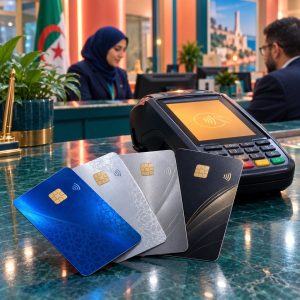
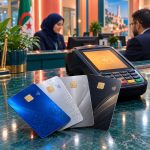
For years, Algeria’s payment card statistics read like an aspirational poster. Cards were issued, stacked in drawers, used once for salary withdrawals, and then ignored. That framing is no longer accurate. According to figures compiled by GIE Monétique and reported in Algerian financial press, the country ended 2025 with roughly 21.9 million interbank cards in circulation — a true doubling from 2022 levels.
The mix is telling: 81% Edahabia (issued by Algérie Poste, approximately 17.8 million cards) and 19% CIB (issued through the banking sector, approximately 4.1 million cards). TSA-Algérie and Algerie Eco both confirm the 80/20 split that has held across successive quarterly reports.
Volume Growth, Not Just Issuance
The more interesting number sits underneath the card count. El Watan reports internet payments grew 179% in 2025. This is not salary withdrawal or ATM rotation — it is e-commerce settlement, utility bills, mobile phone top-ups, and an increasing share of cross-merchant transactions. The growth rate matters more than the absolute volume because it shows a behavioural shift, not just infrastructure deployment.
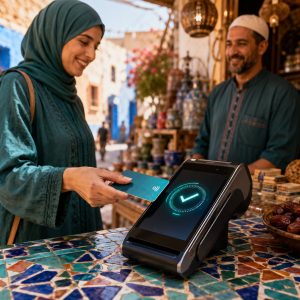
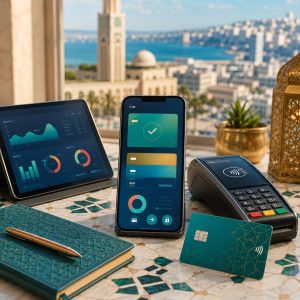
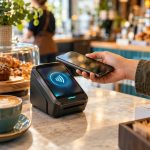
Mobile payments are the other bright spot. Baridi Pay, launched by Algérie Poste, crossed meaningful adoption in the second half of 2025 as QR-code merchant acceptance expanded in Algiers, Oran, and Constantine. For the first time, Algerian consumers have a choice between plastic and phone at the point of sale.
Advertisement
The Acceptance Gap Is Still the Story
Issuance is easy. Acceptance is hard. TSA-Algérie reports roughly 80,000 active point-of-sale (TPE) terminals at the end of 2025, serving a commercial base of more than 1 million registered merchants. That is approximately 8% merchant coverage — a figure that explains why most cards still live in the cash-withdrawal box.
Algerie Eco reported an earlier 2025 snapshot at 77,000 active TPE, showing slow but positive trend. The bottleneck is not consumer willingness — it is terminal cost, merchant onboarding speed, and the MDR (merchant discount rate) economics that make small-ticket retailers reluctant to absorb processing fees.
What the Card Number Unlocks — and Hides
Twenty-plus million cards is a genuine milestone for three reasons:
1. Financial identity. Every Edahabia or CIB card is backed by an account. Even if the account is dormant as a savings vehicle, the cardholder is now inside the formal financial system and can be targeted for credit, insurance, or savings products — the next phase of the financial inclusion push.
2. Digital-bill settlement. Utility companies, Algérie Télécom, Mobilis, Djezzy, Ooredoo, and fiscal authorities now route significant volumes through card rails. This is the “sticky” use case that converts cards from ID into transaction tools.
3. E-commerce enablement. Domestic e-commerce platforms — Yassir, Jumia, Ouedkniss checkout, Temtem — all rely on CIB/Edahabia online settlement. Without 20 million+ cards, the $7 billion e-commerce market estimate would be structurally capped.
What the number hides: activation rate, transaction frequency, and merchant economics. A card used six times per year at an ATM is not a cashless payment instrument — it is a receipt-free withdrawal tool. The next disclosure GIE Monétique should publish is active card rate (transactions per card per month) rather than just circulation count.
What Happens in 2026-2027
The milestone is necessary but not sufficient. To convert 20 million cards into 50% cashless by 2030, Algeria needs TPE density to cross 20% merchant coverage (roughly 200,000 active terminals), mobile wallet interoperability through a unified QR standard, and MDR economics that make small merchants want — not avoid — electronic acceptance.
For banks, the competitive question is no longer “who issues more cards?” but “who builds the acceptance side?” For fintechs, the opportunity is in merchant-facing tooling: soft POS, tap-to-phone, QR reconciliation dashboards, and SME credit built on card-transaction data.
The 20 million milestone is real. The next milestone — 20 million actively transacting cards — is the one that reshapes Algerian retail.
Frequently Asked Questions
How many payment cards are in circulation in Algeria?
GIE Monétique reports approximately 21.9 million interbank cards in circulation at the end of 2025, split 81% Edahabia (around 17.8 million, issued by Algérie Poste) and 19% CIB (around 4.1 million, issued by the banking sector). This represents more than a doubling from the 2022 baseline of roughly 10 million cards.
Why hasn’t this translated into cashless adoption?
The gap sits on the acceptance side. Algeria has around 80,000 active TPE terminals serving more than 1 million registered merchants — roughly 8% coverage. Card ownership is widely distributed but most small merchants still lack electronic acceptance infrastructure, which keeps transactions cash-based even when the consumer has a card in their wallet.
What should merchants and fintechs do now?
Merchants should evaluate soft POS and tap-to-phone solutions, which cost a fraction of traditional TPE and cut onboarding to days rather than months. Fintech founders should build SME tooling — reconciliation dashboards, credit scoring from card-flow data, QR aggregation across Baridi Pay, Chinaâ Pay, and bank wallets — that monetizes the 21.9 million card base rather than competing for card issuance.
Sources & Further Reading
- Paiement électronique : les derniers chiffres du GIE Monétique — Eco Algeria
- L’Algérie : 80 000 TPE pour plus d’un million de commerçants à fin 2025 — TSA-Algérie
- Avec une évolution de 179% en 2025 : Le paiement sur internet explose — El Watan
- Paiements électroniques en Algérie : les chiffres réalisés durant les sept premiers mois de 2025 — Algerie Eco
- E-paiement en Algérie : 77 000 TPE actifs sur un total de 1,6 million de commerçants — Algerie Eco
- E-Paiement en Algérie : le bilan 2025 — Maghreb Emergent