From Cold War Uranium Enrichment to AI Compute
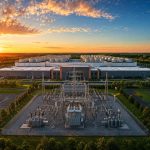
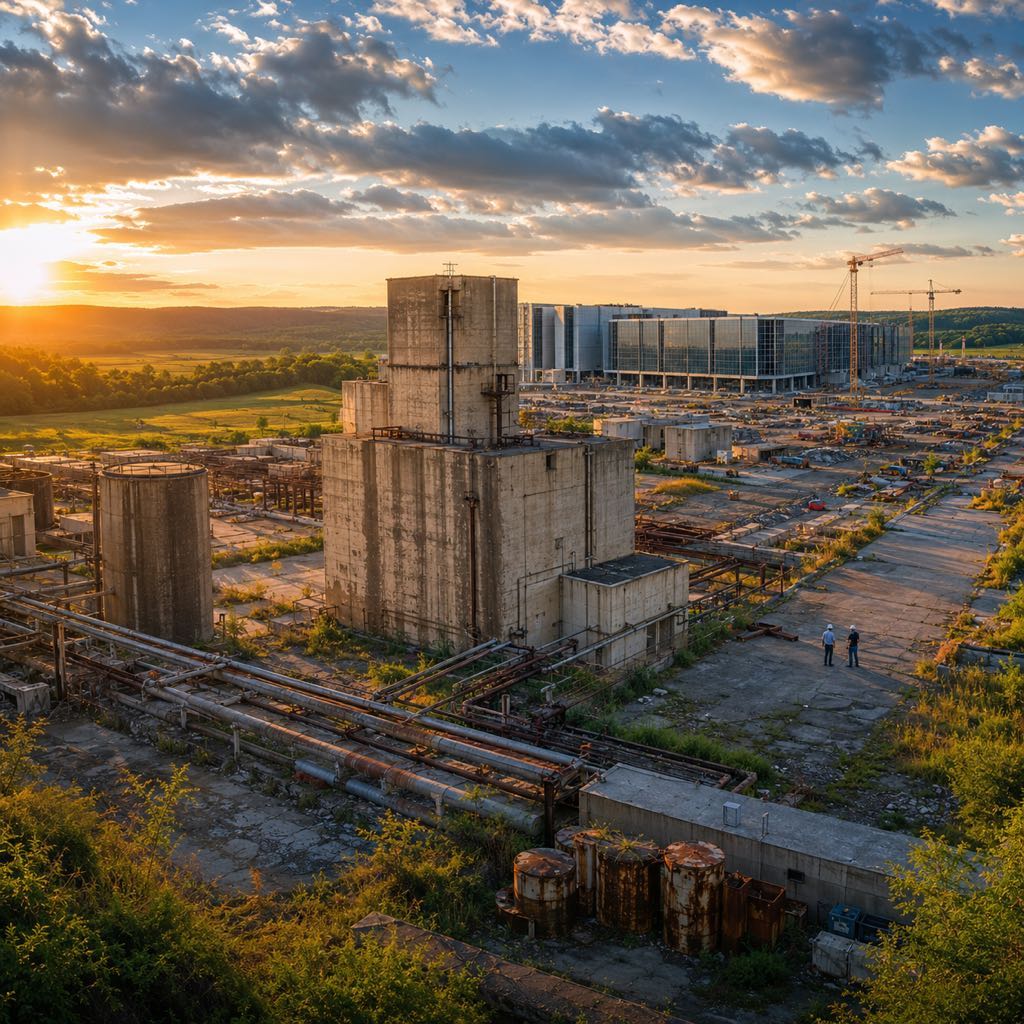
The Paducah Gaseous Diffusion Plant ran continuously from 1952 to 2013, enriching uranium first for nuclear weapons and later for commercial reactor fuel before it became the last government-owned enrichment facility in the United States to shut down. The Department of Energy took the roughly 3,556-acre site back into full federal control on October 21, 2014, and it has spent the years since in environmental cleanup status — a Cold War industrial relic waiting for a second use.
That second use arrived on July 29, 2026, when Brookfield and NextEra Energy announced plans to build a $100 billion AI data center campus on the site, funded entirely by private capital. The DOE had issued a request for offers on November 4, 2025, with a response deadline of January 30, 2026 — Brookfield’s winning bid moved from solicitation to public announcement in under nine months.
The Power Stack: 4.6 Gigawatts Before a Single GPU Ships
What distinguishes the Paducah deal from most AI campus announcements is that the power comes first and is contractually inseparable from the compute. Per PowerMag’s reporting on the deal structure, Brookfield will lease the land from the DOE and develop and operate the data center campus itself, while NextEra Energy separately builds, owns, and operates up to 2 gigawatts of new natural gas-fired generation and up to 2.6 gigawatts of battery energy storage — a combined 4.6 GW of dedicated capacity.
That figure is deliberately larger than what the campus needs to run. The project targets up to 1.8 GW of utility-supplied capacity and more than 1.2 GW of actual compute load, meaning the 4.6 GW of generation and storage exceeds committed demand — PowerMag notes the surplus is designed so excess electricity can flow onto the regional grid rather than competing with it. Construction is targeted for completion by 2031, with full buildout following in 2032.
Three regional utilities round out the coalition: Big Rivers Electric Power Corporation, Jackson Purchase Energy Cooperative, and Paducah Power System. Big Rivers CEO Don Gulley framed the arrangement as additive rather than extractive, saying the project “will provide significant benefits to our members without compromising affordability or reliability,” according to PowerMag.
Why the DOE Wanted This Specific Site
The Paducah announcement is part of a broader federal push to reuse decommissioned DOE land for AI infrastructure rather than leave it in cleanup limbo indefinitely. Tim Walsh, the DOE’s Assistant Secretary for Environmental Management, tied the deal directly to that strategy: “We are intently focused on finding ways to put federal land back to use for American taxpayers. That commitment is at the heart of our office’s American Energy Hubs initiative,” he said, as reported by PowerMag.
For NextEra, the framing is about self-sufficiency rather than grid strain — a direct answer to the interconnection-queue bottlenecks now surfacing in states like Texas. NextEra CEO John Ketchum said “the data center will bring its own power, pay for its own power infrastructure and create good-paying jobs for local workers,” per PowerMag’s coverage. Brookfield CEO Bruce Flatt described the campus as the opening move in a larger commitment, calling it the seed of the firm’s plan to invest $100 billion in AI infrastructure with the goal that “innovation and affordability go hand in hand.”
No anchor tenant — the hyperscaler or AI lab that will actually rent the compute — has been publicly named. TechTimes reported the project moving forward with power infrastructure secured before any customer commitment was disclosed, a build-it-first sequencing that is itself notable given how tightly compute deals and power deals have been coupled in most 2026 hyperscaler announcements.
That sequencing inverts the pattern set by most of the year’s marquee AI infrastructure deals, where a hyperscaler or AI lab signs a multi-gigawatt compute commitment first and power procurement follows as a downstream negotiation with utilities and generation partners. Paducah instead locks in the harder-to-secure asset — dedicated, permitted, under-construction generation on federally controlled land — before a tenant is named, betting that guaranteed power will itself be the scarce resource that draws hyperscaler interest once the campus nears energization.
Advertisement
Coalition Economics: Who Carries the Risk
The four-party structure splits risk in a way that differs from a single-developer campus. Brookfield carries the real estate and data center construction risk on land it leases rather than owns outright, keeping the capital-intensive building shell separate from the balance sheet holding the underlying property. NextEra, as the sole owner-operator of the 4.6 GW generation and storage stack, carries the commodity and interconnection risk on the power side, a business closer to its core utility operations than to data center leasing. The three regional utilities — Big Rivers, Jackson Purchase, and Paducah Power System — absorb neither construction nor generation risk directly, but their cooperation is what turns a private mega-project into one the surrounding community and state regulators are willing to approve without the kind of pushback now playing out in Texas and New York.
What This Means for AI Infrastructure Developers
1. Treat co-located generation as the new baseline, not a differentiator
Paducah’s 4.6 GW of dedicated gas and battery capacity is a direct response to the interconnection queues now stalling projects in ERCOT and other grid territories. Developers still planning to rely primarily on grid draw should model the risk that co-located generation becomes a de facto requirement for winning both regulatory approval and hyperscaler tenancy commitments.
2. Federal land reuse is now a live sourcing channel
The DOE’s American Energy Hubs initiative turned a Cold War industrial site into a nine-month path from RFO to $100 billion announcement. Developers should track other decommissioned federal sites — former weapons, energy, or industrial facilities — as a sourcing pipeline that can move faster than greenfield permitting in contested markets.
3. Build power-to-grid surplus into project economics, not just campus load
By sizing generation above campus demand, Brookfield and NextEra positioned the project to sell into local utility relationships rather than simply extract from them. That surplus-to-grid design is a template for winning cooperation from regional utilities like Big Rivers and Jackson Purchase, whose support is often a prerequisite for local and state approval.
4. Expect tenant-agnostic power deals to become more common
Sequencing power infrastructure ahead of a named compute tenant reduces financing risk tied to any single hyperscaler’s capex cycle. Investors evaluating similar deals should weigh whether power-first structuring, rather than tenant-first, better insulates a project from the kind of capex pullbacks that have periodically rattled AI infrastructure valuations in 2026.
Where This Fits in 2026’s Power-Constrained Buildout
Paducah lands at a moment when power, not chips, is the binding constraint on AI infrastructure growth. Texas paused new data center grid interconnections on August 3, 2026 after its queue hit 474 gigawatts of requests it could not physically accommodate, and New York enacted its own approval pause in July 2026. Against that backdrop, a $100 billion project that brings 4.6 GW of dedicated generation on federally reused land — rather than requesting it from an already-strained regional grid — reads less like an isolated mega-deal and more like the industry’s answer to the exact bottleneck regulators in Texas and New York are now trying to contain. Whether Paducah’s power-first model becomes the standard playbook, or remains a one-off enabled by unusually favorable federal land access, will shape how much of the next wave of AI capacity gets built in already-congested grid territories versus reused industrial sites like this one.
Frequently Asked Questions
What is the Paducah AI data center campus and how much will it cost?
Brookfield and NextEra Energy announced on July 29, 2026 a plan to build a $100 billion AI data center campus on the Department of Energy’s former Paducah Gaseous Diffusion Plant site in western Kentucky. The project pairs the data center campus with up to 4.6 gigawatts of dedicated natural gas and battery storage generation, funded entirely by private capital.
Why did Brookfield and NextEra choose a former nuclear enrichment site?
The Paducah Gaseous Diffusion Plant operated as a uranium enrichment facility from 1952 to 2013 before the Department of Energy took the roughly 3,556-acre site back into full federal control in 2014. The DOE has been pushing to reuse decommissioned federal land for AI infrastructure under its American Energy Hubs initiative, and issued a request for offers for the Paducah site in November 2025 that Brookfield won within months.
Has a hyperscaler or AI company signed on to use the Paducah campus?
No anchor tenant has been publicly named as of the announcement. Brookfield and NextEra secured the power infrastructure — 4.6 GW of dedicated generation and storage — before any compute customer commitment was disclosed, a sequencing that inverts the pattern set by most 2026 hyperscaler deals, where compute commitments typically come before power procurement.
Sources & Further Reading
- Brookfield, NextEra to Develop $100B Data Center Campus at DOE’s Paducah Site — POWER Magazine
- Brookfield and NextEra Plan $100B AI Campus at DOE’s Paducah Site With 4.6 GW — TFTC
- Paducah AI Hub Wins $100B Federal Deal: Power Built In, No Tenant Named — Tech Times
- Facing an estimated 474 GW of interconnection requests, Texas hits pause on data centers — Utility Dive
🔗 Related Intelligence
The $700B Hyperscaler Bet: Why Power and Cooling Are Now the AI Infrastructure Ceiling
AI FinOps 2026: Governing GPU and Token Costs Before They Explode
Emerald AI’s $150M Series A: Betting That the Grid, Not the Chip, Is the Real AI Bottleneck
Bloom Energy and Oracle’s 2.8 GW Fuel Cell Deal: The On-Site Power Revolution for AI Data Centers