What the Army Actually Agreed To
The Enhanced Use Lease (EUL) program — authorized under Title 10, U.S. Code, Section 2667 — allows the Defense Secretary to lease underutilized military land when doing so promotes the national defense or serves the public interest. The Army’s application to data centers is structurally elegant: it contributes land and security perimeter; private capital contributes everything else.
Under the conditional agreements announced in March 2026, Carlyle Group and CyrusOne assume full financial responsibility for financing, constructing, operating, maintaining, and eventually decommissioning the facilities. Developers are also contractually required to provide independent, “behind-the-meter” power and water solutions — meaning the facilities will not draw from the public grid or municipal water systems. Each project carries an estimated $2 billion price tag; the combined $4 billion investment involves zero direct government capital.
The Army’s return is not cash rent. It receives a percentage of each facility’s computing capacity — the exact figures remain undisclosed pending final negotiations, but the structure means the Army gets sovereign cloud access to hyperscale-grade infrastructure without a procurement budget line. According to DefenseScoop, Army Secretary Dan Driscoll framed the rationale directly: “AI is a strategic asset for the Army. It is a force multiplier, supports future transformation and requirements, keeps the Army ahead of our adversaries.”
Why Fort Bliss and Dugway Were Chosen
The two sites were not selected arbitrarily. Both reflect the specific requirements of hyperscale data center development: large contiguous land parcels, distance from population density, defensible perimeters, and proximity to power transmission corridors.
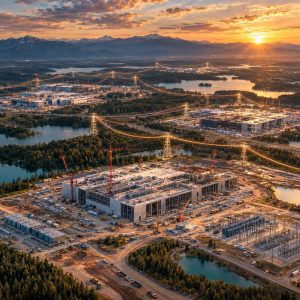
Fort Bliss, outside El Paso, Texas, offers 1,384 acres with established military infrastructure and an economic context — the project is projected to create approximately 2,000 jobs and anchor a new industrial cluster in the El Paso region. Reporting by El Paso Matters notes the 2.5–3 GW facility would consume more power than the entire city of El Paso — a figure that illustrates both the scale of the project and the importance of the behind-the-meter power requirement.
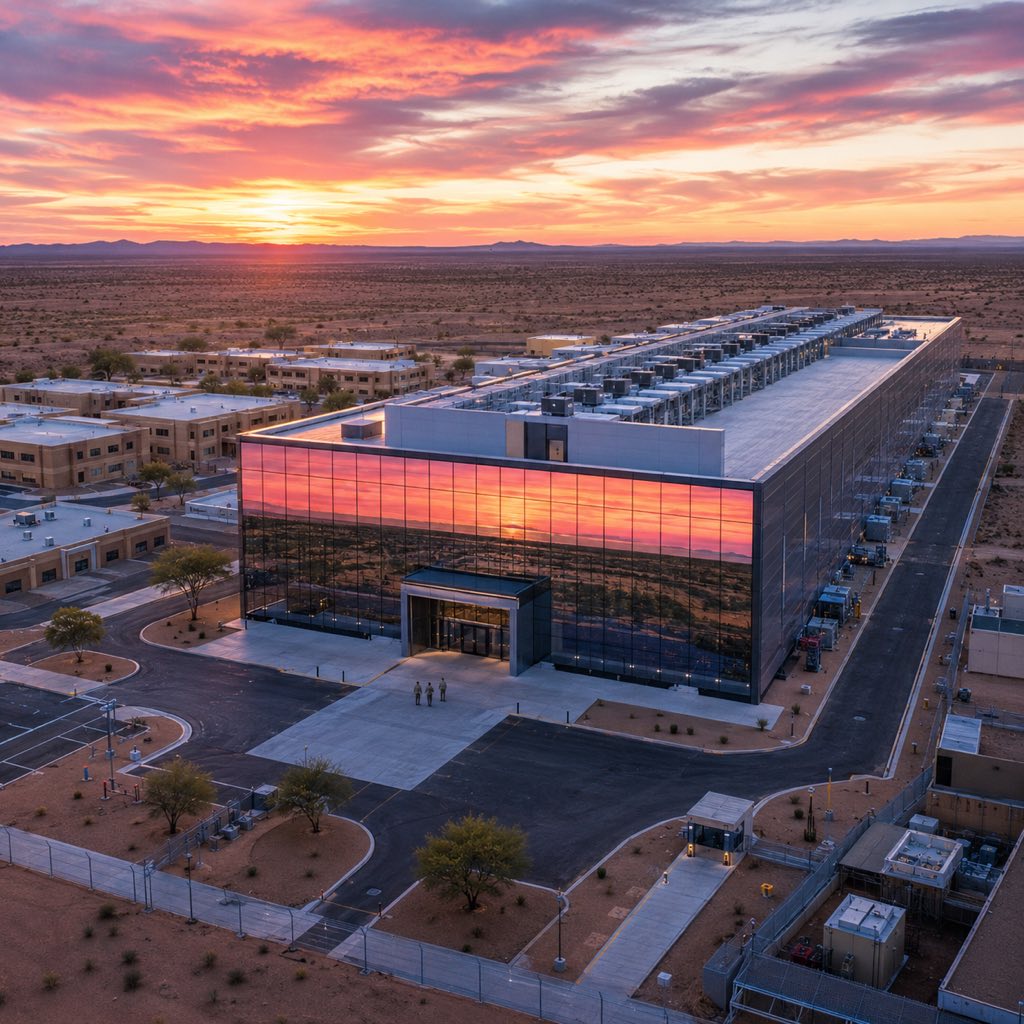
Dugway Proving Ground in Utah offers extreme isolation — it is an existing restricted-access testing facility in the desert, with the physical security profile that classified computing workloads require. CyrusOne’s 1,201-acre site there is projected at 1 GW, with an FY2029 operational target that gives the Army a second facility and geographic redundancy for sensitive AI workloads.
Together the two sites represent 2,585 acres of sovereign territory being converted into what is effectively the world’s largest private-public hybrid hyperscale campus.
The Structural Innovation: What Makes This Template Different
The conventional sovereign cloud model has two variants: direct government procurement (build a national data center with public funds) or hyperscaler contract (rent capacity from AWS GovCloud, Azure Government, or Google Public Sector). Both have well-understood limitations. Government-built facilities are slow, expensive, and technically stagnant. Hyperscaler contracts create dependency on foreign commercial infrastructure and data residency uncertainty.
The EUL model creates a third path. By contributing land under a 50-year lease — a long enough horizon to justify private equity’s infrastructure return profile — the government attracts private capital at scale without procurement risk. The developer bears construction cost overrun exposure, operational risk, and technology obsolescence risk. The government receives guaranteed computing capacity without committing capital.
Bisnow’s analysis notes that Carlyle and CyrusOne/KKR are effectively betting that commercial hyperscaler tenants — technology companies, AI model operators, cloud service providers — will fill the majority of each facility’s capacity, generating the commercial revenue that funds the Army’s in-kind allocation. The military use cases sit on a shared substrate funded by commercial demand.
This is the structural insight that travels: sovereign governments have land assets with security perimeters that no commercial developer can replicate. That perimeter has infrastructure value. The EUL model monetizes that value without liquidating sovereignty.
Advertisement
What Cloud Operators and Policymakers Should Extract From This Model
1. Identify Your Equivalent of “Behind-the-Meter” Power
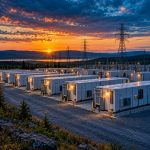
The single most replicable element of the Army deal is the behind-the-meter power requirement. For data centers at gigawatt scale, dependence on the public grid is both a reliability risk and a political vulnerability. Carlyle and CyrusOne must provide on-site generation from a mix of gas peakers, large-scale solar, and battery storage. This requirement should be written into any EUL-equivalent framework from day one — not added as an afterthought when grid strain becomes a news story.
2. Structure the In-Kind Consideration as Sovereign Compute Reserve
The Army’s in-kind return — a percentage of facility computing capacity — is more strategically valuable than cash rent. Any government entering an EUL-equivalent arrangement should negotiate the in-kind consideration as a compute reserve — a pre-allocated slice of GPU and CPU capacity that remains available for sovereign workloads regardless of commercial occupancy rates, sized against projected AI needs for years 5–20 of the lease.
3. Require Technology Refresh Obligations From the Developer
A 50-year lease creates a technology mismatch risk: infrastructure built in 2027 will be obsolete by 2037. EUL agreements should include mandatory technology refresh cycles — contractual obligations for the developer to upgrade hardware on defined schedules (every 5–7 years is the current hyperscale standard). Without this clause, a 50-year EUL delivers 5 years of relevant infrastructure and 45 years of legacy liability.
The Criticism the Army Needs to Address
Truthout’s reporting highlights criticism from anthropologist Roberto González, who argues Army land becomes a de facto subsidy for private equity returns rather than a defense asset. Tyson Slocum of Public Citizen raised concerns about commercializing military installations for private profit. A 3 GW facility consuming more electricity than El Paso will also have upstream impacts — fuel supply chains, transmission infrastructure, land use for solar arrays — that behind-the-meter generation does not fully address. These friction points apply to any government attempting to replicate the model.
The Bigger Picture: Why This Template Travels
Army Secretary Driscoll’s “first of many, many projects” statement is not casual. The U.S. Department of Defense controls approximately 27 million acres globally. Even a small fraction, applied through the EUL framework to digital infrastructure, represents a sovereign cloud capacity pipeline that no government procurement budget could match. For any government with underutilized sovereign land — military bases, industrial zones, port perimeters — the structural question is whether the EUL mechanic can be adapted to its legal framework. For those pursuing digital sovereignty without capital to fund it directly, the answer may well be yes.
Frequently Asked Questions
What is an Enhanced Use Lease and how does it differ from a standard land lease?
An Enhanced Use Lease is a specific legal mechanism under U.S. federal law (Title 10, U.S. Code, Section 2667) that allows the military to lease underutilized land to private parties when the arrangement promotes national defense or public interest. Unlike a standard commercial lease where the landlord receives cash rent, an EUL can involve in-kind consideration — in this case, the Army receives a percentage of the data center’s computing capacity rather than money. The developer assumes 100% of financial risk for construction and operations.
Why would private equity firms invest $2 billion each in facilities on military land?
The military perimeter provides something commercial real estate cannot: a security boundary that satisfies classified computing requirements, making the facilities attractive to government agencies, defense contractors, and AI companies with sensitive workload requirements. The 50-year lease horizon matches private equity infrastructure funds’ return timelines. Commercial tenants paying hyperscale rates fund the Army’s in-kind allocation — effectively, the Army’s compute reserve is cross-subsidized by commercial demand.
What are the main risks in the Army’s EUL data center model?
Three primary risks have been identified. First, technology obsolescence: a 50-year lease on 2027-era infrastructure could deliver decades of legacy computing rather than cutting-edge capacity unless mandatory refresh cycles are built into the contract. Second, mission-commerce blur: using military land for commercial profit raises governance questions about the boundary between defense infrastructure and private equity returns. Third, regional infrastructure impact: facilities consuming 2.5–3 GW generate upstream effects on fuel supply chains and regional power systems even when operating behind-the-meter.
Sources & Further Reading
- Army Picks Companies to Build Commercial Data Centers at Fort Bliss, Dugway — DefenseScoop
- Army Taps KKR and Carlyle for $4B of Data Centers on U.S. Bases — Bisnow
- Proposed Fort Bliss Data Center Could Use More Power Than All of El Paso — El Paso Matters
- Wall Street Is Pairing Up With the Army to Build Data Centers — Truthout
- Army Reaches Conditional Agreement With Private Industry for Hyperscaled Data Centers — U.S. Army
- Dugway Proving Ground Tapped as Potential Host of New Data Center — KSL.com
🔗 Related Intelligence

Pentagon vs. Anthropic: When AI Safety Guardrails Collide with National Security

CISA GitHub Leak: How 844MB of US Government Cloud Keys Sat Exposed for Six Months
SoftBank’s €75B France Bet: When the Compute Race Becomes a Power Contest

The $112 Billion Quarter: Inside the Q1 2026 Hyperscaler AI Infrastructure Sprint