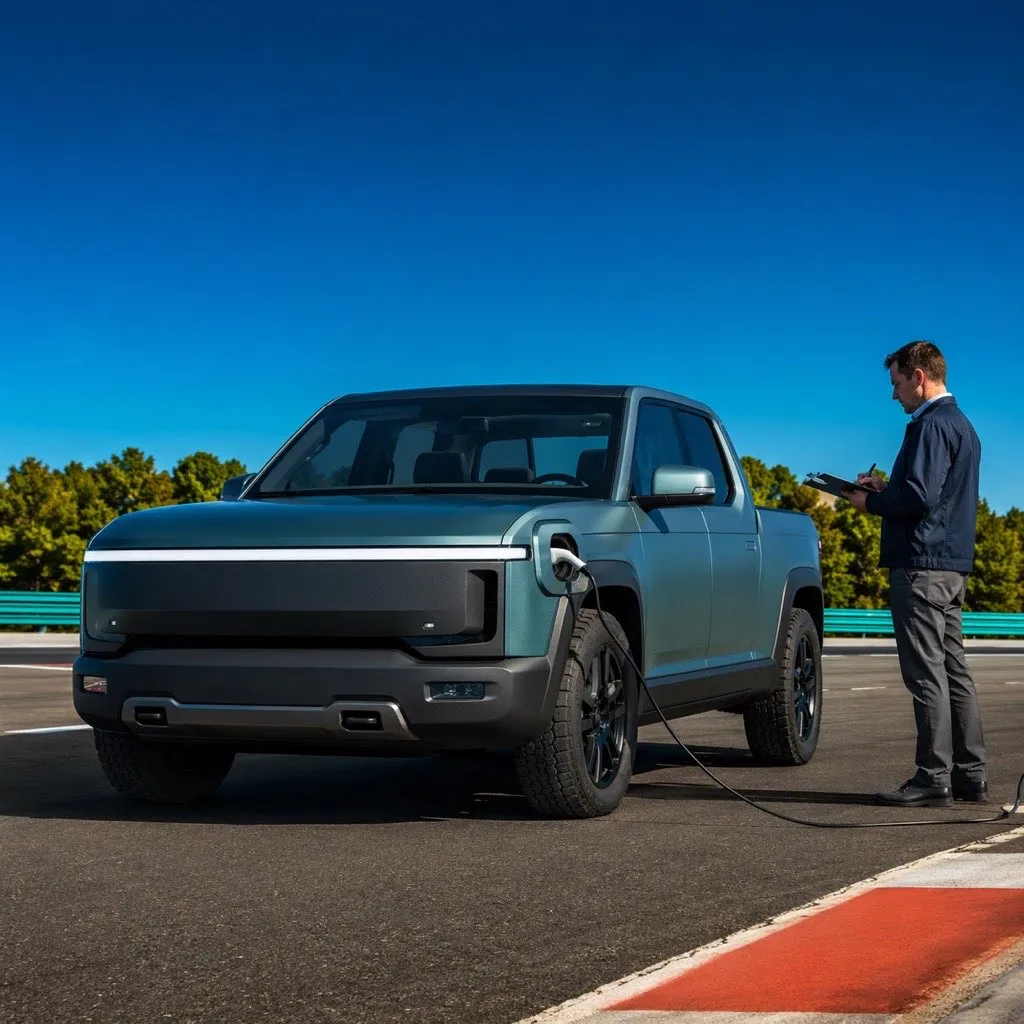
A $650 Million War Chest for the Anti-Cybertruck
Slate Auto, the Troy, Michigan-based electric vehicle startup, closed a $650 million Series C funding round on April 13, 2026, giving it the financial runway to begin production of its affordable electric pickup truck by year’s end. The round was led by investment firm TWG Global, with participation from Jeff Bezos, General Catalyst, and Slauson & Co.
Where Tesla’s Cybertruck starts at $60,000 and Rivian’s R1T at $69,900, Slate is targeting the opposite end of the market. Its two-door pickup truck starts under $28,000, or potentially under $20,000 after federal EV incentives. The company has accumulated more than 160,000 refundable reservations, signaling substantial consumer demand for an affordable electric alternative in the pickup segment.
Bare-Bones by Design
The Slate Truck is deliberately stripped down. It is a small, battery-electric, two-door pickup designed to be “affordable first and flashy never.” A single rear-mounted motor produces 201 horsepower and 195 pound-feet of torque, adequate for daily driving and light hauling without the performance excess that inflates competitor pricing.
Two battery configurations provide flexibility. The base 52.7 kWh pack delivers an estimated 150 miles of range, while the larger 84.3 kWh option extends that to 240 miles. Neither figure matches the 300+ mile range of premium EVs, but Slate is betting that most truck buyers drive fewer than 100 miles daily and would rather save $30,000 on the purchase price than gain range they rarely use.
The minimalist approach extends to the truck’s modular design philosophy. Rather than loading the base model with features, Slate plans to offer customization through aftermarket kits, letting buyers add capabilities over time rather than paying for everything upfront.
Advertisement
Warsaw, Indiana: From Printing Press to EV Assembly
Slate is converting a former printing plant in Warsaw, Indiana into its primary manufacturing facility. The company expects to invest approximately $400 million in the site, create over 2,000 jobs in the region, and build capacity for up to 150,000 vehicles annually.
The choice of a Midwest location is both practical and symbolic. Indiana offers lower labor and real estate costs than coastal manufacturing hubs, access to an established automotive supply chain, and proximity to the truck-buying demographic Slate is targeting. The company projects the factory could contribute as much as $39 billion to Indiana’s economy over 20 years.
Production is planned to begin in autumn 2026, with the first customer deliveries expected before year’s end. The $650 million raise is specifically designed to bridge the gap from prototype to production scale, funding tooling, supplier contracts, and the factory buildout needed to start assembling vehicles at commercial volumes.
The Affordability Gap in Electric Trucks
Slate’s thesis rests on a glaring market gap. The average new car transaction price in the US exceeds $48,000, and electric trucks have been even more expensive. The Cybertruck, Rivian R1T, and Ford F-150 Lightning all target the premium segment, leaving budget-conscious truck buyers with no electric option.
The company is positioning itself as the EV equivalent of what compact trucks like the Ford Ranger and Toyota Tacoma represent in the internal combustion market: practical, affordable, and sufficient for the majority of use cases. With Bezos’s backing providing credibility and TWG Global’s capital providing scale, Slate has assembled the resources to test whether the affordable EV truck market is as large as the reservation numbers suggest.
The risk is execution. History is littered with EV startups that raised hundreds of millions, built impressive prototypes, and then failed to achieve profitable production at scale. Lordstown Motors, Fisker, and Arrival all collapsed despite substantial funding. Slate’s leadership team will need to demonstrate that its stripped-down approach translates to genuinely lower manufacturing costs, not just a lower sticker price subsidized by investor capital.
Frequently Asked Questions
What is Slate Auto’s electric truck and how much will it cost?
The Slate Truck is a small, two-door battery-electric pickup designed for affordability. It starts under $28,000 and could cost under $20,000 after US federal EV purchase incentives. It offers two battery options: a 52.7 kWh pack with 150 miles of range and an 84.3 kWh pack with 240 miles of range, powered by a single 201-horsepower rear motor.
When will Slate Auto start delivering trucks to customers?
Slate Auto plans to begin production at its Warsaw, Indiana factory in autumn 2026, with the first customer deliveries expected before the end of the year. The company’s $650 million Series C raise is specifically designed to fund the transition from prototype to production scale, including tooling, supplier contracts, and factory buildout.
How does Slate Auto compare to other EV truck makers like Tesla and Rivian?
Slate targets the opposite end of the market from Tesla’s Cybertruck ($60,000+) and Rivian’s R1T ($69,900+). While competitors focus on premium features and maximum range, Slate offers a stripped-down, affordable truck with 150-240 miles of range. With 160,000+ reservations, Slate is betting that affordability matters more than performance for mainstream truck buyers.
Sources & Further Reading
- Slate Auto Raises $650M to Fund Affordable EV Truck Plans — TechCrunch
- Bezos-Backed EV Truck Startup Raises $650M — Bloomberg
- 2026 Slate Electric Truck Guide — Recharged
- Slate Auto Closes Funding Round — Electrek
- How Slate Auto Is Helping One Midwest Town — Newsweek
- Slate Auto: Everything You Need to Know — TechCrunch