The Constraint Nobody Priced In
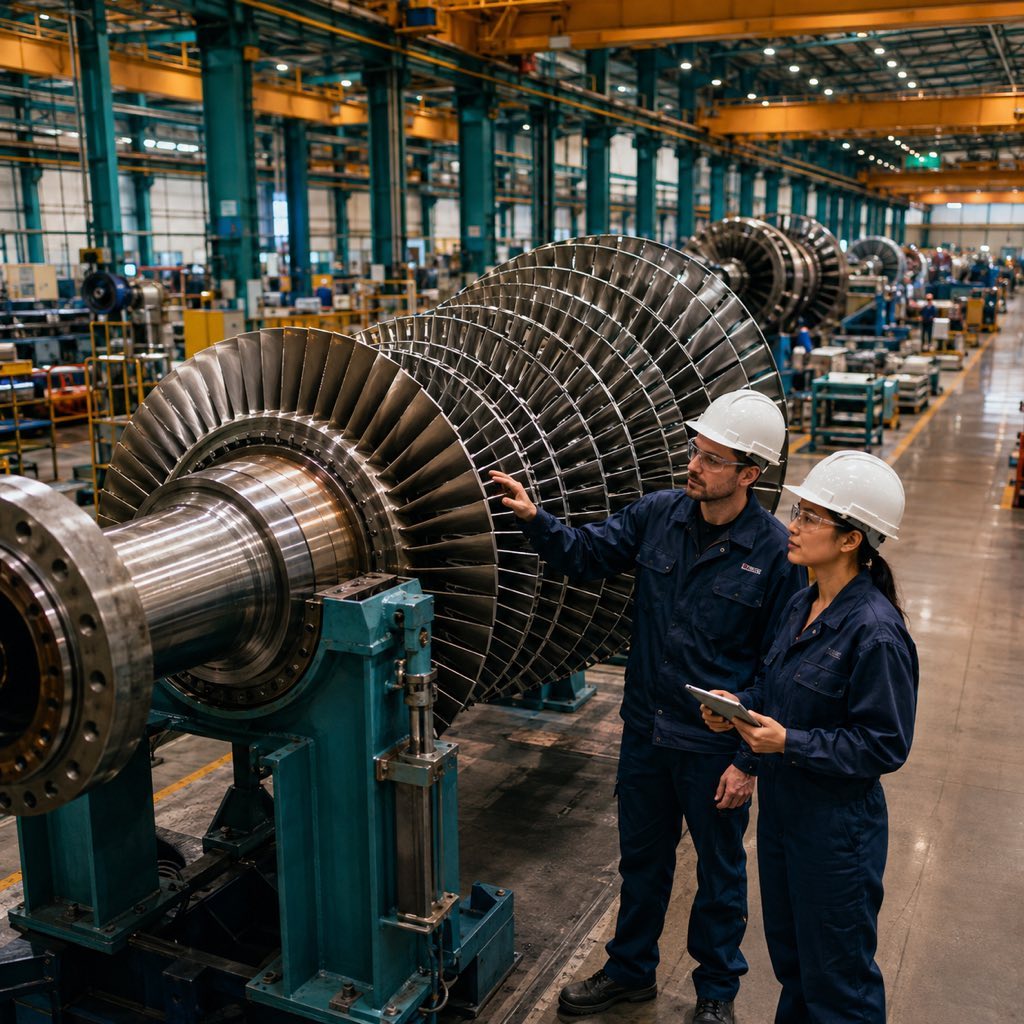
The AI buildout was supposed to be gated by silicon. In 2026 it turned out to be gated by rotating metal. On its July 22, 2026 earnings call, GE Vernova disclosed that its gas turbine backlog — firm equipment orders plus slot reservation agreements — had reached 116 gigawatts by the end of the second quarter of 2026, split between roughly 53 GW of firm equipment and 63 GW of slot reservations. That is up from 100 GW just three months earlier and 83 GW at the end of 2025. The single most consequential number is the lead time: a heavy-duty gas turbine ordered from GE Vernova today will not arrive until around 2031.
This is the constraint that most AI infrastructure planning quietly ignored. GPUs are manufactured in enormous volume; a gas turbine is a bespoke, precision-machined machine that takes years to build and years more to install and commission. When a hyperscaler or a colocation developer decides to bridge the multi-year wait for a grid interconnection with on-site gas generation, they discover that the generation itself is now the bottleneck — and they are bidding against utilities for the same scarce slots.
The Numbers Behind the Squeeze
The imbalance is stark and industry-wide. According to the same reporting, global second-quarter gas turbine orders hit a record 38 gigawatts, up 71% year-over-year, while worldwide manufacturing capacity stands at just 60-70 GW annually against roughly 110 GW in orders. That gap does not close quickly, because turbine manufacturing capacity cannot be conjured — it requires new casting, forging, and precision-machining lines that themselves take years to stand up.
GE Vernova’s own production plan illustrates how gradual the ramp is: the company is running at roughly 20 GW annualized this quarter, targeting 24 GW by 2028 and pushing toward 30 GW by 2030. Its competitors are similarly stretched. Siemens Energy ended its fiscal third quarter on June 30 with a 69 GW gas turbine backlog and lead times exceeding three years. Mitsubishi Heavy Industries reported a 35 GW large-frame backlog as of August 6, 2026, up from 23 GW a year earlier, and said it is being selective about which projects it will contract. Pricing reflects the scarcity: new GE Vernova orders in the first half of 2026 were tracking 10 to 20 percentage points higher on a dollar-per-kilowatt basis than orders booked in the fourth quarter of 2025.
Advertisement
Why This Reshapes AI Infrastructure Economics
The turbine shortage changes the fundamental math of AI capacity. When the Belfer Center and grid analysts describe a watershed moment for the US electric grid, the turbine backlog is the physical reason the moment is so hard to navigate: even a fully financed data center with GPUs on order cannot come online without firm power, and firm power increasingly means a turbine slot that is already spoken for through the end of the decade. Roughly 20 GW — about a fifth of GE Vernova’s 100 GW backlog earlier this year — was explicitly tied to data center load, and that share is climbing as AI developers outbid traditional utilities for delivery slots.
What This Means for Infrastructure Planners
Anyone building, buying, or financing AI capacity in 2026 needs to treat power hardware lead times as a first-class planning input, not an afterthought.
1. Secure turbine slots or firm PPAs before signing GPU contracts
The binding constraint on a 2028-2030 deployment is the power source, not the chip. Reserve generation capacity — whether a turbine slot, a firm power-purchase agreement, or grid capacity — before you commit to GPU orders, because the turbine lead time now exceeds the GPU lead time by years.
2. Model the 2031 delivery reality into your capacity roadmap
If your build depends on on-site gas generation ordered today, assume the turbine arrives around 2031 and plan the intervening years around alternative power: existing grid capacity, batteries, or interim generation. Do not let a slide deck imply generation you cannot physically take delivery of.
3. Diversify power sourcing beyond a single technology
With turbines, transformers, and interconnections all constrained, single-source power plans carry concentrated delivery risk. Pair firm generation with grid capacity and storage so no single equipment queue can strand your project.
4. Price the escalation into long-term financials
Turbine pricing rose 10-20 points per kilowatt in six months and continues to climb as backlogs lengthen. Build ongoing equipment inflation into project financials rather than assuming today’s quoted price holds to delivery.
The Structural Lesson
The gas turbine bottleneck is the clearest evidence yet that AI’s growth ceiling in the near term is physical, not computational. Chips can be fabricated in months; the machines that turn fuel into the tens of gigawatts of firm electricity those chips demand take the better part of a decade to build and deploy. That asymmetry is why the most sophisticated AI infrastructure players spent 2026 investing upstream in power — securing land, generation, and interconnection years ahead of the compute that will sit on top. For operators everywhere, including those planning capacity in emerging markets where grid headroom may actually be more available than in a saturated US market, the lesson is the same: the organization that locks in firm, deliverable power on a credible timeline wins the AI infrastructure race, and the one that assumes power will simply be there when the GPUs arrive will find its expensive silicon sitting idle in a building with no electricity to run it.
Frequently Asked Questions
Why are gas turbines a bottleneck for AI data centers?
AI data centers need enormous amounts of firm electricity, and connecting to the grid can take years. Developers bridge that wait with on-site gas generation — but the turbines themselves are now in critically short supply. GE Vernova’s backlog reached 116 GW in the second quarter of 2026 and a turbine ordered today arrives around 2031, while global manufacturing capacity of 60-70 GW per year lags roughly 110 GW of orders.
How long does it take to get a gas turbine in 2026?
A heavy-duty gas turbine ordered from GE Vernova today will not be delivered until around 2031, the company confirmed on its July 22, 2026 earnings call. Siemens Energy quotes lead times exceeding three years, and Mitsubishi Heavy Industries reports its near-term delivery slots are largely sold, with a 35 GW backlog as of August 6, 2026.
Is this raising the cost of AI power?
Yes. GE Vernova’s new orders in the first half of 2026 were tracking 10 to 20 percentage points higher on a dollar-per-kilowatt basis than orders booked in late 2025, and prices continue to climb as backlogs lengthen and data center developers outbid utilities for scarce delivery slots.
Sources & Further Reading
- The Gas Turbine Shortage Just Became AI’s Biggest Constraint — Yahoo Finance / OilPrice
- GE Vernova’s Gas Turbine Backlog Stretches Past 2030 — Manufacturing Mag
- GE Vernova’s Gas Turbine Backlog Hits 116 GW — Energy News Beat
- AI, Data Centers, and the U.S. Electric Grid: A Watershed Moment — Belfer Center
🔗 Related Intelligence
Behind-the-Meter Gas Turbines: How Hyperscalers Are Solving AI’s Power Bottleneck
AI’s Energy Crisis: The Trillion-Dollar Power Problem Behind the AI Boom
Grid Transformer Shortage: The 5-Year Bottleneck Stalling AI Data Centers in 2026
Bloom Energy and Oracle’s 2.8 GW Fuel Cell Deal: The On-Site Power Revolution for AI Data Centers