A Deliberately Different Bet on Humanoid Robots
Most of the capital pouring into humanoid robotics in 2026 is chasing full autonomy — robots that see, decide, and act on their own. Avatar Robotics is making a quieter, contrarian bet: put humans back in the loop, ship real work today, and let the data earn the autonomy over time. The Robot Report’s coverage of the raise confirms the San Francisco startup closed a $6.5 million seed round led by AlleyCorp, following a pre-seed led by defy.vc, with participation from Headline, Refashiond, and several individual backers including Henry Ford III.
The company announced the round on August 5, 2026. Robotics 24/7’s reporting describes founder and CEO Colin Webb’s ambition as building an “unlimited workforce for industrial labor” — language that reframes the humanoid category away from a race for a single autonomous product and toward an operational service that can scale by adding human operators before it scales by adding autonomy.
That framing is the story. In a field where the dominant pitch is “our robot thinks for itself,” Avatar is pitching “our robot works today, and gets smarter with every shift.”
How the Teleoperation Model Actually Works
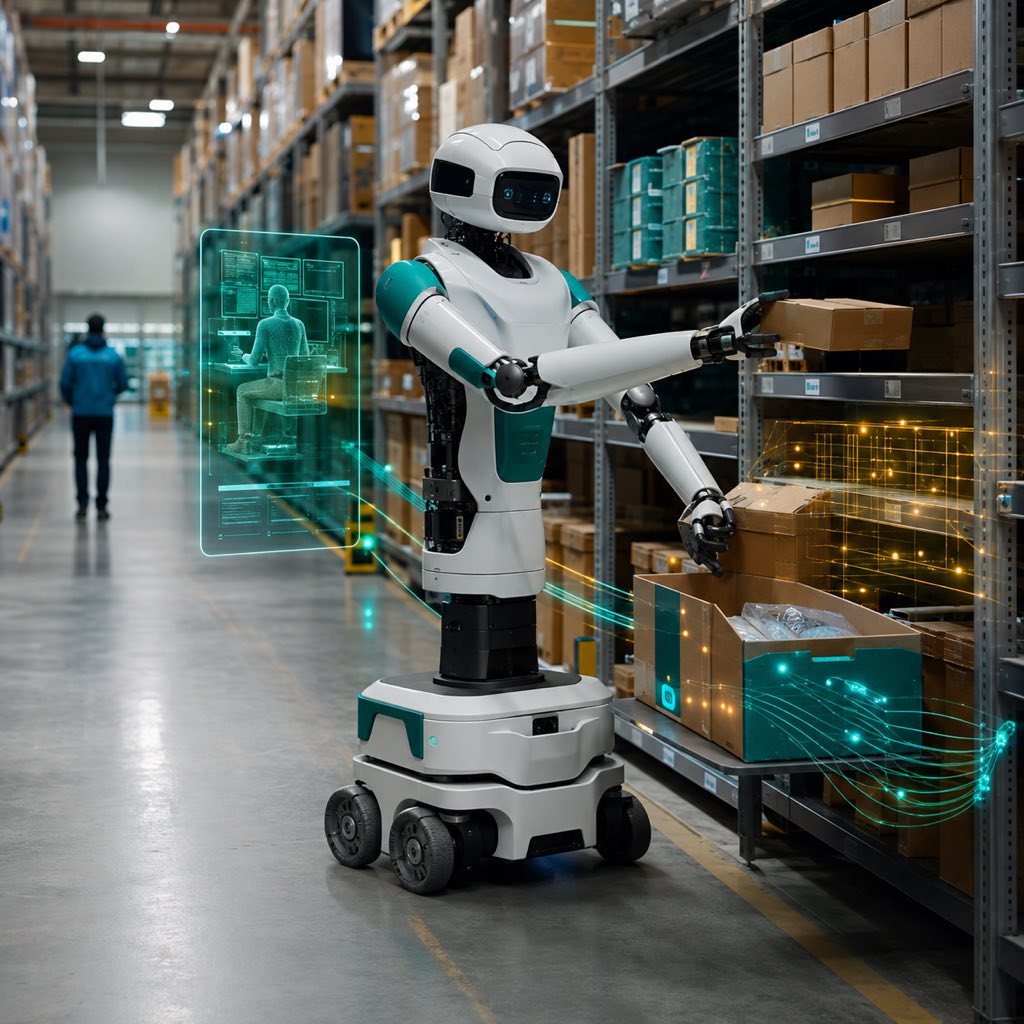
The mechanics are unusual and geographically distributed. According to Robotics 24/7, Avatar deploys wheeled humanoid units sourced from China, controlled remotely by teleoperators based in Mexico, Colombia, and the Philippines. A human operator thousands of miles away pilots a robot on a warehouse floor, performing the picking, packing, sorting, kitting, inventory counting, and material-moving tasks that industrial labor requires — while every action generates labeled data the company uses to train autonomous models.
The traction number behind that model is concrete rather than aspirational. PRNewswire’s announcement states the robots have helped pack, sort, and ship more than 900,000 products in customer facilities since launching in December 2025. That figure matters because it represents real, revenue-generating work performed in live warehouses — not a lab benchmark — and because each of those shipments is a data point feeding the autonomy roadmap.
Why the Human-in-the-Loop Sequence Is the Point
Avatar’s strategy inverts the usual humanoid development order. Instead of spending years building autonomy in simulation and then hunting for deployments, the company deploys first with human operators, earns revenue, and harvests the resulting operational data to improve autonomy incrementally. Yahoo Finance’s coverage of the round notes the company combines remote human operators with AI autonomy rather than pursuing full automation from the outset, using the operational data to progressively expand what the robots can do unassisted.
The company reports installations at a large global beauty retailer and a multibillion-dollar warehouse operator, both unnamed, with additional customer deployments underway. The sequence — deploy, earn, learn, automate — sidesteps the chicken-and-egg problem that has stranded many autonomy-first robotics startups: you cannot gather real-world training data without deployments, and you cannot win deployments without a product that works today.
There is a commercial logic to this order that the raw funding figure understates. A humanoid that already fulfills real orders can be sold on measurable throughput and cost-per-pick rather than on a promise, which shortens sales cycles with hard-nosed warehouse operators who have been burned by robotics pilots before. And because the human operator absorbs the long tail of edge cases — the mislabeled box, the crushed package, the unexpected obstacle — that a purely autonomous system would fail on, Avatar can deploy into messy, unstructured warehouses that autonomy-first robots typically cannot handle yet. Every one of those edge cases, handled by a human today, becomes a labeled example that narrows the gap the autonomy models still have to close.
Advertisement
What This Means for Operators Evaluating Humanoid Automation
1. Judge humanoid vendors on work delivered, not autonomy promised
Avatar’s 900,000-plus shipped products since December 2025 is the kind of metric warehouse operators can actually verify, unlike autonomy roadmaps or demo-day reels. When evaluating any humanoid or robotics vendor, operations leaders should weight demonstrated throughput in live facilities far more heavily than claimed autonomy levels, and ask specifically how many real orders a system has fulfilled in production.
2. Treat teleoperation as a legitimate near-term deployment model, not a stopgap
The instinct to dismiss human-in-the-loop robots as “not real automation” misreads the economics. A teleoperated fleet can deliver labor capacity now while building toward autonomy, which for many operators is more valuable than waiting years for a fully autonomous system. Operators facing acute labor constraints should evaluate teleoperation-plus-autonomy models on total cost and reliability today, rather than ruling them out for not being fully autonomous.
3. Ask where the training data and operators actually sit
Avatar’s model depends on operators in Mexico, Colombia, and the Philippines and on data pipelines feeding its autonomy models — a supply chain with its own latency, reliability, labor, and data-governance implications. Operators considering such systems should ask hard questions about connectivity requirements, operator coverage during peak shifts, and who owns and can access the operational data a fleet generates inside their facility.
The Bigger Signal: Data Is the Real Product in Physical AI
Avatar Robotics’ seed round is small next to the nine- and ten-figure raises dominating humanoid robotics headlines, but its strategy points at where the durable value in physical AI may actually accumulate. The robots themselves are commodity wheeled humanoids sourced from China; the differentiator is the proprietary stream of real-world operational data generated by hundreds of thousands of live warehouse tasks. In physical AI, as in the language-model era before it, the defensible asset is increasingly the data flywheel rather than the hardware. For warehouse operators and investors alike, Avatar’s bet is a reminder that the path to autonomy may run through humans doing the work first — and that the companies quietly logging real shipments today could end up better positioned than those promising fully autonomous robots tomorrow. Whether teleoperation scales into genuine autonomy, or plateaus as a permanently human-dependent service, is the question its 900,000 shipped products have only begun to answer.
Frequently Asked Questions
How much did Avatar Robotics raise, and who led the round?
Avatar Robotics raised a $6.5 million seed round led by AlleyCorp, announced August 5, 2026, following a pre-seed led by defy.vc. Additional investors included Headline, Refashiond, and individual backers such as Henry Ford III.
How do Avatar’s robots work if they aren’t fully autonomous?
Avatar deploys wheeled humanoid robots sourced from China that are remotely piloted by human teleoperators based in Mexico, Colombia, and the Philippines. Each remote-controlled task generates training data the company uses to progressively build autonomous capability, combining human operation with AI rather than pursuing full automation immediately.
What has Avatar Robotics actually deployed so far?
The company says its robots have helped pack, sort, and ship more than 900,000 products in customer warehouses since launching in December 2025, with installations reported at a large global beauty retailer and a multibillion-dollar warehouse operator, and additional deployments underway.
Sources & Further Reading
- Avatar Robotics raises $6.5M seed round to address industrial labor constraints — The Robot Report
- Avatar Robotics raises $6.5M seed round to build the ‘unlimited industrial workforce’ — Robotics 24/7
- Avatar Robotics Raises $6.5 Million Seed to Build the Unlimited Industrial Workforce — PRNewswire
- Avatar Robotics Raises $6.5 Million Seed to Build the Unlimited Industrial Workforce — Yahoo Finance
🔗 Related Intelligence
Humanoid Robotics Gold Rush: $14 Billion and the Race to Automate Warehouses
The Humanoid Robot Race: How AI Is Powering the Next Generation of Physical Automation
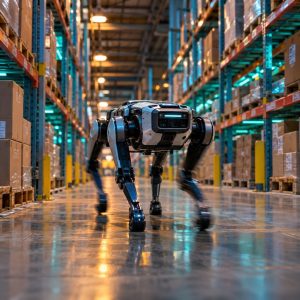
Robotics Systems Gain Whole-Body Reasoning, Moving AI Closer to Warehouses and Farms

Smart Manufacturing Hits 47% Adoption: AI Cobots and Digital Twins Go Mainstream